
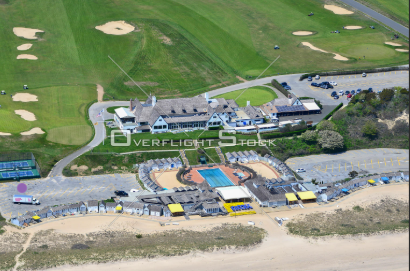
Where 134 Years of Hamptons Exclusivity Guard America’s Last True Links
The salt wind bites your cheeks as you stand on the ninth tee, Atlantic waves crashing just beyond the dunes. Before you stretches one of golf’s most beautiful two-shot holes—a narrow corridor of fescue grass flanked by windswept sand, the kind of terrain Scottish shepherds would recognize instantly. Yet this isn’t Scotland. This is East Hampton, and the Maidstone Club has been keeping this secret since before your great-grandparents were born. Meanwhile, somewhere in the intimate locker room, names you’d recognize from Fortune’s billionaire list are tying their shoes for their afternoon round. Indeed, they’ve earned access to something money alone cannot buy.
The Origin Story of Maidstone Club East Hampton
When Puritans Became Plutocrats
The club takes its name from East Hampton’s original colonial designation. In 1648, Puritan settlers arrived on these shores from Maidstone, England, naming their new village after the home they’d left behind. Consequently, when wealthy New York businessmen gathered in 1891 to establish a summer retreat, they chose this historic name to anchor their ambitions in local tradition. Furthermore, this connection to East Hampton’s founding mythology would prove essential to the club’s identity for generations to come.
Initially, the Maidstone Club functioned primarily as a tennis and beach club. Golf arrived almost as an afterthought. However, by 1894, members had scratched out a rudimentary seven-hole course on the sandy terrain. Additionally, the location’s natural links characteristics—firm turf, ocean breezes, undulating dunes—made it ideal for the Scottish game. Subsequently, the club would embrace golf with increasing seriousness, eventually becoming one of America’s most revered courses.
The Founders’ Vision
Everett Herrick, the inaugural president, established what historians describe as “benevolent paternalism.” This founding philosophy emphasized family-oriented exclusivity above all else. Moreover, Herrick understood that true prestige required careful cultivation rather than rapid expansion. His leadership prioritized lineage over liquid assets, a principle the club maintains today.
The original membership drew from New York City’s most socially connected families. Names like Vanderbilt, Astor, and Morgan appeared on early rosters. However, unlike the flashy Newport set, Maidstone’s founders preferred understated elegance. They sought seclusion from broader society, not showcases for their wealth. As a result, the club developed an institutional culture that valued discretion above display.
From Seven Holes to Greatness
William H. Tucker, a Scottish golf professional, designed the original nine-hole layout in 1896. By 1899, the course had expanded to eighteen holes under member Adrian Larkin’s direction. Nevertheless, these early iterations merely hinted at what the course would become. The true transformation awaited the Roaring Twenties and a fortuitous land acquisition.
The Transformation That Defined Maidstone
The Park Brothers’ Masterpiece
In 1922, the club acquired eighty acres of spectacular dunesland on the Gardiner Peninsula—the sandy strip between Hook Pond and the Atlantic Ocean. Willie Park Jr., a two-time Open Championship winner, received the commission to design this expansion. Tragically, Park would never see his masterpiece completed, passing away in 1925 shortly after the course opened. His brother John “Jack” Park finished the construction, creating some of the finest golf holes in America.
Park’s design philosophy emphasized shot-making over brute length. The routing leveraged the site’s natural topography, incorporating strategic bunkering, undulating greens, and exposure to coastal winds. Specifically, holes four through fifteen traverse the most dramatic terrain on the property. Furthermore, Park’s economical, terrain-responsive approach has earned praise for over a century.
Fire and Rebirth
Disaster struck in 1919 when the original clubhouse burned to the ground. Subsequently, architect Roger Bullard received the commission to design a replacement. Bullard, known for his work with prominent families including the Morgans, created an elegant structure completed around 1921. The building balanced grandeur with restraint, perfectly reflecting the club’s institutional character. In 1953, architect Aymar Embury II remodeled the exterior, giving the clubhouse its current appearance.
The Hurricane That Reshaped Everything
September 21, 1938, brought unprecedented destruction to the East End. The “Long Island Express” hurricane struck with 180-mile-per-hour winds and storm surges exceeding twenty feet. At Maidstone, the damage proved catastrophic. The club had operated two complete eighteen-hole courses, but the hurricane’s fury reduced this to the current twenty-seven-hole configuration.
Perry Maxwell, the renowned golf architect, was retained to assess reconstruction options. He presented three alternatives, ranging from simple restoration to complete redesign. Ultimately, the club chose the most conservative approach, preserving Park’s original vision while adapting to nature’s alterations. This decision would prove prescient, protecting architectural integrity that later generations would celebrate.
What Makes Maidstone Club Truly Iconic
One of America’s Last True Links
Unlike most American courses, Maidstone operates as a genuine links layout. The course functions without an irrigation system, relying entirely on natural rainfall and coastal moisture. Consequently, the firm, fast playing conditions change daily with the weather. Morning dew gives way to afternoon bounce, while wind direction transforms every hole’s character. Indeed, this traditional approach requires golfers to employ the full range of shots—bump-and-runs, punch shots, high fades into the wind.
The intimate facilities reinforce this old-world ethos. The golf shop remains small and functional. The locker room emphasizes utility over extravagance. This restraint stands in deliberate contrast to the ostentatious clubhouses at other wealthy establishments. As one visiting golf writer observed, the understatement actually heightens the sense of privilege.
Legendary Exclusivity
Stories of Maidstone’s selectivity have achieved mythic status. When Groucho Marx played as a guest in the 1950s and later inquired about membership, he was reportedly told he couldn’t join because he was Jewish. Marx allegedly replied, “My kids are only half-Jewish; can they at least play the front nine?” Furthermore, the club is believed to have denied President Clinton a tee time during his years in the White House.
George Plimpton, the celebrated writer and Hamptons fixture, was also rejected. Diana Ross faced similar treatment despite her marriage to billionaire Norwegian shipping magnate Arne Næss Jr., who was a member. He resigned when his wife was denied entry. Donald Trump held temporary membership in the early 1980s but was turned down for permanent status. These rejections underscore that wealth alone has never guaranteed access.
The Insider’s Secrets
Regulars understand rhythms invisible to outsiders. The halfway house between the twelfth and thirteenth holes, donated by member Dudley Roberts Jr. in 1953, serves as an unofficial gathering spot. Waves crash thirty yards beyond as members play cards and discuss matters best left unrecorded. Additionally, the Beach Club offers the signature “Maidstone” cocktail—a post-round ritual that transforms afternoon golf into evening networking.
Walking remains mandatory on this course. Caddies like the legendary Tomas share course knowledge accumulated over decades—which clubs play short in the ocean breeze, which greens reject shots from specific angles. This oral tradition, passed caddie to caddie, constitutes proprietary intelligence unavailable in any yardage book.
The Maidstone Experience Today
The Course After Coore and Crenshaw
By the early 2000s, incremental changes had cluttered Park’s original vision. Trees blocked sight lines. Bunker edges had softened. Green surfaces had shrunk through years of mowing. In 2012, Bill Coore and Ben Crenshaw undertook a comprehensive restoration. Their team expanded putting surfaces by nearly fifty percent, returning greens to approximately their original configurations.
Shaper Jeff Bradley restored the jagged, windswept edges to bunkers throughout the property. The design team cleared trees and brush, exposing sand dunes that had become overgrown. They reintroduced natural sandscapes along ocean-adjacent holes. As Bradley later observed, “Maidstone was laying there. All we had to do was uncover it.”
The Holes That Define Greatness
Bobby Jones reportedly felt that Maidstone’s final three holes made it one of the great match-play courses in America. The seventeenth green sits just feet from a major street intersection, with roads on either side less than twelve paces from each collar. This creates one of the tightest greensites in American golf.
The ninth hole deserves particular attention. Measuring 402 yards from the championship tees, it threads between coastal dunes toward a raised green with the Atlantic visible beyond. The approach demands precision—the cross bunker short and the ten-foot-deep Yale-style greenside bunker punish timidity, while anything long runs away on the sloped putting surface. Golf course critics consistently rank it among America’s finest two-shot holes.
Meanwhile, the fourteenth provides the property’s most stunning panorama. After putting out on the thirteenth, golfers climb to an elevated tee revealing sweeping views of ocean, course, and sky. At just 148 yards, the hole echoes the philosophy of Cypress Point’s famous fifteenth—short, beautiful, and perfect. Bunkers and native vegetation create a virtual island green framed by the Atlantic.
When to Go and What to Know
Summer brings the highest demand and the most temperate conditions. However, true connoisseurs prefer shoulder seasons when winds increase and the course plays more authentically links-like. October’s amber light and cooler temperatures create particularly memorable rounds.
The Insider’s Move: Should you receive an invitation, accept immediately. The tennis facilities feature grass, clay, and hard courts—among the finest private tennis offerings in the Hamptons. The beach club provides afternoon respite, while the dining room serves members with characteristic understatement. Arrive early, walk the property, and understand you’re experiencing something irreplaceable.
The Legacy of Maidstone Club East Hampton
Influence on Hamptons Culture
Maidstone established the template for Hamptons exclusivity that other institutions would emulate. The Meadow Club, the Bathing Corporation of Southampton, even the National Golf Links—all reflect principles Maidstone pioneered. This emphasis on lineage over wealth, discretion over display, created a social architecture that still governs East End society.
The club’s relationship with East Hampton Village proved equally consequential. Members have long dominated local philanthropic and civic life. Guild Hall, the village’s cultural center, has counted Maidstone members among its most important patrons. This integration of club and community creates obligations that reinforce belonging across generations.
Why Maidstone Endures
Current Golf Digest rankings place the West Course at fifty-third nationally, up from ninety-third in 2011. GOLF Magazine ranked it among the world’s top one hundred courses. These accolades validate what members have always known—Willie Park Jr. created something exceptional on the Gardiner Peninsula, and subsequent stewardship has preserved his vision.
Estimated initiation fees range from $500,000 to $1 million, with significant annual dues. Yet money remains insufficient for admission. Prospective members must demonstrate longstanding ties to elite social networks, with strong preference for legacy applicants—those with familial connections to prior members. As one observer noted, “Your great-grandfather’s membership carries more weight than your hedge fund’s performance last quarter.”
One hundred thirty-four years after its founding, the Maidstone Club continues guarding traditions that made it iconic. The salt wind still bites. The fescue still ripples. And somewhere in those intimate facilities, deals are being made that will shape the next century of American commerce. Some institutions merely persist. Maidstone endures because it understood, from the beginning, that real exclusivity cannot be purchased—only inherited or earned through patient cultivation of the right relationships.
Continue Your Hamptons Journey
- Feature & Partnership Inquiries
- Polo Hamptons Tickets & Sponsorships
- Join Our Email List
- Subscribe to Print Edition
- Support Social Life Magazine
Related Articles
Author

Written by
Recent Posts

5 Mindful Wellness Trends Redefining Modern Self-Care This Season

What to Look for in a Hairdresser on the Gold Coast
hiTechMODA Season 16
How to Keep Your Personal Number Private When Booking Events, Rentals and Services
Understanding Compensatory Damages in a Personal Injury Case
Categories
- Art
- Articles
- Business of Luxury
- Celebrities
- Culture
- Entertainment
- Events
- Faces of Summer 2026
- Fashion
- Fashion & Style
- Featured
- Finance
- Food, Spirits, Wine
- Hamptons
- Hamptons Celebrities
- Health
- Health & Beauty
- Lifestyle
- Luxury Lifestyle
- Press
- Profiles
- Real Estate
- Technology
- The Chronicles
- Travel
- Uncategorized
- Weddings