
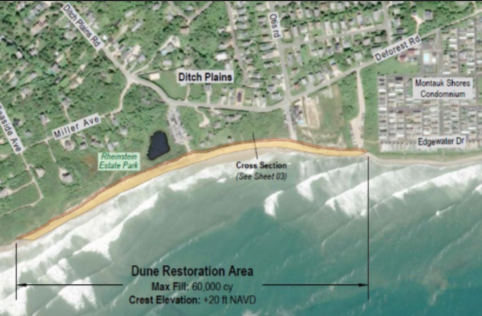
Where the Atlantic Crowns the East Coast’s Surf Kingdom
The Montaukett called it Choppaughshapaughhausuck—”the place where the brook opens.” Centuries before the first surfboard touched Long Island waters, they used these elevated bluffs as lookout points, scanning the Atlantic for approaching enemies. Today, the enemies have been replaced by approaching swells, and the watchers have traded lookout posts for shortboards. However, the essential character of this wild stretch remains unchanged: a place where ocean meets land with uncompromising force, demanding respect from anyone who enters its domain.
The Origin Story of Ditch Plains Beach
Ancient Roots Meet Maritime History
The name itself tells a story of geological destiny. “Ditch” refers to the channel where Lake Montauk once overflowed into the Atlantic, carving a natural outlet through the sandy plains. In 1927, developer Carl Fisher—the man who created Miami Beach—dynamited the lake’s northern end open to Block Island Sound, ending the natural overflow. Yet the ditch remains, occasionally carrying storm surge back to the lake during powerful nor’easters.
Before surfing arrived, this coastline served far more perilous purposes. In 1854, Congress established a lifeboat station at Ditch Plain, part of a network designed to rescue sailors from the treacherous shoals that claimed countless ships. Subsequently, the Life-Saving Station operated until 1915, when President Wilson merged it into the newly formed U.S. Coast Guard. Local fishermen and whalers—men experienced with self-bailing rowboats—crewed these stations, launching into heavy surf during storms to save lives.
The First Wave Riders
Richard Lisiewski gets credit as the first person to ride a surfboard in Montauk. In 1950, this New Jersey soldier stationed in the New York metropolitan area during the Korean War brought his board east. At the time, Ditch Plains was merely a quiet family beach, populated primarily by fishermen staying at the East Deck Motel and their families. The surf culture that would eventually define this stretch existed only in California and Hawaii.
Everything changed in the summer of 1966. The Beach Boys were singing about catching waves, and “The Endless Summer” had just premiered, supercharging surf culture nationwide. Meanwhile, a small tribe of pioneers—Rusty Drumm, Gene DePasquale, Roger Feit, Allan Weisbecker, and Tony Caramanico—were discovering that Montauk’s position at Long Island’s easternmost point created something remarkable: consistent, well-formed waves on an otherwise wave-starved coastline.
The Transformation That Defined Ditch Plains
The Medallion Crisis of 1967
Success brought conflict. By September 1965, a surfing competition at Ditch Plains drew over 300 surfers from across the eastern United States. The crowds unsettled the town. Furthermore, Councilman Howard Mund released a report cataloging incidents associated with these surfing crowds—vandalism, littering, parties, and people illegally sleeping on beaches.
At the start of the 1967 season, the East Hampton Town Board declared its intent to ban surfing in Montauk entirely. To the small but growing tribe of adolescent and draft-age surfers, this seemed absurd. Nevertheless, the threat was real. Perry B. “Chip” Duryea III joined forces with Reverend Howard Friend of the Montauk Community Church to smooth troubled waters.
The compromise? Medallions. Every surfer had to register with the town, pay five dollars, and wear a metal tag on a leather strap around their neck or attached to their shorts. The medallion system lasted approximately two weeks before proving impossible to enforce. Yet this brief experiment created what would become one of the new Montauk Surf Museum’s most treasured artifacts—a physical symbol of the moment when surf culture officially became part of Montauk’s identity.
The East Deck Era
During the 1960s and 1970s, the Ditch Plains trailer park served as ground zero for the nascent surf community. The park’s rented plots featured power poles for lights and record players. Fishermen occupied mobile homes and converted railroad cabooses on the west side; hippie surfers pitched tents on the east. Despite their differences, they coexisted peacefully.
Sam and Bea Cox had purchased the five-acre oceanfront property as a vacant lot in 1949, eventually moving cottages from Navy Road to create the East Deck Motel. For decades, the low-slung, 30-room establishment served fishermen and, increasingly, surfers. Beach towels hanging from motel railings signaled surfers were in residence. Additionally, the property hosted politicians and celebrities—Molly Shannon from “Saturday Night Live” was a regular.
Alice Houseknecht ran the East Deck for years after her husband Steve died in 1996. In 2013, she sold the property for a reported $15 million to a group led by J. Darius Bikoff, founder of Vitamin Water. The motel was demolished in 2016. Where generations of surfers once slept steps from the break, four oceanfront mansion lots now await development. The trailers that once sold for modest sums? Montauk Shores properties now fetch millions.
What Makes Ditch Plains Iconic
The Perfect Wave
Surfline compares Ditch Plains to San Onofre, California’s legendary longboard haven. The comparison holds merit. A rock-covered reef bottom creates waves with a distinctive “long-peeling” quality—soft, shapely A-frames that work for beginners while still offering legitimate barrels for experienced riders. Consequently, it remains perhaps the most consistent wave on Long Island’s 100-mile tail.
The lineup follows an unwritten pecking order. Near the jetty on the east end, waves break bigger and better—territory claimed by seasoned, aggressive surfers. Moving west toward Montauk Shores, smaller waves provide forgiveness for beginners. This isn’t a hard rule, which creates problems on crowded summer weekends.
“I’ve been all over the world and shot some of the most dangerous waves in the world,” photographer Steven Katsipis has observed. “The scariest wave ever is Ditch Plains on Fourth of July weekend.”
The Ditch Witch
In 1994, Lili Adams parked a food truck where the sand meets the parking lot. She was ahead of her time—the food truck concept barely existed then. Adams, formerly a chef at East Hampton restaurants and The Dock in Montauk for a decade, started making health food wraps before they became trendy.
The Ditch Witch became the original Montauk social networking site, predating Facebook by over a decade. Jimmy Buffett maintains a running tab. Lou Reed ordered egg and tomato with no bread so often that it became “The Lou Reed” on the menu. Christopher Walken’s appearance reportedly made Adams “freak out.” Chad Smith from the Red Hot Chili Peppers, John Slattery from “Mad Men”—they all lined up at the window.
In 2011, the town board nearly replaced Adams with a lobster roll vendor. The “Save the Ditch Witch” Facebook campaign generated so many calls to local officials that the decision was reversed. Adams retired in 2014 after her planned 20 years. Her children, Abby and Grant Monahan, purchased the business and have run it independently ever since, introducing poke bowls that have become customer favorites while keeping their mother’s vision alive.
This year marks the food truck’s 30th anniversary—a milestone celebrated by a community that understands exactly what it would mean to lose this institution. “Every year is a new challenge,” Abby Monahan has explained. “But this winter has been one of the worst storms I’ve seen in my lifetime.”
Experience Ditch Plains Today
What to Know Before You Go
Parking requires an East Hampton Town beach permit—a credential roughly as easy to obtain as Hamilton tickets were in 2015. Your alternatives include biking from town (a scenic 10-minute ride), parking at nearby Shadmoor State Park (a 20-minute walk), or accepting a cab fare. Trust the process; it’s worth the logistical effort.
Lifeguards patrol from Memorial Day through Labor Day, 9 AM to 5 PM, with weekend coverage extending through mid-September. The beach is surprisingly inclusive—a surf wheelchair is available during lifeguard hours. Dogs are welcome before 9 AM and after 6 PM.
When to Go
“Anytime is good, depending on what you’re looking for,” notes Montauk Lighthouse historian Henry Osmers. Summer weekends deliver crowded energy—a casting call for surf lifestyle brands. Weekday mornings offer a more serene experience. However, the hardcore understand that fall and winter bring the serious swells, generated by late-season hurricanes and Nor’easters.
The Insider Move
The third parking lot—locals call it “the Dirt Lot”—attracts the dawn patrol who understand that the best sessions happen while most people sleep. Arrive at first light. Order the power burrito with eggs, cheese, black beans, and guacamole from the Ditch Witch when they open. Notice the faded “surfers code” sign near the truck: “Give respect to gain respect.”
For the ultimate experience, visit during the annual Rell Sunn surf contest, named for the beloved Hawaiian teacher and graceful surfer who inspired women worldwide to paddle out for their fair share of waves. The event raises money for disadvantaged community members while embodying the spirit of aloha that Ditch Plains, at its best, represents.
The Legacy of Ditch Plains Beach
Influence on Hamptons Culture
Ditch Plains represents the un-Hampton within the Hamptons—a place where Manhattan’s power brokers shed their armor and weathered locals share waves with weekend warriors. While Southampton plays dress-up and East Hampton performs its careful ballet of old money, Montauk strips everything to essentials: wind, salt, and waves that don’t care about net worth.
The surf culture that emerged here produced many of the community’s most active citizens. More importantly, it created the experienced watermen and women who now make up the town’s frontline defense against accidental drowning. In February 2024, the Montauk Historical Society opened the Montauk Surf Museum in a building next to the lighthouse, formally acknowledging surfing’s influence on the community.
Why Ditch Plains Endures
Real estate developer Joe Farrell recently paid a record $17 million for an oceanfront home at Ditch Plains—proof that proximity to this wave commands premium value. Yet the beach itself remains stubbornly democratic. The Ditch Witch serves billionaires and beginners alike. The waves don’t ask for credentials.
Erosion threatens the dunes. Gentrification pressures the culture. The East Deck is gone. But every morning, surfers still paddle out at Choppaughshapaughhausuck, continuing a tradition that stretches back to 1950, to the Life-Saving Station crews of 1854, to the Montaukett scouts who first recognized this stretch as something worth watching.
The Insider’s Take: Skip the summer weekend chaos. Arrive on a Tuesday in late September, when the water still holds summer warmth but the crowds have retreated. Watch the sunrise from the cliffs at Shadmoor, then walk down to Ditch. Order the cold sesame noodles and an iced coffee at the Ditch Witch. Understand that you’re participating in something that has survived attempts to ban it, commercialize it, and gentrify it out of existence. Some places simply refuse to change their essential character.
Continue Your Hamptons Journey
- Feature & Partnership Inquiries
- Polo Hamptons Tickets & Sponsorships
- Join Our Email List
- Subscribe to Print Edition
- Support Social Life Magazine
Related Articles
Author

Written by
Recent Posts
Unlocking the Berkshires
Dalia Forman Design
Alberto Luzzi
How to Pick a Homecoming Dress for Your Body Type and Feel Amazing in It
How to Prepare a Home for Sale When Major Repairs Are Not Affordable
Categories
- Art
- Articles
- Business of Luxury
- Celebrities
- Culture
- Entertainment
- Events
- Faces of Summer 2026
- Fashion
- Fashion & Style
- Featured
- Finance
- Food, Spirits, Wine
- Hamptons
- Hamptons Celebrities
- Health
- Health & Beauty
- Lifestyle
- Luxury Lifestyle
- Press
- Profiles
- Real Estate
- Technology
- The Chronicles
- Travel
- Uncategorized
- Weddings