
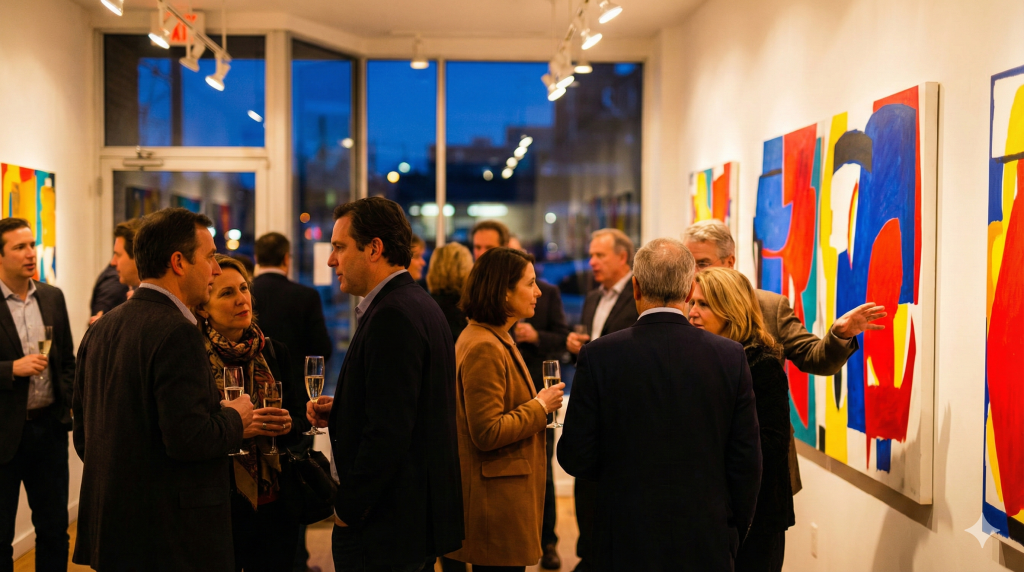
The collector leans forward at the Christie’s preview, studying a canvas where a cartoon character meets a soup can meets a $14.8 million price tag. She’s looking at KAWS’s The KAWS Album, which shattered records in 2019 by reimagining the Beatles’ Sgt. Pepper cover with Simpsons characters. The work crystallizes a question serious collectors confront: which pop art artists belong in a portfolio built for both appreciation and longevity?
The Founding Generation: Pop Art Artists Who Built the Canon
Every serious collection begins with understanding the source material. These five artists established the visual vocabulary and market dynamics that continue shaping pop art today. Their works anchor evening sales at major auction houses and provide the benchmarks against which all subsequent practitioners are measured.
Andy Warhol (1928-1987)
No discussion of pop art artists can bypass the movement’s defining figure. Warhol transformed commercial imagery into fine art, manufacturing celebrity alongside Campbell’s soup cans. His 2022 record of $195 million for Shot Sage Blue Marilyn established him as the most valuable twentieth-century artist at auction. According to MyArtBroker, his print market demonstrates a 27% compound annual growth rate over five years.
Warhol’s Montauk estate hosted Jackie Kennedy, the Rolling Stones, and Truman Capote—cementing connections between pop art and East End social hierarchies that persist today. Entry points range from $5,000 for authorized prints to eight figures for major paintings. Consequently, his market offers genuine accessibility alongside museum-quality trophy pieces.
Roy Lichtenstein (1923-1997)
Lichtenstein translated comic book aesthetics into monumental canvases, his hand-painted Ben-Day dots becoming instantly recognizable signatures. His Southampton studio produced works that now command prices exceeding $100 million. In 2017, Masterpiece (1962) sold for $165 million privately, ranking among the most expensive artworks ever traded.
The artist’s technical precision appeals to collectors who appreciate visible craft alongside conceptual sophistication. His prints offer accessible entry between $10,000 and $50,000 for strong examples. Nevertheless, unique paintings rarely surface below seven figures, making Lichtenstein a blue-chip hold requiring significant capital.
Ed Ruscha (b. 1937)
Ruscha bridges pop art’s commercial imagery with conceptual art’s intellectual rigor. His word paintings transform typography into meditation, while his artist’s books like Twentysix Gasoline Stations pioneered new formats. In November 2024, Standard Station, Ten-Cent Western Being Torn In Half achieved $68.2 million at Christie’s New York—a new record for the artist.
Now 87, Ruscha continues producing significant work, making him one of the few living pop art artists with genuine historical standing. His 2025 retrospective traveling from MoMA to LACMA reinforces institutional support. Prints start around $2,000 for open editions, while unique paintings command millions. This range makes Ruscha accessible to developing collectors while rewarding major acquisitions.
Jasper Johns (b. 1930)
Johns preceded pop art formally but enabled its emergence by demonstrating that everyday imagery—flags, targets, numbers—could sustain serious artistic inquiry. His Flag paintings remain among the most valuable American artworks, with major examples exceeding $100 million. At 94, he continues working, his market supported by decades of institutional validation.
Johns’s prints represent exceptional value for collectors. His technical mastery of printmaking produced editions that rival paintings in complexity. Works range from $5,000 for later lithographs to $500,000 for significant early prints. Furthermore, his historical position ensures continued scholarly attention regardless of market fluctuations.
Claes Oldenburg (1929-2022)
Oldenburg transformed everyday objects—typewriters, clothespins, hamburgers—into monumental sculptures that populate public spaces worldwide. His soft sculptures inverted expectations of form and material, while his proposals for colossal monuments imagined cities transformed by pop sensibility. Following his 2022 death, his market has stabilized with renewed collector interest.
Prints and multiples offer the primary entry point, ranging from $1,000 to $25,000. Major sculptures require institutional-level budgets. However, his smaller plaster works and drawings occasionally surface at accessible prices, rewarding patient collectors who understand his significance.
The Neo-Pop Generation: Pop Art Artists Who Extended the Legacy
These artists emerged in the 1980s and 1990s, applying pop strategies to new cultural contexts. They command strong markets while remaining more accessible than founding figures. Collectors building comprehensive holdings often find optimal value-to-significance ratios in this tier.
Jeff Koons (b. 1955)
Koons amplified pop’s engagement with consumer culture, producing sculptures that achieved the highest price ever paid for a living artist’s work: $91.1 million for Rabbit in 2019. His balloon animals, vacuum cleaners, and oversized tchotchkes provoke debate while commanding undeniable market power.
Koons’s editions offer significant entry points. His balloon dog sculptures in various sizes and materials range from $5,000 for smaller authorized editions to millions for unique works. Nevertheless, his market has shown volatility, requiring collectors to exercise judgment about timing and selection. Works with strong exhibition history and provenance outperform speculative acquisitions.
Takashi Murakami (b. 1962)
Murakami’s “Superflat” aesthetic merges traditional Japanese painting with anime and consumer culture, creating works that function equally in museums and on Louis Vuitton handbags. His smiling flowers and Mr. DOB characters have achieved global recognition. The three top-selling living Asian artists at auction are all Japanese, with Murakami, Yayoi Kusama, and Yoshitomo Nara dominating the category.
According to market analysis, Murakami’s print turnover grew 160% between 2015 and 2024. Entry points start under $1,000 for offset prints, with signed editions commanding $5,000 to $50,000. Paintings have achieved $15 million at auction. This accessibility combined with institutional recognition makes Murakami attractive for collectors building positions gradually.
KAWS (b. 1974)
Born Brian Donnelly, KAWS evolved from graffiti artist to global phenomenon, his Companion figures appearing as gallery sculptures, collectible toys, and massive inflatables floating in Hong Kong harbor. His 2019 record of $14.8 million for The KAWS Album announced his arrival as a market force transcending street art categories.
KAWS’s market demonstrates the power of accessibility. Vinyl figures sell from $100 to $10,000, prints range $1,000 to $50,000, and paintings command six to seven figures. However, his print market shows a modest 3% compound annual growth rate recently—suggesting maturation rather than speculation. Furthermore, his collaborations with brands from Uniqlo to Nike extend his cultural footprint beyond traditional art world boundaries.
Contemporary Pop Art Artists: Names Building Momentum
These emerging practitioners apply pop strategies to current cultural conditions. Their markets remain accessible while institutional recognition grows. Collectors seeking both discovery and upside find opportunities here that blue-chip holdings cannot provide.
Yoshitomo Nara (b. 1959)
Nara’s deceptively simple paintings of wide-eyed children with weapons and attitude have achieved surprising market power. His works command prices exceeding $25 million at auction, placing him among the most valuable living artists globally. The emotional accessibility of his imagery attracts collectors who might find conceptual work alienating.
Prints offer entry from $500 to $15,000, while drawings and smaller paintings surface in the $50,000 to $500,000 range. His 2020 record of $25 million for Knife Behind Back demonstrated collector appetite for his work at the highest levels. Nevertheless, recent market corrections suggest careful timing matters when pursuing major pieces.
Keith Haring (1958-1990)
Haring’s subway drawings and mural projects brought pop art to public spaces with unprecedented accessibility. His early death from AIDS-related illness at 31 limited his output while amplifying his cultural significance. According to Artprice, his auction turnover increased 22% in 2024, reaching $39.1 million.
Prints dominate his accessible market, ranging $1,000 to $50,000 for authenticated examples. Unique works rarely surface below six figures. His Pop Shop editions—originally sold at his downtown Manhattan store—have appreciated substantially while remaining more accessible than gallery works. Consequently, Haring offers both historical significance and active market liquidity.
Banksy (b. 1974)
The anonymous street artist has achieved unprecedented market power while maintaining mystery about his identity. His 2018 auction stunt—shredding Girl with Balloon moments after its sale—demonstrated his ability to manipulate the very systems that price his work. The shredded piece subsequently resold for £18.6 million in 2021.
Authentication challenges complicate Banksy collecting. Works must come with Pest Control certification, his authentication body. Prints with proper documentation range $20,000 to $500,000 depending on edition and condition. His market has shown correction from 2021 peaks, suggesting current opportunities for patient collectors who verify provenance carefully.
Mr. Brainwash (b. 1966)
Thierry Guetta achieved notoriety through the documentary Exit Through the Gift Shop, which questioned whether his overnight art career was genuine or elaborate prank. Regardless, his market exists: large-scale works sell for $50,000 to $200,000, while prints offer entry from $500 to $5,000.
Mr. Brainwash represents a particular collector psychology—those who appreciate pop art’s democratizing impulse and don’t require institutional validation. His accessibility and visibility (large murals in Los Angeles, Miami, and elsewhere) create name recognition that drives demand. However, critical reception remains mixed, making this an acquisition for collectors confident in their own judgment.
Building a Pop Art Artists Collection: Strategic Considerations
Assembling holdings across this field requires balancing multiple factors. Historical significance matters for long-term value, but current market momentum affects near-term liquidity. Visual coherence creates stronger collections than random accumulation, yet over-concentration in single artists increases risk.
Consider building positions across generations. A Warhol print anchors historical legitimacy. A Murakami or KAWS work demonstrates contemporary engagement. An emerging artist—carefully selected—provides discovery potential. This layered approach creates conversation among works while diversifying market exposure.
Furthermore, condition and provenance matter more than impulse suggests. A pristine Lichtenstein print outperforms a damaged Warhol painting at comparable prices. Works with exhibition history and documented ownership chains command premiums that widen during uncertain markets. The discipline to walk away from flawed opportunities separates successful collectors from frustrated ones.
Where Pop Art Artists Meet the Hamptons
The East End’s art scene provides direct access to works by many artists discussed here. Southampton and East Hampton galleries regularly mount pop art exhibitions, while auction house pop-up locations during summer months offer preview opportunities unavailable elsewhere.
Building relationships with Hamptons dealers creates advantages beyond mere access. Advisors who understand your collection goals can alert you to works before public offering. Gallery directors attending the same summer events provide ongoing education about market developments. These connections compound over time, transforming casual collecting into informed practice.
Understanding pop art artists ultimately means recognizing that the movement never ended—it simply evolved. The strategies Warhol pioneered continue shaping contemporary practice, from KAWS’s toy collaborations to Murakami’s fashion partnerships. Collectors who grasp this continuity build holdings that remain culturally relevant rather than merely historically significant.
Continue Your Collecting Journey
Social Life Magazine connects discerning collectors with the Hamptons art world.
- Inquire About Gallery Partnerships
- Subscribe for Art Market Updates
- Experience Polo Hamptons
- Print Subscription
More from The Collector’s Guide to Pop Art
- Previous: Andy Warhol Pop Art: What His Montauk Years Reveal About Collecting
- Next: Roy Lichtenstein Pop Art: The Southampton Master Collectors Still Chase
Author

Written by
Recent Posts
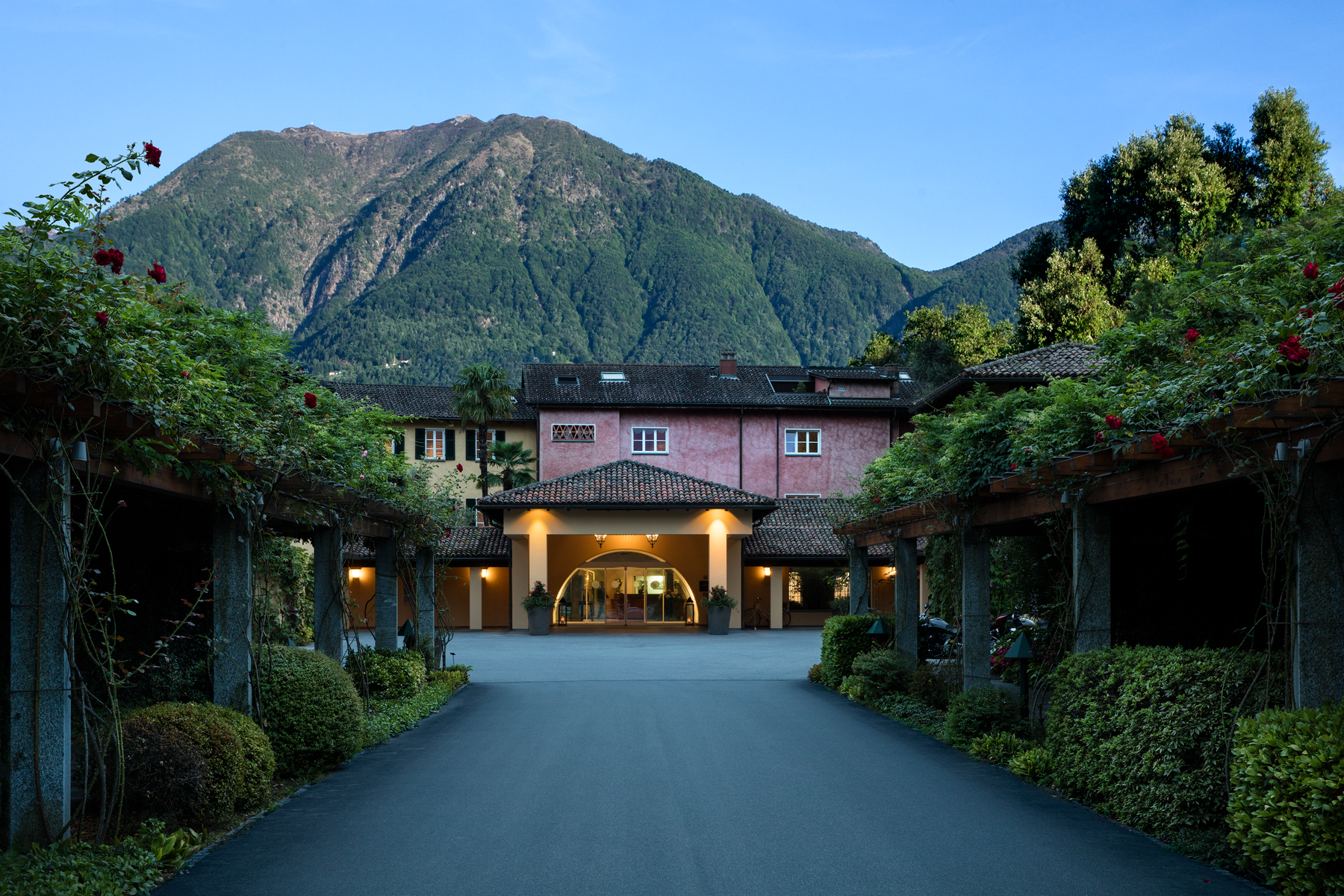
Jetsetter Style: Castello del Sole
The First Decision After a Collision Can Be the Most Important One
Two Weeks in Rome and Beyond: Turkish Airlines Itineraries from Boston, Chicago and Onward to India

Top 10 Hair Transplant Clinics in Turkey 2026

Artist Alley to Online Store: How Convention Artists Can Keep Selling After the Event
Categories
- Art
- Articles
- Business of Luxury
- Celebrities
- Culture
- Entertainment
- Events
- Faces of Summer 2026
- Fashion
- Fashion & Style
- Featured
- Finance
- Food, Spirits, Wine
- Hamptons
- Hamptons Celebrities
- Health
- Health & Beauty
- Lifestyle
- Luxury Lifestyle
- Press
- Profiles
- Real Estate
- Technology
- The Chronicles
- Travel
- Uncategorized
- Weddings