
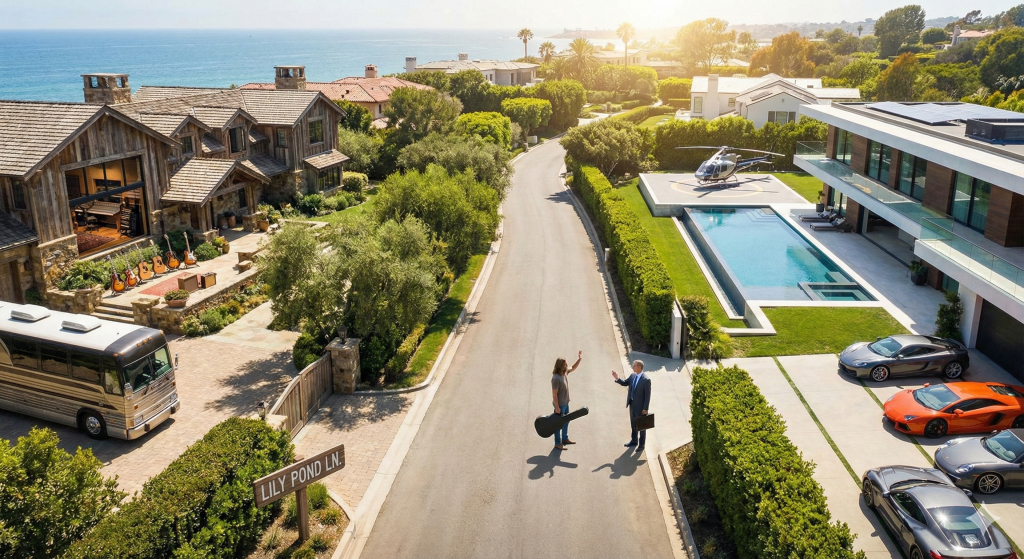
Lily Pond Lane in East Hampton begins at Main Beach and ends where the money gets serious. Jon Bon Jovi has lived here since 2004, raising four kids in a 1920s estate originally built by the developer who gave New York the Winter Garden Theatre. His neighbors include Steven Spielberg, Jerry Seinfeld, and David Geffen. They wave when they pass each other. They don’t discuss business.
The Geography of Lily Pond Lane in East Hampton
Lily Pond Lane runs east from Ocean Avenue toward Georgica Pond, curving through what locals consider the most exclusive residential corridor on the East End. The street spans approximately one mile of prime oceanfront and pond-front estates. Properties on the ocean side command premiums. However, pond-side positions offer privacy that some residents value more than views.
The architecture tells a story of accumulated wealth. J. Greenleaf Thorp designed many original estates in the early 1900s. He’s the same architect behind Grey Gardens and the Georgica Road compound Calvin Klein sold for $85 million in 2021. Subsequently, these homes carry historical weight that newer construction cannot replicate.
Main Beach sits at the western terminus—the same beach that appears on every “Best Hamptons Beaches” list. Georgica Beach anchors the eastern approach. Between them, hedgerows rise twelve feet high, security cameras blink discreetly, and driveways curve out of sight. The message is clear: you’re welcome to drive through, but you’re not invited to stop.
The Residents: Who Lives on Lily Pond Lane
Jon Bon Jovi
The rockstar purchased the EC Potter House in 2004 for $7.6 million—a relative bargain by today’s standards. The 11-bedroom estate sits on Lily Pond Lane’s ocean side, built by E. Clifford Potter, a real estate developer responsible for Park Avenue apartment buildings and the Winter Garden Theatre.
Bon Jovi has called it his “favorite place on earth to be.” Moreover, he’s become embedded in the community in ways most celebrity residents avoid. During COVID, he launched a food bank serving local families facing food insecurity. His son Jesse created Hampton Water rosé, naming the brand after decades of family summers on this street. The Bongiovi family represents something rare on Lily Pond Lane: wealth that chose to integrate rather than isolate.
Net worth: Approximately $410 million, primarily from four decades of album sales, touring, and real estate investments.
Steven Spielberg
The director’s Quelle Farm compound occupies six acres on Georgica Pond, positioned at Lily Pond Lane’s eastern edge. Charles Gwathmey designed the guest house—the same architect responsible for some of the Hamptons’ most significant modernist residences.
Spielberg values privacy above most things. Nevertheless, his estate has hosted notable guests. President Clinton stayed at Quelle Farm in 1998 and 1999. The property features private beach access, extensive gardens, and enough distance from the road that telephoto lenses struggle to capture anything useful. Additionally, his wife Kate Capshaw has made the compound a genuine family home where their seven children have spent formative summers.
Net worth: Approximately $4 billion, derived from directing credits, DreamWorks equity, and strategic investments in technology companies.
Jerry Seinfeld
The comedian purchased his 12-acre compound from Billy Joel in 2000 for a reported $32 million. The property includes a 22-car garage—appropriate for a collector whose automobile obsession rivals his comedy career. Furthermore, the estate features extensive gardens, a pool, guest quarters, and enough land to ensure complete privacy from neighboring properties.
Seinfeld represents the Lily Pond Lane resident who summers seriously. He and wife Jessica have raised their three children here, maintaining a presence that spans more than two decades. Consequently, they’ve achieved something difficult on this street: they’ve become locals.
Net worth: Approximately $950 million, primarily from Seinfeld syndication rights, Netflix deals, and comedy touring.
David Geffen
The entertainment mogul purchased a $70 million oceanfront compound on Lily Pond Lane in 2016. Previously, he owned a property on adjacent West End Road, which he sold for $67.3 million—a $17 million profit after just two years of ownership.
Geffen co-founded DreamWorks with Spielberg and Jeffrey Katzenberg, making the proximity to his former business partner unsurprising. His compound represents one of the highest-priced transactions in Lily Pond Lane history. Moreover, his presence signals the street’s evolution from old-money summer colony to global wealth magnet.
Net worth: Approximately $9.9 billion, derived from record label sales, film production, and strategic investments.
Martha Stewart (Former Resident)
Stewart sold her Lily Pond Lane property in 2021 for $8.4 million. She’d owned the oldest house on the street—”the wreck of Lily Pond Lane,” she once called it, describing its condition at purchase. The 25-room estate underwent complete renovation under her direction, emerging as a showcase for her design sensibility.
Her departure marked a transition. Subsequently, the property’s new owners inherited both a meticulously renovated home and the association with Stewart’s taste-making legacy.
The Unwritten Rules of Lily Pond Lane
Residents of Lily Pond Lane operate under protocols that nobody codifies but everyone understands. First: no ostentatious parties. Diddy’s famous White Parties happened elsewhere—his estate sat on a different stretch of East Hampton oceanfront. The Lily Pond Lane aesthetic favors discretion over display.
Second: hedge height matters more than house size. The landscaping creates privacy barriers that function as social boundaries. Neighbors can go entire summers without meaningful interaction. That’s considered a feature, not a bug. Furthermore, hedge maintenance crews operate with the same discretion as household staff—seen but not discussed.
Third: beach access is not shared. While Main Beach and Georgica Beach are technically public, the private beach frontage along Lily Pond Lane properties belongs exclusively to owners. No casual wandering. No borrowed towel space. The sand itself becomes another privacy layer.
Fourth: local restaurants keep reservations confidential. When Spielberg books at Nick & Toni’s or Bon Jovi appears at a Hamptons restaurant, staff understand the expectation. Discretion earns loyalty. Leaks end relationships.
Fifth: staff sign NDAs as standard practice. Housekeepers, landscapers, pool technicians, security personnel—anyone with regular access operates under legal confidentiality agreements. Consequently, Lily Pond Lane rarely appears in tabloid coverage despite the concentration of famous residents.
The Historical Weight Behind the Address
Lily Pond Lane’s prestige predates its current celebrity residents by a century. The Potter brothers—E. Clifford and Frederick—developed Park Avenue apartment buildings before creating their own summer colony on the East End. They hired J. Greenleaf Thorp to design estates that would establish architectural precedent for generations.
Thorp’s influence extends beyond Lily Pond Lane. Nevertheless, his work here set the template: shingle-style elegance, integration with landscape, scale that impresses without overwhelming. The homes he designed in the early 1900s remain among the most valuable on the street, commanding premiums for historical significance that newer construction cannot match.
East Hampton’s “Summer Colony” roots trace to the 1880s, when artists and writers discovered the light and landscape. Subsequently, industrialists followed. Then financiers. Then entertainment figures. Each wave added wealth without displacing predecessors. Lily Pond Lane became the geographic expression of that accumulation.
The Rose family owned 1 Lily Pond Lane for nearly half a century. Daniel Rose, a real estate developer, and his late wife Joanna, a philanthropist and art collector, represented the old-guard Hamptons resident—present for decades, integrated into institutional life, leaving legacies beyond their property lines. That continuity defines the street’s character.
The Investment Reality of Lily Pond Lane East Hampton
Properties on Lily Pond Lane rarely hit public markets. Most transactions occur off-market, broker-to-broker, with principals who already know each other or share mutual connections. Consequently, published price data understates actual market activity.
Holding periods measure in decades rather than years. Jerry Seinfeld has owned his compound for 25 years. The Bongiovi family has been on the street for 20 years. Spielberg’s tenure exceeds 30 years. These aren’t investment properties—they’re legacy positions. Furthermore, families pass estates to heirs rather than selling at market peaks.
Property taxes run $200,000 or more annually for typical Lily Pond Lane estates. Insurance, landscaping, security, and staff add significantly to carrying costs. A $40 million property might cost $500,000 or more per year to maintain properly. Consequently, the street selects for ongoing wealth, not one-time liquidity events.
For prospective buyers, the calculus differs from typical real estate analysis. Lily Pond Lane represents wealth preservation rather than wealth building. The address signals arrival at a level most people never reach. Moreover, the neighbors provide social capital that transcends financial returns. You’re not buying a house—you’re buying membership.
The Georgica Pond Connection
Lily Pond Lane’s eastern terminus connects to the Georgica Pond ecosystem, where additional celebrity estates cluster. Beyoncé and Jay-Z purchased their “Pond House” on adjacent Briar Patch Road for $26 million in 2017. The property sits close enough to Spielberg’s compound that the director could theoretically wave across the water.
Beyoncé recorded her self-titled 2013 album at the Hamptons estate—a detail that transformed real estate into music history. The couple’s combined net worth exceeds $2.5 billion. Their presence illustrates how Georgica Pond has become an extension of Lily Pond Lane’s prestige, creating a broader enclave of concentrated wealth.
Calvin Klein maintained a Georgica Road compound before selling in 2021. Ronald Perelman, the Revlon billionaire, owns substantial oceanfront nearby. The geography creates natural clustering—each famous neighbor validates the next, establishing social proof that attracts additional wealth. Subsequently, the area has become self-reinforcing in ways that resist economic downturns.
What Lily Pond Lane Reveals About American Wealth
Lily Pond Lane in East Hampton functions as a laboratory for observing how extreme wealth operates. The residents didn’t inherit their positions on this street—Spielberg built DreamWorks, Seinfeld built a comedy empire, Bon Jovi built a rock career spanning four decades. They earned entry. Nevertheless, they now participate in protocols that predate their arrival by a century.
The street teaches something counterintuitive: at certain wealth levels, display becomes liability. The hedge heights, the NDAs, the off-market transactions—all serve to reduce visibility rather than increase it. Status on Lily Pond Lane isn’t demonstrated through spectacle. It’s demonstrated through absence of need for spectacle.
For the newly wealthy considering Hamptons real estate, choosing between East Hampton and Southampton often comes down to this question: do you want to be seen, or do you want to disappear? Lily Pond Lane answers definitively. The most powerful address on the East End is the one nobody talks about.
Jon Bon Jovi’s house isn’t the most expensive on Lily Pond Lane. It isn’t the largest. However, after 20 years, it might be the most rooted. While neighbors flip estates for nine-figure profits, Bon Jovi raised his family here. His son built a rosé empire named after the street. His food bank fed local families during a pandemic.
Lily Pond Lane is where American wealth comes to prove it has taste. What happens after that depends entirely on who’s living there. Some collect art. Some collect houses. Bon Jovi collected a life. That might be the most valuable thing on the street.
Stay Connected with Social Life Magazine
- Contact Social Life Magazine
- Experience Polo Hamptons
- Subscribe to Our Newsletter
- Print Subscription
- Support Our Journalism ($5)
Explore Hamptons Real Estate
Interested in Hamptons properties? Contact us for private estate inquiries and off-market opportunities.
Related Articles
- East Hampton vs. Southampton: Choosing Your Hamptons Base – The ultimate guide to selecting your summer destination
- Best Hamptons Hotels 2026 – Where to stay before you buy
Author

Written by
Recent Posts
What Goes Into Planning a Professional Furnace Installation?
Why Sports Card Collecting Is More Than Just a Hobby
From Signature Scents to Scent Wardrobes: The Evolution of Personal Fragrance

Beyond the Booth: How Exhibition Design Is Creating New Brand Experiences
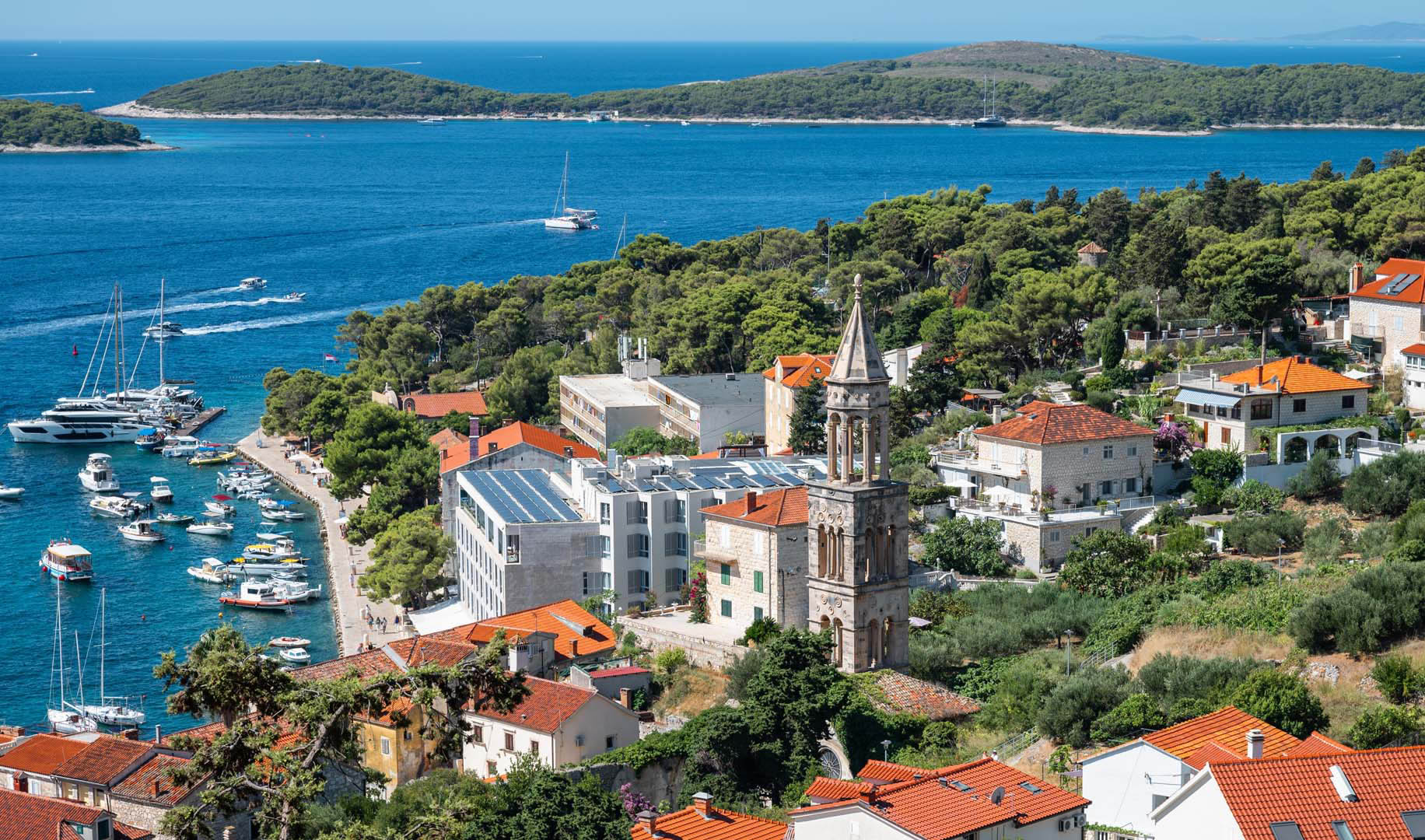
Trading the Hamptons for Hvar: A Summer on Croatia’s Most Glamorous Island
Categories
- Art
- Articles
- Business of Luxury
- Celebrities
- Culture
- Entertainment
- Events
- Faces of Summer 2026
- Fashion
- Fashion & Style
- Featured
- Finance
- Food, Spirits, Wine
- Hamptons
- Hamptons Celebrities
- Health
- Health & Beauty
- Lifestyle
- Luxury Lifestyle
- Press
- Profiles
- Real Estate
- Technology
- The Chronicles
- Travel
- Uncategorized
- Weddings