
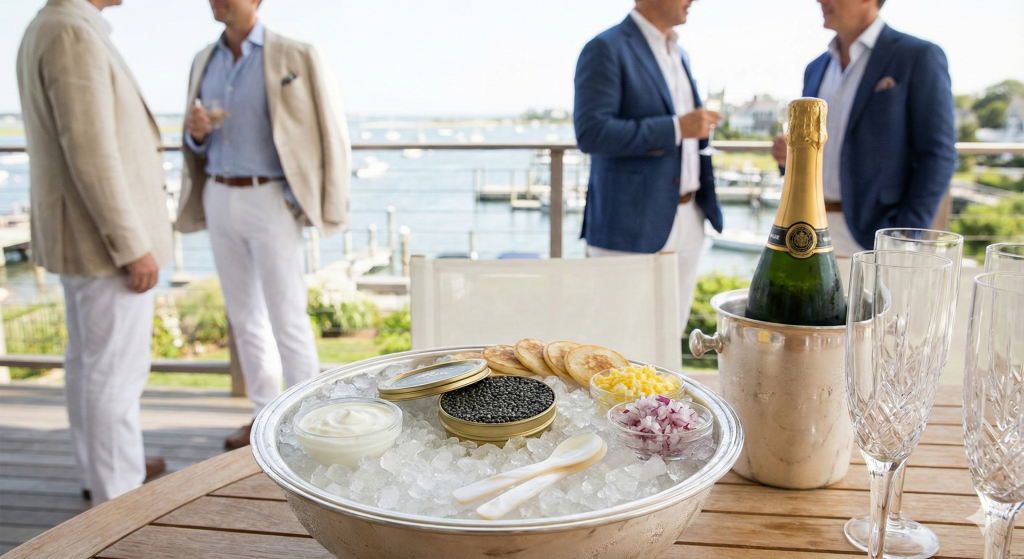
The hedge fund manager slides a mother-of-pearl spoon across the table. No metal. Never metal. That single gesture separates people who understand caviar from those who merely buy it. In the Hamptons, where summer entertaining functions as competitive sport, serving the wrong roe announces amateur status louder than a Hampton Jitney bus horn.
Yet here’s what most luxury guides won’t tell you: the caviar market has shifted dramatically since 2020. Wild Caspian stocks remain depleted. Sustainable aquaculture now produces specimens rivaling legendary Iranian reserves. Prices have stratified into distinct tiers. Understanding these dynamics separates savvy hosts from those overpaying for yesterday’s prestige.
What Is Caviar and Why Does It Command Premium Prices?
Caviar consists of salt-cured sturgeon roe, harvested from fish that can take up to twenty years to mature. This biological reality creates inherent scarcity. Unlike salmon roe or lumpfish eggs (both marketed as “caviar” to uninformed buyers), true caviar comes exclusively from sturgeon species. The distinction matters enormously at discerning dinner tables.
According to Bain & Company’s luxury market analysis, ultra-premium food experiences now represent the fastest-growing segment of experiential luxury. Caviar anchors this category. First, supply constraints create genuine scarcity. Second, proper appreciation requires knowledge most consumers lack. Third, the product deteriorates rapidly, making freshness a status marker itself.
What Does Caviar Taste Like? The Flavor Profile Decoded
First-time tasters often describe caviar as “fishy” and wonder why anyone pays premium prices for salt and ocean. They’re eating it wrong. Properly served caviar at ideal temperature (28-32°F) delivers an entirely different experience. The eggs should pop gently against your palate, releasing waves of briny sweetness followed by a clean, nutty finish that lingers without heaviness.
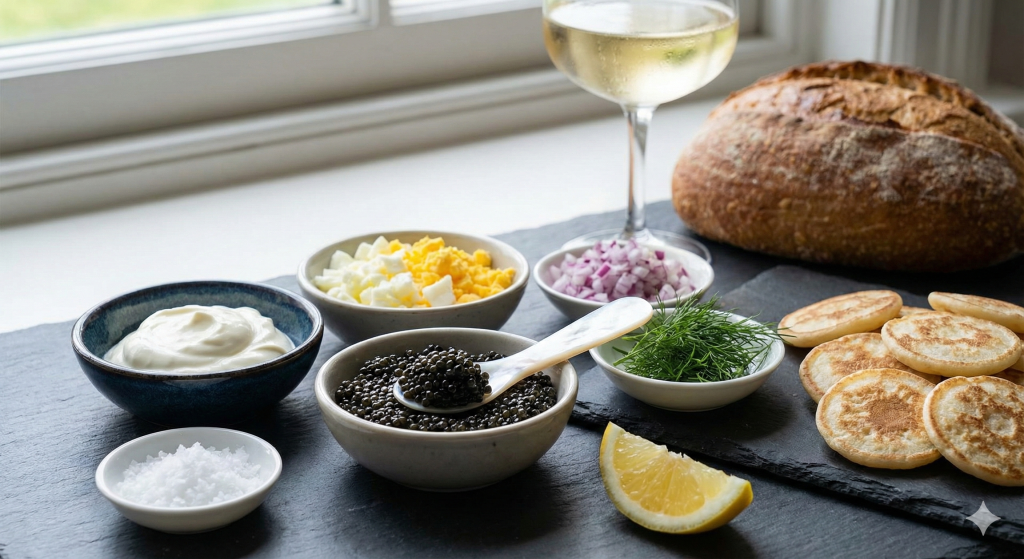
Different sturgeon species produce dramatically different flavor profiles. Beluga offers the largest eggs and most delicate, buttery taste. Osetra delivers more complex, nutty notes with hints of the sea. Sevruga provides intense brininess in smaller pearls. These aren’t subtle differences. Anyone claiming otherwise hasn’t tasted quality product.
Temperature matters critically. Harvard Business Review’s research on luxury consumption demonstrates that context shapes perception. Caviar served too warm tastes oily and aggressive. Too cold numbs the delicate flavors entirely. This explains why Hamptons hosts obsess over proper service rather than simply purchasing expensive tins.
Beluga Caviar vs. Osetra: The Species That Define Status
Beluga caviar once dominated luxury tables exclusively. The Huso huso sturgeon produces the largest eggs, pale gray to black, with unmatched creaminess. However, overfishing pushed wild Caspian beluga toward extinction. The U.S. banned imports in 2005. Today, legal beluga comes from carefully monitored aquaculture operations in Europe and Asia.
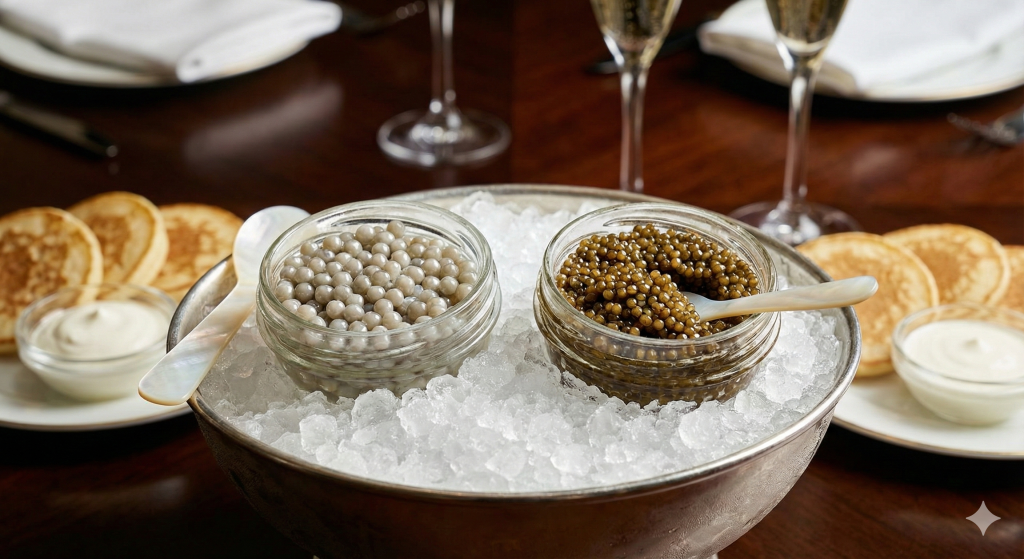
For informed buyers, osetra often represents superior value. The Acipenser gueldenstaedtii produces medium-sized golden to brown eggs with remarkable depth. Many caviar connoisseurs now prefer osetra’s complexity to beluga’s simpler richness. As McKinsey’s consumer insights note, sophisticated consumers increasingly prioritize nuanced quality over simple prestige markers.
Looking for Hamptons dining spots that serve exceptional caviar? Browse our guide to the best restaurants in the Hamptons for insider recommendations on where to experience proper service.
Understanding Sturgeon Caviar: Beyond the Three Major Species
While beluga, osetra, and sevruga dominate conversations, several other sturgeon caviar varieties produce exceptional results. Kaluga (river beluga) delivers eggs nearly matching Caspian beluga in size and texture. Siberian sturgeon offers accessible entry pricing with respectable quality. American hackleback provides domestic sourcing with distinct, earthy character.
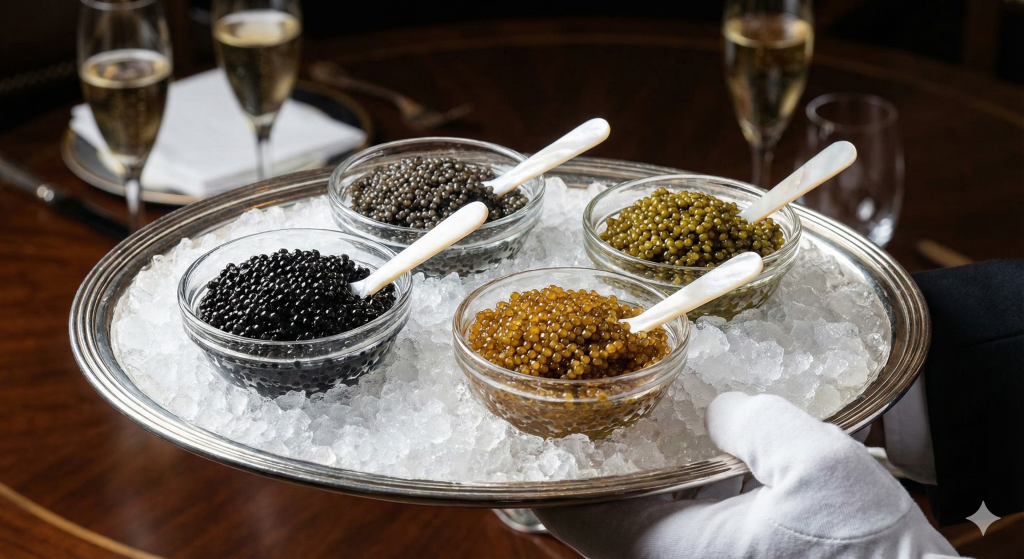
Sustainability matters increasingly to affluent consumers. Wild sturgeon populations remain critically endangered across most species. Responsible aquaculture operations now produce caviar meeting or exceeding historical wild-caught quality. Smart hosts verify sourcing rather than assuming premium price guarantees ethical production.
The Hamptons lifestyle increasingly emphasizes conscious consumption. Explore how local establishments approach sustainable luxury in our coverage of North Fork wine experiences, where similar values drive elevated experiences.
Caviar Price Guide: What Quality Actually Costs in 2026
Caviar price follows predictable tiers once you understand the market. Entry-level domestic caviar (paddlefish, hackleback) runs $50-80 per ounce. Mid-tier Siberian and white sturgeon costs $80-150 per ounce. Premium osetra commands $150-250 per ounce. Top-grade beluga from reputable farms reaches $300-500 per ounce.
Price alone doesn’t guarantee quality. Freshness, handling, and sourcing matter enormously. A well-handled osetra from a respected producer often outperforms poorly stored beluga from questionable origins. BCG’s analysis of luxury premiums confirms that informed consumers increasingly decode these distinctions.
For dinner party planning, calculate one to two ounces per guest for caviar course service. Generous hosts budget two ounces minimum for intimate gatherings where the roe stars. This means a dinner for eight with premium osetra runs approximately $2,400-4,000 for caviar alone. Sticker shock separates serious entertainers from pretenders.
How Hamptons Hosts Actually Serve Caviar
The mother-of-pearl spoon isn’t affectation. Metal oxidizes on contact with caviar, creating metallic off-flavors that ruin expensive product. Bone, horn, gold, or mother-of-pearl preserve the intended taste. This single detail immediately signals whether a host understands the product.
Temperature requires equal attention. Remove caviar from refrigeration exactly fifteen to twenty minutes before service. The tin should rest on crushed ice throughout presentation. Traditional accompaniments include blinis, crème fraîche, and minced egg. However, purists argue exceptional caviar needs nothing but the right spoon.
Summer entertaining in the Hamptons demands attention to heat. Outdoor service requires extra ice and careful timing. For more guidance on elevated hosting, explore our Hamptons lifestyle coverage featuring the region’s most celebrated hosts.
Where to Buy Caviar in the Hamptons and Beyond
Local sourcing ensures freshness and allows inspection before purchase. Established Hamptons specialty food retailers maintain proper cold chain storage and turnover product regularly. Ask when the tin arrived and from which producer. Reputable sellers answer these questions immediately. Hesitation suggests problems.
Online purchasing works for advance planning. Leading producers ship overnight with gel packs ensuring temperature control. Never accept caviar delivered warm. Never purchase product close to expiration. Unopened tins last approximately four to six weeks refrigerated. Once opened, consume within three days maximum.
Planning a significant event? Our Polo Hamptons events feature caviar service from the region’s finest purveyors. Contact our team to learn how premium caviar anchors truly memorable summer gatherings.
The Bottom Line on Caviar for Discerning Hosts
Caviar separates those who understand luxury from those who merely purchase it. The product rewards knowledge with experiences that transcend simple consumption. Understanding sturgeon species, recognizing quality indicators, mastering proper service, and knowing fair caviar prices transforms expensive purchases into genuine status markers.
For Hamptons entertainers, caviar represents perhaps the highest-stakes food decision of summer season. Get it right, and guests remember your table for years. Get it wrong, and they remember that too. The difference lies not in spending more, but in knowing more.
For questions about caviar or to place a special order, contact contributor Lisa Singer at [email protected] or message her on Instagram @laboutiqueducaviar
Elevate Your Summer Table: Subscribe to Social Life Magazine for insider access to the Hamptons’ most coveted entertaining secrets. Join our exclusive community of discerning hosts who understand that details define luxury. Subscribe now or contact us for premium advertising and partnership opportunities.
Related Reading:
Author

Written by
Recent Posts

5 Mindful Wellness Trends Redefining Modern Self-Care This Season
What to Look for in a Hairdresser on the Gold Coast

hiTechMODA Season 16
How to Keep Your Personal Number Private When Booking Events, Rentals and Services
Understanding Compensatory Damages in a Personal Injury Case
Categories
- Art
- Articles
- Business of Luxury
- Celebrities
- Culture
- Entertainment
- Events
- Faces of Summer 2026
- Fashion
- Fashion & Style
- Featured
- Finance
- Food, Spirits, Wine
- Hamptons
- Hamptons Celebrities
- Health
- Health & Beauty
- Lifestyle
- Luxury Lifestyle
- Press
- Profiles
- Real Estate
- Technology
- The Chronicles
- Travel
- Uncategorized
- Weddings