
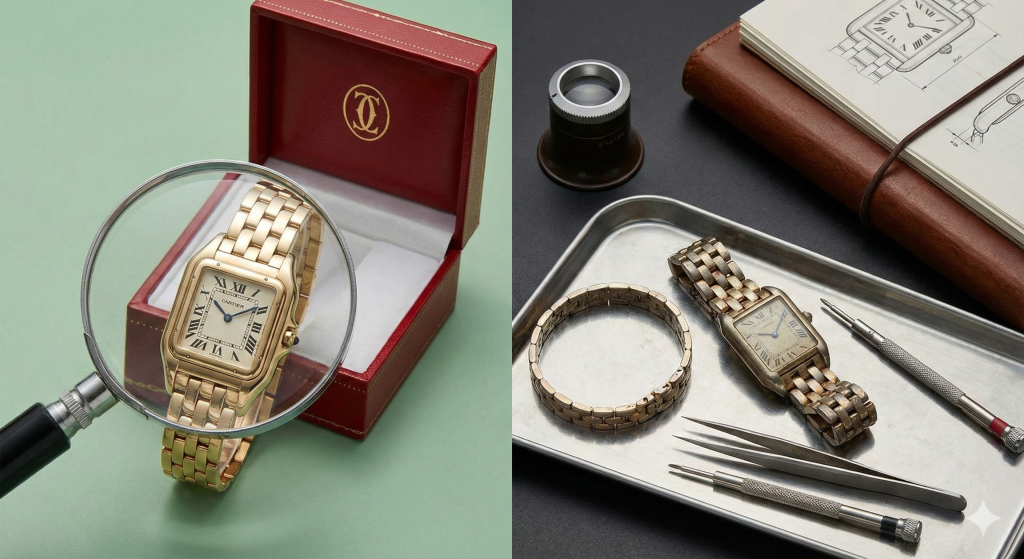
The fake Cartier market has exploded. And the counterfeits getting through customs aren’t the $50 knockoffs your cousin bought in Chinatown. These are $800 replicas with real 18K gold plating, genuine diamonds, and serial numbers that look legitimate until you Google them and find the same code attached to six different bracelets on eBay. For collectors navigating the high-net-worth luxury market, authentication skills have become non-negotiable.
Cartier fake pieces now account for a staggering percentage of the secondary luxury market. According to the International AntiCounterfeiting Coalition, luxury jewelry counterfeiting has become a multi-billion dollar global industry, with iconic brands like Cartier among the most targeted. If you’re spending $6,000 to $50,000 on a Love bracelet or Tank watch, you need to know exactly what separates a cartier fake from the genuine article.
This authentication guide covers everything from the secret signatures Cartier hides on watch dials to the exact weight range your Love bracelet should hit on a jeweler’s scale. Whether you’re vetting a vintage Santos, scrutinizing a Juste Un Clou, or questioning that Trinity ring your ex swore was authentic—these are the tells that matter.
The Cartier Authentication Baseline: What Every Genuine Piece Must Have
Before diving into category-specific tells, understand the universal markers that apply across all Cartier jewelry and watches. Miss any of these fundamentals and you’re looking at a fake cartier piece, regardless of how convincing everything else appears.
Hallmarks and Metal Purity Stamps
Every authentic Cartier piece carries specific hallmarks indicating metal purity. For gold items, look for “750” (representing 75% pure gold in 18K pieces) or “950” for platinum. These stamps must be crisp, deep, and precisely engraved—never laser-etched with a grainy finish. Counterfeiters frequently use “18kt” instead of the proper “750” marking, an immediate red flag.
The Cartier official website confirms that all fine jewelry pieces feature these material hallmarks positioned consistently based on item type. Bracelets display stamps on the interior surface. Rings show them inside the band. Watches engrave them on the caseback alongside other identifying information.
Serial Number Verification
Cartier began adding serial numbers to pieces in the 1970s. Modern format typically follows specific patterns: five digits followed by one letter, two letters followed by four digits, or three letters followed by three digits. Watch serial numbers appear on the caseback; Love bracelets engrave theirs on the interior of both halves.
Here’s the insider move: Google the serial number before purchasing. Counterfeiters often reuse the same codes across multiple fakes. If that supposedly unique identifier appears attached to any other piece online, walk away immediately. Common counterfeit serial prefixes to avoid include those beginning with “CRD” or “IP.”
Weight as the Ultimate Test
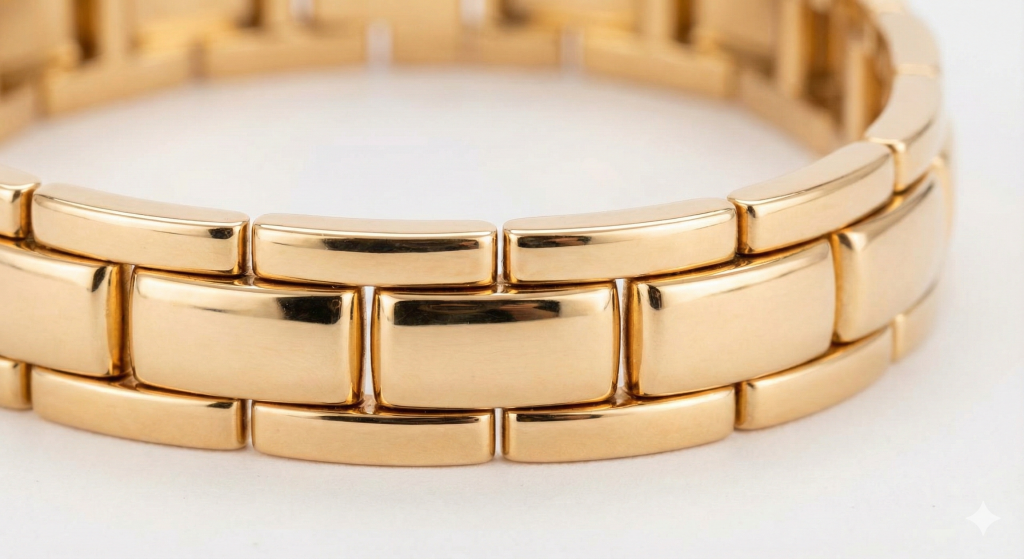
Cartier uses only premium materials—18K solid gold, platinum, sapphire crystal—which translates to substantial heft. A standard Love bracelet weighs between 30 to 38 grams depending on size. The Juste Un Clou starts at 33.4 grams minimum. Anything significantly lighter indicates cheaper base metals, typically surgical steel with gold plating.
Request exact weight from sellers or bring a jeweler’s scale. This single metric eliminates the majority of counterfeits instantly.
Fake Cartier Watch Authentication: The Tells That Matter
Cartier watches command premium prices precisely because of their meticulous craftsmanship. A fake cartier watch cuts corners in predictable ways once you know where to look.
The Flathead Screw Test
Authentic Cartier cases use exclusively flathead screws—never Phillips head or cross-shaped screws. This applies to both the screws visible on the bezel (like the iconic Santos design) and those securing the caseback. According to authentication experts at Bob’s Watches, counterfeiters almost universally default to Phillips head screws because they’re cheaper and easier to source.
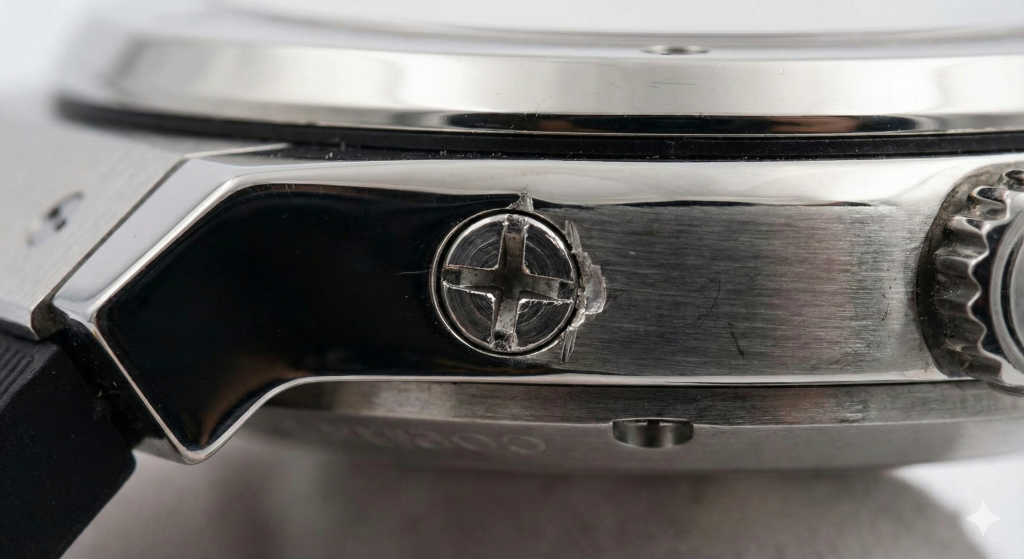
Additionally, genuine Cartier screws are functional components that actually hold the case together. Many fakes feature stamped imprints designed to look like screws but are purely decorative—a dead giveaway under close inspection.
The Secret Signature
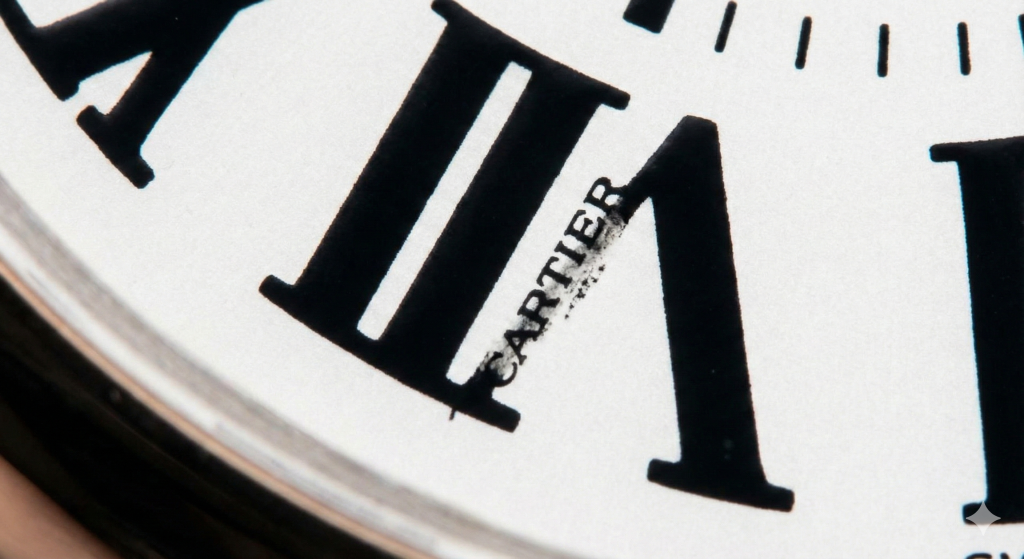
Cartier hides a “secret signature” on most watch dials—the brand name spelled out in microscopic text within the Roman numeral markers, typically at the 7 or 10 o’clock position. To the naked eye, it appears as a thin line. Under magnification, you’ll see “CARTIER” spelled in full. Counterfeiters consistently miss this detail or execute it poorly with blurred or misaligned lettering.
The Cabochon Crown
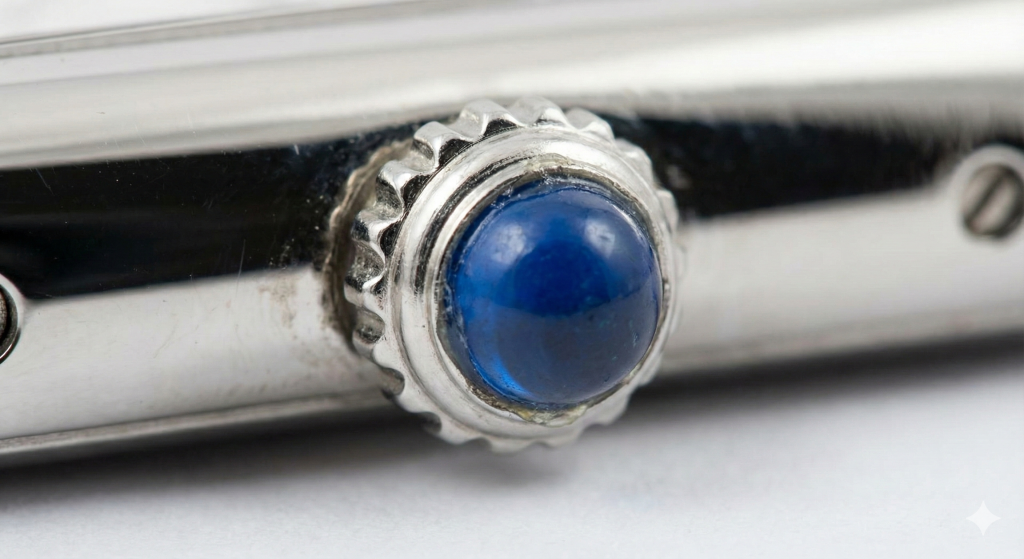
That distinctive blue stone on the crown? Authentic Cartier uses genuine blue sapphire or spinel cabochons, expertly cut and polished to catch light from every angle. Fakes substitute glass, plastic, or low-quality synthetic stones that appear dull, asymmetrical, or poorly set. Check for visible gaps, glue residue, or off-center positioning.
Case Back Engravings
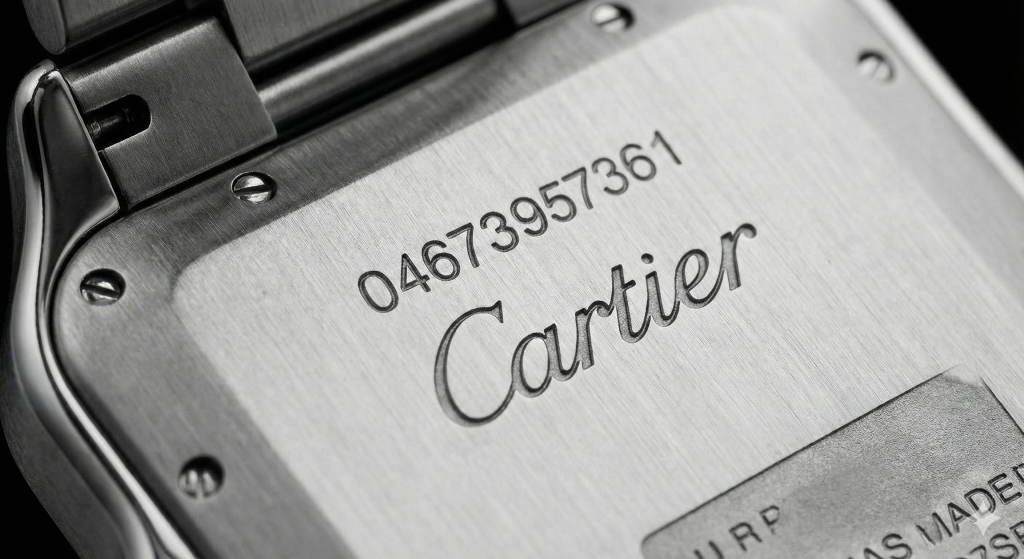
Genuine Cartier watches feature precise engravings on the caseback including: the Cartier logo, “Water Resistant,” “Swiss Made,” a four-digit model number, and the serial number. Every character should be deep, crisp, and clearly defined. Laser engraving—which leaves a grainy, pixelated appearance under magnification—indicates a counterfeit. Authentic Cartier uses mechanical cutting tools that produce clean, sharp lines.
Movement Quality
If you can access the movement (through a transparent caseback or during servicing), authentic Cartier pieces display Geneva stripes, fine perlage finishing, and anglage on the edges—decorative techniques that demonstrate genuine Swiss craftsmanship. The Hodinkee watch experts note these finishing details are virtually impossible for counterfeiters to replicate cost-effectively.
Fake Cartier Love Bracelet: The Complete Authentication Checklist
The Love bracelet remains Cartier’s most counterfeited piece. Designed by Aldo Cipullo in 1969, its distinctive screw motif and romantic locking mechanism have made it a symbol of commitment—and a prime target for fakes.
The Two-Half Construction
Every authentic Love bracelet consists of two separate halves secured by screws. If the bracelet is one solid piece with a hidden clasp, it’s definitively fake. The real bracelet opens only with the provided Cartier screwdriver, and the screws should turn smoothly without any grinding sensation.
The 2011 Screw System Update
Cartier redesigned the screw system in 2011. Pre-2011 bracelets feature screws that completely detach when removed. Post-2011 versions keep screws attached to the bracelet within a U-shaped housing to prevent loss. Knowing which system your bracelet should have based on its serial number and production date is essential—mixing systems indicates tampering or counterfeiting.
Screw Motif Precision
The decorative screw heads around the bracelet’s exterior must be perfectly uniform: crisp circles with centered lines, evenly spaced and identically sized. According to FASHIONPHILE’s authentication experts, fakes consistently show screws with lines that are too thick, circles that appear uneven, or motifs that are faintly stamped rather than deeply embossed.
The Oval Shape Test
Authentic Love bracelets have an oval shape designed to rest comfortably against the wrist’s natural contour. Counterfeits often appear more circular or bulkier. When placed flat, the genuine bracelet shows a subtle elongation rather than a perfect circle.
Interior Engravings Decoded
The bracelet’s interior surface should display: “Cartier” in the brand’s signature cursive font, the metal purity stamp (750 or 950), the size number, and a unique serial number. All text must be crisp with consistent font weight. Pay particular attention to the spacing between characters—authentic Cartier maintains precise, even gaps while fakes often show compressed or irregular spacing.
The Magnet and Smell Tests
Solid gold and platinum are non-magnetic. If your Love bracelet reacts to a magnet, the base metal is steel or another ferrous alloy. Similarly, genuine precious metals have no odor. A bracelet that smells like pennies after handling contains copper or other base metals—dead giveaways of a fake cartier bracelet.
Fake Cartier Ring Authentication: Trinity, Juste Un Clou & Love Rings
Ring authentication shares many principles with bracelets but includes category-specific tells worth understanding before any purchase.
Font and Engraving Analysis
Interior ring engravings reveal authenticity immediately. Genuine Cartier uses consistent fonts across all pieces—the numbers and letters maintain uniform weight and style. According to Legit Check authentication guides, fake Cartier rings frequently show number “1” with an incorrectly long top leg, the number “5” in a different font than other digits, or “0” characters that are wider than they should be.
Juste Un Clou Specific Tells
The nail design should display rounded edges at the four corners, not sharp points. The spacing between the “Cartier” logo and the metal purity stamp must match official specifications—fakes position these elements too close together. Diamond versions should weigh at least 34.4 grams for the small model, with five precisely placed stones on the nail head.
Trinity Ring Band Smoothness
The Trinity’s interlocking three-band design requires exceptional manufacturing precision. Authentic pieces roll smoothly against each other without catching or grinding. Each band maintains its distinct color: yellow gold, white gold, and rose gold. Counterfeits often show color variations that don’t match Cartier’s proprietary gold compositions—particularly rose gold that appears too pink (like 14K) rather than the subtle warmth of 18K.
Love Ring Screw Details
Like its bracelet counterpart, the Love ring features screw motifs that must be perfectly executed. The circles should be uniform, lines centered, and the overall pattern evenly distributed around the band. Any misalignment, fading, or inconsistency points to counterfeit manufacturing.
Documentation, Packaging & Box Authentication
Authentic Cartier pieces include specific documentation and packaging that counterfeiters struggle to replicate perfectly.
The Red Box Standard
Genuine Cartier inner boxes do not display the logo on the exterior lid—it appears in gold on the inside. Outer presentation boxes feature the logo on top. Interior materials consist of either black satin or white fabric, never cheap velvet or synthetic materials. Love bracelet boxes include a specific slot designed to hold the accompanying screwdriver.
Certificate of Authenticity
Authentic certificates specify the serial number, metal type, production details, and purchase information. The printing should be crisp with Cartier’s distinctive fonts. Blurry text, incorrect logos, or missing information all indicate forgery. Cross-reference certificate details against the actual piece—any mismatch between documented serial numbers and engraved numbers confirms inauthenticity.
The Provenance Paper Trail
For pre-owned purchases, request complete ownership history when possible. Reputable dealers like 1stDibs track provenance meticulously. Gaps in ownership history create opportunities for authentic pieces to be swapped with replicas bearing identical serial numbers. Understanding how luxury brands communicate authenticity helps collectors recognize legitimate documentation from forgeries.
Where Hamptons Collectors Authenticate: Professional Resources
Even experienced collectors benefit from professional authentication, particularly for high-value vintage pieces or secondary market purchases.
Cartier Service Centers
Cartier’s own service centers provide the most authoritative authentication, though the brand has reportedly limited this service for Love bracelets due to counterfeit volume. They will, however, authenticate pieces for insurance valuations—effectively confirming genuineness in the process.
Independent Authentication Services
Services like Entrupy use AI and microscopic analysis to verify luxury items. For Hamptons collectors, local jewelers affiliated with organizations like the American Watchmakers-Clockmakers Institute offer trusted authentication. Expect to pay $50-$150 for professional verification—a small investment protecting a five-figure purchase. Those serious about building a legitimate luxury collection consider this cost essential due diligence.
The Trusted Dealer Approach
The simplest protection? Purchase from authorized Cartier boutiques or established luxury resellers with verifiable authentication protocols, substantial customer reviews, and affiliations with recognized watch and jewelry organizations. The secondary market offers significant savings, but only when sourced from dealers who stake their reputation on authenticity.
Red Flags: When to Walk Away Immediately
Some warning signs require no expertise to recognize. Trust your instincts when encountering any of these scenarios:
Price too good to be true: A genuine Love bracelet retails $6,550 to $50,000 depending on configuration. A “new” piece offered at 50% off retail from a non-authorized source is almost certainly counterfeit.
Seller refuses in-person inspection: Legitimate sellers welcome scrutiny. Resistance to professional authentication or in-person viewing before purchase signals awareness that the piece won’t pass examination.
Missing or inconsistent documentation: No original box, certificate, or purchase receipt? Combined with other concerns, this absence strengthens the case for counterfeit.
Serial number irregularities: Numbers that don’t follow Cartier’s known formats, appear on multiple listings, or don’t match documentation eliminate any remaining doubt.
Weight discrepancy: More than a few grams off the expected range? The materials aren’t what they claim to be.
Protecting Your Investment: The Authentication Protocol
For serious collectors, systematic authentication protects both financial investment and the integrity of your collection. Document every piece with detailed photographs, maintain original packaging and certificates in climate-controlled storage, and keep records of any servicing by authorized centers.
Before any secondary market purchase, complete this checklist: verify serial number uniqueness through online searches, confirm weight against published specifications, examine engravings under magnification, test magnetic properties, and request provenance documentation. When in doubt, engage professional authentication before committing funds.
The fake Cartier market will continue evolving, with counterfeiters improving their techniques in response to detection methods. Your best defense combines knowledge of the specific tells covered here with the wisdom to purchase only from sources whose reputation depends on authenticity.
Feature Your Authentication Expertise
Are you a Hamptons jeweler or watch specialist offering authentication services? Contact Social Life Magazine about featuring your expertise.
Polo Hamptons VIP Experiences
Connect with collectors and luxury enthusiasts at our signature events. Visit Polo Hamptons for sponsorship and ticket information.
Hamptons Insider Access
Get luxury lifestyle intelligence delivered directly. Subscribe to our email list.
Print Subscription
Experience Social Life Magazine in its full glossy format. Subscribe today.
Support Independent Luxury Coverage
Donate $5 to support continued Hamptons luxury lifestyle journalism.
Related Articles
Search Social Life Magazine for related luxury authentication and collector content.
Author

Written by
Recent Posts
When an Injury Changes Everything: Building a Strong Durham Claim

Jetsetter Style: Castello del Sole

The First Decision After a Collision Can Be the Most Important One
Two Weeks in Rome and Beyond: Turkish Airlines Itineraries from Boston, Chicago and Onward to India

Top 10 Hair Transplant Clinics in Turkey 2026
Categories
- Art
- Articles
- Business of Luxury
- Celebrities
- Culture
- Entertainment
- Events
- Faces of Summer 2026
- Fashion
- Fashion & Style
- Featured
- Finance
- Food, Spirits, Wine
- Hamptons
- Hamptons Celebrities
- Health
- Health & Beauty
- Lifestyle
- Luxury Lifestyle
- Press
- Profiles
- Real Estate
- Technology
- The Chronicles
- Travel
- Uncategorized
- Weddings