
The SPV funding revolution has only begun. While 2,442 vehicles already operate in the US market, the next five years will multiply that number dramatically. Technology, regulation, and shifting investor preferences are converging to reshape private market access.
Industry projections paint an aggressive growth picture. The SPV services market reached $5.2 billion in 2022. According to Verified Market Reports, the market should exceed $10 billion by 2030, representing an 8.7% compound annual growth rate.
But market size understates the transformation underway. SPV funding is becoming the default mechanism for direct investments into private companies. The structures that seemed exotic a decade ago now feel routine to sophisticated investors.
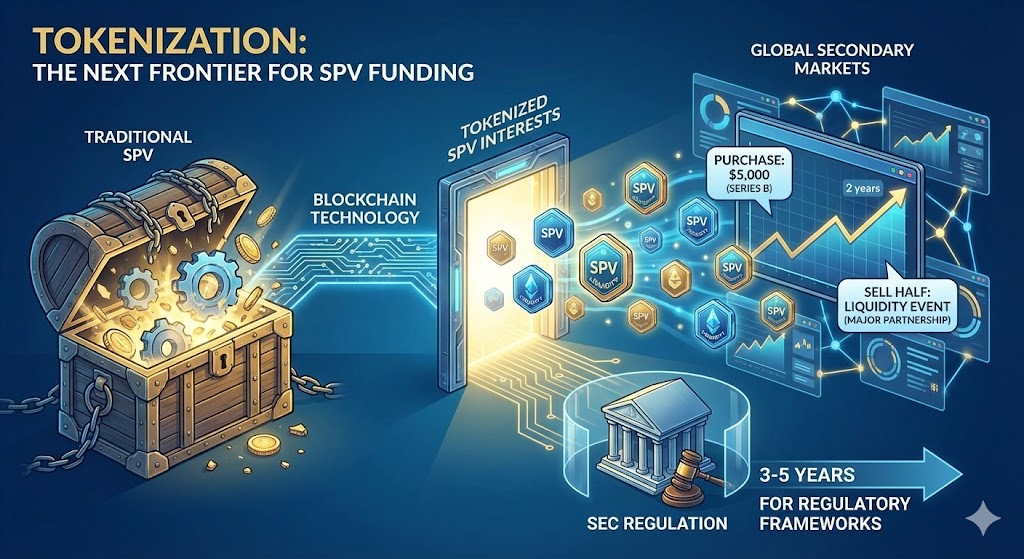
Blockchain technology promises to revolutionize SPV liquidity. Tokenized SPV interests could trade on secondary markets with unprecedented efficiency. The friction that currently locks up private investments for years might dissolve.
Several platforms already pilot tokenized structures. Digital securities regulations continue evolving to accommodate these innovations. The infrastructure for fractionalized private market access is under active construction.
Imagine purchasing a $5,000 position in an SPV backing a Series B company. Then selling half that position two years later when the company announces a major partnership. This liquidity transformation would fundamentally alter private market dynamics.
Regulatory clarity remains the primary barrier. The SEC continues evaluating how existing securities laws apply to tokenized instruments. According to Harvard Business Review analysis, regulatory frameworks will likely crystallize over the next three to five years.
Geographic Expansion of SPV Funding
North America and Europe currently dominate SPV activity. But Asia Pacific represents the fastest-growing regional market. Infrastructure development, renewable energy projects, and technology investments all leverage SPV structures.
The Middle East has emerged as a significant player. Dubai and Abu Dhabi actively court SPV formations through favorable regulatory environments. Family office capital from the Gulf increasingly flows through these structures.
According to Bain’s research, cross-border private market investments continue expanding. SPVs provide the wrapper that makes international capital deployment practical.
European family offices particularly favor SPV structures for US investments. The vehicle simplifies tax treatment and provides familiar governance frameworks. The European family office community has embraced this approach enthusiastically.
Sector-Specific SPV Funding Opportunities
Climate tech and renewable energy investments increasingly flow through SPVs. Project finance structures naturally align with single-purpose vehicles. Each wind farm or solar installation can occupy its own legal container.
According to the International Renewable Energy Agency, global renewable energy investment reached $350 billion in 2022. SPVs will capture growing share of that capital as project-level investment gains popularity.
Healthcare and biotech represent another concentrated area. Drug development programs suit SPV structures perfectly. Investors can back specific therapeutic programs rather than diversified pharma portfolios.
Artificial intelligence companies attract tremendous SPV funding attention. The sector’s rapid growth and high valuations create compelling opportunities. Sophisticated investors use SPVs to access competitive AI deals before institutional rounds close.
The Evolution of SPV Fee Structures
Professionalization drives fee evolution. In 2021’s exuberant market, only 41% of SPVs with over $10 million in assets charged management fees. By 2023, that figure reached 67%. The trend toward compensation continues.
Lead investor quality justifies premium fees. Top performers with strong track records command higher carry percentages. The market increasingly stratifies between premium and commodity offerings.
Technology enables fee compression at the commodity level. Automated administration, standardized documentation, and platform efficiencies reduce operating costs. Savings pass through to investors in competitive vehicles.
According to BCG analysis, fee pressure across private markets will continue. SPVs represent the frontier where competitive dynamics most intensely reshape economics.
Regulatory Trajectory for SPV Funding
Disclosure requirements continue expanding. Post-2008 reforms increased transparency obligations. Additional reporting mandates seem likely as SPV usage grows and attracts regulatory attention.
Accreditation requirements may evolve. Current rules limit most SPV participation to accredited investors. Proposals to modernize these thresholds periodically surface. Changes could dramatically expand the investor base.
Anti-money laundering scrutiny intensifies globally. SPVs must implement Know Your Customer procedures and beneficial ownership reporting. Compliance costs rise but remain manageable relative to investment sizes.
The investment regulation landscape continues evolving. Staying current on requirements protects both lead investors and participants from compliance failures.
Platform Competition and Innovation
AngelList pioneered scalable SPV infrastructure. But competitors have emerged aggressively. Carta, Assure, and specialized providers now compete on fees, features, and deal flow access.
Integration with cap table management software creates stickiness. Platforms that manage the full lifecycle from formation through exit capture long-term relationships. The convenience premium justifies higher fees.
Artificial intelligence increasingly automates due diligence. Document analysis, financial modeling, and market research benefit from machine learning applications. Platforms incorporating AI tools gain competitive advantages.
White-label solutions allow established investment firms to offer branded SPV products. Family offices and RIAs can launch vehicles under their own names while outsourcing administration. The infrastructure layer commoditizes.
Building Your SPV Funding Strategy
Timing matters less than consistent execution. Waiting for perfect market conditions means missing opportunities. Deploying capital steadily across vintages provides natural diversification.
Relationship building cannot be outsourced. The best deals flow to investors with established reputations. Contributing value beyond capital earns access to subsequent opportunities.
Education investments pay compound returns. Understanding term sheets, governance provisions, and exit mechanics prepares investors for negotiations. The investor education resources available have expanded dramatically.
Start with smaller positions to develop pattern recognition. Initial SPV investments teach lessons that larger commitments cannot. The learning curve deserves respect.
What the Next Five Years Hold
The SPV funding market will mature rapidly. Institutional participation normalizes structures that once seemed boutique. Secondary liquidity improves as the market scales.
Technology continues eliminating friction. Formation timelines compress from days to hours. Administrative burden shifts entirely to platforms. Investors focus purely on investment selection.
Competition for quality deals intensifies. As more capital chases opportunities, returns face pressure. Differentiation through value-add, relationships, and specialized expertise becomes essential.
The investors positioned for this evolution share common characteristics. They’ve built networks systematically. They’ve developed domain expertise. They understand structures deeply. They’re playing the long game while others chase quick returns.
Taking Action Today
SPV funding isn’t the future. It’s the present that most investors haven’t yet recognized. The structures exist. The platforms work. The opportunities flow continuously to those with access.
Building that access starts now. Attend industry events. Join investor syndicates. Contribute expertise to founders. The compound returns from relationship building begin immediately.
The Hamptons investment community understands this reality. Family offices from East Hampton to Sag Harbor already deploy capital through SPV structures. The conversation at every summer gathering includes deal flow discussions.
Your seat at that table remains available. But the window for easy entry narrows as sophistication spreads. The time to build your SPV funding capability was yesterday. The second best time is today.
Connect with the Hamptons investment community. Polo Hamptons brings together founders, family offices, and investors for world-class networking events. Contact Social Life Magazine about feature opportunities and strategic partnerships.
Stay informed: Subscribe to our newsletter for exclusive insights on wealth, investing, and the Hamptons business scene. Get the print edition for deep-dive features you won’t find online.
Related Reading:
Family Office Investment Strategies for 2025
Alternative Investment Strategies the Ultra-Wealthy Actually Use
Author

Written by
Recent Posts

Unlocking the Berkshires

Dalia Forman Design

Alberto Luzzi
How to Pick a Homecoming Dress for Your Body Type and Feel Amazing in It
How to Prepare a Home for Sale When Major Repairs Are Not Affordable
Categories
- Art
- Articles
- Business of Luxury
- Celebrities
- Culture
- Entertainment
- Events
- Faces of Summer 2026
- Fashion
- Fashion & Style
- Featured
- Finance
- Food, Spirits, Wine
- Hamptons
- Hamptons Celebrities
- Health
- Health & Beauty
- Lifestyle
- Luxury Lifestyle
- Press
- Profiles
- Real Estate
- Technology
- The Chronicles
- Travel
- Uncategorized
- Weddings