
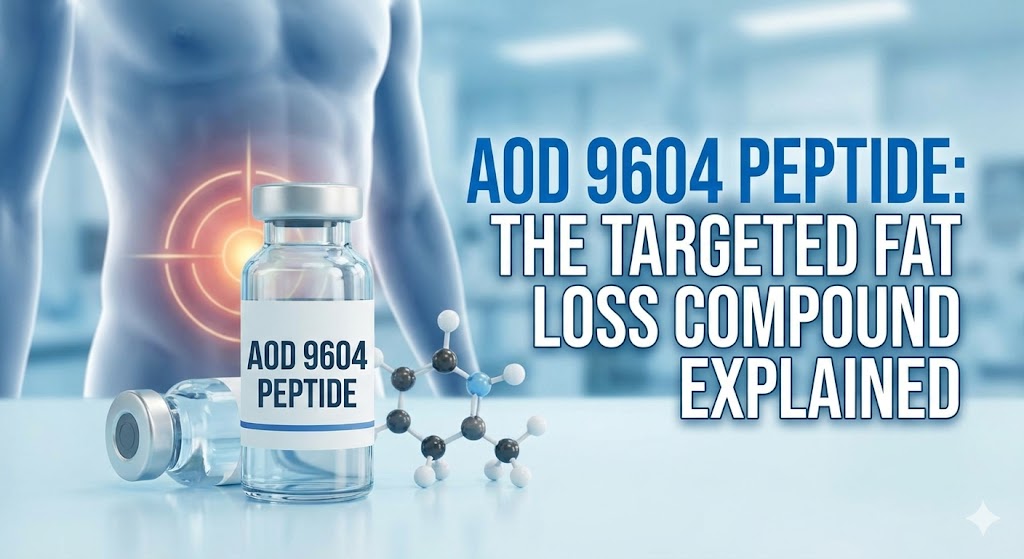
AOD 9604 peptide emerged from a simple question: what if you could isolate the fat-burning effects of growth hormone without the rest? Australian researchers spent years dissecting HGH molecule by molecule until they found the fragment responsible for lipolysis. That fragment became AOD 9604.
The compound attracts people frustrated with conventional fat loss approaches. They’ve dialed in nutrition and training but hit plateaus that discipline alone won’t break. They want targeted intervention without the appetite manipulation of GLP-1 drugs or the systemic effects of full growth hormone therapy.
This guide examines what AOD 9604 peptide actually does, how it differs from other fat loss compounds, and what the research reveals about its effectiveness. We cover dosing protocols, realistic expectations, and the honest limitations that marketing materials conveniently omit.
What Is AOD 9604 Peptide and How Does It Work?
AOD 9604 peptide is a modified fragment of human growth hormone (amino acids 177-191) that stimulates fat breakdown without affecting blood sugar, muscle growth, or appetite. It triggers lipolysis in adipose tissue while inhibiting lipogenesis, meaning it helps burn existing fat and prevents new fat formation simultaneously.
The compound represents clever pharmaceutical engineering. Researchers identified that the fat-burning region of HGH operates independently from its other functions. By isolating this specific sequence and adding a tyrosine amino acid for stability, they created a targeted tool.
AOD 9604 binds to beta-3 adrenergic receptors on fat cells. This binding initiates a cascade that releases stored triglycerides into the bloodstream for energy use. The process mirrors what happens during fasting or intense exercise but occurs independently of those triggers.
Crucially, the peptide doesn’t trigger IGF-1 production like full growth hormone does. This means no effects on blood glucose regulation, no acceleration of cell proliferation, and no impact on insulin sensitivity. The surgical precision appeals to users wary of growth hormone’s broader metabolic effects.
Research published in the Journal of Endocrinology confirmed AOD 9604’s selective action. Animal studies showed significant fat reduction without changes in glucose tolerance or lean mass—a profile no other compound replicated at the time.
What Does the Research Show About AOD 9604?
AOD 9604 research includes animal studies, human clinical trials, and extensive safety data accumulated over two decades. Results demonstrate consistent fat reduction in multiple models. However, the human trial data presents a more nuanced picture than enthusiasts sometimes acknowledge.
The foundational research came from Monash University in Australia. Studies on obese mice showed 50% greater weight loss compared to controls over 19 days. Fat mass decreased significantly while lean mass remained unchanged. These results generated substantial commercial interest.
Human trials produced more modest outcomes. A 12-week study of 300 obese subjects found statistically significant fat loss in the AOD 9604 group compared to placebo. However, the absolute difference was smaller than the animal studies predicted. Participants lost additional pounds, but not dramatically more than diet and exercise alone.
The FDA reviewed AOD 9604 for potential drug approval in the mid-2000s. While safety data satisfied requirements, efficacy data didn’t meet the threshold for pharmaceutical approval. This doesn’t mean the compound doesn’t work—it means the effect size didn’t justify drug status under FDA standards.
Subsequent research focused on other applications. Studies explored AOD 9604 for osteoarthritis and cartilage repair with promising results. The compound’s safety profile enabled continued investigation even after weight loss drug development paused.
Current use relies on this accumulated data plus extensive anecdotal evidence from the optimization community. Many users report meaningful results, though expectations should calibrate to the human trial findings rather than the more dramatic animal studies.
How Does AOD 9604 Compare to Other Fat Loss Peptides?
The fat loss peptide category includes several options with distinct mechanisms. Understanding these differences helps determine whether AOD 9604 fits your specific situation and goals.
AOD 9604 vs. Semaglutide
Semaglutide dominates current fat loss conversations due to dramatic clinical results. The GLP-1 agonist produces 15-20% body weight reduction in trials—far exceeding AOD 9604’s demonstrated effects. For pure scale weight loss, semaglutide wins decisively.
The mechanisms differ completely. Semaglutide works primarily through appetite suppression. Users simply don’t feel hungry. AOD 9604 doesn’t affect appetite at all. It targets fat cells directly while leaving eating behavior unchanged.
This distinction matters for certain users. Those who enjoy food and don’t want their relationship with eating altered prefer AOD 9604’s approach. Athletes needing to maintain caloric intake for performance find appetite suppression counterproductive. Body composition goals sometimes diverge from scale weight goals.
Side effect profiles favor AOD 9604 significantly. Semaglutide commonly causes nausea, especially during titration. AOD 9604 produces minimal side effects in most users. Those intolerant of GLP-1 drugs find AOD 9604 offers an alternative mechanism entirely.
AOD 9604 vs. HGH Fragment 176-191
These compounds are often confused or used interchangeably. HGH Fragment 176-191 represents the raw amino acid sequence from growth hormone. AOD 9604 adds a tyrosine amino acid that improves stability and potentially enhances receptor binding.
Most research specifically studied AOD 9604 rather than the unmodified fragment. While the compounds likely work similarly, the safety and efficacy data applies more directly to AOD 9604. Users citing research should ensure they’re using the studied compound.
Practical differences in sourcing exist. Both compounds appear in the peptide marketplace. AOD 9604’s additional amino acid makes synthesis slightly more complex, which can affect pricing and availability from different suppliers.
AOD 9604 vs. CJC-1295/Ipamorelin
Growth hormone secretagogue combinations like CJC-1295 with Ipamorelin increase natural HGH production. This elevates growth hormone broadly, producing fat loss alongside effects on sleep, recovery, and lean mass.
AOD 9604 offers more targeted action. Users wanting only fat loss without other growth hormone effects may prefer its precision. Those seeking comprehensive optimization might choose secretagogues for their broader benefit profile.
Combining approaches is common. Some protocols use AOD 9604 for direct fat targeting while employing secretagogues for recovery and sleep benefits. The compounds work through different mechanisms and don’t compete for the same receptors.
AOD 9604 Dosing Protocols: What Physicians Prescribe
Standard AOD 9604 protocols involve subcutaneous injection of 250-300mcg daily, typically administered in the morning on an empty stomach. Some practitioners split doses into twice-daily administration. Treatment courses generally run 12-20 weeks with periodic breaks between cycles.
Fasted administration matters for optimal results. Food intake—particularly carbohydrates—can blunt lipolytic signaling. Injecting AOD 9604 upon waking before breakfast maximizes the fat-mobilizing window before eating resumes normal metabolic patterns.
Injection sites rotate between abdominal areas, thighs, or upper arms. Subcutaneous delivery ensures consistent absorption. Some users prefer injecting near stubborn fat deposits, though evidence for enhanced local effects remains anecdotal rather than scientifically established.
Cycle length balances efficacy against theoretical receptor desensitization. While tolerance hasn’t been definitively demonstrated with AOD 9604, most practitioners recommend breaks after 3-5 months of continuous use. These intervals allow receptor sensitivity to normalize.
Stacking with other compounds is common in optimization circles. AOD 9604 pairs logically with agents targeting complementary mechanisms. Combining with exercise and nutrition interventions amplifies results beyond any single approach alone.
What Results Can You Realistically Expect?
Setting appropriate expectations prevents disappointment and enables accurate assessment of whether AOD 9604 works for you individually. The compound produces real effects, but understanding their magnitude and timeline matters.
Most users notice initial changes within 2-4 weeks. These early shifts often involve improved body composition rather than dramatic scale changes. Clothes fit differently. Definition appears in previously soft areas. The mirror shows progress that the scale might not reflect.
Fat loss typically concentrates in areas with high beta-3 receptor density. Abdominal fat often responds well to AOD 9604. Results in other areas may prove more modest. Individual fat distribution patterns influence where changes appear most prominently.
Quantifying expected loss proves difficult because so many variables interact. Users maintaining caloric deficits alongside AOD 9604 see compounded results. Those eating at maintenance may experience recomposition—fat loss offset by stable or slightly increasing lean mass.
The clinical trial data suggests 2-3 additional pounds of fat loss over 12 weeks compared to placebo, controlling for diet and exercise. Real-world users often report better results, possibly reflecting the optimization-focused population using the compound more diligently.
AOD 9604 won’t overcome poor fundamentals. Users eating in significant caloric surplus will gain fat regardless of peptide use. The compound enhances results from proper nutrition and training rather than replacing those foundations.
What Are the Side Effects and Safety Considerations?
AOD 9604 demonstrates a favorable safety profile across two decades of research and clinical use. Side effects remain minimal for most users. The compound’s selectivity—avoiding growth hormone’s broader actions—eliminates many concerns associated with HGH therapy.
Injection site reactions represent the most common complaint. Mild redness, itching, or swelling occasionally occurs and typically resolves quickly. Rotating injection sites and using proper technique minimizes these occurrences.
Some users report temporary headaches during initial use. These generally diminish within the first week as the body adjusts. Staying hydrated and ensuring adequate electrolyte intake helps prevent this issue.
The compound doesn’t affect blood sugar regulation. Studies specifically confirmed glucose tolerance remained unchanged during AOD 9604 administration. Diabetics and those with metabolic concerns can discuss this option with their physicians without the glucose complications growth hormone presents.
Theoretical concerns about any lipolytic agent include mobilizing stored toxins alongside fat. Fat tissue stores certain environmental compounds. Rapid fat loss releases these into circulation. Supporting detoxification pathways through adequate hydration and fiber intake addresses this consideration.
Long-term safety data from the original pharmaceutical development program showed no concerning patterns over multi-year observation periods. This duration exceeds what most research peptides can claim and provides meaningful reassurance.
Who Is AOD 9604 Best Suited For?
AOD 9604 fits certain user profiles better than others. Identifying whether you match these patterns helps predict whether the compound deserves consideration in your optimization strategy.
Individuals with solid nutritional foundations benefit most. Those already eating appropriately who need additional leverage against stubborn fat represent the ideal candidates. Using AOD 9604 to compensate for dietary dysfunction wastes both the compound and the opportunity.
Users wanting fat loss without appetite changes find AOD 9604 particularly appealing. Athletes maintaining high caloric intake, people who genuinely enjoy eating, and those who’ve tried GLP-1 drugs but couldn’t tolerate the appetite suppression all fit this profile.
People seeking body recomposition rather than pure weight loss may prefer AOD 9604’s targeted action. The compound addresses fat specifically while leaving lean tissue unaffected. This precision suits those more concerned with how they look and perform than what the scale reads.
Those cautious about growth hormone’s broader effects find AOD 9604 offers a narrower intervention. No impact on IGF-1, no blood sugar complications, no cell proliferation concerns. The isolated mechanism provides fat loss benefits without baggage.
Individuals with significant weight to lose might find GLP-1 agonists more impactful for initial progress. AOD 9604 shines more for refining already-lean physiques than for major weight loss transformations.
Finding Quality AOD 9604 and Qualified Providers
Sourcing and medical supervision significantly influence outcomes with AOD 9604. The unregulated peptide market contains both legitimate suppliers and operations cutting corners dangerously.
Certificates of analysis verify peptide identity and purity. Quality suppliers provide third-party testing documentation for each batch. Mass spectrometry confirms molecular structure. HPLC testing reveals purity percentages. Demand these documents before purchasing from any source.
Compounding pharmacies offer advantages over research chemical suppliers for those with physician access. Pharmacies follow manufacturing standards that research suppliers aren’t required to meet. The regulatory oversight adds cost but provides assurance worth the premium.
Physician supervision enables proper monitoring and dosage adjustment. Providers experienced with peptides understand how to optimize protocols for individual response. They recognize when results aren’t matching expectations and can troubleshoot effectively.
Longevity clinics and anti-aging practices represent the most likely sources of knowledgeable oversight. Mainstream physicians rarely encounter AOD 9604 in their training or practice. Seek specialists who work with peptides regularly rather than generalists unfamiliar with the compound.
The Bottom Line on AOD 9604 Peptide
AOD 9604 peptide offers targeted fat loss through a mechanism distinct from other available options. It mobilizes stored fat without affecting appetite, blood sugar, or lean tissue. Two decades of research and clinical use support its safety profile.
The compound suits users seeking precision rather than dramatic transformation. It enhances results from solid nutrition and training foundations. It provides an alternative for those who can’t tolerate appetite-suppressing medications or want to avoid growth hormone’s broader effects.
Expectations should align with clinical trial data rather than marketing claims. AOD 9604 produces real but moderate effects. It works best as one component within comprehensive body composition strategies rather than a standalone solution.
Quality sourcing and appropriate medical supervision maximize both safety and results. The peptide market requires careful navigation. Investing in legitimate products and knowledgeable providers pays dividends that cheap alternatives cannot match.
For the right candidate with realistic expectations, AOD 9604 peptide represents a genuinely useful tool. It does what growth hormone does for fat—and only what growth hormone does for fat. That precision is exactly what certain optimization goals require.
Fitness and wellness practitioners: Interested in being featured in our body composition coverage? Contact our editorial team.
Join us at Polo Hamptons for our Wellness & Performance programming this season.
Subscribe to our newsletter for optimization intel delivered weekly.
Prefer print? Get Social Life Magazine delivered to your door.
Support independent health journalism. Donate $5 to keep our coverage uncompromised.
Related Articles
How Peptides Actually Work for Weight Loss
Peptide Therapy in the Hamptons: Your Provider Guide
Sources
Journal of Endocrinology: AOD 9604 Research
PubMed: Growth Hormone Fragment Studies
Author

Written by
Recent Posts
Legal Options for Investment Fraud Claims

How Custom DTF Printing Adds Ease and Color to Your Boutique
How Often Should You Actually Replace Your Towels?
Apartment Pet Policies: What to Know as a Pet-Owning Tenant
Why Reliable Airport Transportation Matters for Modern Travelers
Categories
- Art
- Articles
- Business of Luxury
- Celebrities
- Culture
- Entertainment
- Events
- Faces of Summer 2026
- Fashion
- Fashion & Style
- Featured
- Finance
- Food, Spirits, Wine
- Hamptons
- Hamptons Celebrities
- Health
- Health & Beauty
- Lifestyle
- Luxury Lifestyle
- Press
- Profiles
- Real Estate
- Technology
- The Chronicles
- Travel
- Uncategorized
- Weddings