
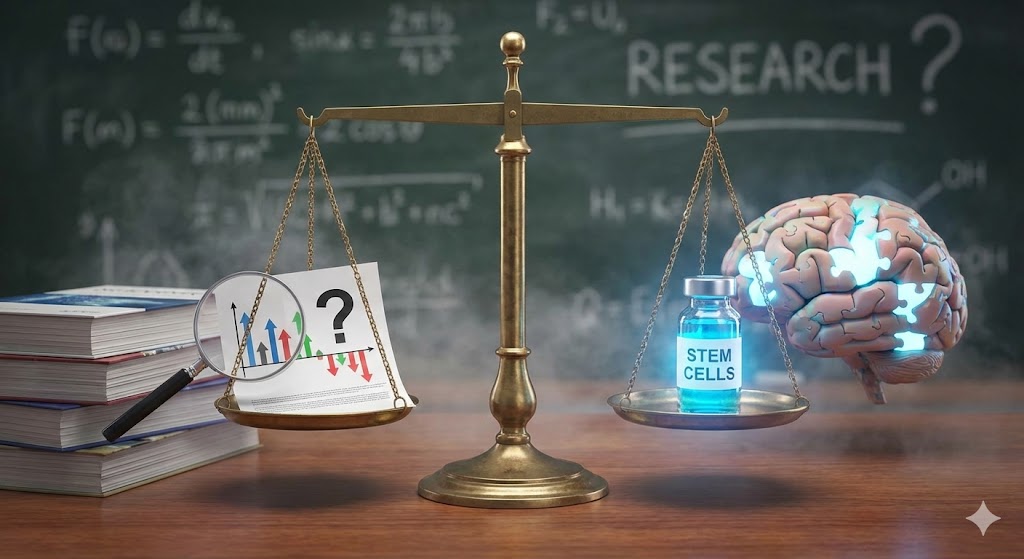
Parents searching for “stem cell treatment for autism” deserve an honest answer. They deserve more than false hope or dismissive skepticism. The honest answer is complicated, and the complication matters.
What follows presents the evidence as it actually stands. Not as clinic marketing materials frame it. Not as reflexive skeptics frame it. As the peer-reviewed research and regulatory reality present it.
The short version: stem cell therapy for autism lacks FDA approval. The most rigorous clinical trials produced disappointing results. Clinics actively exploit parental desperation to market unproven treatments. Legitimate researchers continue investigating this approach, and the story remains unfinished. Both realities exist simultaneously.
Why Parents Search for This
Before examining the evidence, we should acknowledge why families seek experimental treatments. Autism spectrum disorder affects approximately 1 in 36 children in the United States, according to the CDC. Only two FDA-approved medications exist for autism—Risperidone and Aripiprazole. Both target irritability and aggression rather than core autism characteristics. Neither addresses social communication differences, restricted interests, or underlying neurodevelopmental patterns.
This leaves families navigating behavioral interventions, educational supports, and therapies of varying evidence quality. For families whose children face significant daily challenges, the absence of treatments addressing core symptoms creates powerful motivation. This motivation is not irrational. It represents a predictable response to a genuine gap in available options.
Understanding this context explains both the appeal of stem cell marketing and the vulnerability of families to exploitation. Clinics charging $12,000 to $18,000 for unproven treatments succeed not because parents are foolish. They succeed because parents are desperate. Desperation creates an opening for promises that outpace evidence.
What the Best Clinical Trials Actually Found
Duke University conducted the most rigorous research on stem cell therapy for autism. Drs. Joanne Kurtzberg and Geraldine Dawson led the work. Kurtzberg brought expertise in cord blood transplantation. Dawson brought expertise in autism. Their findings provide the clearest window into what this approach can accomplish.
The initial Phase 1 study, published in 2017, treated 25 children ages 2-6 with their own banked cord blood. Approximately 70% showed improvement in one or more autism symptoms. Parents reported these changes. Researchers confirmed them through assessments.
This was genuinely encouraging. However, the study had no control group. Without controls, we cannot attribute improvements definitively to the treatment. Natural development, placebo effects, or the intensive evaluations might explain the gains instead.
The follow-up Phase 2 trial (the Duke ACT study) addressed this limitation. Published in the Journal of Pediatrics in 2020, it used a randomized, double-blind, placebo-controlled design. The study enrolled 180 children. This represents the gold standard for clinical research. The results, to use the researchers’ own careful language, were mixed.
The study failed to demonstrate definitive benefit for the overall population of treated children. The placebo group improved more than expected, making differences hard to detect. Only one subgroup showed statistically significant benefit: children ages 4-7 with non-verbal IQ above 70. For children with intellectual disability (IQ below 70), who represent 40% of children with autism, the treatment showed no apparent benefit.
Dr. Dawson stated the implications explicitly: “We do not have clear evidence that cord blood is an effective therapy for autism.”
What Happened Next: Duke Ends Its Autism Program
The aftermath of the Duke ACT study may be more telling than the study itself. For several years, Duke offered cord blood infusions through an Expanded Access Program (EAP). Families paid $10,000 to $15,000 for the treatment. The program gave families who could not enroll in clinical trials access to experimental therapy—for a substantial fee.
In 2024, as Vice reported and letters to families confirmed, Duke discontinued the EAP for children with autism. The letters cited the ACT study results directly: “Results of our most recent randomized study of umbilical cord blood infusion in children with ASD did not definitively demonstrate benefit.”
This decision speaks volumes. A leading research institution made it. Duke had invested millions in studying this approach. They had genuine incentive to find positive results. The program ended not because of safety concerns or lack of demand. Duke stopped because its own rigorous research failed to support continuing.
The IMPACT trial used a different cell type (mesenchymal stromal cells from cord tissue). It completed enrollment in 2023 with results expected in 2024. That trial may provide additional data. As of late 2025, however, no FDA-approved stem cell therapy for autism exists. The evidence base remains insufficient to recommend this approach.
Why Autism May Differ from Other Stem Cell Targets
Understanding why stem cell therapy might work for some conditions but not others requires considering the underlying biology. Stem cells show promise for conditions involving specific, identifiable damage. Degenerative disc disease fits this model. So do certain orthopedic injuries and neurological conditions involving destroyed tissue.
Autism differs fundamentally. It is not a neurodegenerative condition. Autistic brains are not “damaged” the way a herniated disc or arthritic joint is damaged. Autism involves differences in brain development, connectivity, and function. These differences begin before birth. They involve complex interactions among many brain regions and cell types.
Researchers in the journal Frontiers in Psychiatry noted “there is little scientific rationale for why stem cells would be effective” for autism. The condition lacks the tissue loss or degeneration that stem cells might reverse.
This does not mean stem cells could never help with autism. Science sometimes surprises us. However, the theoretical basis for expecting benefit is weaker than for conditions where stem cells show more promise. Those claiming benefit carry the burden of proof. They have not met it.
The Predatory Clinic Problem
The gap between parental hope and scientific evidence created a market opportunity. Hundreds of clinics worldwide rushed to fill it. Many operate in countries with limited regulatory oversight. They advertise stem cell therapy for autism with claims that far outpace the evidence.
The FDA issued explicit consumer alerts warning that no stem cell products treat autism. The International Society for Stem Cell Research (ISSCR) repeatedly warned about clinics “that prey upon the hopes of desperate patients” with treatments “that have little basis in science or medicine.”
Warning signs of problematic clinics include claims that the same stem cell therapy treats multiple unrelated conditions. Watch for reliance on testimonials rather than published research. Note the absence of FDA registration or legitimate clinical trial participation. Be wary of pressure to pay upfront for multiple treatments. Question contracts that prohibit discussing outcomes. Scrutinize costs ranging from $12,000 to $50,000 for unproven interventions.
The FTC and FDA took action against several such clinics. StemGenex of San Diego and the Cell Surgical Network faced enforcement for unsubstantiated claims about treating autism. Enforcement remains difficult, however. New clinics emerge faster than regulators can address them.
A Note on Neurodiversity
Any discussion of “treating” autism must acknowledge a perspective within the autism community. Some view autism as neurological difference rather than disease requiring cure. They argue the search for treatments reflects societal failure to accommodate neurodivergent individuals rather than medical imperative.
This perspective deserves respect. Many autistic adults find the language of “curing” autism offensive. They consider the pursuit of treatments misguided. They argue that resources would better fund support services, accommodations, and acceptance.
Other autistic individuals and many parents of children with significant support needs hold different views. They see their children struggling with communication, self-injury, or daily functioning in ways that cause genuine suffering. For these families, the search for effective interventions is not about erasing identity. It is about reducing distress and expanding capabilities.
This article takes no position on this debate. It simply notes that before parents spend $15,000 on unproven stem cell treatments, they deserve accurate information. The research shows these treatments currently lack evidence sufficient to justify use outside carefully designed clinical trials.
What Legitimate Research Continues
Despite disappointing results from major trials, research continues. The Duke Marcus Center for Cellular Cures maintains ongoing investigations. Access now requires enrollment in registered clinical trials rather than fee-for-service expanded access. Other academic institutions worldwide conduct smaller studies.
The most comprehensive meta-analysis of stem cell therapy for autism appeared in Frontiers in Pediatrics. It reviewed five controlled studies and found some positive signals on the Childhood Autism Rating Scale (CARS). However, it concluded that “the quality of evidence remains limited by small sample sizes and potential biases.” The authors recommended “further studies on efficacy, safety, and optimal patient selection.”
For families interested in pursuing stem cell therapy for autism, enrollment in registered clinical trials offers the only responsible path. Find trials through ClinicalTrials.gov. Legitimate trials do not charge participants for experimental treatments. They provide treatment as part of the research protocol. If a clinic asks for money while claiming to offer cutting-edge therapy, that signals danger.
The Bottom Line for Families
For parents reading this article, the bottom line may feel inadequate to the weight of their hopes. Intellectual honesty requires stating it clearly anyway.
As of late 2025, insufficient evidence exists to recommend stem cell therapy for autism. The most rigorous trials from leading researchers failed to demonstrate definitive benefit. The theoretical rationale for why stem cells would help autism is weak. Clinics offering this therapy for substantial fees operate without FDA approval. Most lack meaningful scientific support for their claims.
This does not mean stem cell therapy will never help with autism. Science advances. Future research may identify approaches or patient subgroups for whom this therapy proves beneficial. That research has not yet produced those answers. Families should not pay thousands of dollars based on promises that current evidence does not support.
The resources families spend on unproven stem cell treatments—often $15,000 or more—could fund years of evidence-based interventions. They could pay for educational supports or quality-of-life improvements for autistic individuals and their families. Before pursuing experimental approaches, families should consider whether those resources could serve them better elsewhere.
For those who remain interested in stem cell research for autism, we encourage enrollment in legitimate clinical trials. Consult physicians who can provide objective guidance. Apply extreme skepticism toward any clinic making promises that outpace published evidence. The ISSCR’s patient handbook provides detailed guidance on evaluating stem cell clinics.
Related Resources
Our series includes evidence-based guides on questions to ask before stem cell therapy, the real costs of stem cell treatment, and what research shows for conditions like back pain where the evidence base is more developed. Our coverage of regenerative medicine in the Hamptons profiles physicians taking evidence-based approaches.
For questions about advertising, editorial features, or partnership opportunities with Social Life Magazine, visit our contact page. Explore upcoming events at Polo Hamptons, subscribe to our email list, or support independent Hamptons journalism with a $5 donation.
Author

Written by
Recent Posts
Unlocking the Berkshires
Dalia Forman Design
Alberto Luzzi
How to Pick a Homecoming Dress for Your Body Type and Feel Amazing in It
How to Prepare a Home for Sale When Major Repairs Are Not Affordable
Categories
- Art
- Articles
- Business of Luxury
- Celebrities
- Culture
- Entertainment
- Events
- Faces of Summer 2026
- Fashion
- Fashion & Style
- Featured
- Finance
- Food, Spirits, Wine
- Hamptons
- Hamptons Celebrities
- Health
- Health & Beauty
- Lifestyle
- Luxury Lifestyle
- Press
- Profiles
- Real Estate
- Technology
- The Chronicles
- Travel
- Uncategorized
- Weddings