

At its core, vanilla powder is the purest expression of the vanilla bean. It is produced by drying and grinding whole vanilla beans into a fine, fragrant powder, capturing the bean's complete flavor profile without any additives.
Discovering the Power of Pure Vanilla Powder
Unlike vanilla extract, which utilizes alcohol as a solvent, pure vanilla powder contains only the bean itself. This results in a potent, unadulterated flavor that is ideal for recipes where even a minimal amount of additional liquid can impact the outcome.
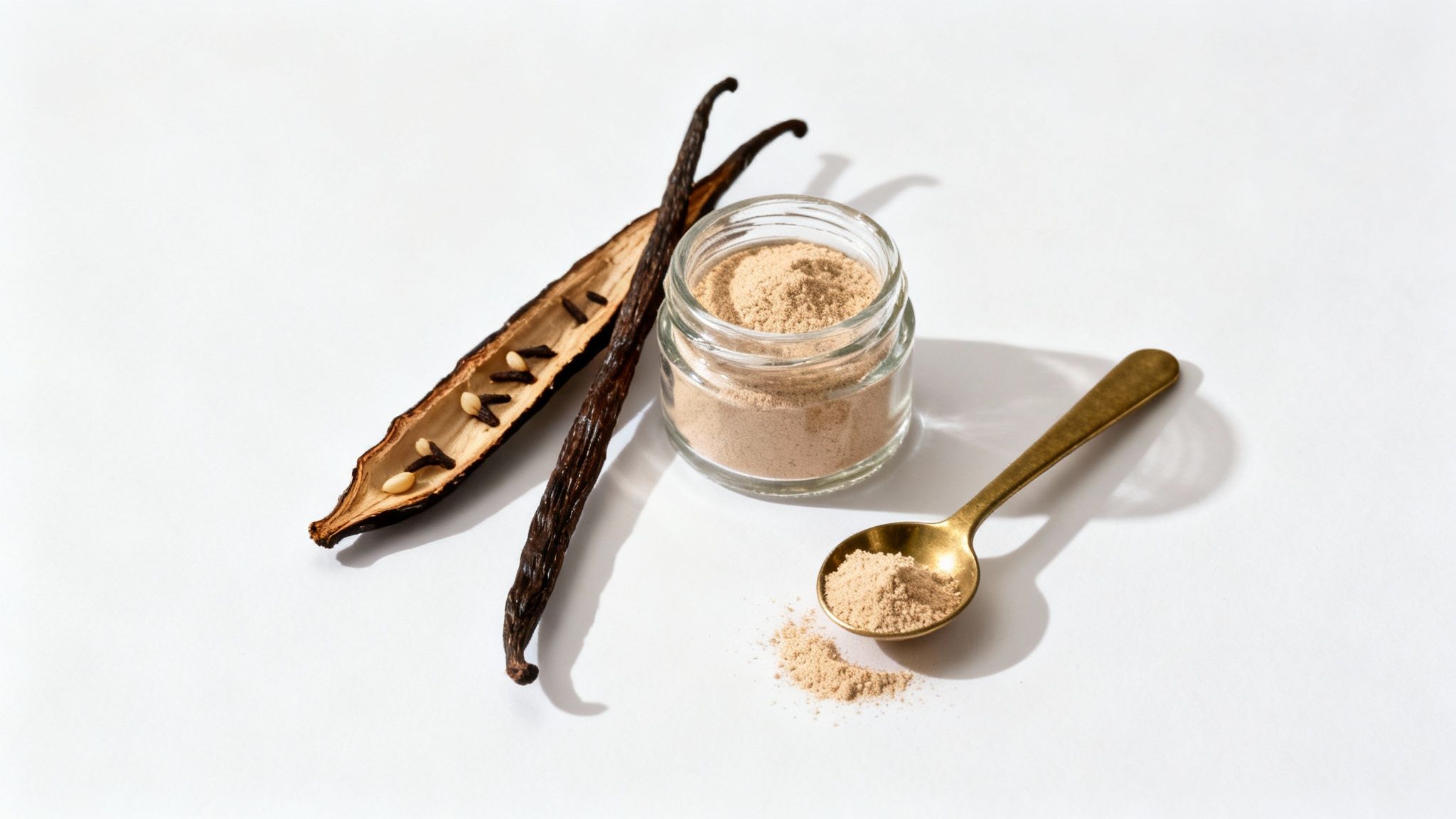
The production process is meticulous. Vanilla pods are carefully cured and dried until brittle, then pulverized. This technique preserves the bean's natural oils and the hundreds of aromatic compounds that create its iconic, complex profile. It is a method that honors the integrity of the ingredient.
This direct-from-the-bean approach provides the powder with a depth of flavor not found in other forms. The taste is often described as richer and more nuanced than its liquid counterparts, offering an unmistakable authenticity.
Why Choose Powder Over Other Forms?
While vanilla extract is a standard kitchen staple, vanilla powder offers unique advantages that make it an essential tool for the dedicated home cook or baker. Its primary benefit is its dry, concentrated nature, which expands its culinary applications.
In recipes where texture is paramount, such as delicate macarons, shortbread, or meringues, an exact balance of moisture is crucial. Adding even a small amount of liquid extract can compromise the structure, whereas vanilla powder blends in seamlessly, infusing flavor without altering the chemistry of the dish.
This makes it a superior choice for:
- Dry Mixes: It is ideal for creating custom spice rubs, infused finishing sugars, or gourmet hot chocolate mixes where intense flavor is desired without adding moisture.
- Precision Baking: Using powder ensures cookies remain crisp and cakes maintain an optimal crumb, as there is no alcohol to evaporate and subtly alter the taste and texture.
- High-Heat Cooking: The flavor of vanilla powder remains stable under high heat, unlike alcohol-based extracts which can partially dissipate.
The Unadulterated Flavor Experience
Perhaps the most compelling reason to include vanilla powder in your pantry is its pure, unadulterated taste. Most high-quality powders are free from the alcohol, sugar, or synthetic additives found in many extracts and pastes. The result is a clean, true-to-the-bean flavor that allows the vanilla's unique character to be fully appreciated.
The absence of alcohol means the flavor introduced at the beginning of the cooking process is the same flavor present in the finished product. There is no evaporation or alteration—only pure, consistent vanilla.
This purity also makes vanilla powder a versatile ingredient in savory cooking. A small amount can add an unexpected layer of warmth and sophistication to dishes ranging from seared scallops to a rich barbecue sauce.
Once its applications are explored, it becomes clear that vanilla powder is not merely a substitute for extract but a genuine enhancement.
A Journey Through Vanilla's Terroir
Vanilla, much like fine wine, is influenced by its terroir—the unique combination of soil, climate, and handling that shapes its character. The journey from a delicate orchid blossom to a rich, aromatic powder is an art form, and the region of origin significantly impacts the final product.
Understanding these nuances can elevate a good dish to an exceptional one. A vanilla powder from one region can be vastly different from another, offering a full spectrum of flavors for the discerning chef. Let's explore the three most distinguished origins.
Madagascar Bourbon: The Gold Standard
The classic, warm vanilla scent is most often associated with Madagascar Bourbon. Originating from the islands of the Indian Ocean, this vanilla, produced from the Vanilla planifolia orchid, defines the category for much of the world and accounts for the majority of global supply.
The "Bourbon" designation refers not to whiskey but to the Bourbon Islands (now Réunion) where it was first cultivated by the French. Its flavor profile is creamy, sweet, and deeply comforting, making it the ideal choice for timeless desserts such as crème brûlée, classic vanilla bean ice cream, or pound cake where a pure, rich vanilla note is the focus.
Tahitian: The Perfumed and Floral Cousin
In the South Pacific, a more exotic relative of vanilla is found. Tahitian vanilla, derived from a different species, Vanilla tahitensis, possesses a flavor profile distinct from its Malagasy counterpart. It is rarer, often more expensive, and prized for its uniquely delicate aroma.
Rather than a bold vanilla flavor, it offers more floral and fruity notes, with subtle hints of cherry and anise.
Tahitian vanilla is less about overwhelming a dish and more about adding a sophisticated layer of complexity. It is exceptional in fruit tarts, light panna cotta, and cocktails where its ethereal, floral notes can be showcased.
Indonesian: Smoky, Woody, and Bold
In Indonesia, Vanilla planifolia develops a completely different character. The tropical climate and specific curing methods, which often involve fire-drying, create a vanilla that is smoky, earthy, and bold. It has a robust, almost woody profile that sets it apart.
This is the vanilla to use when a flavor needs to stand up to other powerful ingredients like dark chocolate, rich coffee, or caramel. It is well-suited for decadent brownies or an espresso-laced tiramisu. It also works effectively in savory dishes, such as a smoky barbecue glaze, where its unique profile adds incredible depth.
Selecting the right vanilla involves more than choosing a jar from the shelf. It is about matching the powder's origin to your culinary vision, turning a single ingredient into a tool for creating truly expressive flavors.
Choosing Between Powder, Extract, and Paste
Selecting between vanilla powder, extract, or paste is analogous to an artist choosing the right brush. Each creates a distinct effect, and understanding their appropriate applications is key to achieving culinary excellence. While all three originate from the same bean, their production methods and behavior in the kitchen differ significantly.
The key is to understand their compositions. Vanilla powder is the purest form—simply whole, dried vanilla beans ground into a fine powder. Vanilla extract, the most common format, is made by macerating beans in an alcohol-and-water solution. Vanilla paste is an intermediate product, offering a thick, syrupy blend of extract and ground vanilla bean seeds, often with an added sweetener.
When to Use Vanilla Powder
The primary advantage of vanilla powder lies in its dry, concentrated form, making it the ideal choice for any recipe where added liquid could be detrimental. It is particularly valuable for delicate baked goods that rely on a precise chemical balance.
- Macarons and Meringues: A small amount of liquid extract can deflate meticulously whipped egg whites. Powder incorporates seamlessly, imparting pure vanilla flavor without compromising the essential structure.
- Dry Rubs and Spice Blends: For savory applications, powder is essential. It mixes well with other dry spices for a sophisticated rub that adds a warm, aromatic depth to pork, chicken, or seafood.
- Infused Sugars and Salts: Creating a gourmet finishing sugar is as simple as mixing vanilla powder into granulated sugar, resulting in a fragrant, deeply flavorful condiment.
The demand for high-quality vanilla powder is growing, establishing a significant presence in the global market. In 2023, the market was valued at USD 670 million, with forecasts projecting it could reach nearly USD 1.1 billion by 2032. This growth is largely driven by the food and beverage industry's demand for premium, shelf-stable ingredients. You can find more detail on these market trends for vanilla powder on Dataintelo.
This decision tree can help visualize which vanilla type is best suited for your flavor goals, whether you are aiming for sweet, floral, or smoky notes.
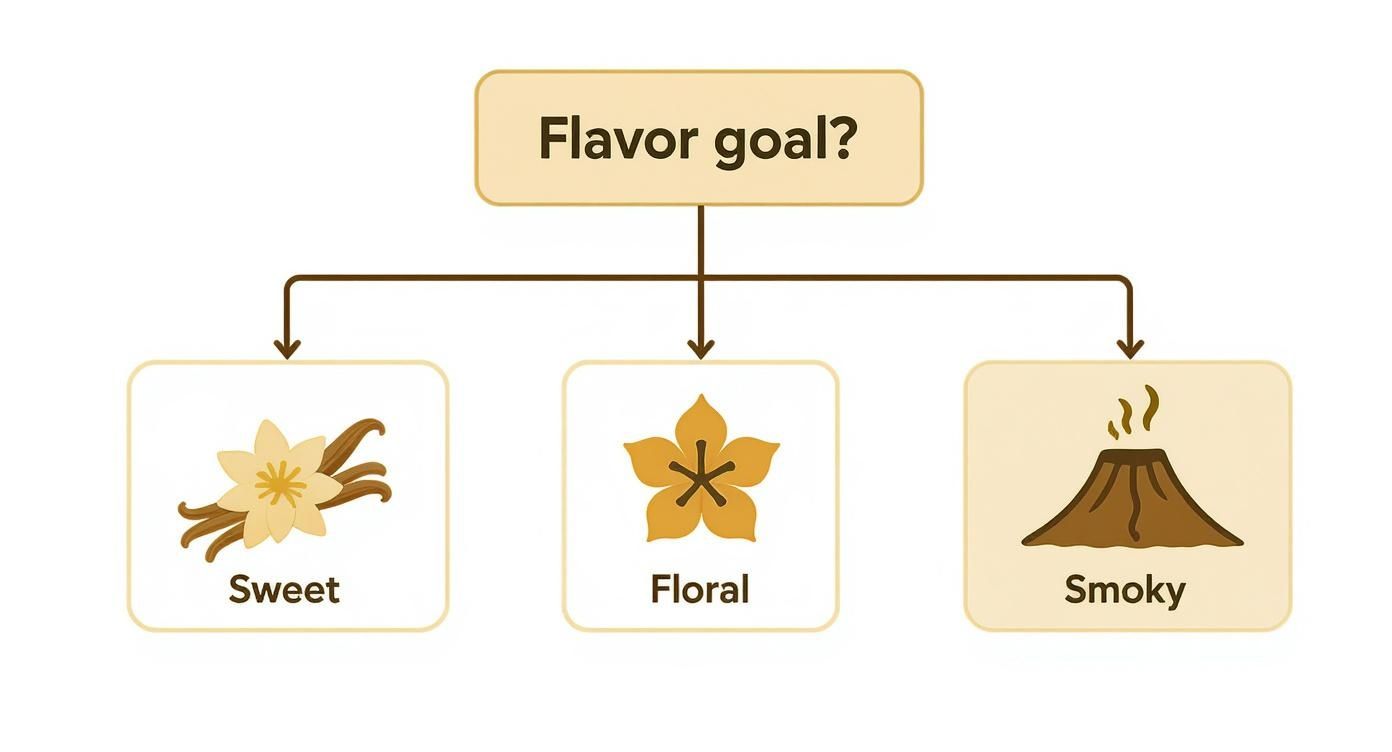
As the infographic illustrates, different vanilla origins can deliver specific profiles, making it easier to select the perfect match for your recipe.
Understanding Extract and Paste
Vanilla extract is a reliable staple for the home baker, valued for its convenience. It is perfect for liquid-heavy recipes like custards, ice cream bases, and cake batters where a small amount of alcohol will not affect the final texture. Its flavor is bright and classic, though some of its more volatile compounds can dissipate during baking.
Vanilla paste, in contrast, is primarily used for its visual appeal. The small black specks are its main draw.
The tiny seeds suspended in the gel give dishes like panna cotta, crème brûlée, and homemade ice cream an artisanal, high-end appearance. The flavor is more robust than extract, but be aware that most pastes contain sugar.
Vanilla Format Comparison Guide
To master the use of vanilla, it is helpful to compare these three formats. Each has unique strengths, and knowing which to select provides greater control over the flavor and texture of your final creation.
| Attribute | Vanilla Powder | Vanilla Extract | Vanilla Paste |
|---|---|---|---|
| Form | Fine, dry powder | Alcohol-based liquid | Thick, syrupy gel |
| Flavor Profile | Deep, rich, complex | Bright, sharp, alcohol note | Sweet, robust, speck-filled |
| Heat Stability | Excellent; flavor holds | Good; can evaporate | Very good |
| Best For | Dry mixes, rubs, macarons | Batters, custards, sauces | Ice cream, panna cotta |
| Moisture | None | Adds liquid | Minimal liquid, adds sugar |
Ultimately, the choice depends on your culinary objective. For the purest, most intense vanilla flavor that will not interfere with a delicate structure, vanilla powder is an indispensable asset for any serious kitchen.
Putting Vanilla Powder to Work in the Kitchen
The true potential of vanilla powder is realized in its application. Its dry form is not a limitation but an opportunity, opening up a new range of culinary techniques for both sweet and savory dishes. Vanilla can be treated as a primary flavor component rather than a background note.

Consider dusting a small amount of vanilla powder over seared scallops. The warm, aromatic notes create a compelling contrast with the sweet, briny seafood. It is this type of unexpected element that can elevate a dish from good to exceptional.
Mastering Delicate Textures in Baking
The most common application for vanilla powder is in baking, particularly when working with recipes that demand a precise texture. Because it contains no liquid, it is highly effective for preparations that are sensitive to moisture.
- Perfecting Macarons and Meringues: Excess moisture is detrimental to macarons, as it can deflate whipped egg whites and ruin the delicate structure. Vanilla powder incorporates perfectly, providing deep, authentic flavor without compromising the crisp shell and chewy center.
- Achieving Crisp Shortbread: For biscuits like shortbread, a crumbly, buttery texture is desired. Using powder instead of extract ensures no extra liquid is added that could soften the dough, guaranteeing a perfectly crisp finish.
Crafting Bespoke Infusions and Mixes
One of the most sophisticated uses for vanilla powder is creating custom-blended infusions and dry mixes. This is a simple method for layering its complex flavor into other pantry staples, transforming everyday ingredients into something special.
Blending vanilla powder directly into dry ingredients creates a stable, intensely flavored base. This is a valuable technique for any creative cook, allowing for the addition of a luxurious touch to countless recipes with minimal effort.
A classic example is making vanilla-infused sugar. Mix one to two teaspoons of high-quality vanilla powder into a cup of caster sugar. Allow it to meld in an airtight container for several days to create a fragrant sugar for dusting over crêpes, rimming cocktail glasses, or enhancing coffee. The same technique can be used to create a savory vanilla-infused sea salt—an excellent finishing touch for roasted vegetables or grilled fish.
Elevating Beverages and Savory Dishes
The applications of vanilla powder extend beyond the pastry kitchen. Its ability to blend seamlessly into dry mixes makes it perfect for crafting artisanal beverage blends. It can be added to homemade hot chocolate mixes, chai spice blends, or even directly to coffee beans before grinding for a subtle, warm infusion. A high-quality Matcha Vanilla Latte Blend is an excellent commercial example of this concept.
This versatility is a key reason for its rapid growth in popularity. Vanilla powder is a significant component of the global vanilla market, valued at USD 3.61 billion in 2024 and projected to reach USD 5.17 billion by 2030. This growth is largely driven by the food and beverage industry's demand for top-tier, flexible ingredients, especially in the bakery, confectionery, and dairy sectors.
Even in savory cooking, vanilla powder can be the unexpected element that unifies a dish. Consider these ideas:
- Sophisticated Spice Rubs: Combine it with smoked paprika, black pepper, and brown sugar for a complex and aromatic rub for pork tenderloin or ribs.
- Enhancing Sauces: A small amount can add surprising depth and a hint of sweetness to a rich tomato sauce or a creamy pan sauce for chicken.
By exploring these applications, you will discover the versatility of vanilla powder, quickly making it one of the most indispensable and inspiring ingredients in your culinary collection.
Finding and Storing the Best Vanilla Powder
Once you appreciate the qualities of vanilla powder, the final step is to procure a high-quality product for your kitchen. Similar to selecting a fine wine or artisanal cheese, choosing the right powder requires a discerning eye and knowledge of what distinguishes a superior product. This single ingredient can completely transform a dish.
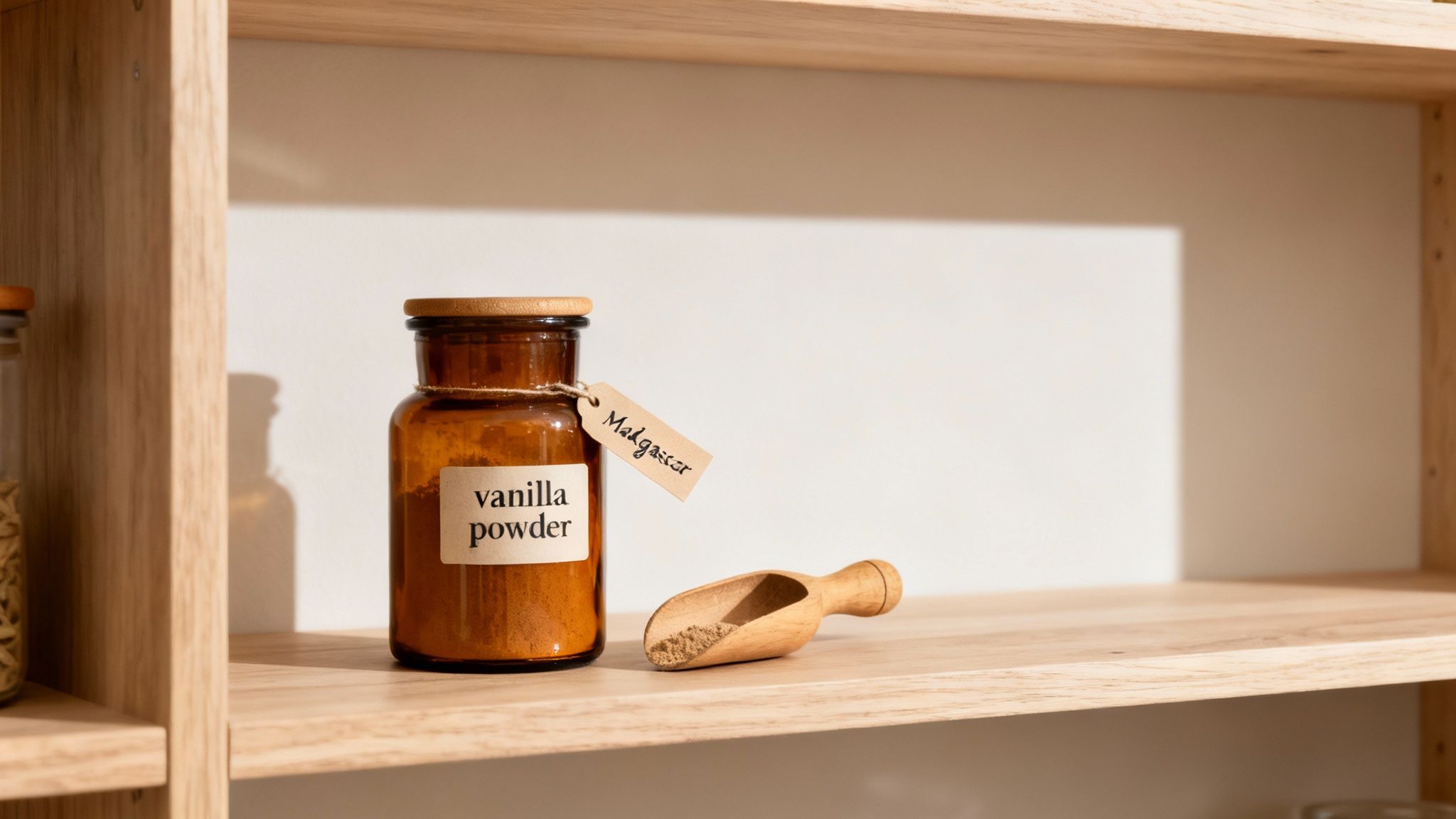
The best vanilla powder is a testament to purity. The process from orchid to powder is painstaking, and the quality is evident in the final product. Fortunately, your own senses are the best guide.
Reading the Labels and Signs of Quality
The first and most important step is to read the ingredient list. Ideally, it should contain only one item: "ground vanilla beans" or "vanilla bean powder." Any additional ingredients indicate a compromise in quality.
Be cautious of products listing ingredients such as:
- Dextrose or maltodextrin: These are fillers used to increase volume, which dilutes the vanilla flavor.
- Silicon dioxide: This is an anti-caking agent. While it prevents clumping, it is an unnecessary additive in a pure, high-quality powder.
- Artificial flavors or vanillin: These are clear indicators of an inferior product attempting to mimic the complex aroma of real vanilla.
Beyond the label, use your senses. A quality powder should have a deep, uniform, dark brown color. If it appears pale, beige, or has an inconsistent color, it likely contains fillers or was made from lower-grade beans. The texture should be fine and silky, and upon opening the container, the aroma should be potent, complex, and unmistakably authentic.
A truly superior vanilla powder will have a powerful fragrance that is immediately noticeable. If the scent is weak, artificial, or flat, it does not meet the standard of quality you should seek.
Why Sourcing and Sustainability Matter
Where you purchase your vanilla powder is as important as what you purchase. It is recommended to seek out specialty spice shops, gourmet food retailers, or reputable online purveyors known for their commitment to quality. These sellers often have direct relationships with farmers, ensuring a fresher, more ethically produced product.
The vanilla market is complex. While demand for natural, clean-label ingredients is driving its growth, producers often face challenges such as fluctuating bean prices and supply chain disruptions. In response, the best companies are focusing on sustainable sourcing, direct farmer partnerships, and innovative production to guarantee both quality and traceability. For those interested in the broader market context, you can learn more about the global vanilla market's robust growth.
Proper Storage for Lasting Potency
Once you have invested in a high-quality vanilla powder, it is crucial to protect it. Air, light, and moisture are detrimental to its aroma and flavor.
Always store your vanilla powder in a small, airtight container. Dark glass or another opaque material is ideal, as it blocks damaging light. Store it in a cool, dark place like a pantry or spice cabinet—never in the refrigerator or freezer. Condensation can introduce moisture, causing the powder to clump and lose its aromatic oils.
Stored correctly, a premium vanilla powder will maintain its peak flavor and fragrance for up to two years.
Your Questions on Vanilla Powder, Answered
Even for experienced cooks, a refined ingredient like vanilla powder can raise questions. To help you utilize it effectively, here are straightforward answers to frequently asked questions. This information should provide the final knowledge needed to master this ingredient.
Can I Just Swap Vanilla Powder for Extract?
Yes, substitution is possible, but it is not always a direct one-to-one exchange. The key is to consider the recipe's balance.
A general guideline is the 1/2 rule: use half the amount of powder as you would extract. For a recipe calling for one teaspoon of extract, begin with half a teaspoon of powder and adjust to taste.
The primary advantage of powder is in recipes where added liquid is undesirable, such as:
- Crisp meringues and delicate macarons
- Buttery shortbreads that need to maintain their shape
- Custom spice rubs and savory seasonings
For custards, sauces, or cocktails where liquid is a core component, either format will work. However, the powder will provide a deeper, more direct vanilla flavor, free from the slight alcoholic note of an extract.
What's the Difference Between Pure Vanilla Powder and Vanilla Sugar?
The distinction is simple: it all comes down to the contents. Pure vanilla powder is 100% dried, finely ground vanilla beans—a pure, potent flavor concentrate.
Vanilla sugar, on the other hand, is a finishing product. It is primarily sugar that has been scented with vanilla, either by mixing in ground vanilla or by infusing whole beans into the sugar crystals. One is a primary flavoring agent; the other is a flavored sweetener.
How Do I Spot a High-Quality Vanilla Powder?
Identifying a high-quality product is straightforward once you know the indicators. It involves examining the label and using your senses.
First, check the ingredients list. It should be extremely short—ideally, containing only "ground vanilla beans." If you see sugar, dextrose, silicon dioxide, or any artificial ingredients, it is not a pure product.
Next, observe the powder itself. Look for a deep, dark, rich brown color. A pale or beige hue is a sign of lower quality.
Finally, trust your sense of smell. Upon opening the container, you should be met with a powerful, complex, and authentic vanilla aroma. If the scent is weak or has a chemical quality, it is an inferior product.
Discover the world of luxury and elevate your lifestyle with Social Life Magazine. Explore exclusive content on fashion, art, and the finest culinary experiences by visiting https://www.sociallifemagazine.com.
Author

Written by
Recent Posts
What Goes Into Planning a Professional Furnace Installation?
Why Sports Card Collecting Is More Than Just a Hobby
From Signature Scents to Scent Wardrobes: The Evolution of Personal Fragrance

Beyond the Booth: How Exhibition Design Is Creating New Brand Experiences

Trading the Hamptons for Hvar: A Summer on Croatia’s Most Glamorous Island
Categories
- Art
- Articles
- Business of Luxury
- Celebrities
- Culture
- Entertainment
- Events
- Faces of Summer 2026
- Fashion
- Fashion & Style
- Featured
- Finance
- Food, Spirits, Wine
- Hamptons
- Hamptons Celebrities
- Health
- Health & Beauty
- Lifestyle
- Luxury Lifestyle
- Press
- Profiles
- Real Estate
- Technology
- The Chronicles
- Travel
- Uncategorized
- Weddings