
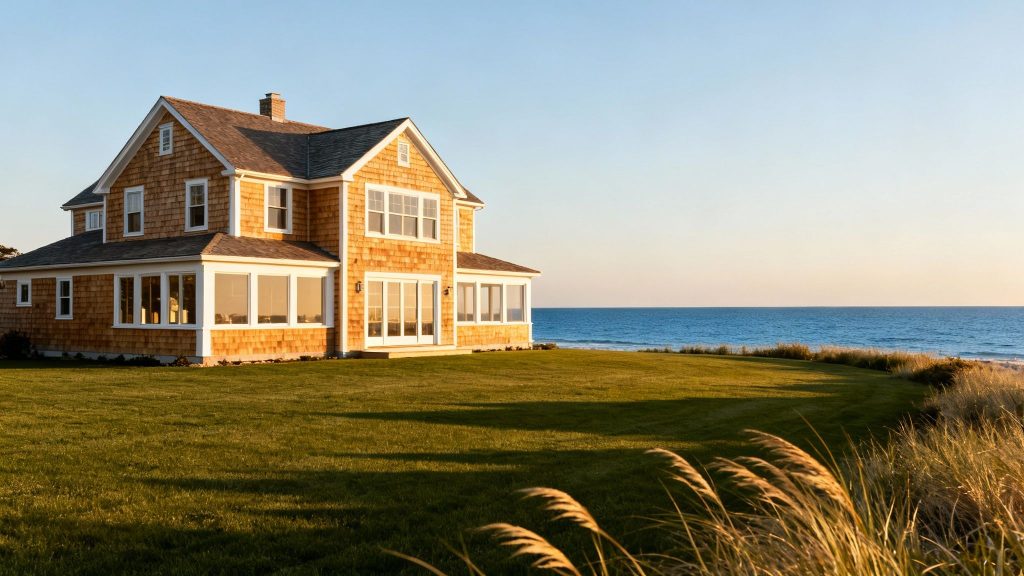
To comprehend Hamptons real estate, one must look beyond the high-profile media coverage and celebrity presence. It represents an investment in a world-renowned lifestyle—a unique synthesis of coastal beauty, agricultural heritage, and an exclusive social landscape.
For prospective buyers, sellers, or investors seeking to understand this market, it is essential to recognize the economic and cultural forces that shape property values in this distinctive region.
Decoding the Allure of Hamptons Real Estate
Welcome to an insider’s guide to the Hamptons. This collection of seaside villages on Long Island's South Fork has been a symbol of luxury for generations, yet its intrinsic value lies in a delicate balance. It is a location where serene farmland meets the Atlantic coastline, and a relaxed, understated atmosphere coexists with the worlds of high finance and fashion.
This potent combination makes the Hamptons one of the most resilient and sought-after property markets globally. This guide is designed as a functional roadmap, moving beyond superficial observations to provide a framework for navigating its complexities. We will explore the distinct character of each hamlet, from the historic grandeur of Southampton to the sophisticated surf culture of Montauk. Understanding these differences is the foundational step in identifying your ideal location.
What This Guide Will Cover
To provide a comprehensive overview, we will analyze the key elements that define the market and influence property values. The objective is to equip you with the strategic insight required to navigate this complex environment with confidence.
Here is what you will find inside:
- Current Market Dynamics: We will examine the latest sales data, inventory levels, and pricing trends to provide an accurate assessment of the market's present condition.
- Neighborhood Profiles: A detailed analysis of the character, amenities, and typical properties in key villages like East Hampton, Sag Harbor, and Bridgehampton.
- Transaction Strategies: Actionable advice for both buyers and sellers, covering aspects from securing financing and home staging to effective marketing and closing negotiations.
- Investment Considerations: A thorough review of the financial components, including local zoning laws, property taxes, and the lucrative seasonal rental market.
Investing in Hamptons real estate is not merely a transaction; it is an entry into a lifestyle. The decision requires understanding both the tangible asset and the intangible cultural currency that accompanies it.
Ultimately, this guide serves to frame a potential purchase as what it is: a significant lifestyle investment. Whether you are a first-time buyer in the area, a seasoned seller, or an investor seeking long-term value, the following sections will provide the clarity necessary for success in this iconic destination.
Analyzing the Current Hamptons Market
To make an informed decision in the Hamptons, one must look past general headlines and understand the specific factors driving prices and inventory. The latest sales data reveals a multifaceted market with varying performance across different segments.
Here, we will analyze the data to clarify current market conditions. We will examine key metrics, break down recent sales, and translate financial information into practical advice. A firm grasp of these dynamics is crucial for timing your transaction and setting realistic expectations.
The Critical Difference: Median vs. Average Price
A common pitfall for those analyzing Hamptons real estate is the conflation of median and average sale prices. These are distinct metrics, and understanding their differences is fundamental.
The median price represents the midpoint in a list of sales; half the homes sold for more, and half sold for less. It provides a stable, representative picture of what a "typical" property is selling for.
Conversely, the average price is calculated by summing all sale prices and dividing by the number of homes sold. In a market like the Hamptons, a few high-value, eight-figure transactions can significantly skew the average upward, presenting a distorted view of overall market health.
A recent market snapshot illustrates this perfectly. In the third quarter of 2025, there was a stark contrast between the median price and activity at the top of the market. The median sale price across the Hamptons was $2.05 million, representing a 5.5% decrease from the Q3 2024 peak of $2.17 million.
At first glance, this suggests a cooling market. However, the average sale price told a different story, climbing 7.8% year-over-year to $3.45 million. The reason was a significant surge in sales above the $10 million mark. You can review the full quarterly analysis to see the robust performance of the luxury segment.
This demonstrates how the market's strength relies on its diverse appeal—from quiet, rural properties to the most exclusive oceanfront estates.
Key Metrics to Monitor
Beyond the sale price, several other indicators offer a clearer picture of market activity. Monitoring these will provide a strategic advantage, whether buying or selling.
- Days on Market (DOM): This metric measures the time a property is listed before an offer is accepted. A low DOM indicates high demand and a seller's market. An increasing DOM suggests buyers are gaining more negotiating leverage.
- Months of Supply: This metric estimates the time it would take to sell all currently listed homes. Four to six months is considered a balanced market. A figure below this range indicates a seller's market, while a higher figure signals a buyer's market.
- Listing Discount: This represents the percentage difference between a home's final sale price and its last asking price. A minimal discount indicates that sellers are achieving prices close to their asking price, signaling strong demand.
By analyzing these three metrics in conjunction, one can gain a comprehensive understanding of market conditions. For instance, a property might sell quickly (low DOM) but only after a significant price reduction (high listing discount), suggesting the initial asking price was set too high.
Understanding these details allows you to see beyond the generalized "Hamptons market" and recognize it as a collection of distinct micro-markets, each with its own dynamics. This forms the foundation for any successful real estate strategy in the region.
Finding Your Ideal Location in the Hamptons
https://www.youtube.com/embed/9t8dgCgTv1I
Selecting a home in the Hamptons is not merely about the property; it is about identifying the community that aligns with your lifestyle. The Hamptons is not a monolithic market but a collection of distinct villages and hamlets, each possessing its own atmosphere, social scene, and architectural identity. The process is less about choosing a zip code and more about selecting a culture.
The experience of residing in the stately elegance of Southampton is fundamentally different from the bohemian surf culture of Montauk. Understanding these nuances is the first and most critical step in finding a location that serves as both a personal retreat and a sound investment.
The Icons of Old-World Elegance: Southampton and East Hampton
Southampton and East Hampton represent the foundation of classic Hamptons society. Here, one finds a deep sense of legacy, framed by iconic, manicured privet hedges and grand estates that have been held by families for generations. The atmosphere is one of tradition and established wealth.
Southampton Village is, for many, the quintessential Hamptons destination. Its historic Main Street features luxury boutiques and renowned restaurants, while the surrounding streets are lined with magnificent shingle-style "cottages" and regal Georgian colonials. In the coveted estate section south of the highway, prices typically begin in the high single-digit millions and increase substantially from there.
East Hampton projects a similar level of established prestige but with a more reserved, arts-centric character. It has long been a sanctuary for artists and writers, home to historic landmarks and the world-renowned Guild Hall. While it shares Southampton's affinity for grand, traditional homes, one will also discover iconic modern masterpieces on its tree-lined lanes.
Laid-Back Luxury: Amagansett and Montauk
Traveling east on Montauk Highway, the atmosphere undergoes a noticeable shift. The meticulously manicured landscapes yield to a wilder, more natural environment. The general ambiance becomes more relaxed. This is the domain of Amagansett and Montauk, where surf culture and understated affluence coexist.
Amagansett strikes a balance between rustic charm and modern sophistication. It is known for its breathtaking ocean beaches and a more low-key village center, attracting a clientele that values privacy and a genuine connection to the outdoors. The homes reflect this blend—historic farmhouses, classic saltbox cottages, and stunning modern beach houses. The market is robust, as highlighted by a report on the first half of 2025 in the South Fork, where the highest-priced sale was a $56 million property in Amagansett. You can explore more insights from the South Fork real estate market on southforker.com.
Montauk, located at "The End" of Long Island, possesses a rugged, windswept beauty. Once a quiet fishing village, it has evolved into a chic destination celebrated for its boutique hotels, vibrant nightlife, and world-class surfing. The real estate here is equally eclectic, ranging from simple beach bungalows to dramatic cliffside estates with unparalleled ocean views.
Each hamlet offers a different interpretation of the Hamptons dream. The key is to align your personal definition of luxury—whether it is formal elegance, relaxed beachcombing, or a strong sense of community—with the appropriate location.
Community-Centric Havens: Sag Harbor and Bridgehampton
For those seeking a strong sense of community and a year-round vibrancy, Sag Harbor and Bridgehampton are excellent options. These villages are favored for their walkable main streets, family-friendly atmospheres, and rich local histories.
As a historic whaling port, Sag Harbor has a unique character, with its deep-water harbor and well-preserved 19th-century architecture. Its charming, winding streets are filled with independent shops, restaurants, and art galleries. The housing stock is wonderfully diverse, featuring everything from historic Captain's houses and Greek Revivals to new construction designed in keeping with the village's historic character.
Bridgehampton has successfully retained its equestrian and agricultural roots while becoming a sophisticated hub. It is famous for the Hampton Classic Horse Show and is surrounded by open farmland and prestigious wineries. Its real estate is just as varied, offering modern farmhouses on large parcels of land alongside classic village homes within walking distance of top-tier restaurants and shops. Both Sag Harbor and Bridgehampton offer a more grounded, community-focused experience that appeals to families and full-time residents.
Hamptons Hamlet Snapshot: A Comparison Guide
To help visualize the differences, here is a brief breakdown of what each of these key areas has to offer. Consider this a starting point for discovering which corner of the Hamptons might be your perfect match.
| Hamlet/Village | Vibe & Atmosphere | Typical Price Range | Best For |
|---|---|---|---|
| Southampton | Traditional, grand, and social. The quintessential "old money" Hamptons. | $$$$ (High-end luxury) | Those seeking classic estates, a vibrant social scene, and prestigious addresses. |
| East Hampton | Elegant, established, and slightly more reserved with an artistic flair. | $$$$ (High-end luxury) | Buyers who appreciate legacy properties, cultural institutions, and refined privacy. |
| Amagansett | Chic but relaxed, with a "barefoot luxury" feel. A blend of rustic and modern. | $$$ (Premium to luxury) | Individuals and families wanting stunning beaches, privacy, and a cool, understated scene. |
| Montauk | Trendy, rugged, and adventurous. A surf-centric, "end of the world" vibe. | $$ – $$$ (Varied) | The active and social buyer looking for a vibrant nightlife, great surfing, and dramatic views. |
| Sag Harbor | Historic, charming, and community-oriented with a strong maritime heritage. | $$ – $$$ (Varied) | Year-round residents, families, and boaters who love a walkable, historic village. |
| Bridgehampton | Sophisticated yet bucolic, with deep equestrian and agricultural roots. | $$$ (Premium to luxury) | Equestrian lovers, foodies, and those wanting a mix of farmland and village life. |
Ultimately, the most effective way to find your fit is to spend time in these locations. Each has a rhythm and personality that can only be truly understood through direct experience.
Mastering Your Hamptons Property Transaction
Navigating a property transaction in the Hamptons—whether purchasing a primary residence or selling a cherished one—requires a sophisticated approach. This market operates with its own unique cadence, and success is often determined by timing, presentation, and an insider's understanding of the local landscape.
For buyers, the preparation begins long before the first property viewing. For sellers, achieving maximum value is a science that blends precise pricing with strategic marketing. Here is how to ensure your next transaction is both smooth and successful.
A Buyer's Playbook For Success
Acquiring a home in the Hamptons is a competitive endeavor. To participate effectively, one must be prepared, decisive, and represented by a professional with deep local knowledge. Financial capacity is the starting point; a well-defined strategy is what secures the property.
First, it is imperative to arrange financing in advance. Securing a loan for a luxury property is often more complex than a standard mortgage, requiring extensive documentation. Working with a financial advisor who understands high-value real estate is advisable. This preparation allows you to present a compelling, non-contingent offer when the right property becomes available.
However, the greatest advantage a buyer can have is a partnership with a well-connected local broker. These professionals have access not only to public listings but also to off-market opportunities, insights into street-level reputations, and the subtle negotiating tactics that are effective in this market.
Key Buyer Strategies
- Craft a Winning Offer: In a competitive market, an offer must be clean and strong. This entails minimizing contingencies and demonstrating financial preparedness.
- Understand Hyper-Local Nuances: An expert broker will know a property's sales history, which enclaves are gaining prominence, and any pending zoning changes that could impact future value.
- Act with Conviction: The most desirable homes in the Hamptons often receive multiple offers within days. Hesitation can result in a missed opportunity.
A well-crafted offer in the Hamptons communicates more than just a price. It presents the buyer as serious and reliable, capable of ensuring a seamless closing process—a quality highly valued by sellers and their agents.
A Seller's Guide To Maximizing Value
If you are selling your Hamptons property, the objective is to attract the most discerning buyers and achieve the best possible price. This involves not just selling a house, but marketing a lifestyle.
Pricing the property correctly from the outset is paramount. Overpricing can lead to market stagnation, while underpricing results in leaving money on the table. A top agent will conduct a detailed comparative market analysis, weighing recent sales against your home's unique attributes and the market's current seasonal rhythm.
Furthermore, the impact of professional staging cannot be overstated. This goes beyond simple tidiness; it is about creating an atmosphere that allows potential buyers to envision themselves living in the space, forging an emotional connection that justifies a premium price.
Finally, high-end architectural photography and cinematic marketing materials are non-negotiable. A buyer's first impression is almost always formed online, and exceptional visuals are necessary to capture their attention.
The Seasonal Rhythms Of The Market
Understanding the Hamptons' seasonal pulse is crucial for both buyers and sellers. The market typically accelerates in the spring, reaching its peak during the summer months when the area experiences an influx of visitors and potential buyers.
This fluctuation affects everything from inventory levels to negotiating power. For instance, while prices have remained strong, the pace of sales can shift. In October 2025, the median sale price was $1.5 million—a 22.7% increase from the previous year—but properties were taking an average of 68 days to sell. You can discover more insights about the Hamptons housing market dynamics on Redfin.com.
A successful transaction also depends on a flawless closing. To navigate the final steps, it is beneficial to explore modern solutions for title and real estate processes to ensure every legal and financial detail is managed with precision. Aligning your strategy with these market rhythms will position you for an optimal outcome.
Understanding Zoning, Taxes, and Regulations
For any serious property investor in this region, the purchase price is only the beginning. To truly understand Hamptons real estate, one must delve into the complex web of local regulations that dictate land use.
These rules form the invisible architecture of the market, shaping everything from the maximum size of a new home to the permissible use of accessory structures. Proper due diligence in this area is what separates a successful investment from a costly and frustrating ordeal. Let's examine the essential financial and legal details every owner must master.
Decoding Local Zoning Laws
Zoning laws function as the local rulebook. In the Hamptons, these regulations are strictly enforced to protect the area's unique character, fragile coastal environment, and property values. Each town, from Southampton to East Hampton, has its own distinct set of codes.
These regulations govern the specifics of what can be built, renovated, or placed on a property. They establish limits on maximum square footage and dictate how close structures can be to property lines or sensitive wetlands. It is imperative to understand these rules before purchasing.
For example, a two-acre parcel may seem ideal for a sprawling modern compound, but local zoning could impose strict limits on the home's footprint or height. The regulations for pools, tennis courts, and guest cottages are equally specific and can vary significantly from one hamlet to another.
Common Zoning Considerations in the Hamptons
- Setbacks and Lot Coverage: These rules define how much of a property can be developed and how far structures must be set back from property lines, roads, and environmental features.
- Height Restrictions: Towns are very strict about limiting the height of new homes and additions to preserve views and the community's overall aesthetic.
- Historic Preservation: In villages like Sag Harbor or the estate sections of Southampton, stringent guidelines protect historic homes. Even minor exterior alterations often require approval from a review board.
- Coastal and Wetland Regulations: Given the location, many properties are subject to oversight from conservation boards that protect dunes, bluffs, and wetlands, adding a layer of approvals to any building plans.
A property's zoning is one of its most valuable—or restrictive—features. A prudent buyer, typically guided by an experienced local attorney, will verify all rules, easements, and covenants before making an offer.
The Property Tax Landscape
Property taxes are a significant, recurring cost of homeownership in the Hamptons, and they vary widely between townships and villages. These taxes fund local schools, police, and road maintenance and are calculated based on a property's assessed value.
Another critical component is the "Peconic Bay Region Community Preservation Fund Tax," commonly known as the CPF or "Peconic Tax." This is a 2% real estate transfer tax paid by the buyer on properties across the five East End towns. The revenue is dedicated to a fund for protecting open space and farmland—preserving the very landscapes that define the Hamptons.
It is essential to factor in both annual property taxes and this one-time transfer tax to calculate the true total cost of ownership. For owners seeking to structure their holdings intelligently, it is wise to explore advanced high net worth tax strategies. This type of proactive financial planning is a hallmark of the seasoned Hamptons investor.
The Future of the Hamptons Real Estate Market
What is the outlook for the Hamptons? It is a market in constant evolution, shaped by architectural tastes, economic forces, and a growing demand for sustainable living. The magnetic appeal of this iconic coastline remains its greatest strength, solidifying its status as a top-tier global destination. However, the very definition of luxury is changing, and this is reshaping the fundamentals of property values for the future.
One of the most significant shifts is the demand for environmentally conscious homes. Today's sophisticated buyers seek more than just expansive square footage; they desire homes that are as intelligent and responsible as they are beautiful. This translates into a clear preference for properties featuring geothermal heating and cooling, solar panels, and construction materials selected for their low environmental impact.
The next generation of luxury in the Hamptons is defined by a commitment to sustainability. A home's value will increasingly be tied to its ability to offer a high-end lifestyle with a lower ecological footprint.
This movement is already having a profound impact on new construction and major renovations, effectively establishing a new benchmark for what a modern Hamptons estate should be.
Emerging Architectural and Lifestyle Trends
The future aesthetic of Hamptons real estate will also be guided by new design philosophies and lifestyle priorities. While the classic shingle-style home will always remain a beloved staple, there is a distinct movement toward architecture that prioritizes wellness, privacy, and a seamless integration with nature.
Here are several design elements that are gaining traction:
- Biophilic Design: This concept focuses on bringing the outdoors in, utilizing elements like living walls, expansive glass panels that blur the line between interior and exterior spaces, and organic materials.
- Integrated Wellness Spaces: The trend has moved beyond a simple home gym. Demand is now for dedicated yoga studios, meditation rooms, and spa-like bathrooms complete with saunas and steam showers.
- Smart Home Technology: Once considered an amenity, integrated systems controlling lighting, climate, security, and entertainment are now an expectation in any new high-end home.
These trends indicate a broader desire for homes that serve as true sanctuaries—places to escape, recharge, and connect with the incredible coastal landscape. While wider economic shifts will undoubtedly test the market’s resilience, the core drivers of demand remain unchanged. The unique combination of natural beauty, exclusivity, and proximity to New York City is a powerful formula that will continue to attract investment.
The future of Hamptons real estate is poised to be one of thoughtful innovation, where timeless allure meets modern consciousness. It is a formula that will secure its legacy for generations to come.
Your Hamptons Real Estate Questions, Answered
Considering a purchase, sale, or investment in the Hamptons? It is natural to have questions. Here are straightforward answers to the most common inquiries from those serious about entering the Hamptons property market.
When Is the Best Time to Buy or Sell in the Hamptons?
The market here follows a distinct rhythm tied to the seasons. The primary "selling season" begins in early spring, gains momentum after Memorial Day, and peaks during the summer when the Hamptons is at its most active. This is the period when sellers can access the largest pool of motivated buyers.
However, prospective buyers should not overlook the off-season. The fall and winter can present a significant opportunity. While inventory is lower, so is the competition. Sellers listing during these quieter months are often highly motivated, which can provide valuable negotiating leverage before the summer market intensifies.
How Important Is Legal Counsel in a Hamptons Transaction?
Legal counsel is not just important; it is absolutely critical. It is essential to engage a local real estate attorney with deep expertise in this specific market. The region is characterized by a complex array of unique local regulations, intricate zoning laws, and specific transfer taxes, such as the Peconic Bay Region Community Preservation Fund tax.
An attorney specializing in Hamptons real estate does more than review a contract. They conduct thorough due diligence on titles, surveys, and permits. Their role is to protect you from potentially costly future complications and ensure a seamless closing.
These experts are your best defense against unforeseen issues related to easements, building restrictions, and the coastal regulations that impact a significant number of Hamptons properties.
What Are the Typical Closing Costs for a Buyer?
Closing costs in the Hamptons are substantial and must be factored into your budget from the outset. While the exact amount will vary, a general guideline is to anticipate costs ranging from 3% to 6% of the home's purchase price.
This figure typically covers the following:
- Peconic Tax: This is a 2% transfer tax paid by the buyer. Certain exemptions apply to the initial portion of the sale price, which your attorney will manage.
- Mansion Tax: For any property selling for $1 million or more, an additional 1% tax is levied.
- Attorney Fees: Compensation for your legal expert's professional services.
- Title Insurance: This is a non-negotiable policy that protects your ownership rights.
- Recording Fees and Other Costs: A collection of smaller fees for services such as filing the deed and processing mortgage paperwork.
What Is a Realistic Expectation for Rental Income?
The rental market in the Hamptons is exceptionally strong, particularly during the summer. It is one of the most lucrative seasonal rental markets in the United States. A high-season rental—typically from Memorial Day to Labor Day—can generate substantial income. For many owners, this is sufficient to cover a significant portion, if not all, of the property's annual carrying costs.
The potential income, of course, depends entirely on the property. Location, amenities, and proximity to the beach are the primary drivers of value. An oceanfront home in Southampton, for example, will command a very different summer rental price than a charming house north of the highway in Sag Harbor. The most prudent step is to consult with a local broker who specializes in rentals. They can provide a realistic, data-driven income projection for any property you are considering.
For more exclusive insights into the people, properties, and lifestyle that define this iconic destination, explore the world of Social Life Magazine. Discover in-depth features, event coverage, and the latest trends in luxury living. Visit us at Social Life Magazine.
Author

Written by
Recent Posts

House Closing Process: What Sellers Should Expect From Start to Finish
What to Know Before Buying a Home in Brantford
When Does Using a Travel Advisor Make the Biggest Difference
What to Look for When Choosing Your First Red Light Therapy Panel

Experience the luxury of exploring Aruba’s coast by private yacht
Categories
- Art
- Articles
- Business of Luxury
- Celebrities
- Culture
- Entertainment
- Events
- Faces of Summer 2026
- Fashion
- Fashion & Style
- Featured
- Finance
- Food, Spirits, Wine
- Hamptons
- Hamptons Celebrities
- Health
- Health & Beauty
- Lifestyle
- Luxury Lifestyle
- Press
- Profiles
- Real Estate
- Technology
- The Chronicles
- Travel
- Uncategorized
- Weddings