
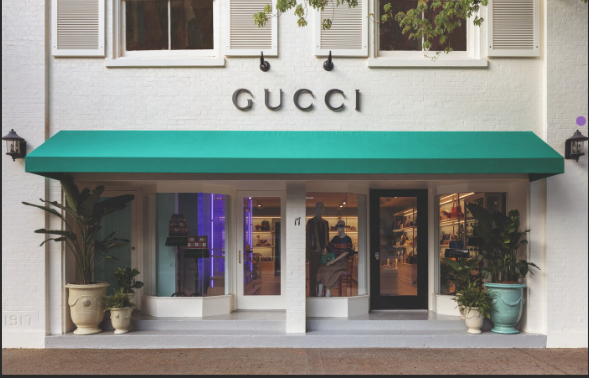
The aqua walls inside 17 Newtown Lane whisper something the price tags cannot say. Gucci Hamptons operates from a 2,000-square-foot boutique where velvet armchairs and aged brass fixtures frame a particular kind of theater. A tote bag embossed with “The Hamptons” in gold sells for $2,500. However, the embossing costs nothing to produce. What you’re actually purchasing is permission to carry geography as identity.
Pierre Bourdieu would recognize this transaction instantly. The French sociologist spent decades anatomizing how taste functions as a weapon of social distinction. Furthermore, he understood what most luxury consumers prefer to ignore: your “personal style” operates as social strategy. Your “investment piece” serves as a bid for legitimacy. Consequently, your shopping bag becomes a flag planted in contested territory.
This particular flag bears the interlocking GG logo of a house built on observation, ambition, and eventually, murder. The Gucci Hamptons story cannot separate from the Gucci family story. Both involve watching the wealthy, learning their codes, and ultimately becoming indispensable to their self-image.
The Genesis: From Savoy Luggage Carts to Florence Leather
Guccio Gucci worked as a bellboy at London’s Savoy Hotel in 1899. The teenage Florentine pushed luggage carts for aristocrats and observed something that would reshape his life. Wealthy travelers carried beautiful things. Moreover, those beautiful things announced their owners before any introduction occurred.
He returned to Florence with a vision rather than a business plan. After learning leather craftsmanship at Franzi, Gucci opened his first shop on Via della Vigna Nuova in 1921. The store sold imported leather luggage to horsemen and travelers. Those equestrian roots would later provide the brand’s most recognizable codes: the horsebit, the stirrup, the green-red-green stripe inspired by saddle girths.
Britannica notes that League of Nations sanctions during the 1930s forced Gucci to innovate with alternative materials. Leather shortages led to woven hemp from Naples. Necessity produced the now-iconic brown-on-tan diamond pattern. Additionally, post-war bamboo shortages led to bamboo handles imported from Japan. What began as constraint became signature.
The mythology machine functions perfectly here. A bellboy studies the wealthy. He learns their visual language. Then he begins speaking it back to them in leather and canvas. Bourdieu would call this cultural capital conversion: transforming observation into objectified status symbols that confer legitimacy on their bearers.
The Dynasty and Its Destruction
Guccio’s sons transformed a Florentine leather shop into global phenomenon. Aldo Gucci opened New York in 1952. The double-G logo arrived in the 1950s. Jackie Kennedy carried Gucci bags so frequently the brand named one after her. Grace Kelly inspired the Flora print. Furthermore, the celebrity ecosystem amplified what the products themselves communicated: taste, arrival, belonging.
Then the family destroyed itself. Fortune reports that internal feuds during the 1980s led to legal battles and prison time for tax evasion. Maurizio Gucci, grandson of Guccio, took control after his father Rodolfo died in 1983. By 1993, financial mismanagement forced him to sell. In March 1995, Maurizio was shot dead in the lobby of Gucci’s Milan office. His ex-wife Patrizia Reggiani served 16 years for hiring the hitman.
The House of Gucci film dramatized what the brand prefers to minimize: this luxury empire runs on blood money, family betrayal, and operatic violence. Nevertheless, the drama adds to rather than detracts from brand mythology. Scandal creates narrative. Narrative creates memorability. Memorability creates desire.
The Capital Architecture: Decoding What Gucci Really Sells
Bourdieu identified four forms of capital that determine social position. Economic capital represents money and assets. Cultural capital encompasses knowledge, taste, and credentials. Social capital means network access and relationships. Symbolic capital confers prestige and recognition. Gucci Hamptons trades in all four simultaneously.
Economic Capital: The Price of Entry
Bain’s 2024 Luxury Report notes that the personal luxury goods market dipped to €363 billion amid economic uncertainty. Gucci generated €7.65 billion in 2024 revenue, making it Kering’s marquee brand. Entry-level handbags start around $1,000 for canvas items. Leather bags range from $2,300 to $5,000. Exotic materials push prices toward $10,000 and beyond.
The Hamptons-exclusive capsule collection demonstrates strategic price positioning. An oversized tote costs $2,500. A drawstring bucket bag matches that price point. The rectangular zip pouch runs $980. These pieces feature organic red and beige jacquard fabric with “The Hamptons” embossed in gold. You’re paying for geographical specificity that transforms a bag into a souvenir of belonging.
Cultural Capital: What You Must Know
Properly consuming Gucci requires specific knowledge. You must recognize the difference between the GG Marmont and the Dionysus. You should understand why the bamboo handle matters historically. Moreover, you need to know that the horsebit references equestrian heritage rather than random hardware choice.
The brand educates through product names and visual codes. Jackie references Kennedy. Diana references Princess Diana. Bamboo 1947 announces its archival origins. Furthermore, the Flora print carries Grace Kelly’s blessing. Each name implies you should already know the story. If you don’t, the product gently excludes you from full appreciation.
Social Capital: Network Access Through Ownership
Gucci’s celebrity ecosystem extends from 1950s royalty to contemporary influencers. Grazia documented the brand’s 2022 Hamptons celebration featuring Christy Turlington, Natasha Lyonne, Rachel Zoe, and Olympian Lindsey Vonn. Carrying Gucci signals membership in a particular cultural conversation.
The East Hampton boutique hosted exclusive events that create social capital through proximity. Attendees don’t just buy products. They purchase adjacency to people who matter. Additionally, the location itself on Newtown Lane positions Gucci among neighbors like Louis Vuitton, creating a luxury corridor that validates each brand through association.
Symbolic Capital: What Ownership Communicates
Gucci occupies a specific position in luxury hierarchy. It ranks below Hermès in exclusivity but above accessible designer brands. The double-G logo announces itself more loudly than Brunello Cucinelli’s cashmere but more quietly than some competitor maximalism.
This middle position serves a particular consumer. New money can enter without the waiting lists of Hermès. Old money can wear it casually without seeming try-hard. Furthermore, the brand’s Italian heritage provides legitimacy that newer labels cannot claim. Consequently, Gucci resolves a fundamental tension: signaling success without appearing desperate to signal.
The Hamptons Play: Why Gucci Chose This Market
Susan Chokachi, president and CEO of Gucci Americas, told WWD that the brand first entered the Hamptons market 15 years ago. The original Main Street East Hampton location operated from 2006 to 2009. Pop-ups at Moby’s Market and Melet Mercantile in Montauk maintained presence during interim years. The permanent 2021 return at 17 Newtown Lane coincided with Gucci’s centennial celebration.
The Hamptons function as what Bourdieu would call a “field” where luxury brands compete for position. Proximity to Louis Vuitton, Cartier, and Hermès creates a concentrated zone of symbolic combat. Each store’s presence validates the others while simultaneously competing for the same customer’s attention and wallet share.
Store design reinforces brand positioning. Aqua-colored moiré walls reference coastal aesthetics without abandoning Italian identity. Velvet armchairs and polished nickel create comfortable formality. Hand-stained natural wood flooring grounds the space in organic materials. Furthermore, Gucci Décor paneled screens and wicker accents suggest lifestyle extension beyond fashion.
The 2024 Lido Collection launch featured a light blue airstream serving complimentary coffee near the Maidstone Hotel. This activation demonstrates experiential marketing strategies that transform shopping into events worth documenting and sharing.
The Distinction Game: Gucci Versus the Competition
The Hamptons luxury corridor forces direct comparison. Louis Vuitton occupies a building Bernard Arnault purchased for $22 million in 2023. Cartier offers jewelry alongside watches. Hermès maintains scarcity through controlled supply. Gucci competes on accessibility, history, and visual recognition.
The brand differentiates through several strategies. Italian heritage versus French competitors provides geographic distinction. Broader product range from apparel to décor extends lifestyle positioning. Furthermore, more visible branding appeals to consumers who want recognition without the subtlety of quiet luxury alternatives.
Recent creative direction shifts reveal brand positioning challenges. Alessandro Michele’s maximalist, gender-fluid aesthetic from 2015-2022 drove significant sales growth. His replacement Sabato De Sarno introduced more minimalist codes. De Sarno departed in February 2025 after declining revenues. The brand currently operates without a named creative director, suggesting ongoing strategic recalibration.
Bain notes that 50 million luxury consumers have either opted out or been forced out of the market in the last two years. Generation Z advocacy for luxury brands continues declining. Consequently, Gucci must navigate between top customers who demand exclusivity and aspirational consumers who provide volume.
The Verdict: Cultural Arbitrage or Conspicuous Consumption?
A Gucci purchase in the Hamptons accomplishes several things simultaneously. It converts economic capital into symbolic capital. It signals knowledge of Italian fashion heritage. Additionally, it grants entry to a particular social conversation where the brand serves as common vocabulary.
The bellboy who watched wealthy travelers at the Savoy would recognize the exchange. He understood that luxury functions as communication before it functions as utility. The bag itself matters less than what the bag says. Furthermore, what the bag says depends entirely on who’s listening.
Bourdieu argued that taste operates as a weapon of class distinction. The Hamptons fashion ecosystem provides a concentrated field where this distinction plays out in real time. Gucci’s positioning offers something the quietly wealthy can wear casually and the newly wealthy can wear proudly. That dual utility explains both the brand’s broad appeal and its particular relevance on Newtown Lane.
The aqua walls contain a century of observation, ambition, tragedy, and reinvention. Understanding rich guy fashion requires understanding that every purchase tells a story. The Gucci Hamptons story begins with a teenager pushing luggage carts and ends with you deciding whether his descendants’ products belong in your closet.
That decision says something. It always has. The bellboy made sure of it.
Elevate Your Hamptons Experience
Feature Your Brand or Business: Contact Social Life Magazine
Polo Hamptons VIP Experiences & Brand Sponsorships: Explore Polo Hamptons
Join Our Hamptons Insider Email List: Subscribe Here
Social Life Magazine Print Subscription: Subscribe Today
Support Hamptons Luxury Lifestyle Coverage: Donate $5 to Social Life Magazine
Related Hamptons Luxury & Fashion Articles
Author

Written by
Recent Posts

Unlocking the Berkshires
Dalia Forman Design
Alberto Luzzi
How to Pick a Homecoming Dress for Your Body Type and Feel Amazing in It
How to Prepare a Home for Sale When Major Repairs Are Not Affordable
Categories
- Art
- Articles
- Business of Luxury
- Celebrities
- Culture
- Entertainment
- Events
- Faces of Summer 2026
- Fashion
- Fashion & Style
- Featured
- Finance
- Food, Spirits, Wine
- Hamptons
- Hamptons Celebrities
- Health
- Health & Beauty
- Lifestyle
- Luxury Lifestyle
- Press
- Profiles
- Real Estate
- Technology
- The Chronicles
- Travel
- Uncategorized
- Weddings