
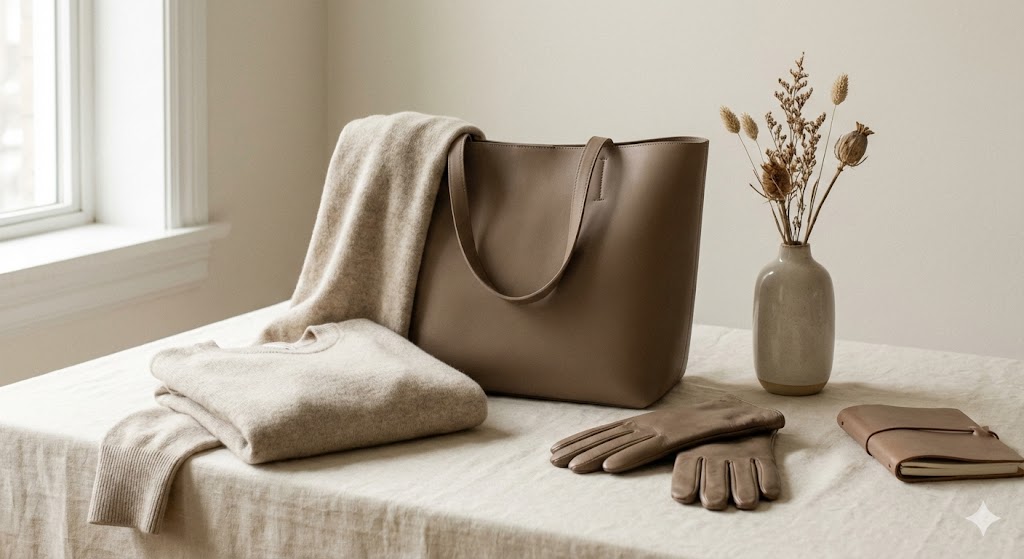
The quiet luxury movement has evolved from an insider’s code into a full-scale aesthetic shift. Searches for “quiet luxury brands” have increased 300% since 2022, driven partly by cultural touchstones like HBO’s Succession and a broader rejection of fast fashion’s disposable mentality. Yet the term itself can be misleading. True quiet luxury isn’t about spending less—it’s about spending differently, on pieces that communicate sophistication to those who recognize the signals while remaining invisible to everyone else.
What Is Quiet Luxury, Really?
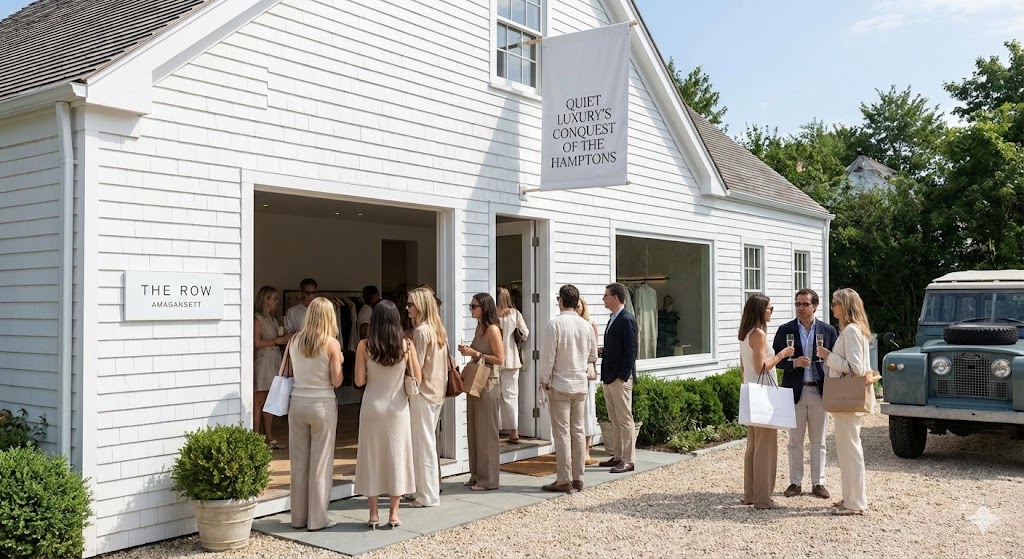
Quiet luxury—also called stealth wealth, silent luxury, or understated elegance—describes a fashion philosophy that values exceptional materials, timeless design, and expert construction over visible branding. The Brunello Cucinelli cashmere sweater bears no exterior logo. The Row handbag could pass for something from a vintage shop to the untrained eye. Loro Piana outerwear looks unremarkable until you feel the fabric.
The concept predates its current trendiness by generations. Old money families in the Hamptons have practiced this approach for decades, investing in bespoke tailoring, heritage brands, and quality basics rather than chasing seasonal It-bags. What’s changed is awareness. Social media and prestige television have exposed these codes to a broader audience, creating demand from professionals, entrepreneurs, and aspirational buyers who want to dress like generational wealth without wearing their net worth on their sleeves.
According to Bain & Company’s 2024 luxury market analysis, the quiet luxury segment now represents approximately 28% of personal luxury goods sales globally, up from 18% in 2019. This shift reflects changing consumer priorities: younger buyers increasingly prefer investment pieces over conspicuous consumption, viewing fashion through a lens of sustainability and lasting value rather than seasonal relevance.
The Definitive Quiet Luxury Brands List
Not every luxury brand qualifies as quiet luxury. Hermès, despite its astronomical prices, remains too recognizable; the Birkin bag is a status symbol understood universally. True quiet luxury brands maintain a lower profile, known primarily within fashion circles and wealthy communities rather than the general public.
The Pinnacle: Brands Worth Knowing
The Row — Founded by Mary-Kate and Ashley Olsen, The Row has become the quintessential quiet luxury brand. Their pieces feature meticulous construction, premium fabrics, and deliberately minimal design. The Margaux bag, available from $2,500 to $6,000 depending on size and material, exemplifies the approach: beautiful leather, perfect proportions, zero visible branding. Celebrities and socialites favor The Row precisely because it doesn’t photograph as “designer.”
Brunello Cucinelli — The Italian brand specializes in cashmere, soft tailoring, and a neutral palette that never dates. Cucinelli’s philosophy extends beyond aesthetics into ethics; the company is known for paying workers above-market wages and maintaining sustainable production practices. A cashmere sweater runs $1,500-$3,000, but owners often keep them for decades. The brand’s Solomeo headquarters has become a pilgrimage site for fashion insiders.
Loro Piana — Now owned by LVMH but still operating with remarkable restraint, Loro Piana produces some of the world’s finest cashmere, vicuña, and technical fabrics. Their storm system jackets protect against weather without sacrificing elegance. The brand maintains an almost pathological aversion to visible logos, relying instead on fabric quality that insiders immediately recognize. Price points start around $1,000 for accessories and climb well past $10,000 for outerwear.
Totême — The Swedish brand founded by Elin Kling offers quiet luxury at more accessible price points, typically $200-$800 for ready-to-wear. Their aesthetic leans Scandinavian minimal with strong tailoring and excellent fabric selection. Totême has captured a devoted following among fashion editors and creative professionals seeking The Row’s vibe without the four-figure commitment.
Khaite — Founded by Catherine Holstein in 2016, Khaite bridges downtown cool with uptown quality. The brand’s leather goods and knitwear have developed cult status, particularly the Lotus bag and Oliver boots. Prices range from $500 for accessories to $3,000+ for outerwear, positioning Khaite as achievable quiet luxury for young professionals.
Quiet Luxury Handbags: The Anti-Logo Investment
Designer handbags have long served as wealth signals, from the Hermès Kelly to the Louis Vuitton Neverfull. Quiet luxury inverts this logic entirely. The most desirable bags in this category are recognized by those who know, invisible to those who don’t.
The Row’s Margaux remains the gold standard: soft leather, architectural shape, no hardware logos. Bottega Veneta’s woven leather pieces qualify when selected in understated colors. Mansur Gavriel offers entry-level quiet luxury with clean bucket bags around $500-$700. Polène, the French direct-to-consumer brand, provides exceptional leather goods under $500 with no visible branding.
For those seeking heritage options, consider Valextra from Milan, whose Iside bag features subtle hand-stitching and premium leather at $3,000-$5,000. Delvaux, the Belgian house predating Hermès by a decade, offers the Brillant and Tempête bags with discreet buckle hardware that initiates immediately recognize.
Building a Quiet Luxury Wardrobe
Quiet luxury isn’t purchased; it’s curated over time. The approach rewards patience and strategic thinking over impulse shopping. Start with foundational pieces that work across seasons and occasions, then layer in special items as opportunities arise.
Foundation Pieces Worth the Investment
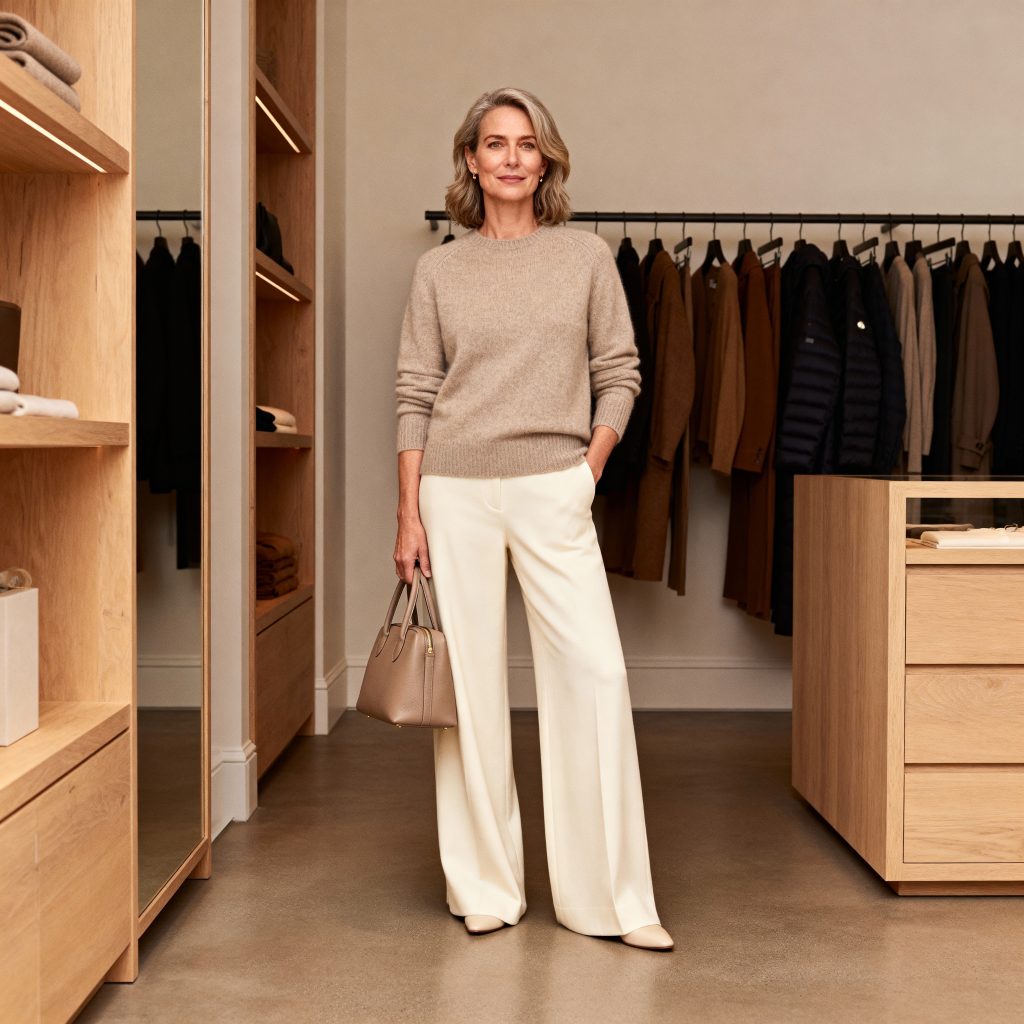
Cashmere Knits — A quality cashmere sweater in navy, gray, camel, or cream forms the backbone of quiet luxury style. Budget $500-$1,500 for pieces that will last 10+ years with proper care. Look for 2-ply or higher cashmere grades and hand-finished seams. Brunello Cucinelli, Loro Piana, and Eric Bompard offer excellent options at various price points.
Tailored Outerwear — One exceptional coat outperforms five mediocre ones. Consider a camel hair or wool-cashmere blend in a classic silhouette: single-breasted, slightly longer length, minimal detailing. Max Mara’s 101801 Icon coat has dressed stylish women for four decades. For men, the Loro Piana reversible cashmere bomber or a quality navy overcoat from Ring Jacket provides similar versatility.
Quality Leather Goods — Beyond handbags, invest in a quality leather belt (no conspicuous buckles), classic leather shoes or boots, and perhaps a leather tote or briefcase. The Italian tanneries supplying these brands—places like Santa Croce sull’Arno—produce leather with distinct hand-feel that synthetic alternatives cannot replicate. A $400 belt from Anderson’s or $600 loafers from Baudoin & Lange outlast and outclass logo-heavy alternatives at similar prices.
Perfect White Shirts — The quiet luxury wardrobe includes several impeccable white shirts in premium cotton or linen. Charvet, the Parisian shirtmaker, represents the pinnacle for bespoke. For ready-to-wear, The Row’s oversized cotton poplin versions run $490 and drape beautifully. Brunello Cucinelli offers slightly more structured options around $500-$700.
The Aesthetic: Color, Fit, and Proportion
Quiet luxury operates within a specific visual language. The palette trends neutral: navy, black, cream, camel, gray, and soft whites dominate. These aren’t boring choices; they’re practical ones that facilitate mixing pieces across seasons and occasions while projecting calm sophistication rather than trend-chasing anxiety.
Fit runs relaxed but never sloppy. The Row popularized the “big” silhouette—oversized blazers, wide-leg trousers, voluminous shirting—but the proportions remain carefully calibrated. Nothing bags or bunches awkwardly. Fabrics have enough body to hold their shape even in larger cuts. This requires either expert tailoring or brands whose sizing and patterns already accommodate the aesthetic.
Texture replaces logo as the status signal. Cashmere’s hand-feel, leather’s patina, linen’s distinctive drape—these tactile qualities communicate quality to anyone nearby. A Loro Piana Storm System jacket in superfine wool announces itself through touch and movement, not obvious branding.
Quiet Luxury Trends Shaping 2025
The quiet luxury movement continues evolving. Several directions have emerged for 2025 that merit attention from anyone building a wardrobe in this aesthetic.
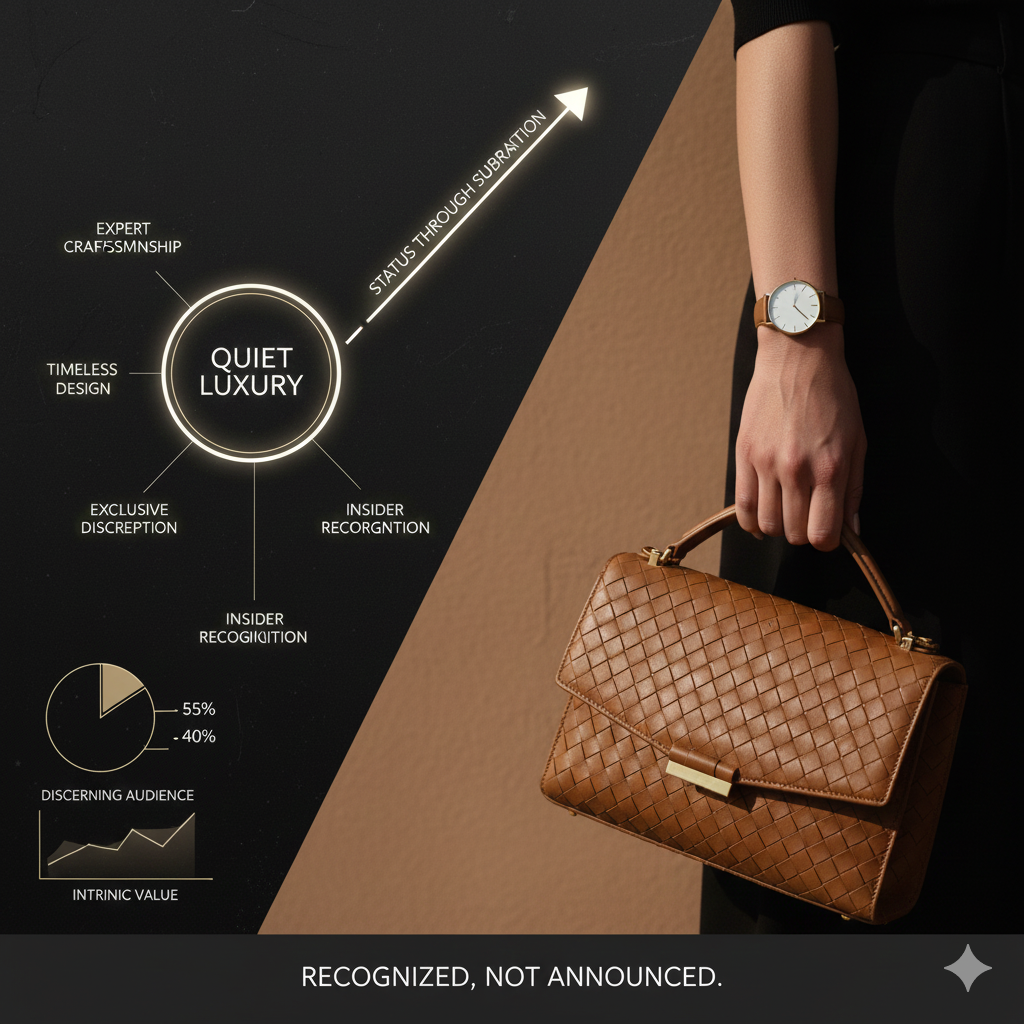
Technical Fabrics Go Luxe — Brands like Zegna and Loro Piana have pioneered technical fabrics that perform like activewear while appearing traditionally elegant. Expect more integration of stretch, moisture-wicking, and weather resistance into pieces that look like standard tailoring. The Zegna Triple Stitch sneaker exemplifies this: a technical sole married to premium leather uppers.
Quiet Streetwear Matures — Aimé Leon Dore, Fear of God Essentials, and Maison Kitsuné have created a streetwear-meets-quiet luxury hybrid that resonates with younger buyers. The pieces read casual but feature upgraded fabrics and construction. This crossover introduces quiet luxury principles to demographics less interested in traditional tailoring.
Vintage Integration — Sophisticated buyers increasingly mix new quiet luxury pieces with vintage finds. A contemporary The Row blazer paired with a vintage Hermès scarf and pre-owned Bottega Veneta loafers creates a wardrobe with depth and authenticity. Consignment platforms like The RealReal and Vestiaire Collective have become essential for building these hybrid wardrobes.
Sustainability Focus Intensifies — McKinsey’s State of Fashion report notes that 67% of luxury consumers now consider environmental impact when purchasing. Quiet luxury brands have responded with increased transparency about sourcing, production, and labor practices. Stella McCartney’s vegan leather innovations and Brunello Cucinelli’s B-Corp certification signal where the category is heading.
Achieving the Look: Affordable Quiet Luxury Options
Not everyone can drop $3,000 on a cashmere sweater, nor should they. The quiet luxury aesthetic can be approximated at various price points through strategic brand selection and smart shopping.
Mid-Range Brands Delivering Quiet Luxury Value
COS — H&M’s elevated sibling offers minimalist design and surprisingly good construction at $50-$300. Their wool-blend coats and structured blazers punch well above their weight class. The aesthetic aligns closely with quiet luxury principles even if the materials don’t quite match premium brands.
Massimo Dutti — Inditex’s upmarket brand provides tailored basics in quality fabrics at $100-$500. Their leather goods particularly impress for the price, offering clean designs without obvious branding. Worth watching for seasonal sales where prices drop 40-50%.
Arket — Another H&M Group brand focused on sustainability and essential pieces. Their cashmere knitwear starts around $150, offering an accessible entry point to quality natural fibers. The aesthetic skews Scandinavian minimal with muted colors and clean lines.
Everlane — The “radical transparency” brand offers elevated basics at moderate prices. Their cashmere sweaters run $100-$200, Italian leather goods under $300. Quality varies by category; the basics and leather goods outperform the more fashion-forward pieces.
Quiet Luxury vs. Old Money Style: Understanding the Difference
The terms often overlap in discussion but describe distinct phenomena. Old money style refers to how generational wealth actually dresses: inherited pieces, country club appropriate attire, regional brands like Murray’s Toggery Shop in Nantucket or J. Press for East Coast prep. It’s unselfconscious in ways that deliberately chosen “quiet luxury” cannot fully replicate.
Quiet luxury is the contemporary luxury market’s attempt to capture that aesthetic for buyers who didn’t grow up with it. The Row and Totême are selling a fantasy of established wealth—clean lines, quality fabrics, discretion—packaged for people who built their own money rather than inherited it. This isn’t criticism; it’s context. Understanding the distinction helps clarify what you’re actually purchasing and why.
True old money style often includes quirks that quiet luxury smooths away: slight eccentricity, visible wear on beloved pieces, unfashionable preferences maintained out of loyalty rather than trend awareness. The third-generation Hamptonite wearing decades-old Bean boots and a moth-holed Shetland sweater isn’t performing wealth—they simply don’t think about clothes much. Quiet luxury buyers, by contrast, think about clothes quite deliberately, which is precisely the point.
Where to Shop for Quiet Luxury
Finding these brands requires knowing where to look. Several retail environments specialize in the quiet luxury customer.
Multi-Brand Retailers — Net-A-Porter, SSENSE, and MatchesFashion carry extensive quiet luxury selections with reliable authentication and service. Bergdorf Goodman in Manhattan and similar luxury department stores offer the advantage of in-person shopping with knowledgeable staff. For emerging brands, Moda Operandi’s trunk shows provide early access.
Direct-to-Consumer — Many quiet luxury brands sell primarily through their own channels. The Row, Brunello Cucinelli, and Loro Piana operate boutiques in major cities and comprehensive e-commerce. Buying direct often provides better service and first access to new collections.
Consignment and Resale — The RealReal, Vestiaire Collective, and Rebag offer authenticated pre-owned quiet luxury at significant discounts. Given these pieces’ durability and timeless design, pre-owned purchasing aligns naturally with the aesthetic’s values. A five-year-old The Row bag looks much the same as a new one.
The Quiet Luxury Philosophy: Beyond Fashion
Quiet luxury represents more than a fashion trend. It’s a consumption philosophy that values quality over quantity, craft over marketing, and discretion over display. In an era of fast fashion waste and conspicuous social media consumption, choosing understated excellence feels almost countercultural.
For residents and visitors of the Hamptons, where old money traditions coexist with new wealth arrivals, quiet luxury offers a visual language that bridges both worlds. The aesthetic respects established codes while remaining accessible to those building their wardrobes—and their wealth—from scratch.
Whether you’re investing in your first Brunello Cucinelli piece or simply shifting toward more intentional purchasing, the principles remain constant: buy less, buy better, and let quality speak for itself. The best-dressed rooms in Southampton have operated this way for generations. Now the rest of the world is catching on.
Continue Your Journey
Explore more luxury lifestyle coverage and Hamptons society reporting at SocialLifeMagazine.com. For event tickets and sponsorship inquiries, visit PoloHamptons.com. Subscribe to our print edition or join our email list for weekly updates on the people, parties, and places shaping East End life.
Related Reading:
Author

Written by
Recent Posts
How to Pick a Homecoming Dress for Your Body Type and Feel Amazing in It
How to Prepare a Home for Sale When Major Repairs Are Not Affordable
From Everyday Comfort to Personal Style: My SHEIN Slipper Habit
5 Best Mitsubishi Heat Pump Companies in Seattle
Tech Gadgets as Modern Corporate Gifts: Useful Ideas for Employees and Clients
Categories
- Art
- Articles
- Business of Luxury
- Celebrities
- Culture
- Entertainment
- Events
- Faces of Summer 2026
- Fashion
- Fashion & Style
- Featured
- Finance
- Food, Spirits, Wine
- Hamptons
- Hamptons Celebrities
- Health
- Health & Beauty
- Lifestyle
- Luxury Lifestyle
- Press
- Profiles
- Real Estate
- Technology
- The Chronicles
- Travel
- Uncategorized
- Weddings