
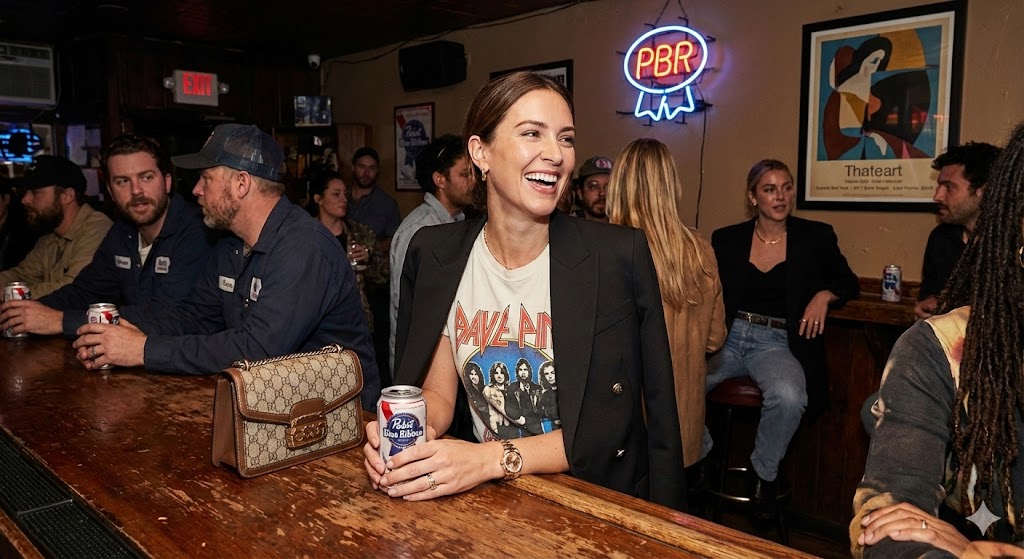
The rules of good taste have changed. Not disappeared, mind you. They’ve simply evolved into something far more sophisticated and nearly impossible to fake. If you’ve ever wondered why your hedge fund neighbor insists on dragging you to that “authentic” taco truck in Montauk while simultaneously maintaining a wine cellar worth more than most houses, you’re witnessing cultural omnivoreism in action.
This isn’t about hypocrisy. It’s about a subtle recalibration of status markers that separates those who truly belong from those who merely aspire. The old model of distinction, where the wealthy consumed only “high culture” while the masses enjoyed their lowbrow pleasures, has become almost quaint. Today’s elite play a different game entirely, and the stakes have never been higher for those trying to break into the inner circle.
The Shift From Snob to Omnivore: A New Theory of Taste
Sociologist Richard Peterson identified this transformation decades ago, building on Pierre Bourdieu’s foundational work on cultural capital. Peterson called it the shift from “snob to omnivore,” observing that upper-class Americans increasingly participate in lowbrow culture. They’ll pour a glass of first-growth Bordeaux at dinner, then suggest hitting a dive bar afterward. They’ll pair a Carhartt work jacket with $1,000 Margiela Tabi boots without a trace of irony.
This evolution reflects broader social changes according to research from Harvard Business Review’s cultural analysis. Globalization, digital democratization, and shifting demographics have made pure snobbery look provincial. The truly sophisticated person today demonstrates range. They move fluidly between opera and underground hip-hop, between Michelin-starred tasting menus and gas station hot dogs.
But here’s what Peterson’s theory doesn’t fully capture: if elite taste now encompasses everything from high to low, how do the wealthy still maintain distinction? The answer reveals a system far more elegant and ruthless than simple snobbery ever was.
Internal Differentiation: The Art of Consuming the “Right” Version
The first mechanism of modern distinction operates through what scholars call internal differentiation within cultures. The boundary isn’t drawn between high and low anymore. It’s drawn between authentic, knowing versions and mass, commercial, basic versions of the same exact thing.
Consider pizza. Everyone eats pizza. But the cultural omnivore doesn’t just eat pizza. They seek out Neapolitan pizza from a specific pizzaiolo who trained in Naples and imports San Marzano tomatoes. They can discuss the difference between a 72-hour and 48-hour fermented dough. They know which Brooklyn spots actually have wood-fired ovens versus gas-assisted ones pretending to be authentic.
The same logic applies across every cultural form. Not just beer, but a specific saison from a Belgian-inspired microbrewery in Vermont. Not just vintage clothing, but Japanese selvedge denim from a factory that still uses shuttle looms. Not just a podcast, but an obscure one about medieval economics that only 50,000 truly sophisticated listeners have discovered.
This pattern explains the seemingly contradictory consumption habits of the Hamptons set detailed in our comprehensive entertaining guide. The same host who serves caviar service at their Meadow Lane estate also throws a lobster roll party featuring a specific shack in Montauk that most tourists would never find. Both gestures communicate the same message: I know the right version of everything.
The Framing Game: Context as the Ultimate Status Marker
The second mechanism of distinction involves how elite consumers frame their engagement with lowbrow culture. The upper class can appreciate dive bars, trucker hats, and gas station snacks, but only through specific interpretive lenses: irony, nostalgia, exoticism, or intellectualization.
Going to a dive bar becomes acceptable when you can articulate why it’s “unpretentious” or “authentic.” Eating a gas station hot dog transforms into a permissible pleasure when framed as a “guilty pleasure” consumed with knowing self-awareness. Wearing a trucker hat signals status when positioned as appreciation for “Americana” or “heritage workwear” rather than simply being a trucker hat.
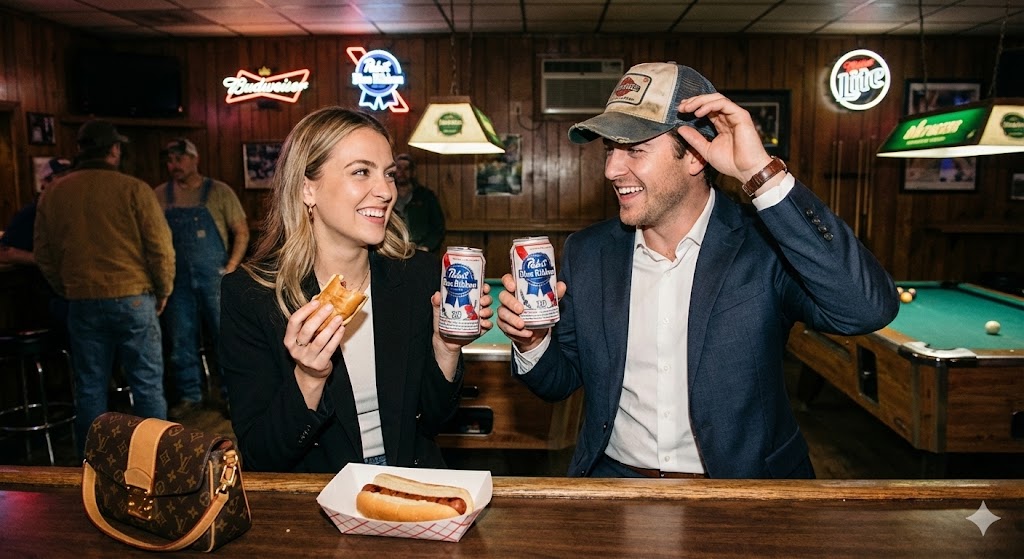
The framing requirement creates an invisible barrier. If you engage with these same cultural forms without the proper interpretive framework, without knowing the specific cultural reference points, without the ability to articulate why it’s interesting, then it just looks like you have bad taste. You’re not being ironic. You’re just being basic.
This dynamic plays out constantly in Hamptons social scenes according to insights from BCG’s luxury consumer research. The tech founder who wears a vintage Grateful Dead t-shirt to a gallery opening succeeds because everyone understands the reference. The person who wears the same shirt without the cultural vocabulary to explain their appreciation for Jerry Garcia’s influence on American counterculture fails the invisible test.
Aesthetic Disposition: The Vocabulary of Belonging
The third and perhaps most powerful mechanism of distinction involves what Bourdieu called aesthetic disposition. This concept describes a specific way of engaging with culture that ultimately separates insiders from outsiders: the ability to analyze, contextualize, and articulate.
The average person goes to a dive bar because drinks are cheap and it’s close by. The cultural omnivore goes to a dive bar for its “Americana aesthetics,” its “rejection of corporate homogenization,” its “authentic working-class ambiance that provides relief from the performative nature of upscale venues.” Same bar. Same cheap drinks. Entirely different mode of consumption.
They can’t just like a painting. They must place it within its historical context, discuss the technique used, reference the artist’s influences, and position it within contemporary art market trends. This analytical engagement transforms consumption from passive enjoyment into active demonstration of cultural competence.
The ability to articulate becomes the boundary itself. This separates knowing consumption from naive consumption. You can drink the same craft beer as someone with genuine cultural capital, but if you can’t explain why you prefer wild fermentation to standard ale yeast strains, you’ve revealed yourself as an outsider.
Why This Matters for Your Positioning
Understanding cultural omnivoreism isn’t merely academic. For anyone navigating Hamptons social life, building relationships with family offices, or positioning themselves for luxury brand partnerships, these mechanisms operate constantly beneath the surface of every interaction.
The newly liquid founder who just closed their Series C faces this challenge acutely. They have the wealth to access elite spaces, but wealth alone doesn’t grant entry to the inner circle. They need to demonstrate the right consumption patterns: broad enough to seem worldly, specific enough to seem knowing, framed with the appropriate vocabulary of appreciation.
The medspa entrepreneur seeking prestige press encounters similar dynamics detailed in our wellness industry analysis. Their aesthetic choices, from the art on their clinic walls to the coffee they serve clients, either signal insider status or reveal them as merely affluent.
Fashion brand founders trying to establish Hamptons relevance must navigate these waters with particular care. According to McKinsey’s State of Fashion report, luxury consumers increasingly value brands that demonstrate cultural fluency alongside quality. The designer who can reference both haute couture and vintage workwear with equal sophistication signals the kind of knowing consumption that attracts elite clientele.
The Invisible Resources Required
Cultural omnivoreism appears democratic on the surface. After all, anyone can visit a dive bar or eat pizza. But the invisible resources required to be a successful omnivore reveal its function as a class separator.
First, there’s time. Developing the knowledge to distinguish authentic from commercial versions across dozens of cultural categories requires years of exploration. The person working multiple jobs doesn’t have leisure hours to research which taco truck uses the correct chili varieties or which vintage dealers stock actual Japanese selvedge.
Second, there’s access. Knowing the “right” versions often requires exposure to people who already possess this knowledge. The right craft brewery, the right pizzaiolo, the right vintage shop, all these discoveries typically flow through social networks that themselves require cultural capital to access.
Third, there’s education. The vocabulary of aesthetic disposition doesn’t emerge naturally. It develops through specific kinds of exposure: art history courses, food writing, design criticism, cultural journalism. These educational resources cluster among those already possessing advantages.
This creates what researchers call cultural reproduction explored in Bain’s luxury market analysis. Those with cultural capital pass it to their children, who learn from infancy how to consume “correctly.” The child raised attending gallery openings and discussing why certain restaurants matter develops an intuitive aesthetic disposition that no amount of adult effort can fully replicate.
Navigating the Omnivore Landscape
For those seeking to build genuine cultural fluency, several strategies prove more effective than others. None of them involve simply buying expensive things.
Develop specific areas of deep knowledge rather than broad superficial familiarity. Knowing everything about Japanese whisky culture signals more effectively than knowing a little about many topics. Depth demonstrates the time investment that separates authentic engagement from status-seeking.
Build relationships with genuine experts in fields you care about. The sommelier who becomes your friend, the vintage dealer who texts you when something special arrives, the chef who welcomes you into their kitchen, these relationships provide both knowledge and credibility that can’t be purchased.
Practice articulation. The vocabulary of aesthetic disposition must be developed actively. Read cultural criticism in publications that take these matters seriously. Attend events where such discussion occurs naturally. Listen to how insiders talk about their passions and internalize not just the content but the mode of engagement.
Our coverage of Polo Hamptons events illustrates how these principles operate in practice. The attendees who successfully network their way into meaningful relationships demonstrate cultural fluency across multiple domains simultaneously: art, sport, fashion, gastronomy, philanthropy.
The Future of Distinction
Cultural omnivoreism will likely intensify as a mechanism of class separation. As material goods become more accessible through fast fashion and global supply chains, the emphasis shifts further toward how you consume rather than what you consume.
The rise of authenticity as a luxury value reflects this trend. What can’t be easily copied isn’t the $2,000 handbag, which can be replicated endlessly. What can’t be copied is the cultural knowledge to pair that handbag with vintage workwear in a way that reads as sophisticated rather than confused. What can’t be copied is the vocabulary to discuss why certain designers matter while others merely profit.
For luxury brands seeking Hamptons relevance, this shift has profound implications. The brands that succeed will be those that help their customers demonstrate cultural competence, not just display wealth. They’ll create products that reward knowledge: limited releases that require insider awareness, collaborations that reference obscure cultural touchpoints, experiences that build the kind of stories only insiders can tell.
For individuals building their social capital in elite spaces, the message is clear. Access requires more than assets. It demands a specific way of moving through culture: omnivorous in scope, precise in selection, articulate in engagement. The rules have changed, but the game continues. Those who master the new mechanisms of distinction will find doors opening that money alone could never unlock.
For features, advertising inquiries, or partnership opportunities, contact us at SocialLifeMagazine.com/contact. Experience the intersection of sport, style, and society at Polo Hamptons this season. Subscribe to our print edition or join our exclusive email list to receive insider access to Hamptons culture, events, and opportunities.
Related Reading:
- North Fork Wine Culture: Beyond the Tasting Room
- The Insider’s Guide to Vintage Rolex Watch Collecting
Support independent Hamptons journalism. Donate $5 to keep our coverage free and fearless.
Author

Written by
Recent Posts
Unlocking the Berkshires
Dalia Forman Design
Alberto Luzzi
How to Pick a Homecoming Dress for Your Body Type and Feel Amazing in It
How to Prepare a Home for Sale When Major Repairs Are Not Affordable
Categories
- Art
- Articles
- Business of Luxury
- Celebrities
- Culture
- Entertainment
- Events
- Faces of Summer 2026
- Fashion
- Fashion & Style
- Featured
- Finance
- Food, Spirits, Wine
- Hamptons
- Hamptons Celebrities
- Health
- Health & Beauty
- Lifestyle
- Luxury Lifestyle
- Press
- Profiles
- Real Estate
- Technology
- The Chronicles
- Travel
- Uncategorized
- Weddings