
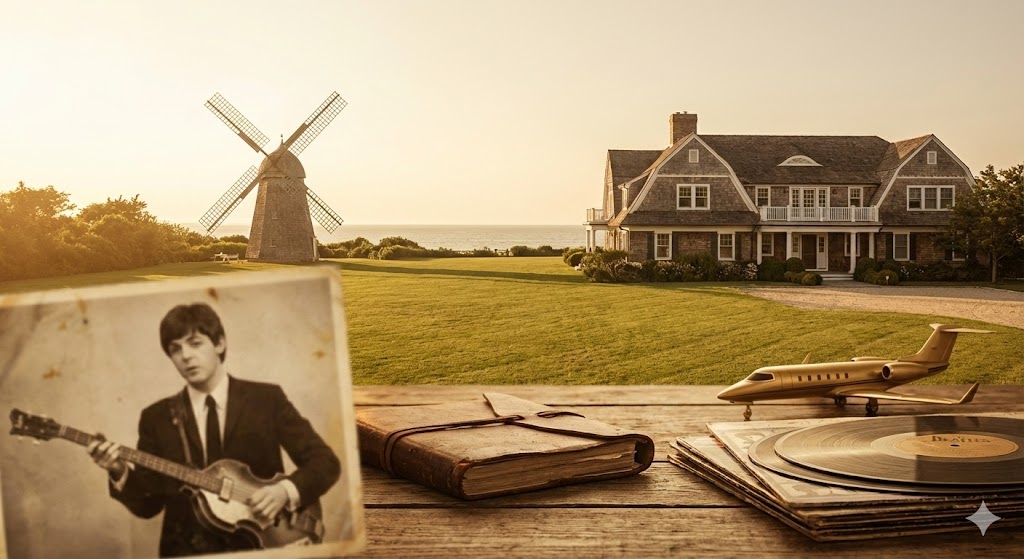
Paul McCartney’s net worth currently stands at an estimated $1.2 billion, making him the wealthiest musician in British history and among the richest entertainers globally. But the Paul McCartney net worth story transcends the expected Beatles narrative. Yes, the band generated unprecedented wealth from music that fundamentally altered popular culture. Yet McCartney’s fortune grew more substantially after the Beatles ended than during, through decades of strategic decisions around touring, publishing rights, and property acquisition that demonstrate business sophistication rarely associated with rock musicians.
His East Hampton estate represents just one property in a portfolio spanning multiple continents and totaling hundreds of millions in real estate value alone. The compound on Further Lane, arguably the most prestigious address in the Hamptons, provides American base operations for a global enterprise still generating nine-figure annual revenues six decades after its founding. The working-class Liverpool kid who couldn’t read music now owns compositions that will generate income for his heirs’ grandchildren.
What Is Paul McCartney’s Net Worth in 2025?
Paul McCartney’s net worth is estimated at $1.2 billion as of 2025. This figure encompasses his music publishing catalog, recording royalties, touring revenues, real estate holdings across multiple countries, art collection, and various business interests. His annual income from music alone reportedly exceeds $50 million, with touring adding another $50-100 million during active years.
The composition reveals how his wealth shifted from performance income toward asset ownership over decades. His MPL Communications company owns publishing rights to thousands of songs, including works by Buddy Holly, Carl Perkins, and numerous contemporary artists purchased strategically when catalog values were lower. The irony of not owning Beatles publishing rights—famously acquired by Michael Jackson—drove McCartney’s determination to build alternative catalog holdings. According to Forbes analysis, his portfolio approach to music rights ownership proved more valuable long-term than the specific Beatles songs he lost.
How Paul McCartney Made His Fortune
The Beatles’ commercial success during their active years (1960-1970) generated substantial income but not the billions associated with McCartney today. Recording royalties, publishing splits with Northern Songs, and touring revenues were divided among four members, managers, and various entities extracting percentages at every stage. McCartney’s genuine wealth accumulation began after the breakup, through solo recording, strategic touring decisions, and the publishing acquisition strategy that became his financial signature.
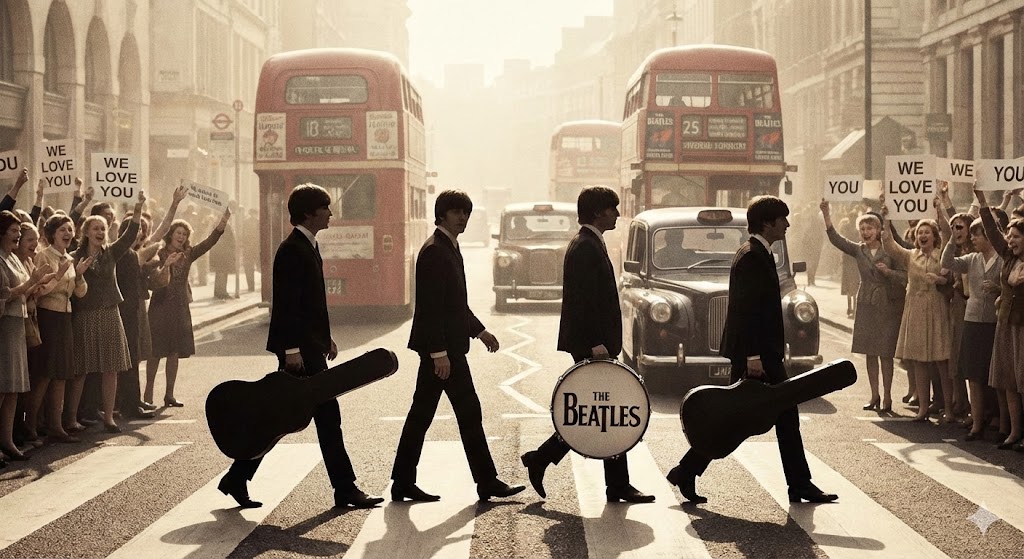
Wings, his post-Beatles band, achieved commercial success that critics often discount when assessing his career. “Band on the Run” sold millions of copies worldwide, generating royalties McCartney controlled entirely rather than splitting four ways. His 1989-1990 world tour grossed over $200 million, demonstrating that decades after the Beatles’ peak, demand for McCartney performances remained enormous. Each subsequent tour improved on previous revenues as ticket pricing increased faster than audience decline.
The publishing acquisition strategy through MPL Communications represents his most sophisticated wealth-building move. By purchasing catalogs from songwriters and estates at prices reflecting historical values rather than streaming-era multiples, McCartney accumulated assets that appreciated enormously. His Buddy Holly catalog purchase in 1976 for approximately $40 million now generates returns exceeding the original investment annually. Research from McKinsey identifies streaming’s predictable revenue as primary driver behind recent music rights appreciation.
The Liverpool Foundation: Working-Class Roots and Upper-Class Reach
James Paul McCartney was born in Liverpool during World War II to James McCartney, a cotton salesman and volunteer fireman, and Mary Patricia Mohin McCartney, a midwife whose income often exceeded her husband’s. The household was comfortable by working-class standards but distant from the privilege his children would inherit. His mother’s death from breast cancer when Paul was fourteen devastated the family and created the emotional foundation that would inform songs touching audiences globally for decades.
Liverpool’s post-war recovery shaped his understanding of class dynamics that permeate British society. The city’s maritime connections brought American music through sailors’ record collections, exposing young McCartney to sounds unavailable through British radio. This cosmopolitan influence, filtered through industrial Northern English perspective, created the synthesis that distinguished Beatles music from purely British or purely American alternatives. The ability to bridge cultures became commercial advantage that compounds still.
His partnership with John Lennon, formed through mutual friend Ivan Vaughan in 1957, began the most commercially successful songwriting collaboration in popular music history. Their competitive creative dynamic produced songs neither could have written alone, though posthumous analysis suggests McCartney’s compositions aged better commercially while Lennon’s maintained stronger critical reputation. This distinction matters financially: McCartney’s songs get played at weddings, in commercials, and as background music generating performance royalties. Lennon’s get discussed in documentaries. Both have value, but different kinds.
Paul McCartney’s Real Estate Portfolio
The East Hampton estate on Further Lane anchors McCartney’s American holdings with oceanfront property valued at approximately $15-20 million. The compound provides Hamptons social access while maintaining privacy that his fame requires. Further Lane’s exclusivity—neighbors include Steven Spielberg, Calvin Klein legacy properties, and hedge fund principals—ensures security through collective interest in discretion. McCartney’s presence elevates neighborhood prestige while benefiting from existing exclusivity.
His London townhouse in St. John’s Wood, near Abbey Road Studios where the Beatles recorded, maintains his British base. The property’s location carries obvious sentimental value while providing practical proximity to business interests and social connections spanning his entire career. Additional British holdings reportedly include properties in Sussex and Scotland, reflecting the landed estate pattern traditional among British wealth that McCartney adopted despite working-class origins.
The Arizona ranch, purchased with late wife Linda McCartney, represents their shared commitment to privacy and environmental causes that defined their partnership. Previous properties sold over decades include various residences that accompanied career phases and marriages. His current portfolio reflects consolidation toward properties he intends to retain long-term rather than continued accumulation. According to Architectural Digest coverage, his properties emphasize comfort and functionality over architectural showmanship.
Spending Patterns: Art, Land, and Calculated Permanence
Paul McCartney’s art collection spans works by Magritte, Picasso, and various modern and contemporary artists acquired over decades. His own painting practice, exhibited professionally though purchased primarily by dedicated fans, generates modest additional income while providing creative outlet distinct from music. The collection represents both genuine aesthetic interest and asset diversification typical of billionaire wealth management.
His vegetarianism, adopted with Linda McCartney in 1975, influences spending patterns through support for animal rights organizations and plant-based food companies. This commitment, maintained for five decades regardless of commercial implications, represents rare consistency among celebrities whose causes rotate with publicity value. The authenticity strengthens his appeal to audiences who share these values while limiting appeal to those who don’t, a trade-off he’s evidently accepted.
Charitable giving focuses on arts education, animal welfare, and Liverpool-area causes connecting him to his origins. The Liverpool Institute for Performing Arts, which he founded and supports, provides arts education in buildings where he attended school. According to Bain research on philanthropic patterns, his focus on specific causes rather than general giving reflects engagement levels associated with genuine commitment rather than reputation management.
What’s Next for Paul McCartney’s Fortune?
At 83, McCartney maintains touring schedules that exhaust performers half his age. His 2022-2023 “Got Back” tour grossed over $130 million, demonstrating continued demand despite age-related concerns. Each tour carries implicit acknowledgment that limited opportunities remain, a scarcity that actually enhances ticket values. The economic irony of mortality boosting prices seems unlikely to escape his notice.
His MPL Communications company provides institutional structure for managing his various interests and will likely persist beyond his lifetime under family or professional management. His children—Heather, Mary, Stella, James, and Beatrice—represent potential heirs whose individual interests range from fashion (Stella McCartney’s successful design career) to photography to relative privacy. Estate planning for assets of this magnitude and complexity likely involves trusts and structures designed for multi-generational wealth preservation.
The Beatles catalog’s ownership remains split among various parties including Sony, which purchased the Lennon-McCartney publishing from Michael Jackson’s estate. McCartney’s gradual reacquisition of his songwriting rights through copyright reversion provisions represents ongoing effort to reunite ownership that original contracts dispersed. These rights reversions, beginning in 2018 for American copyrights, will continue adding to his estate value for years. The working-class Liverpool kid who signed away rights before understanding their value has spent decades systematically recovering them, a patience that defines his approach to wealth as much as any single decision.
Seeking visibility in the Hamptons luxury market? Contact Social Life Magazine for feature opportunities that connect your brand with discerning audiences. Experience where celebrity meets society at Polo Hamptons events throughout the summer season.
Related Reading:
Author

Written by
Recent Posts
Unlocking the Berkshires
Dalia Forman Design
Alberto Luzzi
How to Pick a Homecoming Dress for Your Body Type and Feel Amazing in It
How to Prepare a Home for Sale When Major Repairs Are Not Affordable
Categories
- Art
- Articles
- Business of Luxury
- Celebrities
- Culture
- Entertainment
- Events
- Faces of Summer 2026
- Fashion
- Fashion & Style
- Featured
- Finance
- Food, Spirits, Wine
- Hamptons
- Hamptons Celebrities
- Health
- Health & Beauty
- Lifestyle
- Luxury Lifestyle
- Press
- Profiles
- Real Estate
- Technology
- The Chronicles
- Travel
- Uncategorized
- Weddings