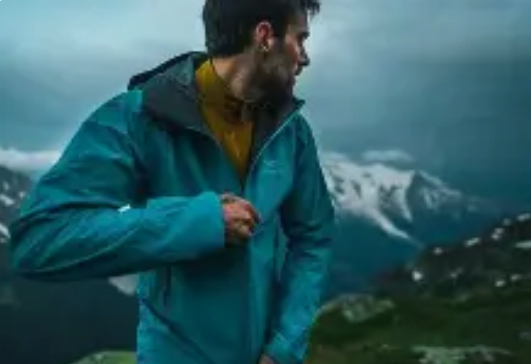
Stand at Ditch Plains any morning this season and count the jackets. You’ll see North Face on tourists. Patagonia on the sustainably-minded. But the serious surfers—the ones who also manage serious money—they’re wearing Arc’teryx Hamptons devotees have made this Vancouver climbing brand their uniform. The dinosaur logo speaks a language more subtle than Moncler, more technical than Canada Goose, and infinitely more credible than anything trying too hard.
The brand’s trajectory defies conventional fashion logic. Founded in 1989 as “Rock Solid Manufacturing” in a Vancouver basement, Arc’teryx spent decades serving hardcore mountaineers. Then TikTok happened. Moreover, Frank Ocean wore their beanie to Paris Fashion Week. Subsequently, Drake was spotted in their jackets. The gorpcore movement transformed technical outerwear into status symbols.
From Climbing Harnesses to Cultural Currency
Dave Lane started Rock Solid because Canadian climbing gear disappointed him. He wasn’t building a fashion brand. He was solving a frustration shared by fellow climbers in British Columbia.
The company rebranded as Arc’teryx in 1991, naming itself after the Archaeopteryx—the transitional fossil linking dinosaurs to birds. Additionally, the choice was deliberate. The founders wanted to signal evolution, the idea of transforming something ancient into something capable of flight.

The Gore-Tex Revolution
Arc’teryx obtained Gore-Tex licensing in 1995, enabling development of the Alpha SV jacket that would define the brand. The jacket combined waterproofing, breathability, and durability at levels competitors couldn’t match. Furthermore, it proved that technical excellence could coexist with refined design.
Fast Company labeled Arc’teryx a “cult brand” in 2021. The Financial Times identified their core demographic as “urbanites.” Neither publication was wrong. However, both missed the deeper story: Arc’teryx succeeded by refusing to pursue the urbanites who would eventually find them.
The TikTok Shower Moment
In 2022, something strange emerged on social media. Users began filming themselves showering while fully clothed in Arc’teryx jackets. British rapper YT released a track called “Arc’teryx” with lyrics declaring “Arc’teryx on me, we don’t rock no Patagonia.”
The videos accumulated over 219 million views under the hashtag #arcteryx. One creator generated 5.1 million views with a single shower test. Consequently, third quarter sales rose 65% year-over-year as the trend crested.
Why Authenticity Beat Marketing
Arc’teryx never initiated the trend. They didn’t pay influencers to shower in their jackets. The virality happened because the products actually performed—water truly did bead and roll off Gore-Tex shells exactly as advertised. Subsequently, the marketing became self-validating. Every shower video was essentially a product demonstration.
For Arc’teryx Hamptons wearers, this matters. The jacket they’re wearing isn’t fashion cosplaying as function. It’s genuine technical equipment that happens to signal cultural fluency.
The Veilance Factor: Urban Technical Luxury
Arc’teryx launched Veilance in 2009, recognizing that urbanites wanted the same performance in sleeker silhouettes. The sub-brand takes Gore-Tex technology and applies it to blazers, trousers, and minimalist outerwear designed for city environments.
The design process for Veilance begins three years before products launch. Materials are developed in-house when existing options prove insufficient. Additionally, the manufacturing facility sits 30 minutes from the design studio, enabling precision control that justifies premium pricing.
Pricing as Positioning
Veilance jackets range from $800 to $1,500. Gore-Tex shells in the main Arc’teryx line run $400-900. These prices exceed competitors like North Face and Patagonia by significant margins. However, they remain below luxury fashion houses attempting technical outerwear.
This positioning proves strategic for Hamptons fashion dynamics. An Arc’teryx jacket signals you care about quality without trying to signal wealth. Moreover, it communicates outdoor credibility whether or not you actually climb mountains.
Arc’teryx Hamptons: The Finance Bro Uniform
Walk through any hedge fund office in Manhattan and you’ll spot Arc’teryx on the commute. The same jackets appear on Jitney buses heading east. Furthermore, they materialize at Surf Lodge weekends and Duryea’s Lobster Deck dinners.
The appeal for finance professionals extends beyond aesthetics. These are people who analyze performance metrics for a living. Arc’teryx outperforms competitors by measurable standards. The purchase decision feels rational even when the motivation is tribal.
The Montauk Connection
Montauk’s specific culture accelerates Arc’teryx adoption. The town attracts people who surf, fish, and spend time outdoors—activities requiring genuine weather protection. Subsequently, functional credentials matter more than they might in Southampton boutique culture.
The brand also benefits from Montauk’s resistance to obvious luxury signaling. Arc’teryx logos remain understated. The dinosaur fossil sits small and cryptic. Unlike Canada Goose patches or Moncler wordmarks, recognition requires insider knowledge.
The Ownership Story Nobody Knows
Arc’teryx operates under Amer Sports, which Chinese company Anta Sports controls with a majority stake acquired in 2019. Furthermore, Amer Sports went public in February 2024, raising $1.4 billion at a $6.5 billion valuation.
This ownership structure enables aggressive expansion, particularly in China where Arc’teryx aims to operate nearly 200 stores. The capital backing supports the brand’s refusal to discount or dilute quality for growth. However, few consumers recognize these corporate dynamics behind their favorite jackets.
Recent Controversy
In September 2025, Arc’teryx faced backlash for a fireworks display in Tibet, which environmental critics condemned for damaging fragile ecosystems. The controversy sparked boycott discussions in China and led to four local officials losing their positions. Additionally, the incident highlighted tensions between the brand’s sustainability messaging and corporate decision-making.
For Arc’teryx Hamptons loyalists, such controversies barely register. Brand attachment in technical outerwear runs deeper than typical fashion relationships. People invest in performance they’ve personally verified.
The LEAF Division Nobody Discusses
Beyond consumer products, Arc’teryx operates LEAF (Law Enforcement and Armed Forces), supplying military and police with tactical gear. This division reinforces the brand’s technical credibility while serving markets most fashion brands avoid.
The existence of LEAF demonstrates Arc’teryx’s commitment to genuine performance applications. Soldiers and law enforcement officers require gear that functions under conditions far more demanding than Hamptons beach mornings. Consequently, the technology trickling into consumer products comes from serious testing.
What Sets Arc’teryx Apart
Sven Radtke, Arc’teryx EMEA general manager, explained the differentiation simply: “commitment to quality and meticulous attention to detail.” The company designs products with functionality first, then prices accordingly rather than targeting price points and designing backward.
This philosophy produces jackets that genuinely last decades when maintained properly. Moreover, the brand’s ReBIRD service centers offer repairs, re-waterproofing, and restoration—extending product lifecycles beyond what disposable fashion allows.
The Style Integration Question
Arc’teryx succeeded partly by ignoring fashion. The irony is that this indifference made them fashionable. Their minimal aesthetic and technical focus attracted people exhausted by logos and trend cycles.
Frank Ocean’s 2019 Paris Fashion Week appearance—orange puffer, blue jeans, Arc’teryx beanie—still circulates as a style reference years later. The outfit worked because it didn’t try to work. Furthermore, the beanie continues selling out whenever restocked.
What Comes Next for Arc’teryx Hamptons
The brand faces the classic cult problem: success threatens authenticity. As more people wear Arc’teryx for fashion rather than function, the technical credibility that enabled fashion adoption could erode. However, the company’s refusal to chase trends suggests they understand this dynamic.
For current Arc’teryx Hamptons devotees, the calculation remains straightforward. A $600 jacket that actually protects against weather, signals cultural awareness, and lasts for years represents reasonable value. Additionally, when that jacket survives a genuine Montauk rainstorm as effectively as it handles a Hamptons brand activation photo opportunity, you’ve found something worth keeping.
The dinosaur evolved into a bird. The climbing brand evolved into a status symbol. Perhaps the lesson is that genuine excellence eventually gets recognized—whether you’re seeking the recognition or not.
Connect With Social Life Magazine
Feature Inquiries & Advertising: Contact our editorial team
Polo Hamptons 2026: Tickets, cabanas, and corporate sponsorships
Never Miss an Issue: Subscribe to exclusive invites and specials
Print Subscription: Receive Social Life Magazine delivered to your door
Support Our Journalism: Contribute $5 to independent Hamptons coverage
Related Articles: