
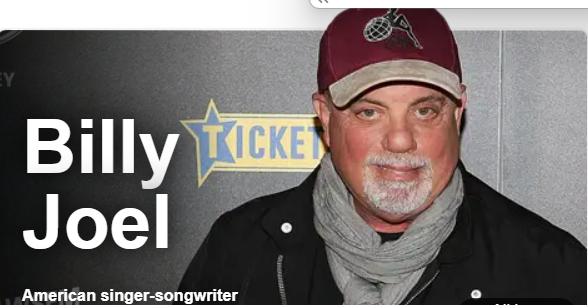
Howard Stern’s father called him stupid. Sylvester Stallone slept in bus stations. Steve Harvey lived in his car for three years. Jim Carrey’s family was so poor they moved into a van. Jay-Z watched his father walk out the door when he was eleven years old and never come back.
These aren’t tragic backstories. They’re the origin stories of self-made millionaires who now own estates in America’s most exclusive zip codes. The wounds that almost destroyed them became the fuel that built empires worth hundreds of millions, sometimes billions. Understanding how they did it reveals patterns that separate temporary success from generational wealth.
This guide examines nineteen self-made millionaires through the lens of what actually created their fortunes. Not luck. Not talent alone. Something darker and more powerful: the conversion of early pain into relentless drive. The research suggests a provocative thesis: the circumstances that seem most likely to destroy someone might actually be the conditions that create extraordinary achievement.
Many of these fortunes eventually found their way to the Hamptons, where the ultimate status symbol isn’t the estate itself but the story of how you earned the right to buy it.
The Psychology of Self-Made Wealth
Harvard Business School research on millionaires reveals something counterintuitive. Inherited wealth produces significantly less happiness than earned wealth. Millionaires who built their own fortunes report higher life satisfaction than those who married into money or inherited everything. The struggle, it turns out, is part of the reward.
But the research goes deeper. The most successful self-made millionaires share specific psychological patterns that emerge from early adversity. They develop what psychologists call “post-traumatic growth,” where difficult experiences become catalysts for personal transformation rather than permanent damage.
The pattern repeats across industries. Entertainment. Sports. Finance. Technology. The specific circumstances differ, but the psychological architecture remains consistent. Early rejection creates hunger. Hunger creates discipline. Discipline creates opportunity. Opportunity, seized repeatedly over decades, creates wealth.
According to research on ultra-high-net-worth individuals, approximately 67.7% created their wealth themselves. Another 23.7% combined inheritance with self-made wealth. Only 8.5% inherited everything. The data confirms what the stories suggest: most significant fortunes are built, not given.
The Wound: How Childhood Adversity Becomes Fuel
Every self-made fortune begins with a wound. Not metaphorically. Literally. The psychological injury that occurs in childhood or early adulthood creates a void that achievement attempts to fill. Understanding this dynamic explains why some people pursue success with intensity that seems irrational to outside observers.
Howard Stern: The Boy Nobody Wanted to Hear
Howard Stern’s net worth of $650 million makes him one of the wealthiest broadcasters in history. But the origin story starts in a cramped Long Island house where a seven-year-old kid sat frozen while his father screamed, “Don’t be stupid, you moron!”
That kid decided he’d make people listen to him because nobody at home seemed to want to. Sixty years later, he owns a 16,000-square-foot oceanfront compound in Southampton. The audience changed. The wound didn’t.
Stern’s father Ben worked as a radio engineer, exposing young Howard to broadcasting equipment. But the household atmosphere was tense. His mother Ray ran things with what Stern later described as “the intensity of Hitler.” The neighborhood was changing around them. Young Howard found himself increasingly isolated, developing the outsider perspective that would later define his broadcasting style.
The SiriusXM contract that generates approximately $90 million annually represents more than compensation. It represents validation on a scale that no amount of childhood criticism can diminish. Today, Stern summers in the same Southampton neighborhoods where America’s most powerful people gather.
Sylvester Stallone: The Face That Launched a Franchise
Sylvester Stallone’s net worth of $400 million started with a botched forceps delivery in a Manhattan charity hospital. The procedure left his face partially paralyzed, creating the distinctive snarl and slurred speech that would become iconic. But first, it made him a target.
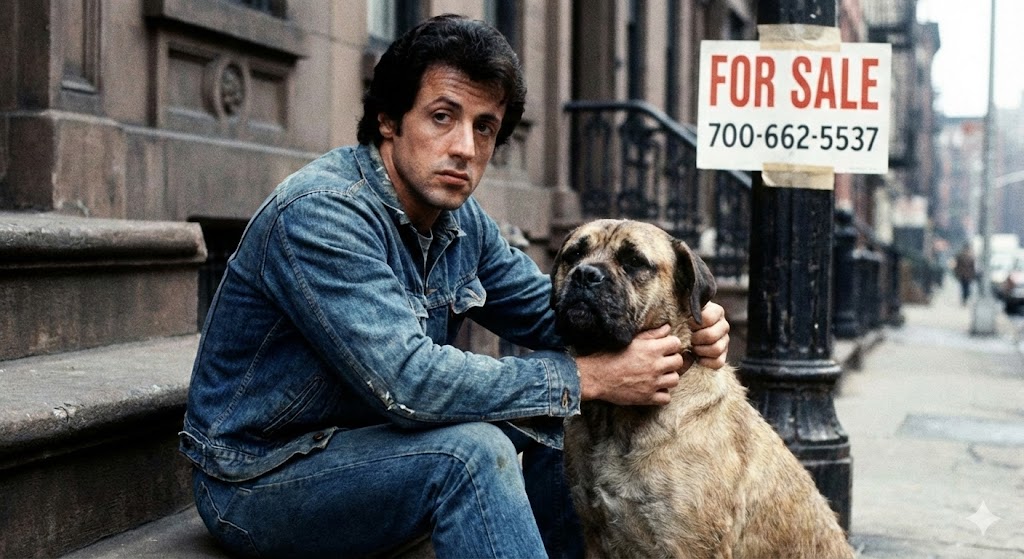
Stallone was bullied relentlessly for how he talked. He was expelled from 14 schools before age 13. He eventually slept in bus stations because he couldn’t afford rent. At his lowest point, he sold his dog outside a 7-Eleven for $50 because he couldn’t afford dog food.
The Rocky script emerged from this desperation. Stallone wrote it in three days, then refused to sell unless he could star in it. Studios offered $350,000 for the script alone. He took $35,000 and the lead role instead. The gamble paid off with a Best Picture Oscar and a franchise worth billions.
Today, Stallone owns a $25 million estate in East Hampton and a $35 million compound in Palm Beach. In January 2025, President-elect Trump appointed him Special Ambassador to Hollywood. The kid from Hell’s Kitchen who sold his dog for $50 now shapes cultural policy.
Steve Harvey: The Man Who Lived in His Car
Steve Harvey’s net worth of $200 million seems impossible when you know where it started. For three years in the late 1980s, Harvey slept in a 1985 Ford Tempo parked in various Cleveland parking lots. He survived on $50 a week while performing anywhere that would have him.
“It kills me when I hear very successful people say, ‘I always knew I would get here,'” Harvey told People. “I didn’t. I always hoped I would get somewhere, but this is above and beyond. My imagination didn’t even go this big.”
The decision to pursue comedy cost Harvey his first marriage. His family thought he was insane. After dropping out of Kent State, he cycled through jobs: insurance salesman, postman, boxer, carpet cleaner, car salesman. Nothing stuck until October 8, 1985, when he entered a comedy competition on a dare. He won. He quit his day job. The homelessness followed.
Harvey’s real estate portfolio now includes a 35,000-square-foot Atlanta mansion purchased from Tyler Perry for $15 million. The man who once slept in parking lots maintains properties worth tens of millions. The contrast isn’t lost on him. He frequently references his homeless period when discussing success, not for sympathy but as evidence that survival creates capacity.
Jim Carrey: The Check That Came True
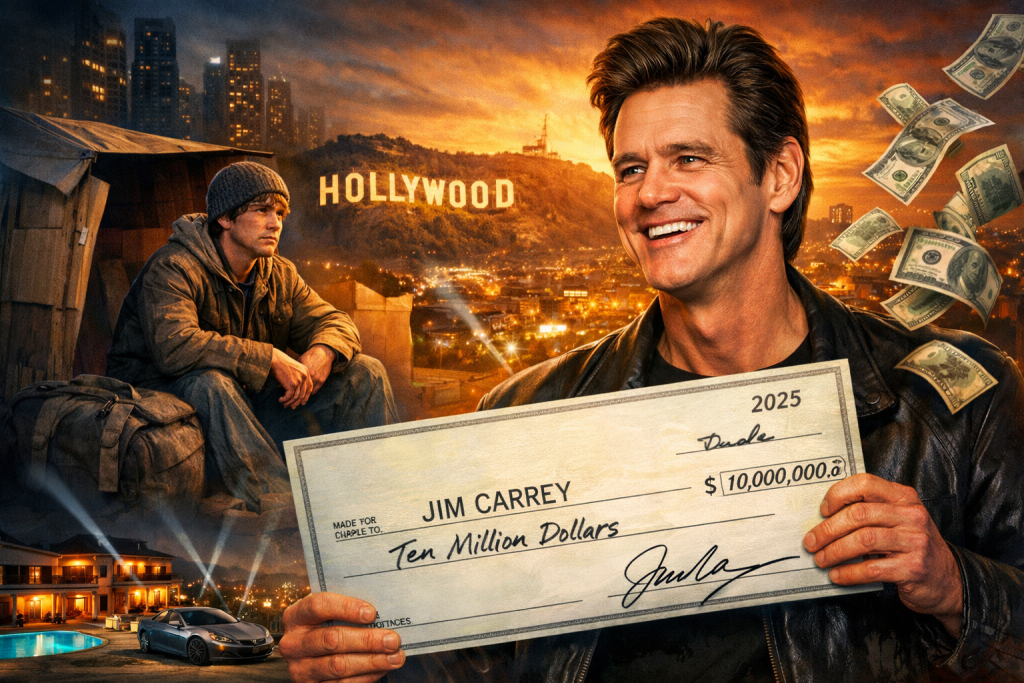
Jim Carrey’s net worth of $180 million peaked around $300 million before real estate struggles and lifestyle choices reduced it. But the origin story involves a check that seemed like fantasy when he wrote it.
Carrey’s family lost their home when he was a teenager. His father, a musician and accountant, lost his job. The family moved into a van, then a tent on a relative’s lawn. Young Jim dropped out of school to work as a janitor alongside his father, cleaning offices after midnight.
In 1985, broke and struggling, Carrey drove up to Mulholland Drive in Los Angeles. He wrote himself a check for $10 million dated Thanksgiving 1995, noting it was “for acting services rendered.” He kept the check in his wallet. In 1994, he received exactly $10 million for Dumb and Dumber.
The visualization technique became legendary. But what made it work wasn’t magic. It was the years of grinding in comedy clubs after writing the check. The manifestation required action. The check represented belief; the work represented commitment.
The Chip: How Rejection Becomes Motivation
The wound creates vulnerability. The chip creates armor. Self-made millionaires develop a psychological mechanism that converts rejection into fuel. Every “no” becomes evidence that they’ll need to prove doubters wrong. The chip on the shoulder becomes the engine of ambition.
Jay-Z: From Marcy Projects to Billionaire
Jay-Z’s net worth of $2.5 billion makes him the wealthiest musician on the planet. But the origin story starts in apartment 5C of the Marcy Projects in Brooklyn, where an eleven-year-old boy watched his father walk out the door and never come back.
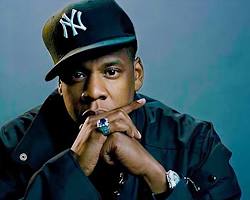
That kid decided he’d become so rich and so powerful that no one would ever be able to leave him again. Four decades later, he owns a $26 million estate on Georgica Pond. He collects Basquiats. He just brought Kendrick Lamar to the Super Bowl halftime show. The address changed. The wound that drives the ambition never did.
Record labels rejected Jay-Z repeatedly before he founded Roc-A-Fella Records in 1995. He sold CDs from the trunk of his car. The rejection taught him something crucial: ownership matters more than participation. He stopped chasing deals and started creating them.
Today, his empire spans luxury spirits like Armand de Brignac champagne and D’Ussé cognac, Roc Nation entertainment, the Tidal streaming platform, and an art collection that includes works by Jean-Michel Basquiat worth $50-100 million at auction. The kid from Marcy Projects understood before most that you don’t get rich working for other people. You get rich owning things.
Jerry Seinfeld: The Kid Who Needed to Make People Laugh
Jerry Seinfeld’s net worth of $950 million makes him the wealthiest comedian in history. The origin story starts in a cramped Massapequa apartment where a young kid sat glued to the television, escaping into other people’s voices.
His father Kalman painted signs for a living and collected jokes he’d heard while serving in World War II. His mother Betty grew up in foster care. Neither had parents of their own to teach them how to build a family. They figured it out anyway.
Seinfeld went straight from Queens College graduation to an open-mic night at Catch a Rising Star in 1976. He bombed. He came back the next night, and the next. For five years, he worked small clubs and Catskill Mountain resorts, perfecting a style of observational comedy that found profound absurdity in everyday annoyances.
The breakthrough came on The Tonight Show in May 1981. Johnny Carson’s approval transformed his trajectory. But the discipline never softened. Even after Seinfeld made him rich beyond imagination, he continued doing stand-up 200 nights a year. The 12-acre oceanfront compound in East Hampton came later. The 22-car garage for his Porsche collection came later. The hunger came first and never left.
Keanu Reeves: The Tragedy That Couldn’t Stop Him
Keanu Reeves’s net worth of $380 million accumulated despite—or perhaps because of—losses that would break most people. His father abandoned the family in Beirut when Keanu was three. He was expelled from high school. His best friend River Phoenix died of an overdose. His girlfriend lost their daughter to stillbirth, then died in a car crash eighteen months later.
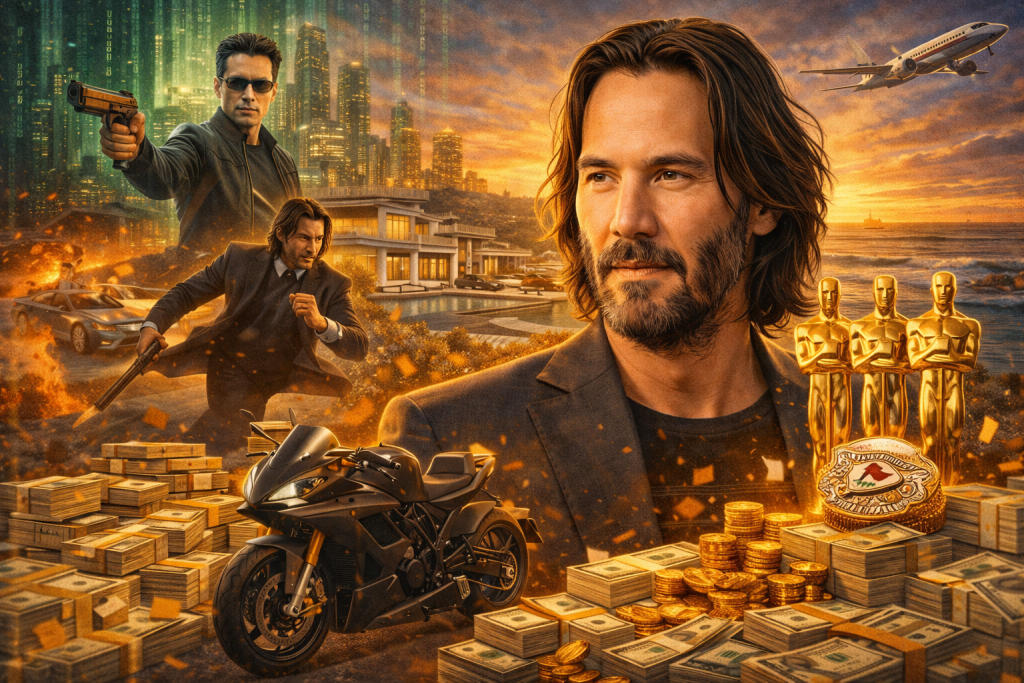
The tragedy created something unexpected: perspective. Reeves famously said, “Money is the last thing I think about. I could live on what I’ve already made for the next few centuries.” He rides the subway. He gives away millions to film crews and cancer research through an anonymous foundation.
The Matrix trilogy generated approximately $250 million for Reeves through strategic backend deals. He reportedly gave portions of his earnings to the special effects and costume design teams because he felt they deserved more. The generosity isn’t performance. It’s the byproduct of understanding that money can’t prevent the losses that matter.
The Rise: Patterns of Wealth Creation
The wound creates drive. The chip creates focus. The rise requires strategy. Self-made millionaires share specific approaches to wealth building that distinguish temporary success from lasting fortune.
Pattern 1: Ownership Over Participation
Jay-Z didn’t just make music. He founded Roc-A-Fella Records, ensuring he owned masters rather than licensing them. Though he didn’t just drink champagne, he acquired Armand de Brignac, then sold 50% to LVMH at a $640 million valuation. He didn’t just endorse D’Ussé cognac. He owned 50% and sold half his stake to Bacardi for $750 million.
Jerry Seinfeld negotiated 15% backend equity on his sitcom when it started. That decision transformed him from well-paid actor into entertainment mogul. The show generated $3 billion in syndication revenue. His share continues generating between $20 million and $50 million annually.
The pattern applies across industries. Paul McCartney’s net worth of $1.2 billion grew more substantially after the Beatles ended than during, through decades of strategic publishing rights acquisitions. His MPL Communications company owns publishing rights to thousands of songs, including works by Buddy Holly and Carl Perkins.
Pattern 2: Multiple Revenue Streams
Howard Stern’s $650 million didn’t come from radio alone. Book royalties, film earnings, television appearances, and real estate appreciation all contributed. The SiriusXM contract provides the headline number, but diversification protects the fortune.
Steve Harvey hosts Family Feud, commands a syndicated radio empire reaching 7 million listeners, sells out arenas, runs a production company, and maintains a substantial real estate portfolio. No single failure could threaten the whole.
Patrick Mahomes’s net worth of $90 million at age 30 combines NFL salary, endorsement income exceeding $20 million annually, and ownership stakes in multiple professional sports franchises including the Kansas City Royals. The quarterback understood early that athletic careers end, but properly constructed wealth compounds.
Pattern 3: The Two-Income Philosophy
Jay Leno’s net worth of $450 million emerged from a financial philosophy so unusual it sounds like fiction. For 22 years as Tonight Show host, earning $20-30 million annually, Leno never spent a dime of his television salary. Every cent went directly into savings.
He lived entirely off his stand-up comedy earnings. While his NBC colleagues enjoyed the network money, Leno kept grinding 200+ comedy club performances annually. Sometimes he flew home from Burbank after taping just to do a midnight show in Vegas.
The discipline came from watching his Scottish immigrant father work multiple jobs while his Italian mother stretched every dollar. Leno absorbed the lesson that one income stream can disappear. Two income streams create security. Never touching the larger income creates wealth.
Pattern 4: Real Estate as Wealth Preservation
Self-made millionaires consistently convert liquid wealth into real estate, particularly in markets with structural supply constraints. The Hamptons luxury real estate market exemplifies this pattern.
Stallone paid full asking price in an all-cash deal for a newly built estate at 9 Hither Lane in East Hampton Village. The 11,640-square-foot home sits on 1.12 gated acres. He committed after only two video FaceTime tours, demonstrating the confidence that comes from decades of wealth building.
Sarah Jessica Parker’s net worth of $200 million, shared with husband Matthew Broderick, includes twin townhouses at 273 and 275 West 11th Street purchased for $34.5 million and combined into a 13,900-square-foot mega-mansion. The couple also owns a charming cottage in Amagansett.
The psychology makes sense. Real estate in premium locations represents tangible wealth that can’t evaporate like stock options or entertainment careers. When you’ve experienced poverty, owning property provides security that liquid assets cannot match.
Entertainment Moguls: Building Empires from Performance
The entertainment industry creates more visible self-made millionaires than perhaps any other sector. But visibility misleads. Most entertainers earn good livings without building substantial wealth. The ones who achieve real fortune share specific characteristics beyond talent.
The Talk Show Dynasty
Howard Stern, Jay Leno, and Steve Harvey represent three approaches to converting talk into wealth. Stern bet his career on satellite radio when critics called it suicide. Leno lived on one income while banking another. Harvey diversified so aggressively that no single show cancellation could threaten his empire.
All three maintain significant real estate holdings. They continued working long after they needed the money, and they converted childhood adversity into communication skills that audiences found compelling.
The Comedy Fortune Formula
Jerry Seinfeld and Jim Carrey represent different paths to comedy wealth. Seinfeld built through ownership and syndication, creating passive income that compounds indefinitely. Carrey built through unprecedented per-film paydays that peaked with $20 million for The Cable Guy.
The outcomes differ instructively. Seinfeld’s wealth continued growing after his creative peak because he owned assets. Carrey’s wealth declined after his creative peak because he owned primarily lifestyle. The lesson: how you structure success matters more than how much you earn at peak.
Hollywood Legends: From Rejection to Real Estate
Every major Hollywood star experienced rejection before success. The ones who built lasting wealth share a specific relationship to that rejection: they let it inform but not define them.
Robert De Niro: Method to the Money
Robert De Niro’s net worth of $500 million spans five decades of film excellence and a restaurant empire that proved creative talent can translate to business success. His Nobu partnership generated wealth independent of acting, demonstrating the ownership principle in hospitality.
De Niro’s father was a gay abstract expressionist painter in 1950s Greenwich Village. Young Bobby grew up surrounded by art and outsider status. The experience shaped his ability to inhabit characters society marginalized. The same emotional intelligence that won two Oscars also built a hospitality brand worth hundreds of millions.
His East End real estate connections include property in Montauk inherited from his father, linking his wealth story back to the artistic heritage that shaped him.
The Action Star Archetype
Stallone proved that physical presence combined with creative ownership could generate exceptional returns. He wrote, directed, and starred in Rocky, maintaining creative control that multiplied his earnings. The franchise approach meant each success funded the next opportunity.
His watch collection, even after a major Sotheby’s sale, likely exceeds $1 million in value. The real estate portfolio spans America’s most exclusive zip codes. But the origin remains the same: a kid with a speech impediment who decided physical excellence and creative persistence would overcome what nature had seemingly denied him.
Music Billionaires: From Lyrics to Liquidity
The music industry historically exploited artists. The self-made millionaires who emerged learned to exploit the industry instead, converting cultural influence into ownership positions that outlasted hit songs.
Jay-Z: The Ownership Playbook
Jay-Z’s $2.5 billion represents the most successful execution of the ownership playbook in music history. His music catalog is worth approximately $95 million. That represents less than 4% of his total net worth. The real money came from owning things: champagne, cognac, streaming platforms, sports management, real estate.
The champagne play began as revenge. In 2006, Cristal’s parent company made dismissive comments about hip-hop’s embrace of their champagne. Jay-Z responded by boycotting Cristal entirely and featuring Armand de Brignac in his music video. He acquired the brand outright in 2014. He sold 50% to LVMH in 2021 at a $640 million valuation. The insult became a billion-dollar opportunity.
His art collection includes Basquiats that regularly sell for $50-100 million at auction. The kid from Marcy Projects understood that culture creates value. Owning cultural assets captures that value permanently.
Paul McCartney: The Catalog King
Paul McCartney’s net worth of $1.2 billion makes him the wealthiest musician in British history. The irony: he doesn’t own the Beatles catalog. Michael Jackson famously outbid him for those publishing rights. The pain of that loss drove McCartney’s determination to build alternative catalog holdings.
His MPL Communications company now owns publishing rights to thousands of songs across multiple decades. His Further Lane estate in East Hampton represents just one property in a portfolio spanning multiple continents. Annual income from music alone reportedly exceeds $50 million, with touring adding another $50-100 million during active years.
Athletes Who Became Moguls
Athletic careers end. The self-made millionaires who emerge from sports understood this reality and built accordingly, using fame as a platform for business development rather than the business itself.
Patrick Mahomes: The $500 Million Man
Patrick Mahomes’s net worth of $90 million at age 30 represents the foundation of what could become a billion-dollar fortune. His 10-year, $503 million contract extension made him the first half-billion dollar athlete in professional sports history. But the contract is just the beginning.
Mahomes owns stakes in the Kansas City Royals, Kansas City Current (NWSL), and other franchises. His endorsement portfolio exceeds $20 million annually. His father played professional baseball for 11 seasons, teaching young Patrick that athletic careers end but properly constructed wealth compounds.
The contract architecture reveals sophisticated financial engineering. Base salary in 2025 is technically just $1,255,000, but full cash compensation including bonuses exceeds $50 million. Performance incentives can increase annual earnings based on playoff success, MVP awards, and Super Bowl victories. Given that Mahomes has already won three Super Bowls and two league MVP awards, these incentives represent reliable income rather than aspirational targets.
Conor McGregor: The $200 Million Fighter
Conor McGregor’s net worth of $200 million transformed him from a plumber’s apprentice collecting €188 weekly welfare payments into the highest-paid fighter in combat sports history. He named his yacht “The 188” after those welfare checks, never forgetting where he came from.
The Proper No. Twelve whiskey sale generated the single largest payday of his career. He didn’t just endorse liquor. He created a brand, built it, and sold majority stake at a valuation that dwarfed his combined fight earnings. The pattern repeats: ownership beats participation.
His pub acquisitions in Dublin represent his complex relationship with his origins. The Black Forge Inn and Marble Arch aren’t just investments. They’re statements. The kid from Crumlin now owns the pubs where working-class Dublin gathers. Every pint pulled is proof of the distance traveled.
The Hamptons Connection: Where Success Lives
Self-made millionaires don’t randomly choose where to live. They cluster in specific locations that offer particular advantages: privacy, peer access, and property that holds value. The Hamptons have become the summer destination of choice for entertainment wealth in particular.
Why Success Ends Here
The geography matters. The Hamptons sit close enough to Manhattan for business access yet far enough for genuine escape. The beaches rival anything in the world. The private clubs offer networking without the performance required in city settings. The real estate holds value through economic cycles because supply is permanently constrained by the Atlantic Ocean on one side and protected farmland on the other.
According to research on ultra-high-net-worth concentration, the Hamptons hosts more than 700 centimillionaires during peak season. This represents a 2,700% increase in wealthy residents compared to year-round population. The density creates what sociologists call “manufactured serendipity.” When you compress that much wealth into a 30-mile stretch of coastline, remarkable things happen.
The Addresses That Matter
Meadow Lane in Southampton earned its nickname “Billionaires Row” for good reason. The five-mile oceanfront stretch contains estates that trade for $50 million, $80 million, occasionally nine figures. The hedges grow tall enough to hide houses that could fit a hundred guests.
Further Lane in East Hampton contains some of the most valuable residential real estate in America. Barry Rosenstein’s $147 million purchase set records. Jerry Seinfeld’s 12-acre compound includes a 22-car garage and reportedly a baseball diamond. The neighbors include Steven Spielberg, Martha Stewart, and various hedge fund billionaires.
Georgica Pond attracts those who prefer water views without beach easements. Jay-Z and Beyoncé’s estate here provides the privacy that oceanfront properties, with their public access requirements, cannot match.
Where Self-Made Money Gathers
The dining scene reveals the social architecture. Nick & Toni’s in East Hampton has been the celebrity canteen since 1988, hosting Jack Nicholson, Brad Pitt, Paul McCartney, and countless others. The reservation book reads like a guest list for the Oscars.
Sant Ambroeus Southampton serves the power breakfast crowd. Le Bilboquet Sag Harbor offers French Riviera energy where deal-making happens over rosé. The American Hotel in Sag Harbor attracts those who prefer history to hype.
The summer social calendar runs nonstop with benefits, galas, and fundraisers. Southampton Hospital Foundation, Watermill Center Benefit, Hampton Classic horse show. The events aren’t just parties. They’re the infrastructure where relationships become opportunities.
Lessons from Self-Made Millionaires
The patterns that emerge from studying self-made millionaires reveal actionable principles that apply beyond entertainment or athletics.
Lesson 1: The Wound Becomes the Weapon
Every fortune examined here began with some form of adversity. The adversity created drive that comfortable childhoods cannot produce. The successful converted pain into fuel rather than allowing it to become limitation.
This doesn’t mean suffering guarantees success. It means that those who achieve exceptional outcomes often find ways to use their suffering constructively. The wound creates sensitivity. The sensitivity creates understanding. The understanding creates value.
Lesson 2: Rejection Is Information, Not Identity
Jay-Z was rejected by every record label before founding his own. Stallone was rejected before every Rocky sequel before the first one proved the doubters wrong. The rejection provided information about what wasn’t working, but it never became identity. The successful treated “no” as data rather than verdict.
Lesson 3: Own Rather Than Rent
The wealth gap between those who own and those who participate explains most of the difference between millionaires and hundred-millionaires. Jerry Seinfeld’s 15% backend ownership created more wealth than the salary that seemed enormous at the time. Jay-Z’s ownership of champagne and cognac brands dwarfed what he would have earned as an endorser.
Lesson 4: Multiple Streams Create Security
No single income source threatens the truly wealthy because they’ve built redundancy into their financial architecture. Harvey hosts multiple shows and owns production companies. Leno maintained two careers simultaneously for decades. The approach requires more work but creates genuine security.
Lesson 5: Real Estate Preserves Wealth
Liquid wealth can evaporate. Real estate in premium locations provides security that no financial instrument can match. The Hamptons real estate market exemplifies this principle: constrained supply, unlimited demand, and structural appreciation over time.
Lesson 6: The Work Never Stops
Self-made millionaires continue working long after they need the money. The hunger that created the fortune doesn’t disappear when the fortune arrives. The work itself provides meaning that retirement cannot replace. Seinfeld still does stand-up. Stern still broadcasts. McCartney still tours. The activity isn’t about money anymore. It’s about purpose.
The Unwritten Rules
Self-made millionaires in the Hamptons operate by codes that outsiders rarely understand. The old money aesthetic values discretion over display. The flashiest cars often belong to summer renters. Long-term residents prefer their wealth invisible.
The status symbols that matter have shifted. Young millionaires value experiences over possessions, wellness over watches, access over logos. The crypto founder at Polo Hamptons doesn’t need a Lamborghini to prove anything. His wealth is in his freedom to spend three weeks optimizing his health, his ability to work from anywhere, and his presence at events where real power players gather.
Privacy is the currency. What makes the Hamptons valuable to self-made millionaires isn’t the beaches. It’s the implicit agreement that their presence will be noted but not exploited. The nod of recognition without intrusion is the Hamptons greeting.
Your Access Point
The hedges hide fortunes built from nothing. The restaurants serve legends who once slept in cars. The beaches stretch toward a horizon that looks exactly like earned success feels: vast, beautiful, and available only to those who’ve proven they belong.
Self-made millionaires choose the Hamptons because it offers what their fame typically denies them: 1) the chance to be ordinary among the extraordinary. 2) walk into Nick & Toni’s without causing a scene. 3) watch their children build sandcastles on Coopers Beach without photographers lurking. 4) be wealthy among the wealthy, successful among the successful, and therefore unremarkable.
The villages each serve a purpose. Southampton for tradition and old money elegance. East Hampton for entertainment wealth and celebrity access. Sag Harbor for creativity and maritime charm. Hampton Bays for value and authenticity.
The origin stories examined here share a common thread: early pain converted into lasting achievement. The wound became the weapon. The chip became the fuel. The rise became the legend. And the legends eventually found their way to the same stretch of Long Island coastline where success has summered for generations.
These are the self-made millionaires. Now you know how they did it.
Connect With Social Life Magazine
Get Featured: Contact Social Life Magazine for advertising, features, and brand partnership opportunities.
Polo Hamptons 2025: Network with successful entrepreneurs and industry leaders at Polo Hamptons. Tickets, cabanas, and sponsorship opportunities available.
Stay Connected: Subscribe to our email list for exclusive event invitations and insider access.
Print Subscription: Get Social Life Magazine delivered—the Hamptons’ luxury lifestyle authority since 2000.
Support Independent Journalism: Donate $5 to support our coverage.
Related Reading
Ultra High Net Worth Individuals: What Crossing $30 Million Actually Means
Who Lives in the Hamptons: The Real Power Map
Author

Written by
Recent Posts

Red, White & Bordeaux: A Founding Fathers’ Guide to Raising a Glass

Youmetalks Reviews Show Why This Platform Is a Game-Changer for Safety
Creating Behind-the-Scenes Content Without Recording New Footage
The Invisible Essential: How Smart Travelers Stay Connected from the Moment They Land in Japan
The Hamptons Longevity Protocol: How to Stay Sharp Through Late Dinners, Early Tee Times, and Beach Weekends
Categories
- Art
- Articles
- Business of Luxury
- Celebrities
- Entertainment
- Events
- Faces of Summer 2026
- Fashion
- Fashion & Style
- Featured
- Finance
- Food, Spirits, Wine
- Hamptons
- Hamptons Celebrities
- Health
- Health & Beauty
- Lifestyle
- Luxury Lifestyle
- Press
- Profiles
- Real Estate
- Technology
- The Chronicles
- Travel
- Uncategorized
- Weddings