
For the complete framework on how generational wealth actually perpetuates itself, see our Old Money Playbook: How Generational Wealth Actually Works. This guide focuses on the specific tells that reveal which category someone falls into, and what those distinctions mean in practice.
Defining the Terms
What Old Money Actually Means
Old money describes wealth that has survived at least three generations while maintaining or growing its purchasing power. The Rockefellers, Mellons, Du Ponts, and Vanderbilts represent American examples. European equivalents extend across centuries rather than decades.
The technical definition matters less than the cultural one. Old money is a mindset before it becomes a bank balance. Families in this category think in generational terms. Decisions made today consider grandchildren who haven’t been born. Current consumption always balances against future preservation.
Understanding what a family office is reveals how these families institutionalize this thinking. The structures exist precisely because individual judgment cannot be trusted across generations. Systems must replace personalities.
What New Money Represents
New money, sometimes called nouveau riche, describes first-generation wealth. The tech founder who just cleared $50 million. The business owner who sold after building for twenty years. The athlete whose contract makes headlines. The influencer whose brand deals compound into real assets.
New money isn’t inferior. It’s simply untested. These fortunes haven’t yet faced the succession question that destroys most wealth: what happens when the person who made it is gone? According to wealth management research, 70% of wealthy families lose their fortune by the second generation. By the third generation, the failure rate climbs to 90%.
The difference between old and new money is ultimately about whether a fortune will join the 10% that survives or the 90% that doesn’t.
The Psychological Divide
Wealth Anxiety vs. Wealth Security
New money often carries what sociologists call “wealth anxiety.” This isn’t character flaw. It’s logical psychology. If you built something from nothing, displaying success makes emotional sense. The Rolex, the luxury car, the designer wardrobe serve as proof that the climb was real. They validate years of sacrifice.
Old money operates from the opposite position. Wealth is assumed, inherited, and expected to continue indefinitely. There’s no need to prove anything because proof isn’t relevant. The Patek Philippe isn’t purchased to signal success. It was grandfather’s and will be grandson’s.
This security breeds a different relationship with display. Showing too much suggests insecurity. Insecurity suggests your money might be newer than you’d like people to think. According to Harvard Business Review research, first-generation wealth creators spend significantly more on visible status goods than third-generation inheritors, who allocate resources toward experiences, education, and assets that don’t announce themselves.
The Spending Philosophy Difference
New money sees wealth as reward. After years of building, the money represents permission to enjoy life. Spending brings pleasure. Luxury purchases celebrate achievement. This approach isn’t wrong. It’s simply different from how dynastic wealth thinks.
Old money sees wealth as responsibility. The fortune doesn’t belong to the current generation. It belongs to the family across time. Current holders are stewards, not owners. Every dollar spent on display is a dollar not compounding for descendants.
This philosophical divide produces dramatically different financial behaviors. New money might spend 15% of liquid assets on lifestyle. Old money typically constrains lifestyle spending to 3-5% of total wealth. The gap compounds across decades.
The 17 Tells That Reveal Everything
Tell #1: The Parking Lot
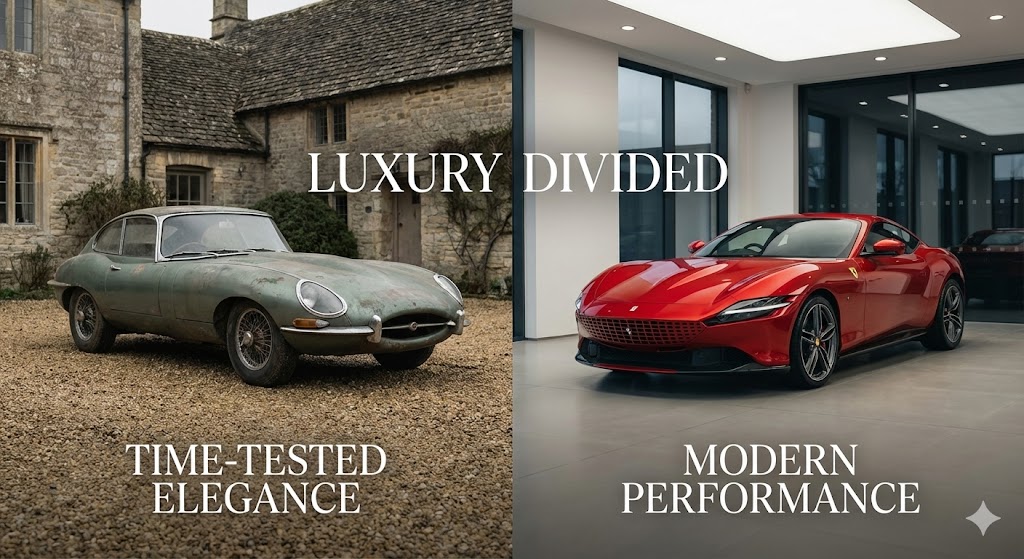
Perhaps nowhere is the new money vs old money divide more visible than vehicle choices. New money drives new: current-year Range Rovers, Mercedes S-Class, Tesla Model X. The cars are pristine, often leased, and replaced before they age.
Old money drives old. Vintage Land Rover Defenders maintained by the same mechanic for twenty years. Wood-paneled station wagons inherited from parents. Or deliberately modest vehicles that suggest money isn’t something requiring automotive announcement. The ten-year-old Volvo driven by a centimillionaire signals more than the newest Bentley ever could.
Tell #2: The Watch
New money buys the newest Rolex, often the largest available model. The watch announces itself from across the room. It says: I can afford this, and I want you to know it.
Old money wears inherited timepieces. A vintage Cartier Tank from grandmother. A Patek Philippe Calatrava passed down from father. The watch is slim, understated, and often worth more than the flashy alternative. But only those who know watches recognize it.
Tell #3: Clothing Condition
New money wardrobes contain brand new everything. Purchased at full retail. Worn for one season. Replaced before showing wear. Tags are practically still attached.
Old money wardrobes include pieces that are twenty years old and look it. The Barbour jacket has been rewaxed multiple times. The loafers have been resoled three times. The cashmere sweater shows slight pilling at the elbows. These signs of wear aren’t embarrassing. They’re proof of quality. Things that last deserve to be kept.
Tell #4: Logo Visibility
New money gravitates toward recognizable luxury. Louis Vuitton monograms. Gucci interlocking Gs. Hermès H-belts worn as statements. The logos serve as verification. They say: this is expensive, in case you couldn’t tell.
Old money avoids visible branding entirely. The preferred brands are known only within certain circles. J. Press, Murray’s Toggery, Charvet. If the average person on the street would identify something as expensive, it’s probably too obvious. The quiet luxury brands guide catalogs these insider preferences.
Tell #5: Jewelry Scale
New money jewelry makes statements. Large diamonds. Prominent pieces. Items designed to catch light and attention. The assumption: if you have it, show it.
Old money jewelry whispers. Pearl studs inherited from grandmothers. Slim signet rings with family crests. Modest diamonds in classic settings. The assumption: those who need to know will recognize quality without flash.
Tell #6: The House Tour
New money homes are designed to impress visitors. Grand entries. Statement art. Trophy rooms displaying achievements. The architecture anticipates an audience.
Old money homes are designed for inhabitants. Worn leather furniture chosen for comfort, not display. Family photographs in silver frames. Books that have actually been read. The aesthetic assumes no one is watching.
Tell #7: Social Media Presence
New money documents everything. Instagram showcases properties, travels, purchases, experiences. The platform serves as verification and celebration. Followers represent validation.
Old money maintains minimal digital footprint. Private accounts if any. No photographs of homes, vacations, or possessions. Discretion extends to digital space. The families who survived centuries learned that visibility attracts predators.
Tell #8: Name-Dropping Habits
New money mentions connections. Conversations include references to famous acquaintances, exclusive events attended, important people encountered. The mentions establish credentials.
Old money never mentions connections. If you actually know someone powerful, you don’t need to reference the relationship. And if you reference it, others assume you don’t actually have it. The rule is absolute: those who talk don’t know, and those who know don’t talk.
Tell #9: Money Talk
New money discusses money. Purchase prices, investment returns, net worth comparisons. The conversation reflects excitement about achievement and curiosity about where one stands.
Old money never discusses money. Direct questions about finances receive deflection. Prices are never mentioned. Costs are “reasonable” or “a bit much,” never specific numbers. The convention assumes that discussing money suggests you think about it. And thinking about it suggests you might not have enough.
Tell #10: Philanthropy Approach
New money gives publicly. Named buildings. Gala sponsorships with prominent signage. Press releases announcing donations. The giving validates success and creates legacy.
Old money gives anonymously when possible. Foundations rather than personal gifts. Matching programs rather than named donations. The philosophy: real giving doesn’t require credit. Those who need recognition might be giving for the wrong reasons.
Tell #11: Children’s Names
New money chooses distinctive names. Creative spellings. Unique combinations. Names designed to stand out. The children’s identities begin fresh.
Old money uses names passed down across generations. William IV. Elizabeth Ann like grandmother. Family surnames as first names. The children connect to lineage before they develop individual identity. Our old money names guide details these conventions.
Tell #12: Education Selection
New money chooses prestigious schools. Harvard, Stanford, Wharton. The names matter because they validate achievement and open doors. Rankings guide decisions.
Old money chooses legacy schools. The institution where grandfather and great-grandfather attended. Relationships with admissions span generations. The school matters less for career opportunities than for continuing family connection to specific institutions.
Tell #13: Club Membership
New money joins the most exclusive club available. The name recognition matters. The waiting list length signals achievement. Getting in represents arrival.
Old money belongs to clubs because parents belonged. The membership transferred automatically. Some members don’t even know the application process because they never experienced one. The best private clubs in the Hamptons reflect these distinctions.
Tell #14: Vacation Destinations
New money travels to status destinations. St. Barts during high season. Aspen over Christmas. Private islands featured in magazines. The locations photograph well.
Old money returns to the same places annually. The family cottage that’s been in the family for three generations. The fishing lodge grandfather built. Places chosen for meaning rather than status. No one photographs them because no one needs to prove they were there.
Tell #15: Staff Relationships
New money hires staff. The relationship is transactional. Turnover happens. Positions get eliminated and recreated based on current needs.
Old money inherits staff relationships. The housekeeper who worked for parents now works for children. The same attorney has represented the family for forty years. Loyalty extends in both directions. Staff members become extended family.
Tell #16: Crisis Response
New money panics during market downturns. The wealth is recent enough that loss feels possible. Protective measures get implemented urgently. Anxiety shows.
Old money maintains composure during crises. The family has survived depressions, wars, and revolutions. Current turbulence is temporary noise against generational perspective. The European family office model embeds this resilience institutionally.
Tell #17: Conversation Topics
New money discusses business, deals, and opportunities. The conversation reflects what built wealth and what might build more. Success stories feature prominently.
Old money discusses history, culture, and family. Business happens but isn’t discussed in social settings. The assumption: everyone at the table has enough money. What matters is what you’re doing with your life beyond making more.
The Hamptons Laboratory
Where the Codes Collide
The Hamptons function as a living laboratory for new money vs old money distinctions. Summer months bring both populations into proximity. The same restaurants, beaches, and events host families whose wealth arrived yesterday and families whose wealth predates the American Revolution.
Southampton skews older money. Meadow Lane estates passed down across generations. The Meadow Club and Southampton Bath and Tennis Club maintain membership patterns established decades ago. The aesthetic is established and unmistakable.
East Hampton welcomes more entertainment industry wealth. Recent fortunes from technology and finance cluster alongside creative class success. The aesthetic is more contemporary, more visible, more evolved.
The complete guide to Hamptons living details these geographic distinctions. Understanding which village speaks to which wealth tradition helps explain everything from real estate patterns to restaurant reservations.
Reading the Room
At Polo Hamptons matches, both populations attend. But they occupy space differently. Old money arrives in appropriate but unremarkable clothing, clusters with people they’ve known for years, and leaves before the crowd peaks. New money arrives in statement outfits, photographs the experience thoroughly, and stays for the entire scene.
Neither approach is wrong. They simply reveal different relationships with wealth and what it means to possess it.
Can New Money Become Old Money?
The Generational Question
Every old-money family was once new money. The Rockefellers descended from a patent medicine salesman. The Vanderbilts began with a Staten Island ferry. The fortunes that persist all started somewhere.
The transition from new to old isn’t automatic. It requires deliberately adopting the behaviors and philosophies that preserve wealth across generations. Our self-made millionaires guide profiles founders who built fortunes from nothing. The survivors share common patterns.
First-generation wealth creators who want their fortunes to persist must learn preservation before they need it. The family office governance structures that old money developed over centuries can be adopted immediately by new money willing to implement them.
The Cultural Shift Required
Moving from new money to old money culture requires specific changes:
Spending constraints. Lifestyle spending must drop from whatever percentage feels natural to whatever percentage allows wealth to compound for grandchildren.
Discretion adoption. The social media presence that celebrates achievement becomes the vulnerability that attracts predators. Visibility must decrease.
Educational focus. The prep school and university pathways that old money uses aren’t about snobbery. They’re about network creation across generations. New money children need access to those networks.
Governance creation. Individual judgment cannot persist beyond individual lifetimes. Structures must be built that institutionalize family philosophy. Understanding next generation wealth preparation starts with recognizing that the next generation will need guidance the current generation didn’t require.
Why the Distinction Matters
Beyond Social Observation
Understanding new money vs old money isn’t gossip. It’s practical intelligence.
In business negotiations, knowing which type of wealth sits across the table predicts behavior. New money makes faster decisions, accepts more risk, and values time differently. Old money moves slowly, considers implications for decades rather than quarters, and prioritizes relationship over transaction.
In real estate transactions, understanding the seller’s wealth type explains pricing flexibility. Old money sells when strategic; emotion rarely enters. New money may have attachment to properties that affects negotiation.
In philanthropic circles, recognition of wealth type guides approach. New money responds to naming opportunities and public acknowledgment. Old money responds to mission alignment and long-term impact.
For New Money Seeking Integration
If you’ve recently created wealth and seek to move in old money circles, the tells work in reverse. They become a checklist of behaviors to adopt or avoid.
Stop discussing money. Remove logos from your wardrobe. Maintain your possessions rather than replacing them. Join institutions for community rather than status. Give without requiring recognition. Think in generations rather than years.
The old money playbook isn’t secret. It’s simply not advertised. Those who want the codes can find them. Those who apply them consistently will eventually stop being recognizable as new money. A generation or two later, no one will remember the distinction.
Connect With Social Life Magazine
Get Featured: Contact Social Life Magazine for advertising, features, and brand partnership opportunities.
Polo Hamptons 2026: Experience where old money and new money converge at Polo Hamptons. Tickets, cabanas, and sponsorship opportunities available.
Stay Connected: Subscribe to our email list for exclusive event invitations and insider access.
Print Subscription: Get Social Life Magazine delivered—the Hamptons’ luxury lifestyle authority since 2000.
Support Independent Journalism: Donate $5 to support our coverage.
Related Reading
The Old Money Playbook: How Generational Wealth Actually Works
Author

Written by
Recent Posts

AI for personal finance: where PennyGuard fits

How to Pick a Homecoming Dress for Your Body Type (and Feel Amazing in It)

World Cup Injury Attorney for Vancouver Events
What a 3-Carat Engagement Ring Actually Costs in 2026: The Real Numbers
The Skincare Habits That Make a Real Difference Over Time
Categories
- Art
- Articles
- Business of Luxury
- Celebrities
- Culture
- Entertainment
- Events
- Faces of Summer 2026
- Fashion
- Fashion & Style
- Featured
- Finance
- Food, Spirits, Wine
- Hamptons
- Hamptons Celebrities
- Health
- Health & Beauty
- Lifestyle
- Luxury Lifestyle
- Press
- Profiles
- Real Estate
- Technology
- The Chronicles
- Travel
- Uncategorized
- Weddings