
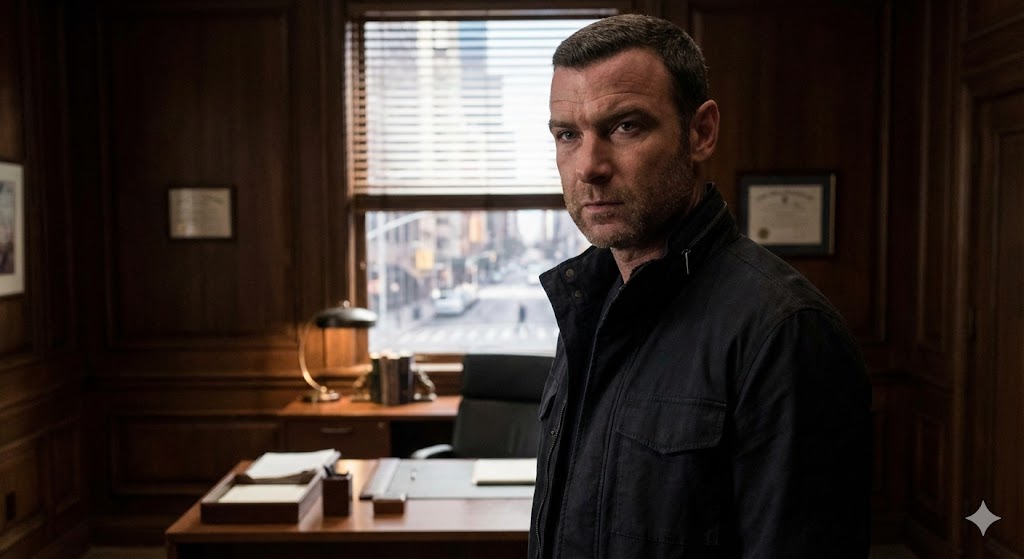
The three-year-old boy didn’t understand why his father’s men were there. He didn’t understand the commune, or why his mother had taken him there, or why strangers in suits were now pulling him away from her. He was being kidnapped—for the second time in his short life. First his mother had fled with him. Now his father was taking him back.
“But I must have been terrified,” Liev Schreiber has said about those years he can’t remember. “You’d think that would make a kid grow up scared, but I grew up fearless in a bad way, like I didn’t sense danger. Something shut off in me.”
Today, Liev Schreiber’s net worth stands at approximately $40 million. He’s won a Tony Award, earned nine Emmy nominations, and been called “the finest American theatre actor of his generation” by The New York Times. He’s played Sabretooth in X-Men, the title character in seven seasons of “Ray Donovan,” and Orson Welles, Boris Spassky, and Otto Frank. Meanwhile, therapists have told him his memory problems—the gaps, the forgetting—might be an old coping mechanism that never quite turned off.
Some wounds don’t heal. They just become armor.
The Wound: A Life Without Ground
Isaac Liev Schreiber was born October 4, 1967, in San Francisco. His father, Tell Schreiber, came from “a blueblood and wealthy society family from Bucks County, Pennsylvania”—an all-American WASP who’d been a wrestling and football star at Hampshire College before becoming a stage actor. His mother, Heather Milgram, was the opposite in every way: a working-class Brooklyn Jew from a family of Communists, descended from immigrants from Poland, Ukraine, and Germany.
Schreiber has described her as “this far-out Socialist Labor Party hippie bohemian freak who hung out with William Burroughs.” She was highly cultured and eccentric, with deep knowledge of classical music and Russian literature. She named her son Liev after Leo Tolstoy, pronounced the Russian way. His family called him “Huggy.”
The Bad Trip That Changed Everything
When Liev was one, the family moved to a remote farmhouse in Winlaw, British Columbia. Then came Heather’s bad acid trip. It affected her profoundly, leading to hospitalizations and psychiatric treatment over the next four years. Her husband Tell became convinced she was unstable. He wanted to have her committed to a mental institution.
Heather, fearing involuntary commitment, did what she thought she had to do: she grabbed her son and ran. They fled to a hippie commune in upstate New York. Private detectives hired by Tell tracked them across multiple states. When Liev was three, his father kidnapped him back from the commune.
By the time Liev was four, his mother had won the custody battle—but the legal fight had bankrupted her father, Alex Milgram. The man Liev would call “the most significant male in my youth” lost everything trying to keep his daughter’s son safe.
The Lower East Side Years
Mother and son moved to Manhattan’s Lower East Side. Specifically, they moved to a cold-water flat on First Avenue and First Street—a fifth-floor walkup that frequently had no electricity, no hot water, and sometimes no beds. For a time, they lived as squatters in abandoned buildings.
Heather drove a cab to survive. On the side, she made papier-mâché puppets to sell on the street and picked garbage for extra money. They were on welfare. However, she was determined to raise her son her way. That meant giving him the Hindu name Shiva Das, dressing him in yoga shirts, growing his hair to his shoulders, enforcing a strictly vegetarian diet, and banning color movies—only black and white allowed.
“The first color movie I saw was Star Wars in 1977,” Schreiber has said. He was ten years old. Until then, his favorite actors were Charlie Chaplin and Basil Rathbone—the only performers he’d been allowed to watch.
The Ashram Years
When Liev was twelve, Heather sent him to the Satchidananda Ashram in Pomfret, Connecticut. He was known there as Shiva Das. The experience was profound—another world layered onto all the other worlds he’d already inhabited. Commune kid. Lower East Side squatter. Ashram student. Each identity as unfamiliar as the last.
“I suppose my upbringing was eccentric,” Schreiber told the Jewish Chronicle. “I think most people have an eccentric side to their childhood, but then most people don’t have to tell it to the press. Sure I was in several communes—the first when I was six—but I didn’t have much choice. And I didn’t know anything else.”
The Chip: Building a Self From Fragments
Schreiber eventually attended Friends Seminary, a Quaker school in Manhattan. The combination was surreal: ashram meditation layered onto Quaker silence layered onto the chaos of his early years. He played bass clarinet in high school. He read voraciously—his mother’s influence, her love of Russian literature bleeding into him.
Then came something unexpected: his father. In his teens, Liev reconnected with Tell Schreiber, the man who had kidnapped him, the man he’d barely known. “Anything he had done I had to explore,” Liev told Dustin Hoffman in an interview. “Like, he played football, so I played football; he acted, so I wondered what acting was like.”
Finding the Stage
At Hampshire College, Schreiber chose semiotics as his major—the study of symbols—with plans to become a writer. But a drama teacher saw something else in him. The perpetual outsider had learned to read environments, to adapt, to become whatever each new situation required. That was actor training, even if he didn’t know it yet.
He dropped out and went to London, taking a course at the Royal Academy of Dramatic Art. Some funding came from his father—the first real support Tell had ever provided. Subsequently, Schreiber won admission to Yale’s prestigious drama school, earning his MFA in 1992.
Now the kid who’d grown up in squats was trained at the finest institutions in the world. Meanwhile, the boy named Shiva Das was about to become one of Broadway’s greatest Shakespearean actors.
The Rise: From Cotton Weary to Ray Donovan
Schreiber’s early career was a study in range. Off-Broadway theater came first, including Antonio in “The Merchant of Venice” in 1989. Then came indie films like “The Daytrippers” and “Party Girl” and “Big Night.” Directors whispered about him—technically brilliant, physically imposing at 6’3″, capable of disappearing into any role.
Then came “Scream” in 1996. He played Cotton Weary, the man wrongfully accused of murder. It was a small role in a horror film, but it opened doors to bigger productions. “Ransom” with Mel Gibson. “The Hurricane” with Denzel Washington. “RKO 281,” the HBO film where he became Orson Welles—a performance that earned him Emmy and Golden Globe nominations.
The Broadway Triumphs
But theater remained his true home. In 2005, he won the Tony Award for Best Featured Actor playing Richard Roma, the profane real estate shark, in the Broadway revival of David Mamet’s “Glengarry Glen Ross.” The role required him to be charming, manipulative, explosive—everything he’d learned to be from a childhood of constant adaptation.
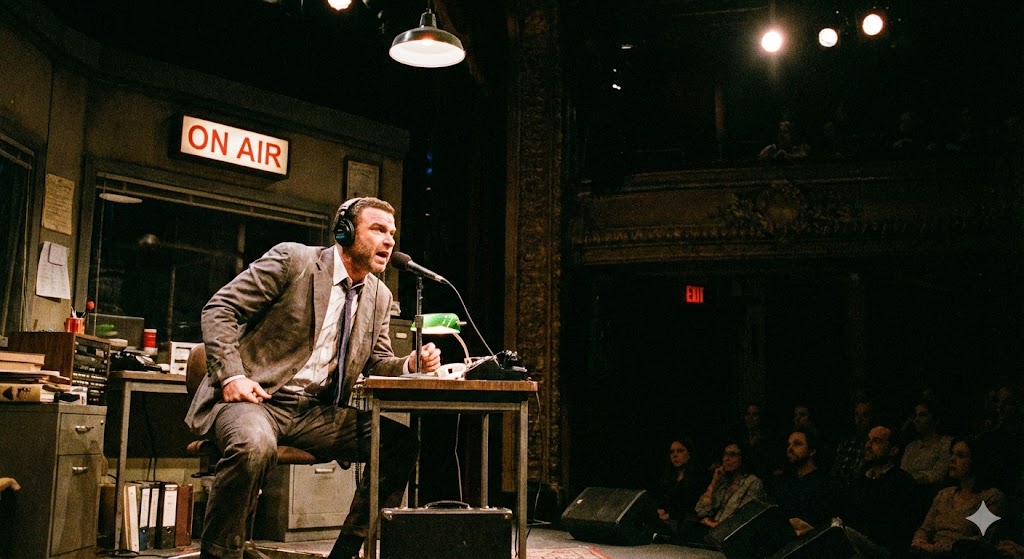
Two years later, he played Barry Champlain in Eric Bogosian’s “Talk Radio.” Ben Brantley of The New York Times called him “the finest American theatre actor of his generation.” More Tony nominations followed for “A View from the Bridge” in 2010 and “Doubt” in 2024.
Ray Donovan Changes Everything
In 2013, Showtime cast Schreiber as Ray Donovan, a Hollywood fixer who cleans up the messes of the rich and famous while struggling with his own traumatic past. The role was physically demanding and emotionally brutal. It required him to channel rage and damage while maintaining icy control.
The show ran for seven seasons. Schreiber earned $200,000 to $250,000 per episode. He received five Golden Globe nominations and three Emmy nominations for the role. “Ray Donovan” became the foundation of his fortune and redefined his public image—from theatrical actor to television star.
The Tell: What the Wound Became
Schreiber has spoken openly about his memory problems. Large chunks of his childhood are simply gone. Therapists have suggested this might be a coping mechanism that developed during the kidnappings and custody battles—a way of protecting himself by not remembering.
“Something shut off in me,” he’s said. The boy who was passed between warring parents, who lived in communes and squats and ashrams, learned to forget as a survival strategy. The cost was pieces of his own history.
The Mother He Finally Understood
For years, Schreiber seemed ambivalent about his unconventional upbringing. The yoga shirts, the vegetarian diet, the Hindu names, the black-and-white movies—it was a lot to process. But when his own children were born, something shifted.
“Since I’ve had Sasha, I’ve completely identified with everything my mother went through raising me,” he said in 2008. “And I think her choices were inspired.”
His mother now lives on an ashram in Virginia. When he made some money, he bought her a swimming pool. The gesture was simple but profound: the son who’d grown up in poverty providing comfort to the woman who’d done everything—however strange—to protect him.
Heather had once bought him a motorcycle for his sixteenth birthday “to promote fearlessness.” She understood something about her son: he’d shut off his fear response so early, so completely, that he needed to learn healthy risk. The motorcycle was her way of teaching him that danger could be chosen rather than endured.
The Hamptons Connection: Finding Solid Ground
For someone who spent his childhood without a stable home, Liev Schreiber’s relationship with the Hamptons represents something essential: permanence.
In 2007, Schreiber and his then-partner Naomi Watts purchased a 6,000-square-foot shingle-style cottage in Amagansett Lanes for $4.3 million. The property featured five bedrooms, seven and a half bathrooms, vaulted ceilings, a bluestone fireplace, and a gunite pool with a pool house. It was walking distance to town and a brief bike ride to the beach.
The Family Years
The couple raised their sons—Sasha, born in 2007, and Kai, born in 2008—with roots Liev never had. They were fixtures of the East End, spotted at Nick and Toni’s, at fundraisers like the Ross School’s Hamptons for Haiti brunch, at birthday parties at the Surf Club in Montauk.
“I wanted my children to have a sense of identity based around being in one place,” Naomi Watts has said—a philosophy that surely resonated with a man who’d lived in communes, squats, ashrams, and cold-water flats before he was a teenager.
In 2016, after listing the Amagansett house for $5.85 million, the couple purchased a new property in Montauk for $5.4 million. The 3,500-square-foot home on Surfside Avenue featured ocean views, four bedrooms, a heated pool, and easy beach access. It was smaller but more private—a retreat rather than a showcase.
Schreiber and Watts separated in 2016 but have remained committed co-parents. The Hamptons has stayed central to their family life, providing the stability that eluded Liev throughout his childhood.
The Fortune Behind the Fixer
Liev Schreiber’s net worth of $40 million represents a career built on range, longevity, and strategic choices. The money comes from multiple sources cultivated over three decades.
First, his seven seasons on “Ray Donovan” provided the financial foundation. At $200,000-$250,000 per episode over roughly 82 episodes, the series alone generated substantial wealth—plus residuals every time the show streams on Paramount+ or reruns on cable.
Second, his film work spans blockbusters and prestige pictures. “X-Men Origins: Wolverine” brought franchise money. “Spotlight” brought Oscar-winner credibility (the film won Best Picture). The Wes Anderson films—”Isle of Dogs,” “The French Dispatch,” “Asteroid City”—brought indie prestige with solid paychecks.
Third, his narration work has been remarkably consistent. Schreiber is practically the voice of HBO Sports and PBS documentaries. “Hard Knocks” alone has run for over two decades with his narration. This steady work provides reliable income between major roles.
Fourth, his real estate portfolio has been strategic. The Amagansett purchase at $4.3 million, listed later at $5.85 million. The Montauk purchase at $5.4 million. Properties in Manhattan’s NoHo and Tribeca. The Brentwood home in Los Angeles that once rented for $20,000 per month.
Finally, his theatrical work—while less lucrative than film—has built his reputation as a serious artist, which commands higher fees for film and television roles.
Still That Boy, Still Building Home
In 2023, Schreiber played Otto Frank in the National Geographic miniseries “A Small Light”—the father who hid his family from Nazis, who survived when they did not, who spent his remaining years ensuring Anne’s diary reached the world. It was a role about a father’s love and a father’s guilt, about trying to protect children in a world determined to harm them.
The Transformation Complete
Consider what Liev Schreiber has become. The boy kidnapped by both parents is now a devoted co-parent who stayed in the Hamptons for his children’s stability. That child raised by a “far-out Socialist Labor Party hippie bohemian freak” bought his mother a swimming pool. And the kid who grew up without electricity now owns properties worth millions across two coasts.
The Roles That Find Him
There’s a pattern in his career. Schreiber plays fixers who clean up other people’s messes while struggling with their own damage. Characters of violence with unexpected depth draw him in—Sabretooth, the hockey goon in “Goon,” the Bielski partisan in “Defiance.” And fathers trying to protect children recur constantly: Otto Frank, Ray Donovan’s complicated relationship with his own kids.
These aren’t coincidences. The roles find actors who can access their truth. Schreiber’s truth is a childhood so chaotic he had to forget most of it, and an adulthood spent building the stability he never had.
“Pretty much everything I imagined a person of substance was, I saw in my time with him,” Schreiber said about his grandfather Alex Milgram—the man who played cello, owned Renoir etchings, delivered meat to restaurants, and went bankrupt fighting for custody of his grandson.
That grandfather gave Liev a model of dignity and culture that survived poverty. A boy who watched only black-and-white movies became an actor praised for his classical training. And the child who never stayed anywhere now summers in Montauk, just steps from the beach.
Liev Schreiber’s net worth isn’t just $40 million in bank accounts and real estate. It’s the distance traveled from a Lower East Side squat to the Hamptons, from Shiva Das to Tony Award winner, from a boy without memories to a man who creates them for his own children.
Something shut off in him. But something else turned on: the ability to become anyone, anywhere, in any situation. That was the gift hidden inside the wound. He’s been cashing it in ever since.
For more insider stories on Hamptons celebrities and exclusive coverage of the East End’s most fascinating residents, explore our archive. Want to experience where the stars play? Join us at Polo Hamptons for an unforgettable afternoon of sport, style, and social connection. Contact us for features, partnerships, and advertising inquiries.
Related Reading:
Author

Written by
Recent Posts

4th Annual Catwalk Furbaby

Thomas J. Henry and Dr. Elena Alvarez-Henry Join Forces for Cancer Care
How an Emergency 24/7 Plumber Resolves Sudden Drain Backups Fast
Best Free Location Tracking Apps for Everyday Family Safety: iSharing and HeyPolo Compared
How Disney Channel Stars Become Pop Powerhouses: The Sabrina Carpenter Blueprint
Categories
- Art
- Articles
- Business of Luxury
- Celebrities
- Culture
- Entertainment
- Events
- Faces of Summer 2026
- Fashion
- Fashion & Style
- Featured
- Finance
- Food, Spirits, Wine
- Hamptons
- Hamptons Celebrities
- Health
- Health & Beauty
- Lifestyle
- Luxury Lifestyle
- Press
- Profiles
- Real Estate
- Technology
- The Chronicles
- Travel
- Uncategorized
- Weddings