
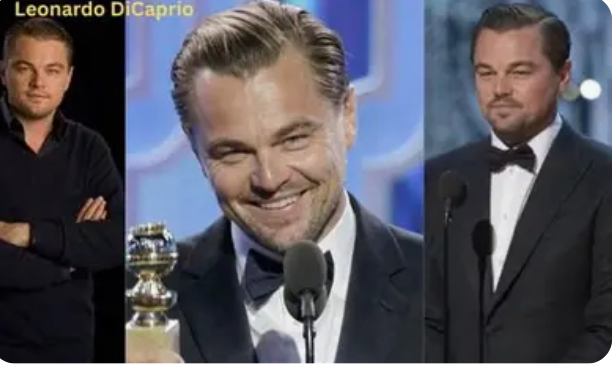
Leonardo DiCaprio’s net worth in 2026 sits at approximately $300 million. However, the number obscures the strategy. Between 1995 and 2020 alone, he earned over $300 million from film salaries and profit participation alone. His current net worth reflects something more disciplined than simple accumulation: reinvestment, environmental philanthropy, and long-term asset building.

His recent paychecks reveal the earning power of Hollywood’s most trusted brand. Beyond film earnings, his real estate portfolio spans coasts and continents. His Hollywood Hills compound started with two properties purchased for approximately $4 million in the 1990s — one from Madonna — and has since expanded to include multiple neighboring parcels covering more than five acres. Additionally, he owns properties in Malibu, Silver Lake, Beverly Hills, and Palm Springs. His two Battery Park apartments in New York total over $21 million in acquisitions. Most notably, there’s Blackadore Caye — a 104-acre private island off the coast of Belize purchased in 2005 for $1.75 million.
Leonardo DiCaprio turns fifty-two in 2026. His filmography reads like a syllabus on American ambition: the kid who made good in Titanic, the corrupt stockbroker in Wolf of Wall Street, the frontier survivor in The Revenant, the faded TV star in Once Upon a Time in Hollywood. Every role contains echoes of the boy who walked past needle-strewn sidewalks to reach auditions.
2026 Update: Eight Nominations, Thirteen for the Film, and the Most Important Payday He Hasn’t Collected Yet
Three developments define the period since this article’s original publication. A Paul Thomas Anderson film arrived as a cultural event, sweeping virtually every critics’ prize on its way to 13 Oscar nominations. A historic eighth nomination placed DiCaprio in the rarest company in Academy history. Meanwhile, the Appian Way production slate is expanding on multiple fronts simultaneously.
One Battle After Another: What the Film Is and Why It Matters Financially
Loosely adapted from Thomas Pynchon’s 1990 novel Vineland, One Battle After Another is Paul Thomas Anderson’s absurdist comic thriller about the revolutionary movements of the 1960s and ’70s, filtered through a father desperately trying to reconnect with his daughter. DiCaprio plays Bob Ferguson — a former radical hiding from authorities for sixteen years in a California mountain community, forced back into action when an enemy from his violent past resurfaces. He spends most of the film in a bathrobe. By every critical account, he is remarkable in it.
The film earned 13 Academy Award nominations at the 98th ceremony, including Best Picture, Best Director for Anderson, and Best Actor for DiCaprio. It swept the DGA, Critics Choice Awards, and multiple critics’ circles throughout the fall season. Anderson’s DGA win — the single most reliable predictor of Best Director — makes OBAA the consensus Best Picture frontrunner heading into Sunday night. Warner Bros. backed both One Battle After Another and Sinners. Combined, the two titles account for 29 nominations — a remarkable outcome for a studio that took meaningful commercial risks on both.
DiCaprio is also a producer on the film through Appian Way. If One Battle After Another wins Best Picture, he collects a producer’s Oscar to sit alongside his Best Actor statue from The Revenant. That is not a minor footnote. A Best Picture win on the producing credit transforms Appian Way’s industry positioning — deal terms improve, backend participation becomes more negotiable, and every studio conversation Jennifer Davisson (Appian Way’s President of Production) runs shifts accordingly.
The Nomination That Changed the Historical Ledger
DiCaprio’s Best Actor nomination for One Battle After Another is his eighth overall Oscar nomination. More specifically, it is his sixth in the Best Actor category alone. That sixth nod ties him with Richard Burton and Daniel Day-Lewis for the most Best Actor nominations in history. He joins a company of eight others — Ingrid Bergman, Jeff Bridges, Robert Duvall, Jane Fonda, Greer Garson, Dustin Hoffman, and Kate Winslet — as performers to earn at least seven nominations across all Oscar categories. Winslet is his Titanic costar.
He will likely not win Best Actor on Sunday. Timothée Chalamet swept Critics Choice and the Golden Globes for Marty Supreme. Then he lost the SAG Actor Award to Michael B. Jordan. That win — landing in the middle of Oscar voting — flipped the race decisively. As of Sunday morning, Jordan leads DiCaprio roughly 50 to 6 percent in prediction markets. DiCaprio told the Associated Press after the nominations that the film’s ensemble mattered more to him than individual recognition. He expressed disappointment that costar Chase Infiniti was not nominated for Best Actress — he called her “the heart and soul” of the film, the onscreen daughter who carried its emotional weight. The gesture is consistent with a career-long pattern: DiCaprio, given a microphone during awards season, redirects attention toward the work rather than himself.
Appian Way: The Slate That Compounds Quietly
While the awards campaign has dominated conversation, Appian Way is simultaneously building production infrastructure that extends well beyond DiCaprio’s acting schedule. A live-action Captain Planet series entered early development at Netflix in July 2025, produced in partnership with Berlanti Productions. The Sigma Force techno-thriller series — based on James Rollins’s novels — is in development at Amazon MGM Studios. A television adaptation of Stephen King’s Billy Summers is in development at Warner Bros. with Bad Robot as co-producer. Appian Way holds first-look deals with both Apple (television) and Sony Pictures (features). That multi-studio positioning is unusual for a company of its size. Most production companies sacrifice that leverage for the security of a single relationship.
Consider the combined effect: a potential Best Picture Oscar, a deepening multi-platform slate, and DiCaprio’s continued willingness to take creative risk. Killers of the Flower Moon, One Battle After Another, the Sleepwalker thriller slated for 2026 — each one a proof of concept. Together, they are making Appian Way steadily more valuable as an entity independent of its founder’s acting schedule. The $300 million net worth estimate has not moved dramatically. The architecture beneath it, however, is compounding.
The Wound: The Boy From Scumsville
Young Leonardo DiCaprio was walking home from school through East Hollywood in 1979 when a man in a trenchcoat cornered him near an alleyway. Crack vials scattered the sidewalk, while a prostitution ring operated openly on his corner. His family had a name for the neighborhood where he lived with his mother at Hollywood Boulevard and Western Avenue. They called it Scumsville.
Leonardo Wilhelm DiCaprio entered the world on November 11, 1974, named after a kick. His pregnant mother Irmelin stood before a da Vinci painting in the Uffizi gallery in Florence. That’s when she first felt her baby move. The artistic omen would prove prophetic. Even so, the path from that Italian museum to the Hollywood Walk of Fame cut through some of Los Angeles’s ugliest terrain. His parents couldn’t have been more ill-suited for the American Dream’s conventional version. George DiCaprio was an underground comic book artist who distributed titles like “Greaser Comics” and “Cocaine Comix” from his garage.
The Mother Who Drove Him Out
Irmelin Indenbirken was the daughter of Wilhelm Indenbirken, a German refugee who fled to America after World War II. She worked as a legal secretary. Every day, she drove her son three hours to auditions — from East Hollywood to the agencies in Century City and back. The neighborhood tried to obscure something. She saw it clearly: her son had something real. The commute was an act of faith. The faith was eventually vindicated.
George and Irmelin divorced when Leonardo was one, but both remained active in his life. His father, the underground comic artist, introduced him to literature, philosophy, and the avant-garde sensibility that would eventually animate his film choices. His mother provided the practical infrastructure of ambition. Between the two of them, they raised a kid who could hold Scumsville in one hand and the Uffizi in the other.
The Chip: The Kid Commercials Couldn’t Break
DiCaprio’s early attempts to enter the industry were humiliating in the specific way that only show business can produce. Casting directors told him his name was too ethnic. They suggested he change it to Lenny Williams. He refused. At eleven, he appeared in educational films and commercials, a period he has described as formative precisely because it taught him exactly what he didn’t want to do.
His breakthrough arrived in a manner that speaks to the randomness of early careers. A recurring role on Growing Pains — as Luke Brower, a homeless teenager taken in by the Seaver family — ran from 1991 to 1992. It was steady work, a paycheck, and a platform. More importantly, it put him in front of enough people that Paramount noticed when Robert De Niro began casting This Boy’s Life.
De Niro and the Education That Mattered
The This Boy’s Life audition is one of the most retold stories in contemporary Hollywood. It illustrates something important about how real talent announces itself. DiCaprio reportedly threw a temper tantrum in the audition room — not from anxiety, but because the scene called for it, and he understood the scene. De Niro, who has seen more auditions than nearly anyone alive, cast him on the spot.
Working opposite De Niro at seventeen was an education that no acting school could replicate. He watched one of the craft’s greatest practitioners up close, every day, for months. The lessons weren’t instructional. They were observational. DiCaprio absorbed what sustained commitment to a role looked like from the inside, and that absorption never left him.
The Rise: From What’s Eating Gilbert Grape to Global Phenomenon
The Academy Award nomination for What’s Eating Gilbert Grape arrived when DiCaprio was nineteen. He played Arnie Grape — a young man with an intellectual disability. The nomination announced something the industry hadn’t named yet. This was not a teen actor with good timing. This was a performer of uncommon range who happened to be very young.
Then came Romeo + Juliet. Then came Titanic. James Cameron’s $200 million gamble became the highest-grossing film in history, earning over $2.2 billion worldwide. DiCaprio was twenty-two when filming began. He was twenty-three when it opened. For roughly two years, he was the most famous person on Earth. That experience destroys most people. In his case, it produced instead a ferocious commitment to choosing work that could not be reduced to celebrity.
The Post-Titanic Turn
The choices he made after Titanic were not commercially obvious. He turned down projects that would have kept him in the romantic-lead lane and sought out material that confused audiences expecting the Titanic star. The Man in the Iron Mask. Celebrity. These were misfires. But they were willful misfires — deliberate experiments in a career that had to prove something beyond box office.
The turning point was Gangs of New York in 2002, which began his collaboration with Martin Scorsese. By then, DiCaprio had found his working method and his working partner. Over the next two decades, they made seven films together. The list reads like a curriculum: The Aviator, The Departed, Shutter Island, The Wolf of Wall Street, Killers of the Flower Moon, and One Battle After Another. The collaboration is among the most significant in cinema of the past quarter century.

The Tell: The Environmental Fortune That Isn’t a Fortune
The most revealing financial decision Leonardo DiCaprio ever made was not a real estate acquisition or a film deal. Instead, it was the decision to route hundreds of millions of dollars through his environmental foundation — not into personal net worth. Since founding the Leonardo DiCaprio Foundation in 1998, he has contributed over $100 million to environmental causes globally. He has leveraged his celebrity to raise hundreds of millions more from other donors.
The gap between what DiCaprio has earned ($300 million-plus in film salaries alone since 1995) and what he is currently worth ($300 million) is explained in large part by this philanthropy. The $300 million figure represents what remained after the giving. It represents what a movie star looks like when the first instinct isn’t accumulation.
In 2014, he was appointed a United Nations Messenger of Peace with a focus on climate change. That appointment extended his platform beyond celebrity environmentalism into actual diplomatic weight. He addresses the UN General Assembly. Heads of state take his calls. The kid from Scumsville has access to rooms that most people with $300 million never enter. Not because of the money. Because of the credibility built by spending it on something other than himself.
The Hamptons Chapter: The Billionaires’ Row of Environmental Giving
DiCaprio maintains a deep relationship with the Hamptons social circuit, where his environmental credibility opens doors that pure celebrity cannot. The East End’s philanthropic community is anchored by family offices, foundations, and inherited wealth that measures itself by impact rather than display. That community has long recognized DiCaprio as a rare Hollywood figure who speaks their language.
He has appeared at private events in Southampton and East Hampton. The conversation there is not about film grosses. It centers on conservation finance, impact investing, and the intersection of capital and climate. His Blackadore Caye project in Belize began as an eco-resort concept before scaling back to a more limited conservation initiative. It exemplifies the model: a private island as a demonstration project, not a luxury asset.

The Hamptons connection is also professional. His real estate consultant and several early Appian Way partners have East End roots. The magazine profiles and charity galas defining the social calendar from Memorial Day to Labor Day treat DiCaprio differently. He is not an entertainment figure at these tables. He arrives as something closer to a foundation executive — with an extraordinary acting career on the side.
Leonardo DiCaprio Net Worth: The Full Wealth Audit
At approximately $300 million, DiCaprio’s net worth is best understood through four categories:
Breaking Down the $300 Million
Film salaries and backend participation. From Titanic through One Battle After Another, DiCaprio has earned in excess of $300 million from acting alone. His current quote for major studio films is reported at $20-30 million, with backend participation on franchise and major commercial releases. The Wolf of Wall Street backend alone was reportedly in the eight figures.
Appian Way Productions. Founded in 2001 and co-run with Jennifer Davisson, Appian Way holds first-look deals at both Apple and Sony. Its active slate includes projects at Netflix, Amazon, and Warner Bros. The company also carries the producer credit on One Battle After Another — the consensus Best Picture frontrunner as of this writing. The company’s value compounds with each successful project. Most net worth estimates miss it entirely — they focus on liquid assets.
Real estate. The Hollywood Hills compound (multiple properties, five-plus acres), Malibu beach house, Silver Lake property, Beverly Hills holding, Palm Springs retreat, two Battery Park apartments in New York, and Blackadore Caye island in Belize represent a portfolio that has appreciated substantially since acquisition. Conservative estimates place the total real estate value at $50-70 million.
Environmental philanthropy as strategic capital. The $100 million-plus donated through the DiCaprio Foundation cannot be counted as net worth, but it generates a form of reputational and relational capital that compounds the value of everything else. Family offices take his calls because of it. The UN gave him a platform because of it. Ultimately, this is the investment that never appears on a balance sheet — but functions as the foundation of everything that does.
Where DiCaprio Is Now
On Sunday night, March 15, 2026, Leonardo DiCaprio is almost certainly not winning Best Actor. Timothée Chalamet swept Critics Choice and the Golden Globes. Then Michael B. Jordan took SAG. That win flipped prediction markets decisively in Jordan’s favor. DiCaprio enters the ceremony as a long shot in the acting race. He enters it as a co-favorite to win Best Picture.
The distinction matters. A Best Picture Oscar for DiCaprio is a producer’s Oscar. It validates Appian Way’s strategy of backing difficult, expensive, ambitious material that the market has mostly abandoned. One Battle After Another is exactly the kind of film that studio executives said couldn’t be made at scale. DiCaprio helped make it at scale. If it wins, every future Appian Way conversation starts from a different position.
His Martin Scorsese collaboration — seven films across twenty-five years — represents one of cinema’s great partnerships. His Oscar finally came in 2016. The internet’s longest-running joke about his drought ended with a standing ovation and a speech about climate change. That speech was not an accident. It was the whole point.
The $300 million fortune matters less than what it represents. A German refugee’s daughter drove her son three hours daily to escape a neighborhood that should have destroyed him. The kid from Scumsville isn’t just wealthy now. He’s free. And on Sunday, he may be adding a second statue to the shelf — one that belongs to Appian Way as much as it belongs to him.
Feature your brand in Social Life Magazine: Contact our editorial team for features, advertising, and partnership opportunities.
The East End’s premier sporting event: Polo Hamptons — sponsorships, tickets, and brand activations.
Get the Hamptons insider list: Subscribe to Social Life Magazine
Support independent luxury journalism: Donate $5
Read next:
Brad Pitt Net Worth 2026: The Architect Who Rebuilt a $400 Million Empire
Timothée Chalamet Net Worth 2026: The Hell’s Kitchen Kid and the $35M Chosen One
Author

Written by
Recent Posts

Why the Supplement Market Is Shifting From More Products to Smarter Choices
5 Ways Engraved Custom Trophies Boost Employee Engagement
Creating Beautiful Mix-and-Match Tablescapes for Any Occasion
Is It Cheaper to Drive or Ship Your Car? We Ran the Numbers

Dear Margo: Restaurateur Dean Pashilis’ Tribute to Family, Food and Hospitality
Categories
- Art
- Articles
- Business of Luxury
- Celebrities
- Culture
- Entertainment
- Events
- Faces of Summer 2026
- Fashion
- Fashion & Style
- Featured
- Finance
- Food, Spirits, Wine
- Hamptons
- Hamptons Celebrities
- Health
- Health & Beauty
- Lifestyle
- Luxury Lifestyle
- Press
- Profiles
- Real Estate
- Technology
- The Chronicles
- Travel
- Uncategorized
- Weddings