
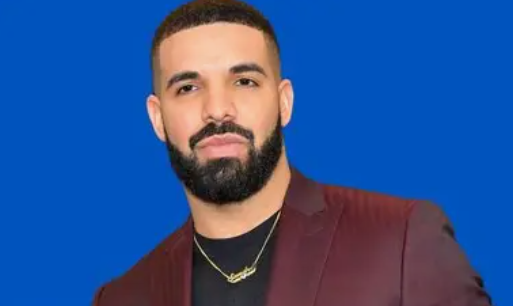
The basement was cold. Always cold. Young Aubrey Graham could hear the other family walking around upstairs, their footsteps a constant reminder that half a house was all his mother could afford.
Meanwhile, in Forest Hill—one of Toronto’s wealthiest neighborhoods—a sick woman and her teenage son rented the bottom half of a duplex while private jet kids flew overhead to ski vacations. The irony wasn’t lost on him. In fact, it would fuel everything that came next.
Today, Drake’s net worth sits at approximately $400 million, making him one of hip-hop’s five wealthiest artists. Yet the wound that built this empire wasn’t poverty. Instead, it was something far more complicated.
The Wound Nobody Talks About: Growing Up Between Two Worlds
Aubrey Drake Graham was born October 24, 1986, to parents who represented two entirely different Americas. His father, Dennis Graham, was a Black drummer from Memphis who’d played with Jerry Lee Lewis. In contrast, his mother, Sandi Graham, was an Ashkenazi Jewish Canadian who worked as an English teacher and florist.
They met at Club Bluenote in Toronto, married, and then divorced five years later. That’s precisely when everything fractured.
Dennis returned to Memphis, where drug charges would land him in prison twice during Drake’s childhood. Specifically, he served two separate sentences—two and three years respectively. Although the summers Drake spent in Memphis visiting his father would eventually inform his unique sound, for most of his formative years, Dennis was simply gone.
“I didn’t have a father, because he was in jail two separate times,” Drake told Complex Magazine in a revealing 2011 interview. Years later, his father claimed these assertions were embellishments to sell records. Drake responded on Instagram: “Every bar I ever spit was the truth and the truth is hard for some people to accept.”
A Mother’s Illness and the Real “Bottom” Drake Started From
While his father dealt with legal troubles in Memphis, young Drake watched his mother deteriorate. Sandi suffered from osteoporosis and severe joint pain—conditions that left her bedridden for significant portions of his childhood. As a result, she was isolated in her bedroom for years, heavily medicated, smoking to cope with the pain.
One night, Sandi packed her bags to run away. However, Drake caught her in the driveway because he’d forgotten something in the car. She broke down crying. He held her and promised everything would be okay.
Remarkably, he was just a teenager.
“Everybody thinks I went to some private school and my family was rich,” Drake explained later. “Maybe it’s my fault. Maybe I haven’t talked enough about it, but I didn’t grow up happy. I wasn’t in a happy home. My mother was very sick. We were very poor, like broke.”
The Forest Hill Illusion
The Forest Hill address confused people. Yes, it was an affluent neighborhood. No, the Grahams weren’t affluent. Sandi moved there specifically so her Black Jewish son wouldn’t be stereotyped in a rougher area. Consequently, she found half a house they could afford. Drake got the basement. She took the first floor. Meanwhile, the family upstairs had the rest.
The Bar Mitzvah in an Italian Restaurant Basement
When Drake turned 13, Jewish tradition required a bar mitzvah. Unfortunately, Sandi couldn’t afford a proper venue. Instead, they held the ceremony in the basement of an Italian restaurant, which Drake himself has acknowledged was “kind of a faux pas” for the ritual.
Throughout his childhood, he attended Jewish day school where he learned Hebrew and the Torah. The other students had trust funds. By comparison, he had a mother on pain medication and a father in a Memphis prison cell. Needless to say, the cultural disconnect was total.
“When I went to school with kids that were flying private jets, I never fit in,” Drake has said. “I was never accepted.”
Not Black enough for the Black kids. Not Jewish enough for the Jewish kids. Not rich enough for anyone. Ironically, this in-between identity would become his superpower.
The Audition That Changed Everything
At 15, Drake was cracking jokes in class at Forest Hill Collegiate when a classmate noticed something. “Yo, my dad is an agent,” the kid told him. “You should go talk to him because you’re good and you make people laugh.”
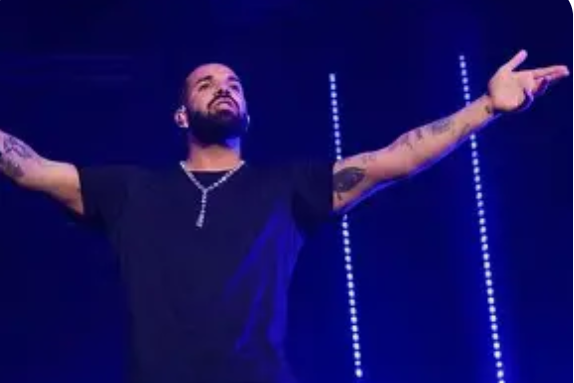
Consequently, the audition for Degrassi: The Next Generation became legendary—though for all the wrong reasons. On the same day Drake finally got accepted by the cool Jewish kids at school, they invited him over. He smoked marijuana for the first time. Then, unfortunately, he had to go audition.
“I had this really tug of war moment where I actually did something that I probably shouldn’t have done that starts with a ‘W’ and ends with ‘eed,'” Drake told Jimmy Fallon. “That was my first time, and we did it out of a starts with a ‘B’ ends with a ‘ong.'”
He showed up paranoid, splashing water on his face in the bathroom like a “Clearasil commercial.” At that moment, he thought he’d ruined his life. Nevertheless, the casting directors saw something else entirely.
Linda Schuyler, co-creator of Degrassi, remembered the moment vividly: “He was this lanky, rather awkward 14-year-old. There was a charisma and a warmth to that face and that beautiful smile. We all looked at each other and said, ‘We have just found our Jimmy Brooks.'”
Wheelchair Jimmy: The Role That Paid the Bills
For seven years, Drake played Jimmy Brooks, a basketball star who becomes paralyzed after being shot by a classmate. The role earned him $40,000 annually. In Canadian television terms, this was substantial. In real-world terms, however, it was barely a teacher’s salary.
Still, it was enough to keep his mother afloat.
“The only money I had coming in was off of Canadian TV, which isn’t that much money when you break it down,” Drake admitted. “A season of Canadian television is under a teacher’s salary, I’ll tell you that much.”
During this period, Drake was essentially the family breadwinner while still in high school. As a result, he dropped out to focus on acting. His mother needed the income. The basement apartment needed heat. Ultimately, the choice was survival, not ambition.
The Mixtape Era: Building an Empire From a Basement Studio
While still filming Degrassi, Drake started making music in Toronto’s after-hours scene. His first mixtape, Room for Improvement, dropped in 2006. Notably, he sold 6,000 copies independently and received exactly $304.04 in royalties.
His first concert? Opening for Ice Cube at Kool Haus nightclub in 2006. He performed for thirty minutes and earned just $100.
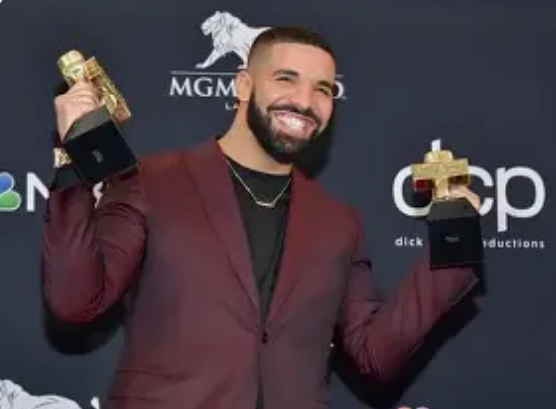
Comeback Season followed in 2007. Then came So Far Gone in February 2009—a mixtape that would detonate his entire career. Released as a free download on his OVO blog, it spawned “Best I Ever Had,” which peaked at number two on the Billboard Hot 100.
Remarkably, the track was recorded in producer Boi-1da’s parents’ basement using FL Studio on a laptop. Another basement. Another beginning.
What followed was one of the biggest bidding wars in music history. Every major label wanted him. Eventually, Lil Wayne’s Young Money Entertainment won, reportedly signing Drake for over a million dollars.
The Young Money Era and Commercial Domination
Lil Wayne saw something in Drake that others had missed. Specifically, the emotional vulnerability. The willingness to sing about heartbreak, loneliness, and ambition in equal measure. Above all, the hybrid sound that blended rap and R&B in ways that hadn’t been attempted at this scale.
“Drake has what it takes to represent Young Money to the fullest,” Wayne said at the time of signing.
Thank Me Later debuted at number one on the Billboard 200 in 2010. Subsequently, Take Care followed in 2011, winning the Grammy for Best Rap Album. Then came Nothing Was the Same (2013), Views (2016), and Scorpion (2018). Without exception, every single album topped the charts.
As of 2025, Drake holds the record for most entries on the Billboard Hot 100 with over 300 songs charted. Furthermore, he was the first artist to surpass 50 billion streams on Spotify. His streaming numbers alone generate approximately $70 million annually.
Drake Net Worth 2025: Breaking Down the $400 Million Empire
Drake’s wealth extends far beyond music royalties. Here’s how the $400 million breaks down according to Celebrity Net Worth and industry analyses.
Music, Touring, and Recording Deals
Music and Touring: Drake’s career earnings from music have exceeded $430 million before taxes. Most notably, his It’s All a Blur Tour grossed $320.5 million, becoming the highest-grossing hip-hop tour in history. Additionally, streaming royalties contribute approximately $70 million annually.
Universal Music Group Deal: In May 2022, Drake signed a “long-term worldwide partnership” with Universal worth an estimated $400 million. This comprehensive deal covers recorded music, publishing, film, television, and brands. His music catalog alone generates roughly $50 million annually for the label.
Business Ventures and Brand Partnerships
OVO Sound: Co-founded with producer Noah “40” Shebib and manager Oliver El-Khatib in 2012, OVO Sound has signed PartyNextDoor, Majid Jordan, Roy Woods, and other Toronto talent. In January 2024, the label secured significant investment from Santa Anna Label Group, a joint venture with Sony Music.
OVO Clothing: What started as merchandise has since evolved into a streetwear empire with flagship stores in Toronto, Los Angeles, New York, Chicago, and Vancouver. Collaborations with Canada Goose, Nike, and the Toronto Raptors have further expanded the brand’s reach.
NOCTA: Drake’s sub-label under Nike launched in December 2020. The partnership, reportedly worth up to $450 million, produces functional minimalist apparel inspired by his nocturnal creative process.
Virginia Black Whiskey: Co-founded in 2016, the ultra-premium whiskey brand sold over 30,000 cases in its first year. Interestingly, Dennis Graham even appeared in commercials for the brand, demonstrating that some family wounds can heal.
Real Estate Holdings
Real Estate Portfolio: Drake’s properties total over $100 million in value. His Toronto mansion, dubbed “The Embassy,” spans 50,000 square feet and features an NBA regulation-size indoor basketball court, recording studio, and indoor swimming pool. He also owns a Beverly Hills estate purchased for $75 million (currently listed for $79 million) and a 313-acre Texas ranch acquired for $15 million in 2024.
The Kendrick Lamar Feud: When Being Vulnerable Became Liability
Drake’s 2024 beef with Kendrick Lamar tested whether vulnerability could survive direct attack. Specifically, Lamar’s diss tracks targeted everything: Drake’s authenticity, his Canadian identity, his parenting, his relationships.
The feud generated $15.3 million in streaming revenue. Similarly, Drake’s response tracks earned nearly $2 million alone. However, the psychological toll was different from the financial outcome.
For an artist who built his empire on emotional openness, being attacked for that same openness created a unique wound. After all, the kid from the basement had become successful enough to be a target. Some wounds create empires. Others simply hurt.
Toronto: The City He Put on the Map
Drake didn’t just leave Toronto. Instead, he redefined it. As Global Ambassador for the Toronto Raptors, he integrated himself into the team’s branding and championship culture. When the Raptors won the 2019 NBA Finals, Drake was courtside losing his mind.
OVO Fest, the annual Toronto music festival he founded in 2010, has featured everyone from Jay-Z to Eminem to Stevie Wonder. In essence, the festival created Toronto’s identity as a hip-hop destination.
“The 6” became synonymous with Drake after he popularized the nickname, derived from Toronto’s area codes (416 and 647). Remarkably, the city that raised him in a basement now bears his cultural fingerprint.
What the $400 Million Actually Represents
Ultimately, Drake’s net worth isn’t really about the money. It never was.
Rather, it’s about the sick mother who couldn’t afford a proper bar mitzvah venue. The absent father who showed up for commercials thirty years later. The Jewish school kids who flew private while he rented a basement. The Degrassi check that kept the lights on. The first concert that paid just $100.
“Started from the bottom” was never just a lyric. On the contrary, it was a correction to everyone who assumed Forest Hill meant wealth—who didn’t understand that addresses can lie, that houses can be divided, that mothers can be bedridden while children pay bills.
Drake built a $400 million empire by doing what no rapper before him had done at scale: admitting weakness, singing about heartbreak, blending genres without apology. Surprisingly, the same in-between identity that made him an outsider in Toronto became the sound that dominated global pop music for fifteen years.
The Next Chapter: Still Building
In February 2025, Drake released “$ome $exy $ongs 4 U” with PartyNextDoor, which debuted at number one and earned 246,000 album-equivalent units in its first week. Significantly, it was his 14th chart-topping album, tying him with Jay-Z and Taylor Swift for most all-time.
Then in April 2025, he became the first artist in history to surpass 500 million RIAA-certified units across albums, singles, and features. The numbers keep breaking. The empire keeps expanding. And the basement kid keeps building.
But here’s what ultimately matters about Drake’s fortune: he never pretended the wound wasn’t there. He wrote songs about his mother trying to run away. He rapped about his father’s absence. He admitted he was broke while living in a rich neighborhood.
That honesty was the foundation. The $400 million? That was simply what happened when the world finally believed him.
For more exclusive coverage of the tastemakers shaping luxury culture, contact Social Life Magazine about features and partnerships. Discover our upcoming Polo Hamptons events where entertainment meets affluence.
Subscribe to our print edition for insider access to the stories behind the fortunes. Explore our Music Moguls series for more origin stories of the entertainment elite.
Related Reading
Author

Written by
Recent Posts

How to Pick a Homecoming Dress for Your Body Type (and Feel Amazing in It)

World Cup Injury Attorney for Vancouver Events
What a 3-Carat Engagement Ring Actually Costs in 2026: The Real Numbers
The Skincare Habits That Make a Real Difference Over Time
Hamptons-Ready Beauty: Polished Makeup for Long Summer Days
Categories
- Art
- Articles
- Business of Luxury
- Celebrities
- Culture
- Entertainment
- Events
- Faces of Summer 2026
- Fashion
- Fashion & Style
- Featured
- Finance
- Food, Spirits, Wine
- Hamptons
- Hamptons Celebrities
- Health
- Health & Beauty
- Lifestyle
- Luxury Lifestyle
- Press
- Profiles
- Real Estate
- Technology
- The Chronicles
- Travel
- Uncategorized
- Weddings