
She was nine years old when her father stopped calling.
This is the story of how Norah Jones transformed childhood abandonment into one of music’s most unlikely empires.
The Wound: Growing Up as a Famous Man’s Secret
Born March 30, 1979, in Manhattan, Norah arrived as the product of an affair between her mother Sue Jones, an American concert producer, and Ravi Shankar, the 59-year-old sitar virtuoso who was already entangled with another woman. Her parents never married. In fact, Shankar was simultaneously involved with Sukanya Rajan, who would bear his other daughter, Anoushka, just two years later.
When Norah was seven, her parents separated. Sue took her daughter to Grapevine, Texas, a suburb of Dallas where the average household income sat firmly in the middle class. Furthermore, their new life was worlds away from her father’s celebrity circuits.
The Secret She Couldn’t Tell
“I knew who my dad was,” Jones later told 60 Minutes. “I saw him sporadically until I was nine and then I didn’t see him again or talk to him until I was 18.” Her mother didn’t want her discussing him publicly. As a result, Shankar became “kind of a secret.”
Imagine being a child with a famous father you couldn’t mention. Meanwhile, her half-sister Anoushka was traveling the world at his side, learning sitar, absorbing his genius firsthand. Norah got silence instead.
Sue Jones worked as a nurse to support them, changing jobs multiple times as the economy shifted. “She worked very hard,” Norah recalled. “She just needed to make enough money to support us and also have time to be with me.” Still, Sue poured everything into her daughter’s development: piano lessons, voice training, diving lessons, painting classes.
The Chip: Building an Identity Without Him
At 16, with both parents’ consent, Geethali Norah Jones Shankar made a decision that would define her trajectory. She legally changed her name to simply Norah Jones, erasing the Shankar surname entirely.

Think about that for a moment. A teenager choosing to sever the most visible connection to her famous father. This wasn’t rebellion for rebellion’s sake. Instead, it was a declaration of independence, a statement that whatever she built would belong to her alone.
Texas Roots, Not Indian Heritage
When asked point-blank if she considered herself part Indian, Jones was characteristically direct: “I grew up in Texas with a white mother. I feel very Texan, actually. And New Yorker.” Her musical roots were country and jazz, tastes acquired from her mother’s eclectic record collection, not from any instruction her father might have provided.
She found Billie Holiday in her mother’s eight-album set, picking out one disc and playing it over and over again. Additionally, she discovered Bill Evans’ piano work. These would become her true musical parents, the artists who shaped her velvet voice and understated style.
By high school, Jones was already winning recognition on her own merits. She earned DownBeat magazine’s Student Music Award for Best Jazz Vocalist twice, plus Best Original Composition in 1996. Subsequently, she enrolled at the University of North Texas to study jazz piano, joining the UNT Jazz Singers and rubbing shoulders with fellow musicians who would later collaborate on her breakthrough record.
The Rise: From Lounge Singer to Diamond-Selling Artist
In 1999, Jones dropped out of college and moved to New York with nothing but talent and determination. She waited tables during the day. At night, she sang in jazz clubs and tiny venues throughout Greenwich Village, honing her craft in anonymity.
Six months in, she was ready to quit. “I got really depressed and wanted to move home,” she admitted. Her mother’s response would prove pivotal: “As much as I want you to come back, you should stay. Otherwise you’ll feel like a failure.”
The Night Everything Changed
Peter Malick walked into the Living Room, a small New York venue, just as a young singer announced her last song of the set. She sang Dinah Washington’s “Since I Fell for You,” and Malick was struck breathless. “Here, in the tradition of Billie Holiday, was a stunningly beautiful, blues infused voice,” he later wrote. “This was my first contact with Norah Jones.”
Subsequently, a Blue Note employee named Shell White caught Jones performing on her 21st birthday and vowed to get her a record deal. Through White’s intervention, Jones met Bruce Lundvall, the label’s president. He signed her despite reservations about the commercial viability of her sound.
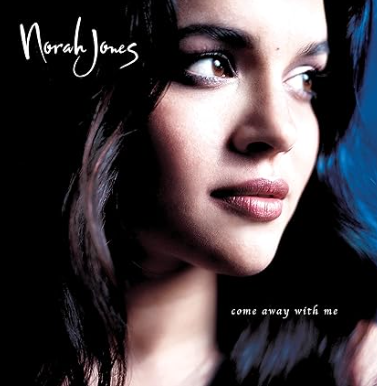
Come Away With Me, released in February 2002, was what Jones called her “moody little record.” Nobody expected it to become one of the best-selling debut albums in music history. The fusion of jazz, country, blues, and folk connected with listeners starving for authenticity in an era of manufactured pop.
The Grammy Sweep That Shocked Everyone
On February 23, 2003, the 23-year-old singer walked into Madison Square Garden as a relative unknown. She walked out having swept all four major categories: Album of the Year, Record of the Year, Song of the Year, and Best New Artist. Eight Grammys total that night.
“I felt like I went to somebody else’s birthday party and I ate all their cake without anybody else getting a piece,” Jones later said. Her competitors that night? Bruce Springsteen and Eminem. She beat them both.
Notably, in her acceptance speeches, she thanked her mother, her team, everyone who had supported her journey. She did not single out her father. Critics pounced. Was it a snub? Jones addressed it directly to Oprah: “My mom was involved in the daily stress of making this record. We talk every day on the phone, no matter what. I talk to my dad every five months, so it’s not like I dissed him by not singling him out.”
Norah Jones Net Worth 2025: Breaking Down the $25 Million Empire
According to Celebrity Net Worth and multiple financial publications, Norah Jones has accumulated an estimated net worth of $25 million as of 2025. Remarkably, this fortune was built without any inheritance or financial support from her famous father.
Music Sales and Streaming Revenue
Come Away With Me alone sold over 27 million copies worldwide, earning diamond certification and generating an estimated $40 million in gross revenue. Jones’ share, after label cuts and production costs, likely represented several million dollars from this single album.
Her subsequent albums have each achieved platinum status. Feels Like Home (2004) sold over a million copies in its first week. Not Too Late (2007) and The Fall (2009) both moved more than a million units. Additionally, her songs have been streamed over 10 billion times worldwide, generating ongoing royalty income.
Grammy Power and Ongoing Success
With ten Grammy Awards to her name (her most recent win coming in 2025 for Visions), Jones commands premium rates for her work. Billboard named her the top jazz artist of the 2000s decade. Furthermore, this recognition translates directly into higher album advances, better touring guarantees, and more lucrative licensing deals.
Touring and Live Performances
Jones’ transition from lounge singer to arena headliner happened at turbo speed. Her 2013 Little Broken Hearts Tour sold approximately 73,215 tickets, generating $4.62 million in revenue. Subsequent tours have maintained strong demand, with her 2022 Summer Tour celebrating the 20th anniversary of Come Away With Me drawing sold-out crowds.
Real Estate Investments
Jones has demonstrated shrewd real estate instincts, particularly in Brooklyn’s coveted Cobble Hill neighborhood. In 2009, she purchased a historic Greek Revival townhouse at 166 Amity Street for $4.9 million. She then invested significantly in upgrades: a geothermal heat exchange system, rooftop solar panels, a heated lap pool with hot tub, and double-glazed windows.
In 2019, she listed the property for $8 million. It sold in March 2020 for $7.5 million, netting her approximately $2.6 million in profit before renovation costs. Meanwhile, in 2015, she purchased another Cobble Hill property for $6.25 million: a historic carriage house that appeared in the Julia Roberts film Eat, Pray, Love.
Collaborations and Additional Revenue Streams
Her Grammy-winning duet with Ray Charles, “Here We Go Again,” showcased her ability to collaborate with legends. She has recorded with Willie Nelson, OutKast, Foo Fighters, Herbie Hancock, and Logic. Each collaboration brings sync licensing opportunities, expanded audience reach, and additional royalty streams.
Her acting career, though secondary, has added to her earnings. Her lead role in Wong Kar-Wai’s My Blueberry Nights (2007) and a cameo in Ted (2012) brought both paychecks and exposure. Additionally, the song she co-wrote for Ted, “Everybody Needs a Best Friend,” earned an Academy Award nomination.
Want more celebrity net worth stories and Hamptons lifestyle coverage?
Contact us for features and partnerships | Polo Hamptons Events
Subscribe to our print edition
The Tell: How the Wound Still Shows
Listen to Come Away With Me and you hear a woman who learned early that presence cannot be demanded, only earned. The album’s quiet intensity, its refusal to shout for attention, carries the mark of someone who discovered that the loudest people in the room often don’t show up when it counts.
“I don’t like talking about him because he doesn’t have anything to do with me or my music,” Jones told Rolling Stone in 2004. The statement was sharp, direct, and revealing. Even at the peak of her fame, the wound remained tender.
When she reconnected with Shankar at 18, she admitted to Katie Couric that she “might have” wanted an apology. The reconciliation happened eventually. She traveled to New Delhi to spend time with him, writing material that appeared on The Fall. But the relationship remained complicated until his death in 2012.
Today, Jones speaks of her father with warmth, noting his “childlike sense of humor” and wishing he could see her children. Nevertheless, her career stands as proof that she never needed his name to succeed. She built something entirely her own.
The Connection: Brooklyn Roots and Quiet Living
That Jones chose to build her life in Brooklyn, not Manhattan, tells you something. She settled in Cobble Hill, a neighborhood known for tree-lined streets, historic brownstones, and a community feel that recalls small-town living. Neighbors include Daniel Craig, Rachel Weisz, and Ethan Hawke, yet the area maintains an unassuming character.
Her townhouse, with its wisteria-covered backyard and disappearing pool, became the kind of sanctuary she never had as a child. “It always felt like an escape from city life,” she said when listing it. “I started my family, made a lot of music and had some truly magical times there.”
She married keyboardist Pete Remm in 2014. They have two children whose names she has deliberately kept private. During the pandemic lockdown, she homeschooled them while finding creative inspiration in unlikely places, including Dr. Seuss books. The rhymes stuck in her head after reading to her kids, sparking new songs.
This is the life of someone who learned early that attention and presence are not the same thing. Fame came to her; she didn’t chase it. And when it arrived, she made sure her children would never experience the absence she knew.

The Paradox of Norah Jones
There is a beautiful irony in Norah Jones’ story. The daughter who was left behind built an empire that outshines her father’s celebrity. The girl who couldn’t talk about Ravi Shankar became the Grammy winner who didn’t need to. The child raised in modest Texas circumstances now owns multiple Brooklyn townhouses.
At 45, with $25 million to her name, ten Grammys on her shelf, and over 53 million records sold worldwide, Jones has proven something that every abandoned child secretly hopes: that success is the quietest revenge.
Yet revenge was never the point. “I think that’s partly due to my mom, my friends and the people around me,” she said when asked how she stayed grounded. Sue Jones, the single mother who worked nursing shifts and drove her daughter to piano lessons, gets the credit. Not the famous father who taught George Harrison to play sitar.
The day after her historic Grammy sweep, Norah Jones took a long walk through New York City. Nobody recognized her. She could have been any young woman on the street, anonymous and free.
“Nobody even recognized me!” she recalled years later, laughing with delight.
For a woman who spent her childhood as a famous man’s secret, that moment of invisibility might have been the sweetest victory of all.
Related Articles
Author

Written by
Recent Posts
The New York Women’s Foundation’s 2026 Neighborhood Dinner

Marco Maranghello
The Baker House 1650
MvVO ART Show
Casita Maria Center for Arts and Education
Categories
- Art
- Articles
- Business of Luxury
- Celebrities
- Culture
- Entertainment
- Events
- Faces of Summer 2026
- Fashion
- Fashion & Style
- Featured
- Finance
- Food, Spirits, Wine
- Hamptons
- Hamptons Celebrities
- Health
- Health & Beauty
- Lifestyle
- Luxury Lifestyle
- Press
- Profiles
- Real Estate
- Technology
- The Chronicles
- Travel
- Uncategorized
- Weddings