
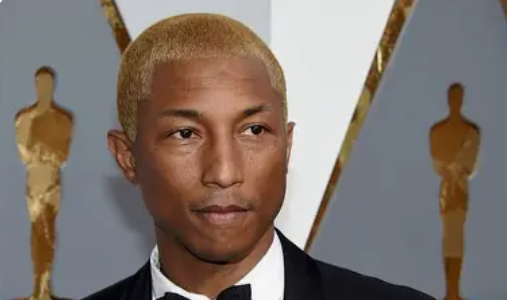
The water got cut off again. Seven-year-old Pharrell Williams sat on the concrete stoop of building 1021 in the Atlantis Apartments, watching older kids hustle on the corner while his mother figured out which bill to pay this month. Around him, music poured from every open window, every passing car, every church down the block. But young Pharrell wasn’t just hearing the bass lines thumping through Virginia Beach’s most notorious housing project. He was seeing them.
Swirling yellows. Bursting oranges. Deep, pulsing blues. Every note painted colors in his mind that he assumed everyone could see. He wouldn’t learn until years later that his brain was wired differently, that this neurological gift called synesthesia would become his secret weapon. For now, he was just another kid from the mud, waiting for his family to move again before the eviction notice stuck.
Today, Pharrell Williams commands a net worth of $250 million. He serves as Men’s Creative Director at Louis Vuitton, has won 13 Grammy Awards, and owns a $30 million waterfront mansion in Coral Gables, Florida. However, the boy who couldn’t afford name-brand sneakers until his first McDonald’s paycheck at 16 never left that housing project. He named his upcoming Broadway musical after it.
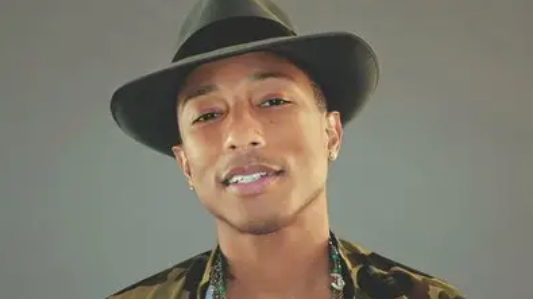
Pharrell Williams Net Worth 2025: From Pork and Beans to Fashion Royalty
The Williams family knew financial instability intimately. Pharaoh, a handyman and house painter, and Carolyn, a schoolteacher, raised three sons in conditions their youngest brother David later described to the Guardian as surviving on “a lot of pork and beans.” Multiple evictions shaped Pharrell’s childhood, with utilities frequently disconnected and water sometimes requiring a pump to access.
Nevertheless, music surrounded him like oxygen. His father played drums at local churches, teaching young Pharrell percussion while his mother kept the stereo running constantly. Gospel at grandmother’s house on Sundays. R&B drifting through the Atlantis complex. Michael Jackson, Stevie Wonder, and Queen on repeat in his bedroom. The boy absorbed it all, translating sound into his private rainbow.
According to Psychology Today, Pharrell discovered his synesthesia gradually, not realizing that other people didn’t see music as explosions of color. In interviews, he describes the revelation as both isolating and liberating. “If it was taken from me suddenly I’m not sure that I could make music,” he has said. “I wouldn’t have a measure to understand.”
This perceptual difference combined with what he suspects is ADD/ADHD made traditional schooling challenging. His mind wandered during reading assignments, imagination racing elsewhere while text sat static on the page. Band camp at age 12 changed everything. His grandmother suggested he join the school band, and Pharrell chose percussion, channeling his restless energy into rhythm.
The Chip: How a Talent Show Changed Everything
At that summer camp, Pharrell met Chad Hugo, a Filipino-American kid who played saxophone with the same obsessive intensity. The two bonded immediately over their shared love of experimentation, spending every free moment programming beats on samplers and drum machines in Hugo’s bedroom. They called themselves the Neptunes, named because Neptune rules water and water covers most of the Earth.
Their ambition seemed delusional given their circumstances. Virginia Beach wasn’t a music industry hub. The Atlantis complex was known for drug dealing and occasional shootings, not launching pop careers. But Pharrell had internalized something from watching his parents struggle. As he recently told the Footwear News Achievement Awards audience, “I’m proletariat. In fact, I’m lumpenproletariat. I had to stay on my feet.”
In 1991, fate intervened. The Neptunes entered a high school talent show, competing against local acts including a young Missy Elliott and the duo Timbaland & Magoo. Producer Teddy Riley, whose Future Records studio sat near their school, attended as a judge. According to GRAMMY.com, Riley “overrode the judges in the contest” upon hearing the Neptunes, declaring them exactly what he’d been seeking.
Subsequently, Riley took the teenagers under his wing. Pharrell was still in high school when he wrote the verse for Wreckx-n-Effect’s 1992 hit “Rump Shaker.” The song reached number two on the Billboard Hot 100, introducing a sound that would eventually dominate radio across genres.
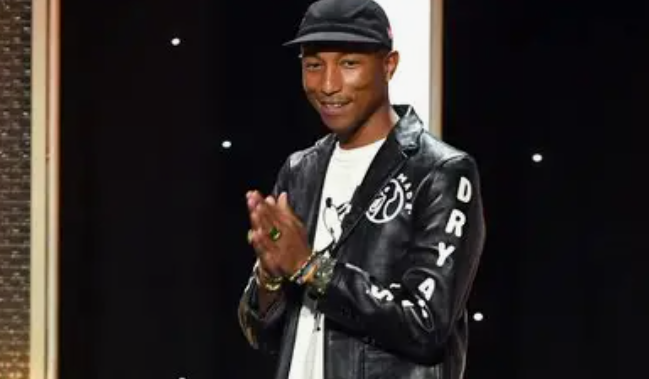
The Rise: Building a $250 Million Empire One Beat at a Time
The Neptunes spent years apprenticing under Riley, honing their minimalist, staccato production style while working on Blackstreet records and other projects. Their breakthrough came with Noreaga’s 1998 single “Superthug,” followed by an avalanche of hits that defied genre boundaries.
By the early 2000s, the duo’s productions comprised 43 percent of songs playing on American radio. Jay-Z, Britney Spears, Justin Timberlake, Usher, Nelly, Gwen Stefani, and Snoop Dogg all relied on their distinctive four-count intros and sparse arrangements. According to Forbes, Pharrell earned approximately $13 million annually during their peak production years, building wealth through publishing royalties that continue paying dividends today.
His 2014 mega-hit “Happy,” created for the Despicable Me 2 soundtrack, became one of the most downloaded songs in history. Pharrell describes seeing the track as “yellow and red… well, it’s not red, it’s more like orange, but then it’s a little pink, a little rainbow-y.” That synesthetic vision translated into an infectious, universally appealing anthem that expanded his audience beyond hip-hop into mainstream pop consciousness.
Furthermore, Pharrell diversified aggressively into fashion and design. He co-founded Billionaire Boys Club and Ice Cream Footwear, collaborated extensively with Adidas on the Human Race sneaker line, and designed jewelry and sunglasses for Louis Vuitton before being appointed Men’s Creative Director in 2023. As he told the New York Times, “I’m a Black man, they have given this appointment to a Black man. This is the crown jewel of the LVMH portfolio.”
The Tell: How the Original Hurt Still Shows Up
Watch Pharrell accept any award and you’ll notice it. The gratitude borders on disbelief. The references to ancestors landing on Virginia’s shores as captives. The insistence that his success came from luck, timing, and the efforts of people who believed in him rather than any inherent superiority.
At the 2025 Footwear News Achievement Awards, with Pusha T presenting his honor, Pharrell returned to the wound: “As a child, nobody’s been evicted more times than me. Lights turned off, water turned off, and at times, had to pump the water. And I didn’t have a name-brand sneaker until I was 16, when I could afford them for my first paycheck from McDonald’s.”
His philanthropy reveals the same preoccupation. In 2008, he established From One Hand to AnOTHER, a nonprofit providing after-school programs and summer camps focused on science, technology, engineering, and mathematics for at-risk youth in Virginia Beach. His mother Carolyn, now holding a doctorate in education, chairs its board. The organization serves 3,000 students annually.
Then came Black Ambition in 2020, a nonprofit supporting Black and Latinx entrepreneurs. Through its annual Demo Day competition, the initiative has awarded over $85 million to start-ups, with grand prizes reaching $1 million. “We have the smallest slice of the American pie, in terms of ownership,” Pharrell explained at the launch. “The African-American dollar stays in its community for six hours, because we don’t own much.”
Pharrell Williams Net Worth 2025: The Coral Gables Connection
In April 2020, Pharrell paid $30 million for a waterfront estate in Coral Gables, Florida. The 17,000-square-foot mansion sits on 3.3 acres, featuring a 2,000-bottle wine cellar, a pub-style bar, a boathouse, and an outdoor kitchen overlooking koi ponds and coral rock pathways. The property had originally listed for $45 million.
The location speaks volumes. Miami represents everything Pharrell couldn’t access as a child in the projects. Moreover, Florida offers no state income tax, protecting the wealth he’s accumulated. The Coral Gables estate places him among neighbors like The Weeknd, who recently purchased nearby for $54 million, creating an enclave of music industry elite far from the financial precariousness of his youth.
Additionally, Pharrell opened The Goodtime Hotel in Miami Beach with hospitality entrepreneur David Grutman in 2021. His restaurant Swan operates in the Design District, and Billionaire Boys Club maintains a flagship store in the city. He told Hypebeast simply, “There’s no other place like Miami in the world.”
Yet he never abandoned Virginia Beach. Pharrell returns regularly to the Atlantis Apartments, sending turkeys to residents at Thanksgiving and visiting for community celebrations. In October 2024, he surprised tenants at a “Brick by Brick” event celebrating his LEGO biopic Piece by Piece, giving away Pharrell-inspired LEGO sets and Adidas sneakers.
The Paradox of Success
Pharrell Williams built a quarter-billion-dollar empire by turning disadvantage into advantage. The synesthesia that made school difficult became his production superpower. The poverty that forced multiple evictions fueled ambition that outlasted every setback. The outsider status of Virginia Beach gave him permission to ignore genre boundaries that confined other producers.
His documentary Piece by Piece, animated entirely in LEGO, visualizes what he’s always seen. Colors swirl from stereo speakers in the Atlantis living room. Beats materialize as cascading blocks of light. The childhood daydreams about swimming in the mythical underwater city that shared his project’s name become tangible, shareable, finally visible to audiences who never experienced his perceptual reality.
At 51, he occupies positions that would have seemed impossible to that seven-year-old on the stoop. Yet every philanthropic initiative, every return to the old neighborhood, every tribute to his parents’ sacrifice suggests the hurt child remains very much present. The $250 million represents security against ever experiencing that particular vulnerability again. The Louis Vuitton title represents legitimacy in spaces that once seemed permanently closed.
And somewhere in that $30 million mansion, among the wine cellars and koi ponds and coral rock pathways, Pharrell Williams still hears music in colors that no one else can see.
Want more insider access to how the Hamptons elite build, protect, and enjoy their wealth? Contact Social Life Magazine for advertising and partnership opportunities, or visit Polo Hamptons for exclusive event information. Subscribe to our print edition or join our email list for weekly insights on luxury living.
- Related Articles:
- Vera Wang Net Worth 2025: From Top Failures to Fashion Empire
- Betsey Johnson Net Worth 2025: A Fortune Built on Cartwheels and Chaos
- Calvin Klein Net Worth 2025: The Bronx Boy Who Built a $75m Hamptons Fortress
- Tory Burch Net Worth 2025: Tomboy Builds a Billion Dollar Empire
- Reed Krakoff Net Worth 2025: Architect of American Luxury
Author

Written by
Recent Posts
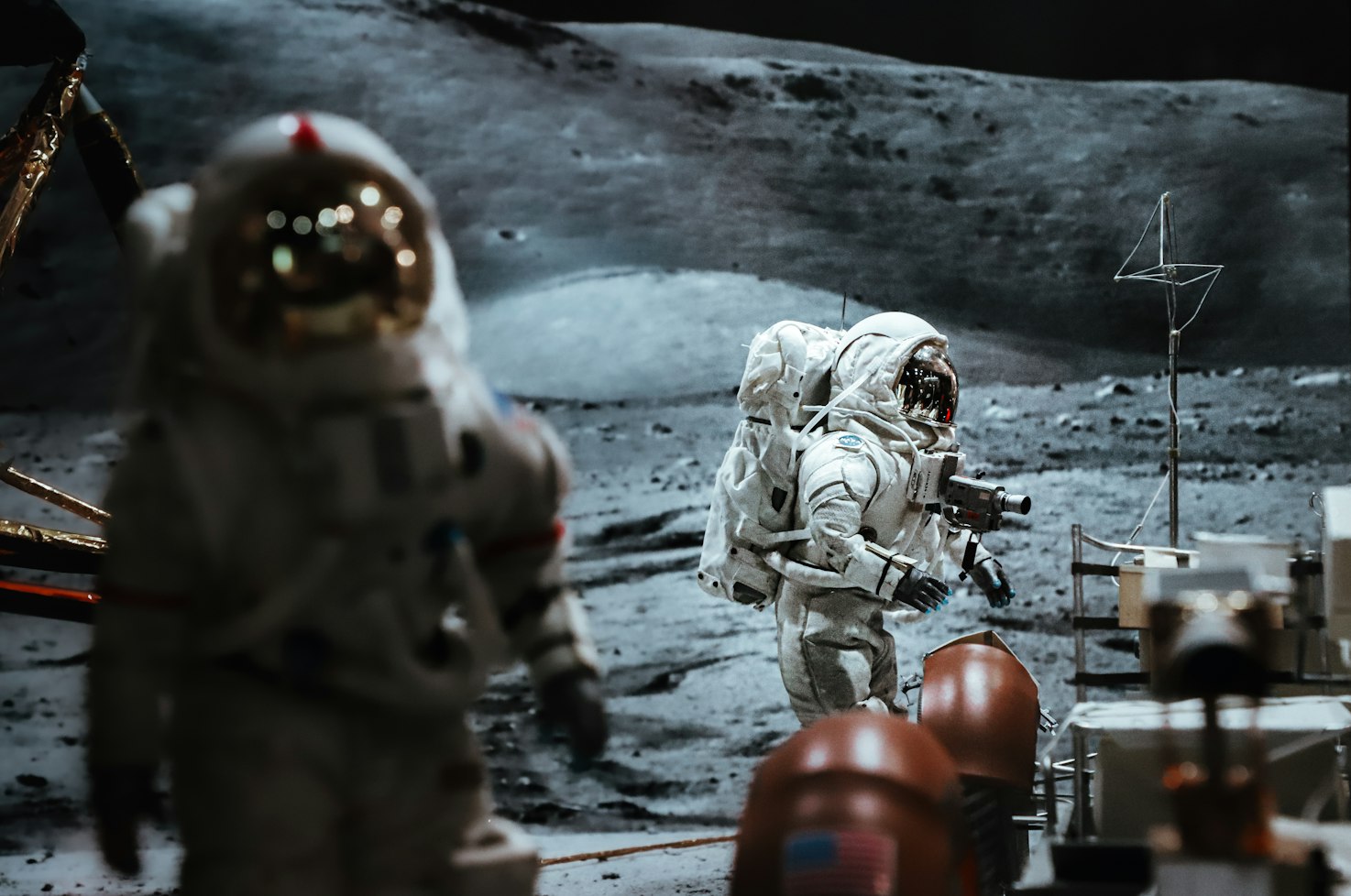
Streamlining Ground Station Data Pipelines for Deep Space Missions

The Coordination Problem That Kills Growing Marketing Teams
Why Personalized Skincare Is Replacing One-Size-Fits-All Beauty Products
The Return of the Transatlantic Crossing
How Molecular Spectroscopy Uncovers Structural Details In Molecules
Categories
- Art
- Articles
- Business of Luxury
- Celebrities
- Culture
- Entertainment
- Events
- Faces of Summer 2026
- Fashion
- Fashion & Style
- Featured
- Finance
- Food, Spirits, Wine
- Hamptons
- Hamptons Celebrities
- Health
- Health & Beauty
- Lifestyle
- Luxury Lifestyle
- Press
- Profiles
- Real Estate
- Technology
- The Chronicles
- Travel
- Uncategorized
- Weddings