
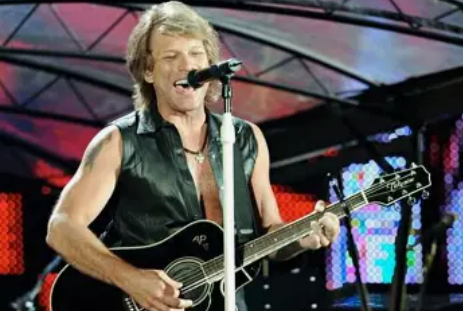
The mop handle was still warm in his hands when the session musicians started filing into Studio A. Nineteen-year-old John Bongiovi had spent the morning cleaning toilets and sweeping floors at the Power Station, one of Manhattan’s hottest recording studios. His cousin Tony owned the place. The job was supposed to be a favor, a way to keep the kid busy while he figured out his life.
But John wasn’t there to figure anything out. He already knew exactly what he was going to become. Between cleaning shifts, he’d recorded demos with whatever session players would give him the time of day. One of those demos featured Roy Bittan, Bruce Springsteen’s keyboardist, playing on a track about runaway kids surviving on the streets. The song was called “Runaway.” Every record label in New York had rejected it.
Today, Jon Bon Jovi commands a net worth of $450 million. His band has sold over 130 million albums worldwide, performed in more than 50 countries for 35 million fans, and been inducted into the Rock and Roll Hall of Fame. Yet the man who wrote anthems about holding on through impossible odds still thinks about that studio floor. Still remembers what it felt like to be the kid with the mop who refused to accept no for an answer.
Jon Bon Jovi Net Worth 2025: From Perth Amboy to Palm Beach
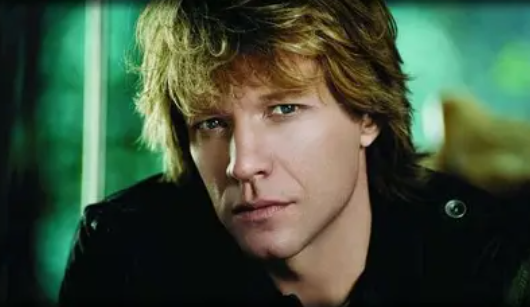
John Francis Bongiovi Jr. arrived on March 2, 1962, in Perth Amboy, New Jersey. The gritty industrial port city sat on the Raritan Bay. His parents were both former Marines who met during their military service. John Sr. worked as a barber. His mother Carol had been one of the original Playboy Bunnies before becoming a florist. The family later moved to Sayreville, a working-class suburb where young John attended Catholic school.
Carol Bongiovi had lived through Beatlemania as a young woman and dreamed that her son might achieve similar fame. She gave him his first guitar at age seven. According to his own recollection, Jon promptly flung it down the stairs, captivated by the “oing, oing, oing” sound it made on the way down. Seven more years would pass before he picked up the instrument seriously.
By his early teens, Jon was sneaking into clubs along the Jersey Shore. He was convinced he’d become a rock star. Local heroes like Bruce Springsteen and Southside Johnny commanded stages in Asbury Park, and Jon dreamed of doing the same. According to Biography.com, by age 16 he was already playing clubs professionally. Bands with names like Atlantic City Expressway and The Wild Ones came and went.
His father’s cousin Tony Bongiovi had built something remarkable in Hell’s Kitchen: the Power Station. Artists like the Ramones, Talking Heads, and Jimi Hendrix had created history in those rooms. When Jon needed work after high school, Tony offered him a janitor position. The timing would prove fateful.
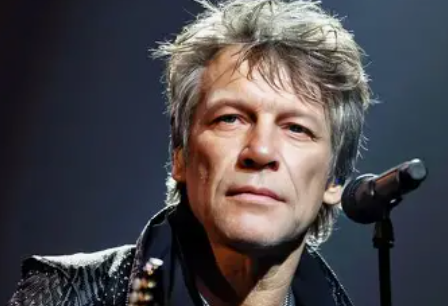
The Chip: A Mop, A Demo, and Relentless Ambition
Session guitarist Tim Pierce remembers the teenage Jon Bongiovi with striking clarity. “Jon had the laser-focus about becoming a rock star at age 19,” Pierce told MusicRadar. “He knew what the business had to offer. He just didn’t have any distractions.”
Between sweeping floors and cleaning bathrooms, Jon networked relentlessly. Springsteen would come through to record, and Jon made sure to be around. Session musicians found themselves backing the kid on demos during downtime. His cousin Tony eventually assembled an all-star band to record “Runaway,” including Roy Bittan on keyboards, Hugh McDonald on bass, and Frankie LaRocka on drums.
Nevertheless, every record label rejected the track. Jon’s response revealed the chip on his shoulder that would define his entire career. Instead of accepting defeat, he walked directly into the offices of WAPP 103.5 FM, a new rock station in Lake Success, New York. The station was so new they didn’t even have a receptionist to stop him. He handed his demo tape directly to DJ Chip Hobart.
Subsequently, WAPP started playing “Runaway” in heavy rotation. The same labels that had rejected Jon suddenly came calling. Mercury Records signed him, but there was a catch: he didn’t actually have a band. Jon quickly assembled keyboardist David Bryan (whom he’d known since high school), bassist Alec John Such, drummer Tico Torres, and guitarist Richie Sambora. The record executives anglicized “Bongiovi” to “Bon Jovi,” and a legend was born.
The Rise: From Jersey Shore to Global Domination
The self-titled debut album dropped in January 1984, with “Runaway” reaching the Billboard Top 40. The second album, 7800° Fahrenheit, went gold. However, real breakthrough came in 1986 with Slippery When Wet, which eventually sold over 28 million copies worldwide.
The album spawned three massive hits: “You Give Love a Bad Name,” “Wanted Dead or Alive,” and the eternal anthem “Livin’ on a Prayer.” That last track, according to Jon, almost didn’t make the album. The band initially dismissed it as too simplistic. Producer Bruce Fairbairn convinced them otherwise, and “Livin’ on a Prayer” became the defining arena rock song of the 1980s.
According to Celebrity Net Worth, the band’s touring operation can gross $100 to $150 million in a typical year. During their 2019 tour, Bon Jovi earned $135 million worldwide. Jon personally took home around $40 million. Over four decades, revenue streams have compounded: album sales, publishing royalties, merchandise, and stadium tours.
Beyond the Stage: Acting and Business Ventures
Jon also diversified beyond music. He appeared in Young Guns II, famously writing “Blaze of Glory” on a napkin while eating hamburgers with Emilio Estevez. Television roles followed on Ally McBeal and Sex and the City. He briefly owned the Philadelphia Soul Arena Football League team. His entertainment empire maintains control over all Bon Jovi recordings, touring, and merchandising.
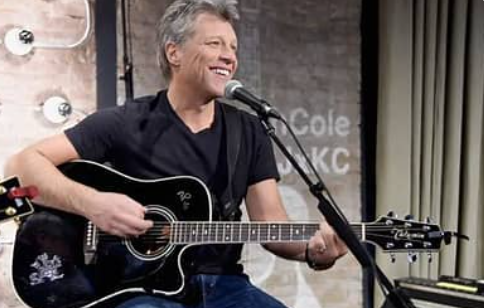
The Tell: Why a Rock Star Opens Community Kitchens
One night in Philadelphia, Jon looked out his hotel window and saw a man sleeping on a steam grate. The image hit him, as he later described it, “like a lightning bolt.” He told The Big Issue, “I said, ‘That’s not what our forefathers were thinking when they created this America that they dreamt of.'”
That moment crystallized something the barber’s son from Perth Amboy had always understood. Success is not guaranteed. The distance between rock star and homeless person isn’t as vast as comfortable people imagine. In 2006, Jon founded the Jon Bon Jovi Soul Foundation, dedicated to breaking the cycle of hunger, poverty, and homelessness.
The foundation’s signature initiative, JBJ Soul Kitchen, operates four community restaurants. Patrons pay what they can afford. If they can’t pay anything, they volunteer their time instead. His wife Dorothea serves as Founder and Program Director. They married in 1989 after secretly eloping to Las Vegas during a tour stop. “The most important ingredient is love,” she explained.
Since its inception, the foundation has supported over 1,000 units of affordable housing in 12 states. It has served more than 100,000 meals. Campus kitchens at Rutgers Newark and New Jersey City University address student food insecurity. The work earned Jon the MusiCares Person of the Year honor in 2024. Bruce Springsteen performed at the tribute concert.
Jon Bon Jovi Net Worth 2025: The Palm Beach Holdout
In 2020, Jon traded his 15-acre New Jersey estate for a $43 million mansion in Palm Beach, Florida. The Mediterranean-style property spans 10,000 square feet. It features seven bedrooms, 12 bathrooms, a wine cellar, and a private gym. Architect Thomas Kirchhoff designed it. David Kleinberg handled the interiors. The estate sits on North Ocean Boulevard, one of America’s most exclusive streets.
Recently, the property has become the subject of intrigue. A mystery buyer has spent approximately $250 million acquiring surrounding properties. The goal appears to be assembling a mega-compound near Mar-a-Lago. According to the Wall Street Journal, Jon has refused all offers. He stands as the lone holdout against one of the largest residential real estate deals in U.S. history.
The rock star’s defiance mirrors his entire career. He’s never been interested in taking the easy path or accepting someone else’s definition of what’s possible. He’d rather be the kid with the mop who walks uninvited into radio stations than the celebrity who sells out to the highest bidder.
The Wound That Almost Ended Everything
In April 2022, Jon walked off stage in Nashville and realized something was fundamentally wrong with his voice. One vocal cord was atrophying, growing thin as a pinky while the other remained thick as a thumb. The strong cord pushed the weak one around, destroying the instrument he’d spent 40 years perfecting.
“I pride myself on having been a true vocalist,” he told NPR’s Fresh Air. “I’ve sung with Pavarotti. I know how to sing. So when God was taking away my ability, I couldn’t understand why.”
Following surgery in 2022, Jon spent years in recovery. He worked with vocal coaches daily, rebuilding strength through exercises he compares to lifting weights. The process became the focus of the 2024 Hulu documentary Thank You, Goodnight: The Bon Jovi Story. The series alternates between career retrospective and raw documentation of his uncertain future.
His position remained clear throughout: “If I can’t do it at 102%, then I say, ‘Thank you and goodnight.'” The man who built anthems about fighting through impossible circumstances refused to become a diminished version of himself on stage. Either he’d return at full power or not at all.
In October 2025, Jon announced the “Forever Tour” for 2026. Performances are scheduled in New York and Europe. “I can confidently say that I can do my two-and-a-half hours, night after night,” he told the Today show. The kid who swept floors at the Power Station was going back on the road.
The Paradox of Holding On
Jon Bon Jovi built a half-billion-dollar empire writing songs about working-class struggle. The irony isn’t lost on him. That barber’s son now owns oceanfront mansions. A janitor became a Rock and Roll Hall of Famer.
Yet his philanthropy suggests the original wound never fully healed. That kid from Perth Amboy still identifies with people sleeping on steam grates. His restaurants don’t just serve food; they serve dignity. Every housing unit his foundation builds provides stability, allowing people to imagine futures they couldn’t afford to dream about before.
At 63, with his voice restored and a world tour ahead, Jon Bon Jovi remains what he’s always been: too stubborn to accept rejection. Back in 1983, he walked into that radio station because no one else would open the door. Today, he refuses to sell his Palm Beach mansion. The alternative has always been unacceptable.
“If you’re not going to be great, the guy that’s coming in tomorrow night is going to be better,” he said while promoting the documentary. “You better be one of the greats or else good luck.”
Somewhere in a basement studio in Sayreville, a seven-year-old kid once threw a guitar down the stairs. He listened to the sound it made on the way down. Forty-some years later, that same kid is still making noise. He refuses to go quietly. Living on a prayer was never just a song. It was the plan all along.
Want more insider access to how the elite build, protect, and enjoy their wealth? Contact Social Life Magazine for advertising and partnership opportunities, or visit Polo Hamptons for exclusive event information. Subscribe to our print edition or join our email list for weekly insights on luxury living.
Related Reading:
Author

Written by
Recent Posts

Red, White & Bordeaux: A Founding Fathers’ Guide to Raising a Glass

Youmetalks Reviews Show Why This Platform Is a Game-Changer for Safety
Creating Behind-the-Scenes Content Without Recording New Footage
The Invisible Essential: How Smart Travelers Stay Connected from the Moment They Land in Japan
The Hamptons Longevity Protocol: How to Stay Sharp Through Late Dinners, Early Tee Times, and Beach Weekends
Categories
- Art
- Articles
- Business of Luxury
- Celebrities
- Entertainment
- Events
- Faces of Summer 2026
- Fashion
- Fashion & Style
- Featured
- Finance
- Food, Spirits, Wine
- Hamptons
- Hamptons Celebrities
- Health
- Health & Beauty
- Lifestyle
- Luxury Lifestyle
- Press
- Profiles
- Real Estate
- Technology
- The Chronicles
- Travel
- Uncategorized
- Weddings