
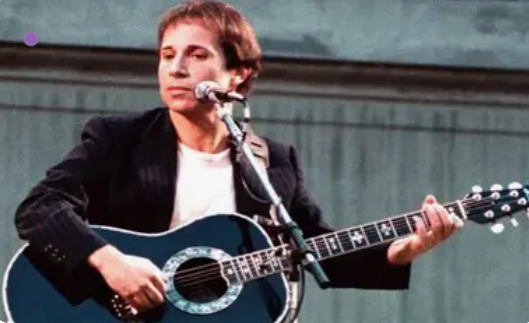
The camera caught it, but nobody mentioned it. At a 1966 photo session for Big Records, Art Garfunkel looked down at his best friend and said something that would burrow under Paul Simon’s skin for the next sixty years: “No matter what happens, I’ll always be taller than you.”
Simon was sixteen years old. He stood barely five feet three inches tall. His partner towered over him with that mop of angelic curls, that soaring tenor voice, that effortless way of commanding attention.
In that moment, a decision crystallized. Not consciously, perhaps, but in the place where ambition meets humiliation. If Paul Simon couldn’t be the tallest person in the room, he would be the smartest. The most talented. The one who wrote the songs that made the tall people famous.
Today, Paul Simon’s net worth stands at approximately $200 million. After selling his catalog to Sony for $250 million in 2021, the man who once worried about measuring up has nothing left to prove to anyone. However, the chip on his shoulder? It never quite went away. Understanding that chip is the key to understanding everything.
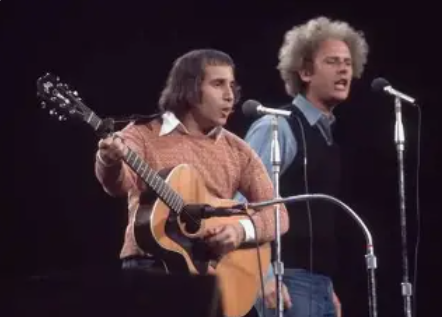
The Wound: Growing Up Different in Queens
Paul Fredric Simon was born on October 13, 1941, in Newark, New Jersey, to Hungarian-Jewish parents. His father Louis was a jazz bassist who performed under the name Lee Sims—a calculated erasure of his Jewish identity in the anti-Semitic entertainment world of the 1940s. This early lesson in survival through adaptation wasn’t lost on young Paul.
The family moved to Kew Gardens Hills in Queens when Paul was four. His mother Belle taught elementary school. His father had traded the uncertainty of jazz gigs for the stability of academia, eventually earning a doctorate in semantics from Columbia. The musician Donald Fagen would later describe Simon’s childhood as that of “a certain kind of New York Jew, to whom music and baseball are very important.” The observation captured something essential about Simon’s formation.
Late nights in the Simon household meant staying up to catch Louis’s appearances on The Jackie Gleason Show and Arthur Godfrey and His Friends. Young Paul absorbed everything: the way his father’s fingers moved on the bass strings, the mechanics of performance, the unspoken hierarchy of who commanded attention and who provided support.
The Measuring Stick
By fourth grade, Paul had encountered Artie Garfunkel—the most famous singer in the neighborhood. Something in that first meeting established a pattern that would define Simon’s entire life. Here was a kid with a beautiful voice, with height, with presence. Meanwhile, Paul had words. Melodies. The invisible architecture that held songs together.
“Being short had the most single effect on my existence, aside from my brain,” Simon would later admit. “In fact, it’s part of an inferior-superior syndrome. I think I have a superior brain and an inferior stature, if you really want to get brutal about it.”
The wound was physical, visible, immutable. Every photograph reminded him. Every stage appearance placed him in Garfunkel’s shadow—literally. His mother’s comment cut deepest: “You have a good voice, Paul, but Arthur has a fine voice.” The distinction between good and fine became a splinter he could never remove.
The Chip: Turning Pain Into Obsessive Excellence
Simon developed a game in his mind. “I’d pretend God would come to me and say, ‘If you could be six foot two with a mop of hair, would you pay a million dollars?’ I said, ‘Absolutely.’ Then God said, ‘Would you pay five million?’ and again I said, ‘Absolutely.’ Then the question changed: ‘If you could be six foot two with a mop of hair, would you give away ten of your songs?’ and that’s when I said, ‘No.’ That was too much.”
This wasn’t just vanity calculus. It was a young man quantifying his worth, establishing where his real power resided. Height was borrowed currency. Songs were his. Forever.
At thirteen, he wrote his first song for Garfunkel: “The Girl for Me.” His father transcribed the words and chords on paper—that document now sits in the Library of Congress. The collaboration was born: Paul would write, Artie would sing. The division seemed natural. In reality, it was the beginning of an imbalance that would poison their relationship for decades.
The Betrayal Seed
By 1957, calling themselves Tom & Jerry (hiding their Jewish names, just as Simon’s father had hidden his), the duo scored a minor hit with “Hey, Schoolgirl.” They appeared on American Bandstand, right after Jerry Lee Lewis. For a sixteen-year-old from Queens, this should have been pure triumph.
Then Simon made his first grievous mistake. Offered the chance to record solo singles, he accepted—without telling Garfunkel. The pseudonym was True Taylor. The betrayal was real.
“The friendship was shattered forever,” Garfunkel wrote in his memoir, decades later. “I never forgot it, and really I have never forgiven him.” Meanwhile, Simon felt something else: validation. He had proven he didn’t need the tall one with the beautiful voice. He could exist on his own terms.
The chip wasn’t just about height anymore. It was about control. About never again being the shorter half of anything.

The Rise: Building an Empire on “The Sound of Silence”
The 1960s belonged to Simon & Garfunkel—but the decade’s spoils weren’t distributed equally. Simon wrote virtually every song. He retained publishing rights. He collected royalties that would compound for generations. Garfunkel had that voice, those looks, the applause.
“We had an uneven partnership because I was writing all of the songs and basically running the sessions,” Simon explained in a documentary. “Artie would be in the control room with Roy, and he’d say, ‘Yeah, that’s good, let’s do that,’ but it was an uneven balance of power.”
The Sound of Silence. Mrs. Robinson. Bridge Over Troubled Water. The Boxer. America. Each song a monument to Simon’s craftsmanship—and a reminder of who really controlled the partnership. By 1970, Simon & Garfunkel had sold over 100 million records worldwide. Their final album, Bridge Over Troubled Water, became one of the best-selling records in history.
The Standing Ovation That Stung
When they performed “Bridge Over Troubled Water” live, Garfunkel sang lead. The audience would leap to their feet, transported by that angelic voice. Simon would stand there with his guitar, thinking one thing:
I wrote that song.
The applause wasn’t for him. It was never for him. No matter how many hits he wrote, how many Grammys he won, how much money accumulated in his accounts, Paul Simon remained the shorter half. The invisible half. The one who made it all possible but never received the standing ovation.
Then Garfunkel left to become a movie star, abandoning Simon mid-album to shoot Carnal Knowledge. “He would make the movie for six months, and I could write the songs for the next album,” Simon recalled Garfunkel suggesting. “I thought, ‘Fuck you, I’m not going to do that.'”
The partnership ended. The competition never did.
Graceland: Turning Depression Into a $250 Million Catalog
By 1984, Paul Simon had hit rock bottom. His marriage to actress Carrie Fisher had collapsed spectacularly and publicly. His album Hearts and Bones had flopped—the first commercial failure of his career. At 42, he felt obsolete in an MTV world dominated by Michael Jackson, Prince, and Madonna.
“I was very bad at writing about politics,” Simon admitted. He spent much of that dark period sitting in his car, smoking joints for the first time in over a decade, listening to a bootlegged cassette tape. The music was mbaqanga—South African township jive. Something in those rhythms broke through his depression.
Simon flew to Johannesburg during the height of apartheid, defying a cultural boycott. He paid South African musicians triple the going rate. He collaborated with Ladysmith Black Mambazo, Ray Phiri, and Bakithi Kumalo. The result was Graceland—an album that would sell over 16 million copies and resurrect his career from the dead.
The Healing That Wasn’t
“I named the album Graceland because it represents a process of healing: finding something you could call a state of grace—the healing of a deep wound,” Simon explained. The parallel to South Africa’s apartheid struggle wasn’t accidental. Neither was the personal dimension: Simon was still that hurt kid from Queens, still trying to prove he belonged.
Graceland won the Grammy for Album of the Year in 1987. It launched Ladysmith Black Mambazo to international fame. It proved that Paul Simon, at 45, could reinvent himself entirely—without Garfunkel, without Columbia Records’ support, without anyone’s permission.
In 2021, Sony Music Publishing paid $250 million for Simon’s entire catalog. Approximately 400 songs, including all the Simon & Garfunkel hits. The deal represented validation of a different kind: not applause, but the cold acknowledgment of financial markets that Paul Simon’s work would generate revenue for generations.
The Tell: How the Wound Still Shows
In 2023, at 81, Paul Simon suddenly lost most of the hearing in his left ear. No explanation. No cure. The cruelest irony imaginable for a man who had spent his entire life listening more carefully than anyone else.
“It was incredibly frustrating. I was very angry at first that this had happened,” Simon told CBS Mornings. “The guitar is the instrument that allows me to express myself creatively. But it’s also where I go for solace. If I’m—whatever—temporarily wounded by my life, it’s a very crucial thing to me.”
Temporarily wounded by my life. The phrase reveals everything. Even at 81, even worth $200 million, even with sixteen Grammys and two Rock and Roll Hall of Fame inductions, Paul Simon still frames existence in terms of wounds.
“My generation’s time is up,” he said, his voice catching. But then, defying the hearing loss that doctors said might end his performing career, he announced the 2025 Quiet Celebration Tour—intimate venues across America and Canada. Because Paul Simon has never known how to stop proving people wrong.

The Montauk Estate: What $50 Million Buys When You’re Still That Kid
Paul Simon owns a 30-acre oceanfront compound in Montauk, at the very edge of Long Island. The property features multiple structures, including a cliff-side cottage built on the former site of a World War II military bunker. In 2017, erosion threatened to send that cottage tumbling 65 feet into the Atlantic. Simon won an emergency permit to move it 80 feet back from the precipice.
The symbolism writes itself. A man who spent his life feeling on the edge of something—recognition, belonging, acceptance—building a home on a literal cliff. A man who learned early that nothing is permanent, that even solid ground can shift beneath you, that survival requires constant vigilance and the willingness to relocate your entire foundation when necessary.
From his duplex on Central Park West, where neighbors include Lorne Michaels and Robert De Niro, to the Montauk bluffs, Simon has surrounded himself with the trappings of success. His third wife, singer Edie Brickell, has been a stabilizing presence since 1992. They have three children. He coaches his son’s baseball team—still chasing that love of the game his father instilled in him.
The Sound of Silence at 83
In February 2025, Paul Simon took the stage at Saturday Night Live’s 50th anniversary special. He performed “Homeward Bound” alongside Sabrina Carpenter—a collaboration that spanned generations, proving his songs had outlived every slight, every betrayal, every moment of feeling too short for the room.
His father’s double bass still leans against a wall in his office. The instrument seems to loom over everything, a reminder of complicated love and the man who most influenced his thinking. “I had a very good relationship with my mother and father,” Simon has said. “Complicated with my father, but certainly loving.”
Complicated. It’s the word that defines Paul Simon’s entire existence. The relationship with Garfunkel. The marriages. The creative process. The constant tension between feeling inferior and knowing, with absolute certainty, that he was one of the most gifted songwriters of his generation.
Paul Simon net worth 2025: $200 million. But wealth was never the point. The point was proving that the short kid from Queens—the one with the good voice, not the fine voice, the one who couldn’t play baseball because he stopped growing at five-foot-three—could become impossible to ignore.
Mission accomplished. The wound remains open. That’s the paradox of Paul Simon: the success never quite heals what it was meant to heal. The mansion is beautiful, and it’s also a bandage.
For more stories of extraordinary lives shaping the Hamptons, contact us about features and partnerships or visit Polo Hamptons for exclusive events where culture meets commerce. Subscribe to our print edition or support independent journalism with a $5 contribution.
Related: Billy Joel’s Long Island Legacy | Joni Mitchell Net Worth 2025
Author

Written by
Recent Posts

Red, White & Bordeaux: A Founding Fathers’ Guide to Raising a Glass

Youmetalks Reviews Show Why This Platform Is a Game-Changer for Safety
Creating Behind-the-Scenes Content Without Recording New Footage
The Invisible Essential: How Smart Travelers Stay Connected from the Moment They Land in Japan
The Hamptons Longevity Protocol: How to Stay Sharp Through Late Dinners, Early Tee Times, and Beach Weekends
Categories
- Art
- Articles
- Business of Luxury
- Celebrities
- Entertainment
- Events
- Faces of Summer 2026
- Fashion
- Fashion & Style
- Featured
- Finance
- Food, Spirits, Wine
- Hamptons
- Hamptons Celebrities
- Health
- Health & Beauty
- Lifestyle
- Luxury Lifestyle
- Press
- Profiles
- Real Estate
- Technology
- The Chronicles
- Travel
- Uncategorized
- Weddings