
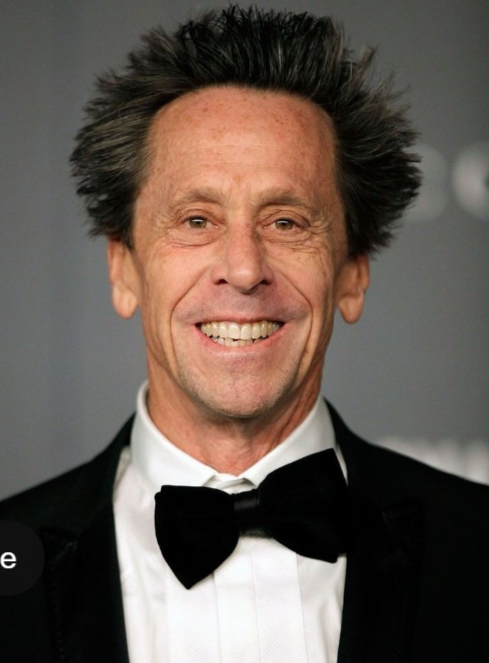
Every morning started at five a.m. with dread.
Little Brian Grazer would wake up in his San Fernando Valley bedroom already strategizing for the school day ahead. Which teachers might call on him? What questions could he pretend not to hear? How could he avoid the humiliation of being exposed as the kid who couldn’t read?
In 1950s Los Angeles, there was no word for his condition. No diagnosis, no accommodation, no understanding. There was only “stupid” and the daily terror of being found out. Meanwhile, Brian developed elaborate coping mechanisms, including tripping the kid in front of him, becoming the class clown, and positioning himself as the playground enforcer who protected others from bullies.
“I was hiding,” Grazer has recalled. “There was always a show of hands, and mine was never one of them.”
The Undiagnosed Wound: Growing Up Dyslexic Before Dyslexia Existed
Brian Grazer’s net worth of $400 million in 2025 was built on a foundation of shame and compensation. Born in 1951 in Los Angeles to criminal defense attorney Thomas Grazer and Arlene Becker Grazer, young Brian grew up in the comfortable suburbs of Sherman Oaks and Northridge. His parents’ divorce during high school added instability to an already anxious childhood.
The dyslexia went undiagnosed for years. Brian couldn’t read or write until fifth grade. His report cards showed straight F’s. Teachers reprimanded him constantly. Classmates assumed he was slow. His mother hired the same ineffective tutor five days a week, trying to “fix” him through sheer repetition.
“My mom and my grandmother always said, ‘Brian, he’s carrying the weight of the world on his back,'” Grazer has explained. “And I always did feel the weight of the world on my back, every day since kindergarten.”
The shame of not being able to answer questions, of ducking when teachers scanned the room, of watching other children succeed at basic tasks he couldn’t master, created a wound that would drive everything that followed. Brian learned early that traditional paths to success were closed to him. He would need to find another way.
The Tiny Champion: How a 4-Foot-10 Grandmother Changed Everything
Amid the daily failures and humiliations, one person saw something different in Brian Grazer. His grandmother Sonia Schwartz stood four feet ten inches tall and possessed absolute conviction that her grandson was destined for greatness.
“She just said, ‘You are going to find your way through this,'” Grazer remembers. “‘Think big! Be big!’ She had all of those adages. She did convince me that I was special as much as all the forces of reality were showing me I wasn’t.”
Grandma Sonia did more than offer encouragement. She established a discipline of curiosity that would become Brian’s superpower. Every weekend, she took him somewhere new: Dodger Stadium, Hollywood Park racetrack, restaurants of every variety. She introduced him to chefs, to “the big boss,” to anyone who would talk to a curious kid.
When five-year-old Brian asked her “What goes faster, a car or a bee?” she didn’t brush off the question. Instead, she answered comprehensively and told him something that changed his life: “Curiosity is going to be your power. You are going to be a special person because you ask really good questions.”
That grandmother’s faith became Brian Grazer’s operating system. Since he couldn’t compete academically, he would compete through connection. He couldn’t read books, so he would read people. The disability became a superpower in disguise.

From Straight F’s to USC: The Art of Negotiation
Brian Grazer developed an unconventional strategy for academic survival. Since he couldn’t read textbooks, he read other students’ papers. Since he couldn’t take tests normally, he learned to argue his grades with teachers. The dyslexia forced him to become a master negotiator and networker before he understood those terms.
Against all odds, Grazer won a scholarship to the University of Southern California as a psychology major. He graduated from USC’s School of Cinema-Television in 1974, then enrolled in USC Law School. After one year, he quit to pursue Hollywood.
At USC, surrounded by wealthy classmates whose parents gave them Porsches, Grazer worked forty hours a week while attending school. He saved enough to buy his own Porsche, but told everyone his parents gave it to him. The shame of being different, of having to work harder for less, still burned.
Then came the opportunity that changed everything. Grazer overheard a tip about a law clerk position at Warner Bros. He took the job and immediately began what he calls “curiosity conversations”: approaching every powerful person he could find and asking for five minutes of their time.
Building Imagine: From Law Clerk to Oscar Winner
“Hi, my name is Brian Grazer, I work at Warner Brothers business affairs, this is not associated with studio business, I’d like five minutes of your time, and I do not want a job.”
That pitch, delivered to every chairman, studio head, and creative executive Grazer could reach, became his education in Hollywood leverage. He met Lew Wasserman, Sid Sheinberg, Jules Stein, Richard Brooks, and Mel Brooks. Meanwhile, he learned how power operated in creative enterprises.
Warner Bros. eventually fired him. By then, Grazer had accumulated enough contacts and insights to launch his producing career. His first feature film was Ron Howard’s Night Shift in 1982. Two years later, Splash earned him an Academy Award nomination for Best Original Screenplay.
In November 1985, Grazer and Howard co-founded Imagine Entertainment. The production company became a hit factory, generating over $15 billion in worldwide grosses. Films like Apollo 13, A Beautiful Mind, and The Da Vinci Code established Grazer as one of Hollywood’s most commercially successful producers.
In 2001, Grazer won the Academy Award for Best Picture for A Beautiful Mind, shared with Ron Howard. The film about mathematician John Nash, who struggled with schizophrenia, resonated deeply with a producer who understood what it meant to have a mind that worked differently.
The Wound That Still Shows: Curiosity as Compulsion
Brian Grazer still conducts bi-weekly “curiosity conversations” with people from every imaginable field. He’s sat with Elon Musk, Jeff Bezos, Michael Jackson, Steve Jobs, Oprah Winfrey, and countless others. He wrote a bestselling book about it: A Curious Mind: The Secret to a Bigger Life.
The practice that began with Grandma Sonia taking him to meet restaurant owners became systematized networking at the highest levels. Furthermore, it reveals the wound beneath the success. The kid who couldn’t read still compensates by gathering information through conversation. The student who ducked when teachers called on him now seeks out experts and asks them questions.
“I think having dyslexia has helped me be a better parent,” Grazer has noted, “because in some areas I have a heightened sense of empathy.” His son has learning disabilities too, and Grazer poured that understanding into producing A Beautiful Mind. The film about a brilliant man whose brain worked against him was personal in ways audiences never knew.

The Santa Monica Beach House: Where Curiosity Lives
Brian Grazer’s real estate holdings reflect both his success and his restless mind. His primary residence is a beach house in Santa Monica, California, featuring stunning oceanfront views and an impressive art collection. In December 2011, he paid $12.5 million for a 10,000-square-foot home on roughly two acres in Santa Monica, purchasing it for nearly half its pre-recession asking price of $22.5 million.
He also maintains a home on Sunset Beach in Hawaii. His Santa Monica residence serves as a hub for the curiosity conversations he’s conducted for decades, filled with carefully chosen art pieces and conversation-starting objects like an antique perfume-making kit given to him by a fragrance expert.
“Props make people more comfortable,” Grazer has explained. The man who learned to compensate for his reading disability by engaging people in conversation has designed his living space to facilitate connection. Every object tells a story. Every room invites questions.
Brian Grazer Net Worth 2025: The Full Picture
Brian Grazer’s net worth of $400 million in 2025 represents the triumph of adaptation over limitation. The dyslexic kid who couldn’t read built an empire on the very skill his disability forced him to develop: the ability to learn through human connection.
His films and television shows have earned 47 Academy Award nominations and 217 Emmy nominations. Imagine Entertainment remains one of Hollywood’s most successful production companies. In 2007, Time magazine named him one of the “100 Most Influential People in the World.”
Yet the foundation of it all remains a four-foot-ten grandmother who took her struggling grandson to Dodger Stadium and taught him that curiosity was power. The wound of being called stupid, of carrying the weight of the world since kindergarten, transformed into a superpower that built one of Hollywood’s great fortunes.
Inside the $400 million empire, behind the Oscars and the beach house and the celebrity rolodex, there’s still a kid who woke up at five a.m. dreading the school day. The terror of being exposed never fully left. It just found a $400 million outlet.
Brian Grazer discovered that the same trait that made him “stupid” in the classroom made him brilliant in the meeting room. The inability to process information through reading forced him to develop extraordinary skills in processing information through people. What looked like a disability was actually training for the career of his life.
For more celebrity net worth stories and Hamptons lifestyle coverage, explore our archive at SocialLifeMagazine.com. Interested in exclusive events? Visit PoloHamptons.com for tickets and sponsorship opportunities.
Want features like this for your brand? Contact us about editorial partnerships and advertising opportunities.
Related Reading:
- Noah Baumbach Net Worth 2025: From Park Slope Divorce to $16 Million Director
- Greta Gerwig Net Worth 2025: From Rejection to Top Female Director
- Wes Anderson Net Worth 2025: Divorced Kid to Award Winner
- Paul Rudd Net Worth 2025: From Outsider to Movie Star
- Brook Shields Net Worth 2025: Actress With No Childhood
- Kate Hudson Net Worth 2025: The Daughter Who Became Her Own Kind Of Famous
- Brian Glazer Net Worth: Dyslexic Kid Builds Film Production Empire
Author

Written by
Recent Posts

Face of Summer 2026: The Institutional Trader Who Reads Markets at Dawn and Drinks Rosé at Sunset

7 Common Mistakes New Dog Owners Make (and How to Avoid Them)

A Vacation Emergency Guide: How to Ask for Help After an Unexpected Accident
Post and Beam Homes Are Having a Moment in Oregon Wine Country
Eco-Friendly Builds Are Gaining Ground Faster in Texas Than Anywhere Else in the South
Categories
- Art
- Articles
- Business of Luxury
- Celebrities
- Entertainment
- Events
- Faces of Summer 2026
- Fashion
- Fashion & Style
- Featured
- Finance
- Food, Spirits, Wine
- Hamptons
- Hamptons Celebrities
- Health
- Health & Beauty
- Lifestyle
- Luxury Lifestyle
- Press
- Profiles
- Real Estate
- Technology
- The Chronicles
- Travel
- Uncategorized
- Weddings