
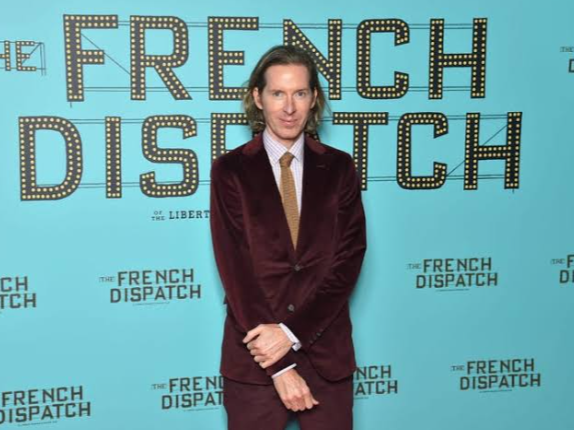
The world cracked in half when Wesley Anderson was eight years old.
One day his parents were together in their Houston home, and then suddenly they weren’t. His father Melver, an advertising man, moved out. His mother Texas, an archaeologist turned realtor, stayed with the three boys. Young Wes and his brothers Eric and Mel shuttled between households, trying to make sense of a family that no longer existed in its original form.
“The most crucial event of my brothers’ and my growing up,” Anderson would later call it. The divorce shattered whatever sense of stability an upper-middle-class Houston childhood was supposed to provide. Everything Wes believed about how families worked turned out to be wrong.
So he started building his own worlds instead.
The Broken Family: Houston Origins and the Seeds of Obsessive Control
Wes Anderson’s net worth of $50 million in 2025 traces back to a childhood defined by rupture. Born May 1, 1969, in Houston, Texas, Wesley Wales Anderson grew up in a household that looked successful from the outside. His father worked in advertising and public relations. His mother pursued archaeology before shifting to real estate. They lived in a comfortable suburb with good schools.
Then, in 1977, it all fell apart. The divorce forced eight-year-old Wes to confront an uncomfortable truth: the adults who were supposed to protect him couldn’t even protect their own marriage. The family split. The boys stayed with their mother. Weekend visits to their father became the new normal.
While trying to cope with the disintegration, Anderson often misbehaved at school. Teachers saw a troubled kid acting out. What they didn’t see was a child desperately trying to process emotions he couldn’t name or control. The world felt chaotic and unpredictable. Adults made promises they couldn’t keep. Security was an illusion.
So Wes turned his energies elsewhere. He began writing plays and making movies with his father’s Super 8 camera, starring his brothers and neighborhood friends. These early projects weren’t just creative expression; they were attempts to build realities he could control.
The Control Artist: From Super 8 Films to Symmetrical Frames
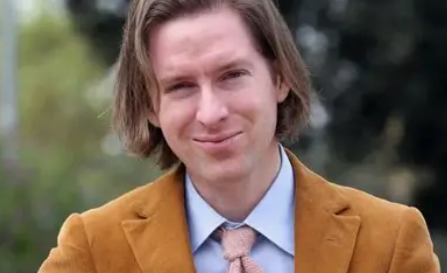
Anderson’s distinctive filmmaking style makes perfect sense when you understand his childhood. The obsessively symmetrical compositions, the carefully curated color palettes, the meticulous attention to every detail of set design: these aren’t mere aesthetic choices. They’re the visual language of someone who experienced chaos and decided never again.
At St. John’s School, a private preparatory academy in Houston, Anderson became known for his elaborate play productions. He didn’t just write scripts; he controlled every aspect of the performances. One production was a sock puppet version of the 1978 Kenny Rogers album The Gambler. Even then, Anderson was building miniature worlds where he made all the rules.
The school itself would later appear in his breakthrough film Rushmore. Anderson’s protagonist Max Fischer, an eccentric teenager with boundary issues and grandiose theatrical ambitions, was a barely disguised self-portrait. “Max is like me, except he’s not shy,” Anderson admitted in a 1999 interview.
He also revealed that his fourth-grade teacher made a deal with him: every two weeks he went without behavior problems, he got to put on another play. “My parents were getting divorced,” Anderson explained. “It was kind of horrible. I couldn’t accept it for the longest time.”
From Austin to Auteur: Building the Anderson Empire
Anderson attended the University of Texas at Austin, majoring in philosophy. There he met Owen Wilson, who would become his creative partner and lifelong friend. The two began making short films together, some of which aired on a local cable-access station. Their mutual friend had attended military school with Owen in New Mexico; Anderson had known of Wilson before they met in a playwriting class.
“Owen just walked up to me in the hall one day and started talking to me as if we knew each other,” Anderson recalled. They became roommates and began brainstorming ideas that would eventually yield Bottle Rocket.
The 1996 debut feature failed at the box office but attracted critical attention. Director Martin Scorsese praised it and later named Anderson as the next great American filmmaker. The following year, Rushmore proved Scorsese right, earning Anderson the Independent Spirit Award for Best Director.
Then came The Royal Tenenbaums in 2001. The film about a dysfunctional family of geniuses whose eccentric father abandons them earned an Oscar nomination for Best Original Screenplay and grossed over $50 million domestically. Anderson was finally making the kind of money that matched his reputation.
The Royal Tenenbaums: The Divorce Film That Made Him Famous
Watch The Royal Tenenbaums knowing about Anderson’s childhood, and the autobiography becomes obvious. Royal Tenenbaum abandons his family. The children grow up damaged. Ethel Tenenbaum, played by Anjelica Huston, raises three brilliant kids alone while their father disappears.
Anderson even used his own mother’s real eyeglasses for Ethel’s costume. The character’s archaeological background mirrors Texas Anderson’s career. The New York brownstone where the family lives, with its carefully organized rooms and color-coded children’s spaces, represents the controlled environment Anderson wished he’d had.
“A child, hiding from reality in cozy and simple dreams, can’t accept the grim reality of his family’s disintegration,” one analysis of Anderson’s work observed. His films are populated by characters who refuse to grow up, who build elaborate fantasy worlds, who use eccentricity as armor against pain.
The commercial and critical success of The Royal Tenenbaums gave Anderson budgets to match his vision. His next film, The Life Aquatic with Steve Zissou, cost $50 million. The wounded child from Houston could finally build worlds as elaborate as his imagination demanded.
The Wound That Still Shows: Control as Creative Language
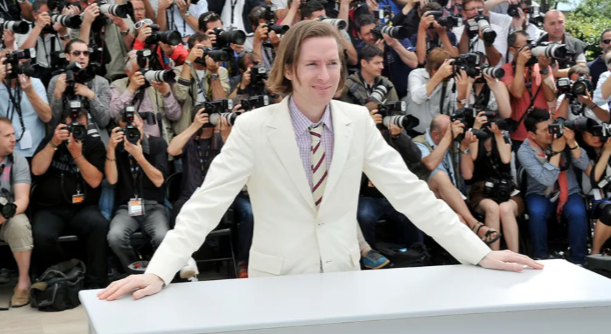
Anderson’s filmmaking process reveals the depth of his need for control. On his sets, there are no trailers, no dressing rooms, no hierarchy. Everyone stays in the same hotel. The entire cast eats dinner together at one table every night. Actors describe it as “summer camp” rather than a film production.
“You just show up and off you go,” actor Willem Dafoe has explained. “Sometimes you might be just a small supporting role in a scene and then in others you’ll be the lead in a movie.” Anderson reportedly pays all his actors the same rate, regardless of star power. The family he creates on set operates by different rules than the one that broke apart in Houston.
His visual style has become so distinctive that it spawned countless parodies and homages. Saturday Night Live created a fake trailer for a “Wes Anderson horror movie.” The internet overflows with “Wes Anderson version of X” memes. His aesthetic has become a brand, but it’s also a psychological fingerprint.
Every perfectly centered frame, every pastel color scheme, every meticulously organized dollhouse set says the same thing: here is a world where nothing is out of place, where chaos has been defeated, where the artist controls every pixel of reality.
The Paris Life: Where the Wounded Child Found Home
Wes Anderson has lived in Paris since 2005, far from Houston and the site of his childhood rupture. He maintains an apartment in the city with his partner Juman Malouf, a Lebanese writer and costume designer, and their daughter Freya, born in 2016. Bill Murray is the godfather.
The choice of Paris makes sense for Anderson. European culture, with its emphasis on tradition and aesthetic refinement, aligns with his sensibility. His films increasingly draw on Old World settings: the fictional European nation of The Grand Budapest Hotel, the French provincial town of The French Dispatch, the atmospheric locations of Asteroid City and The Phoenician Scheme.
Unlike many Hollywood directors who flaunt their wealth with massive estates and luxury car collections, Anderson lives modestly. He’s mentioned owning Volvo family vehicles and previously drove a 1985 Mercedes station wagon. The man who builds extravagant fantasy worlds for millions of dollars spends his personal life avoiding ostentation.
Wes Anderson Net Worth 2025: The Full Picture
Wes Anderson’s net worth of $50 million in 2025 places him among the most financially successful auteur directors working today. The Grand Budapest Hotel alone grossed nearly $175 million worldwide against a $25 million budget. His films consistently perform well both critically and commercially, a rare combination in independent cinema.
In 2024, Anderson won his first Academy Award for Best Live Action Short Film for The Wonderful Story of Henry Sugar, adapting Roald Dahl’s work for Netflix. His latest feature, The Phoenician Scheme, premiered at the 2025 Cannes Film Festival.
His production company American Empirical Pictures provides additional revenue through development deals. Meanwhile, streaming platforms pay premium rates for his distinctive content, and his films generate long-term income through television licensing, home media, and international sales.
The Gift of Chaos
Inside the $50 million fortune and the Oscar and the Paris apartment, there’s still an eight-year-old boy watching his family fall apart. The symmetrical frames, the pastel colors, the perfectly organized sets: these aren’t just aesthetic preferences. They’re the visual language of a child who experienced chaos and spent the rest of his life trying to build worlds where everything stays in place.
Wes Anderson didn’t overcome his wound. He transformed it into an art form. Every meticulously crafted film says the same thing: unlike the family that broke apart in Houston, this world will hold together. Because here, the wounded child is finally in charge.
For more celebrity net worth stories and Hamptons lifestyle coverage, explore our archive at SocialLifeMagazine.com. Interested in exclusive events? Visit PoloHamptons.com for tickets and sponsorship opportunities.
Want features like this for your brand? Contact us about editorial partnerships and advertising opportunities.
Related Reading:
- Noah Baumbach Net Worth 2025: From Park Slope Divorce to $16 Million Director
- Greta Gerwig Net Worth 2025: From Rejection to Top Female Director
- Paul Rudd Net Worth 2025: From Outsider to Movie Star
- Brook Shields Net Worth 2025: Actress With No Childhood
- Kate Hudson Net Worth 2025: The Daughter Who Became Her Own Kind Of Famous
- Brian Glazer Net Worth: Dyslexic Kid Builds Film Production Empire
- Hugh Jackman Net Worth 2025: The Boy Who Waited For His Mother to Come Home
Author

Written by
Recent Posts

He’s Got Millions. He Still Flinches at the Bill.

Streamlining Ground Station Data Pipelines for Deep Space Missions

The Coordination Problem That Kills Growing Marketing Teams
Why Personalized Skincare Is Replacing One-Size-Fits-All Beauty Products
The Return of the Transatlantic Crossing
Categories
- Art
- Articles
- Business of Luxury
- Celebrities
- Culture
- Entertainment
- Events
- Faces of Summer 2026
- Fashion
- Fashion & Style
- Featured
- Finance
- Food, Spirits, Wine
- Hamptons
- Hamptons Celebrities
- Health
- Health & Beauty
- Lifestyle
- Luxury Lifestyle
- Press
- Profiles
- Real Estate
- Technology
- The Chronicles
- Travel
- Uncategorized
- Weddings