
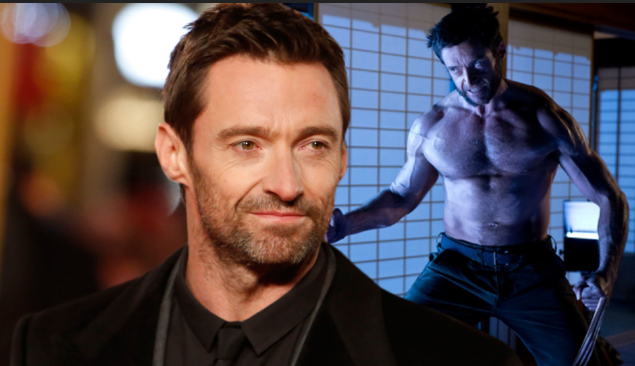
She was wearing a towel wrapped around her head when she said goodbye. Hugh Jackman remembers this detail with the clarity that only childhood trauma provides. Specifically, he was eight years old, heading off to school in Sydney, and his mother was standing in their doorway. Furthermore, something about the way she said it felt different. Notably, when he came home that afternoon, the house was empty.
The next day, a telegram arrived from England. Specifically, Grace McNeil had gone home. She wasn’t coming back. Today, the Hugh Jackman net worth 2025 figure stands at an estimated $120 million, according to Celebrity Net Worth. Some estimates place the figure closer to $180 million. Furthermore, either way, the number represents one of the most successful careers in modern entertainment. Indeed, every dollar earned, every standing ovation received, every superhero role inhabited traces back to that empty house in 1976.
The Wound: A Telegram From England
Hugh Michael Jackman was born on October 12, 1968, in Sydney, the youngest of five children. Specifically, his parents, Grace and Christopher John Jackman, were English immigrants who had arrived in Australia the year before as part of the “Ten Pound Poms” scheme. Furthermore, Christopher was a Cambridge-educated accountant. Notably, Grace was struggling with something no one yet understood.
“She was in hospital after I was born suffering from postnatal depression,” Hugh later explained to The Daily Mail. “There wasn’t a support network for her here.” Specifically, the condition went undiagnosed in an era when women’s mental health was barely acknowledged. Furthermore, Grace felt increasingly isolated, thousands of miles from her family in England, raising five children while her husband worked long hours.
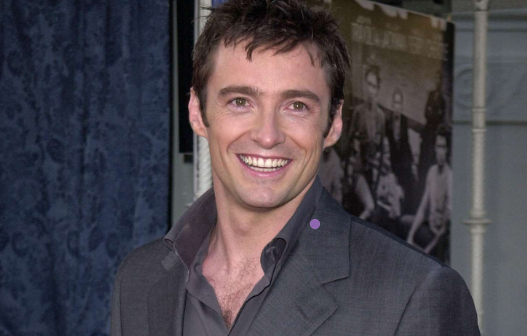
When she finally left, she took Hugh’s two sisters with her. Specifically, the boys stayed with their father. Indeed, for years afterward, Christopher Jackman prayed every night that his wife would return.
The Long Wait
“I thought she was probably going to come back,” Hugh told 60 Minutes Australia in 2012, his voice cracking. “And then it sort of dragged on and on.” Specifically, Grace would visit once a year. Furthermore, Hugh remembers beach trips during those visits, the fleeting normalcy of a family holiday. Notably, each time she left again, the wound reopened.
It took more than four years for the young Hugh to accept that his mother wasn’t returning permanently. “It was traumatic,” he acknowledged to WHO Magazine. Specifically, the impact shaped everything that followed.
He became afraid of the dark. Furthermore, heights terrified him. Notably, as a teenager, the unprocessed emotions curdled into volatility. “I was volatile,” he admitted in interviews. Indeed, the anger mixed with hormones created what he described as a “perfect storm” of adolescent confusion.
The Chip: The Boy Who Learned to Perform
Something had to channel the rage. Specifically, for Hugh, it was activity. Furthermore, constant, exhausting activity. Notably, at Knox Grammar School on Sydney’s Upper North Shore, he threw himself into everything: cadet corps, school musicals, multiple sports, eventually becoming school captain. Indeed, if he was performing, he was in control. As a result, if people were watching, he existed.
“The thing I never felt — and I know this might sound strange — I never felt that my mum didn’t love me,” he told The Australian Women’s Weekly. Specifically, the intellectual understanding came years before the emotional healing. Furthermore, his mother loved him. Notably, she just couldn’t stay.
Christopher Jackman became both parents. Specifically, he was strict about responsibility, teaching Hugh to tithe 10% of his dollar-a-week allowance to church, save another 10%, and budget the rest. “He is a deeply thoughtful man whose religion is in his deeds way more than anything else,” Hugh reflected. Furthermore, the father’s quiet devotion provided stability when everything else had fractured.
Finding the Stage
Hugh’s gap year took him to England, where he finally spent extended time with his mother. Specifically, she introduced him to theatre. They attended plays together, and something clicked. Furthermore, the boy who had learned to perform as a survival mechanism discovered that performance could also be art.
Still, acting felt frivolous. Specifically, Hugh enrolled at the University of Technology Sydney, earning a Communications degree in 1991 while working multiple jobs. Furthermore, only after graduation did he allow himself to pursue drama seriously, completing a one-year course at the Actors’ Centre in Sydney before attending the Western Australian Academy of Performing Arts.
On the night of his final graduation performance in 1994, he was offered a role in the Australian TV series Correlli. Specifically, on that same set, he met Deborra-Lee Furness, thirteen years his senior. Notably, they married in 1996, a year after meeting. Indeed, the marriage would last 27 years and produce two adopted children before ending in 2023.
The Rise: Wolverine and the Weight of Success
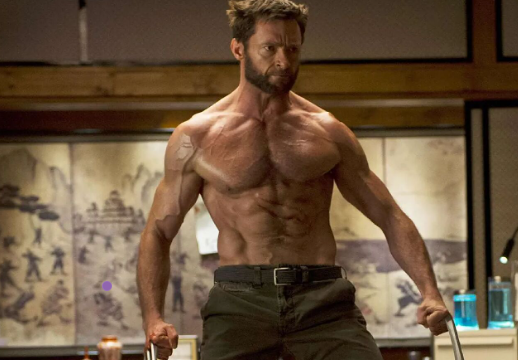
Hugh Jackman became Wolverine by accident. Specifically, Dougray Scott was originally cast for 2000’s X-Men, but scheduling conflicts with Mission: Impossible 2 forced a last-minute replacement. Furthermore, director Bryan Singer took a chance on the unknown Australian.
The gamble paid off spectacularly. Specifically, Jackman’s portrayal of the brooding, clawed mutant transformed him into an international star. Furthermore, his first X-Men salary was $500,000. By X-Men Origins: Wolverine in 2009, he commanded $20 million per film. Notably, over nine appearances spanning 17 years, his Wolverine earnings totaled approximately $100 million. Indeed, the X-Men ensemble cast included future Oscar winner Anna Paquin as Rogue, who carried her own post-Piano architecture into the franchise.
Nevertheless, the blockbuster success never fully defined him. Specifically, in 2003, Jackman returned to Broadway as Peter Allen in The Boy from Oz, playing the flamboyant Australian singer-songwriter eight shows per week. Furthermore, he won the Tony Award for Best Actor in a Musical. Notably, the choice baffled Hollywood strategists. Indeed, Jackman didn’t care.
The Greatest Showman Within
“Peter Allen may not have been the greatest singer or piano player or dancer in the world,” Jackman explained, “but when he performed, he just lit up the stage.” Specifically, he recognized something of himself in that description. Furthermore, talent alone hadn’t carried him. Indeed, the need to be seen, to matter, to prove that the abandoned boy was worth staying for — that fuel burned beneath every performance.
His 2017 musical The Greatest Showman became one of the highest-grossing movie musicals ever, earning $435 million worldwide against an $80 million budget. Specifically, Jackman’s upfront salary was reportedly around $10 million, with additional backend participation. Furthermore, the soundtrack dominated charts globally. Notably, the film about P.T. Barnum, a man who built spectacle from nothing, resonated for reasons Jackman understood intimately.
For 2012’s Les Misérables, he earned $5 million and an Oscar nomination for playing Jean Valjean, a man seeking redemption after abandonment by society. Specifically, the role required Jackman to sing live on set, often in tears. Indeed, “I just let it all out,” he said of the emotional process.
The Barbell Beneath the Career
Industry analysts have spent two decades trying to explain the architecture of Hugh Jackman’s career. Most of them get it wrong. Specifically, the standard reading goes that Jackman is a Wolverine actor who occasionally indulges Broadway. The actual structure runs the other direction. He is a Broadway actor who occasionally indulges Wolverine. Furthermore, the proof is that the Broadway runs continuously while the Wolverine work cycles in and out around it. Specifically, The Boy from Oz ran for 363 performances during the prime X-Men years. Subsequently, The Music Man revival ran 343 performances during the lead-up to Deadpool & Wolverine. Notably, the prestige-stage track has never paused for the franchise track. Indeed, both lanes have run simultaneously since 2003.
Why the Refusal to Choose Is the Strategy
The pattern matters because almost no other working actor has executed it across two decades. Specifically, most stars who reach Jackman’s recognition tier choose. They commit fully to franchise vehicles or they retreat into prestige work. Furthermore, Jackman has refused to choose for twenty-two years. Notably, the refusal is itself the strategy. Indeed, it parallels exactly what the British actor Jude Law has been doing on the other side of the Atlantic. Sherlock Holmes and the Sorrentino Pope series anchor Law’s version. Both men are running what economists who study celebrity careers have started calling the prestige-and-tentpole barbell. The architecture trades total brand-asset compounding for total casting flexibility. Jackman has spent two decades demonstrating the trade works.
The financial math validates the choice. Specifically, Wolverine paid the franchise income that funded the Broadway runs. Furthermore, the Broadway runs paid the prestige credibility that justified the auteur-tier salaries on Les Misérables and The Greatest Showman. Notably, each lane reinforced the opposite lane rather than competing with it. The standard celebrity playbook treats commercial work and prestige work as oppositional. By contrast, Jackman’s career demonstrates that the actors who build the most durable wealth treat them as additive. Indeed, the additive math is why his net worth runs at the upper end of his cohort. As a result, the Broadway years should have compressed his film income by conventional industry logic. They did the opposite.
The Tell: Therapy and The Son
In 2021, Hugh’s father Christopher passed away on Australian Father’s Day. Specifically, the timing felt almost literary. “My Dad was, in a word, extraordinary,” Hugh wrote on Instagram. “He devoted his life to his family, his work and his faith. I pray he is now at peace with God.”
At the time of his father’s death, Hugh was filming The Son, a drama about a father struggling to help his depressed teenage son. Specifically, the parallels were unavoidable. Furthermore, “I literally could see him in the corner of the room,” Jackman told Variety about shooting scenes after Christopher’s passing. Indeed, “I had an image of him on set, standing behind the action.”
The film forced Hugh to confront his own psychological patterns. Specifically, he entered therapy for the first time. “I just started it recently,” he confirmed to WHO Magazine in 2022. “It helped me a lot. We all need a village.”
Reconciliation and Reflection
The therapy addressed wounds decades old. Specifically, “Most importantly, it’s helping me to be more relational with the people I love in my life,” he explained. Furthermore, the boy who had learned to cope with abandonment through performance and achievement was finally learning to simply exist in relationships without constantly proving his worth.
His relationship with his mother had healed years earlier. Specifically, “As I grew older, I gained an understanding of why Mum did leave,” he told The Sun in 2011. “We have definitely made our peace, which is important.” Furthermore, in 2021, he posted a rare photo of himself with Grace on Instagram, captioned simply: “Mum.”
The reconciliation didn’t erase the wound. Notably, it transformed its meaning. Indeed, Grace hadn’t left because Hugh wasn’t lovable. As a result, she left because she was suffering from an illness that 1970s Australia couldn’t treat or name.
The East Hampton Connection: Calm in the Chaos
In 2014 and 2015, Hugh and Deborra-Lee purchased two adjacent waterfront properties in East Hampton’s Northwest Woods for approximately $7.5 million combined. Specifically, they razed the existing structures and spent six years designing their dream compound with Stelle Lomont Rouhani Architects.
The result: a minimalist 7,300-square-foot sanctuary on 2.5 acres, featuring 345 feet of water frontage on Gardiner’s Bay and two private pathways to the beach. Specifically, the property includes a main residence and a renovated guest cottage, both designed with influences from Japan and Morocco — clean lines, natural materials, deliberate calm.
“I wanted to do a beach house that allowed for the way we wanted to live,” Deborra-Lee told Architectural Digest in 2021. “That’s why the design is unusual, because people usually hide the kitchen. For us, cooking is the main event.”
A Home Designed for Presence
The kitchen sits prominently in the open living space. Specifically, floor-to-ceiling walls of glass open onto stone patios overlooking Gardiner’s Bay. Furthermore, a mirror-edge pool seems to merge with the water beyond. Notably, the design philosophy prioritized togetherness — no hidden rooms, no isolated spaces where family members could disappear.
“The home so far exceeded my expectations,” Hugh told AD. “I didn’t realize what Deb created was not only beautiful but warm. Even now, when I walk in the door, it gives me a feeling of calm.”
The compound also includes a gym, a three-tier media room with lounge seating, and an artist’s studio. Specifically, the most meaningful amenity might be the kitchen itself, where Jackman’s children learned to cook beside him. Furthermore, “My kids love to cook,” Deborra-Lee noted. Indeed, “So that’s in the middle of the living room.”
For a man whose childhood home emptied without warning, a house designed for constant family presence represents something profound. Notably, the East Hampton estate isn’t just real estate. Indeed, it is architecture as therapy.
The Paradox of Hugh Jackman
The Hugh Jackman net worth 2025 figure of $120 million reflects extraordinary commercial success. Specifically, Deadpool & Wolverine (2024) crossed $1 billion in worldwide box office, becoming his highest-grossing film. Furthermore, his Broadway revival of The Music Man extended multiple times during its 2022-2023 run. Notably, upcoming projects include Song Sung Blue (2025) and The Death of Robin Hood (2026).
In September 2023, Hugh and Deborra-Lee announced their separation after 27 years. Specifically, the divorce was finalized in 2025. Furthermore, reports suggest the split was complicated by the lack of a prenuptial agreement and an estate valued at potentially $250 million. Indeed, the cautionary tale of a marriage without a prenup that bled out half the estate runs in our Mel Gibson net worth profile. Notably, Hugh has since been romantically linked to his Music Man co-star Sutton Foster.
The ending of his marriage adds another layer to the paradox. Specifically, the man who built his entire adult life around family — who designed a house to keep people together — couldn’t prevent his own family from fracturing. Furthermore, the pattern repeats, though this time with more consciousness and, presumably, less trauma for the children involved.
Hugh continues to prioritize his adopted children, Oscar and Ava. Specifically, “Love isn’t always enough,” he reflected after making The Son. Indeed, “That’s one of the most difficult things for a parent to hear. I realized it is okay to say to my own children, ‘I don’t know.'”
Reconciling With The Past
The vulnerability would have been unthinkable for the angry teenager in Sydney, the one channeling abandonment into achievement. Specifically, that boy needed to prove he was worth staying for. Furthermore, the man he became is learning that presence matters more than perfection.
The East Hampton compound, with its clean lines and expansive views, represents a childhood fantasy made real — a home where family gathers in the kitchen, where no one disappears without explanation, where calm replaces chaos. Notably, whether Hugh occupies it alone or eventually shares it with someone new, its meaning remains unchanged.
The telegram from England arrived nearly fifty years ago. Specifically, the boy is still here. Notably, the house didn’t empty. Indeed, the walls still hold him.
Read the Chronicles
The fish is the last to notice the water. Most readers of this magazine operate inside the same pond as the people in these profiles. Specifically, the pond is the Hamptons between Memorial Day and Labor Day. Furthermore, the dinners that close the deals. Notably, the summers that decide who gets invited back. Indeed, if you are already swimming in it, you already know what that water is worth.
Related Reading on the Broadway-Tentpole Architecture
For the parallel prestige-and-tentpole barbell architecture executed by a British actor, see our Jude Law net worth profile. Specifically, for the Anna Paquin X-Men ensemble parallel and post-Piano architecture, see our Anna Paquin net worth profile. Furthermore, for the Mel Gibson cautionary tale of the no-prenup divorce settlement, see our Mel Gibson net worth profile. Notably, for the Robert Downey Jr Marvel-deal architecture that parallels the Wolverine-franchise compensation, see our Robert Downey Jr net worth profile. Indeed, the broader Hamptons celebrity real estate cluster lives in our Living Legends Net Worth guide.
Editorial Inquiries and Polo Hamptons
Want your story told the way Social Life Magazine tells these stories? Editorial inquiries go to sociallifemagazine.com/contact. Specifically, one feature subject per issue. Notably, the waitlist moves when someone misses it.
If the editorial calendar is booked and you still want in, Submit A Paid Feature at sociallifemagazine.com/submit-a-paid-feature/. Furthermore, three tiers cover print and digital. Indeed, the feature runs in the issue that lands in the hands you are trying to reach.
Our 82,000-reader summer preview list opens Memorial Day weekend. Subsequently, sign up here and read what the rest of the Hamptons reads before they do.
Polo Hamptons returns July 18 and July 25 in Bridgehampton with BMW as title sponsor. Notably, sponsorship and VIP inquiries go to polohamptons.com. Furthermore, the tent list closes by May.
Print is still how the East End reads when it actually wants to read. Subscribe at sociallifemagazine.com/subscription. Specifically, five summer issues, two winter, direct to your door between Montauk and Manhattan.
Support the magazine at paypal.com/donate. Indeed, independent publishing is the only kind still worth reading. Notably, it is also the only kind that tracks the next Hugh Jackman net worth 2025 Broadway-and-Wolverine architecture renegotiation before the rest of the culture notices.
Author

Written by
Recent Posts
Inside Sushi by Bou’s Custom VIP Sushi Experience at Palm Tree Music Festival Hamptons
Face of Summer 2026: The Institutional Trader Who Reads Markets at Dawn and Drinks Rosé at Sunset

7 Common Mistakes New Dog Owners Make (and How to Avoid Them)

A Vacation Emergency Guide: How to Ask for Help After an Unexpected Accident
Post and Beam Homes Are Having a Moment in Oregon Wine Country
Categories
- Art
- Articles
- Business of Luxury
- Celebrities
- Entertainment
- Events
- Faces of Summer 2026
- Fashion
- Fashion & Style
- Featured
- Finance
- Food, Spirits, Wine
- Hamptons
- Hamptons Celebrities
- Health
- Health & Beauty
- Lifestyle
- Luxury Lifestyle
- Press
- Profiles
- Real Estate
- Technology
- The Chronicles
- Travel
- Uncategorized
- Weddings