
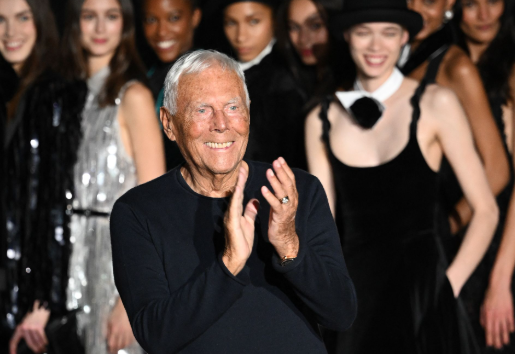
The boy was playing with his friends near an abandoned barracks when he found the shell. It was 1945. The war had just ended. They didn’t know what unexploded ordnance meant. Then the gunpowder detonated.
Giorgio Armani spent the next six weeks in a hospital bed, his eyes bandaged, unsure if he would ever see again. One of his closest friends was killed in the explosion. For weeks afterward, the sound of any airplane overhead sent him diving into ditches, his body remembering the terror before his mind could process it.
Decades later, Armani would become the richest fashion designer in history. At the time of his death in September 2025, his net worth stood at $12 billion. He owned ten homes across four continents, a 213-foot superyacht, and the only major fashion house never sold to a conglomerate. Yet his design philosophy—the rejection of artifice, the obsession with natural lines, the belief that elegance means removing everything unnecessary—traces directly back to that moment when a child learned how fragile everything is.
Estimated Net Worth: $12 billion (Forbes, September 2025)
Source of Wealth: 100% ownership of Giorgio Armani S.p.A., real estate, hotels, yacht
Annual Revenue: €2.3 billion ($2.7 billion)
Global Ranking: Italy’s third-richest person, behind Giovanni Ferrero and Andrea Pignataro
Armani’s fortune was remarkable not just for its size but for its structure. Unlike Tom Ford, who sold to Estée Lauder, or the countless houses absorbed by Bernard Arnault’s LVMH, Armani never surrendered a single share. He remained sole owner and CEO until his final breath. “As long as I am here,” he told GQ, “I am the boss.”
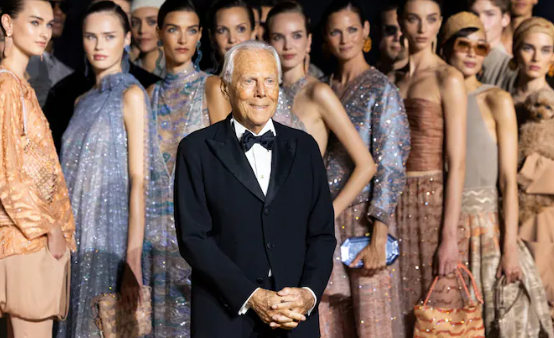
The Wound: War, Poverty, and the Explosion That Changed Everything
Giorgio Armani was born on July 11, 1934, in Piacenza, a small industrial town along the Po River in northern Italy. His father, Ugo, worked as a shipping manager. His mother, Maria Raimondi, kept the household together through circumstances that would have broken most families. He had an older brother, Sergio, and a younger sister, Rosanna.
Then came the war. Mussolini allied with Hitler. Allied bombs began falling on the factories surrounding Piacenza. Maria moved the children to a nearby village while Ugo stayed behind, eventually joining the Fascist Party—an act of survival, Giorgio would later insist, though he was less forgiving of his brother Sergio’s participation in the Fiamme Bianche squads.
The Hunger and the Bombs
“We were poor and life was tough,” Armani told Harper’s Bazaar. His first memory, he once said, was of hunger. The family sheltered in cellars during air raids. Some of his childhood friends were killed in bombings. “Sometimes it seemed to me that I never had a childhood or adolescence,” he recalled.
After the war ended in 1945, his father was briefly shunned as a collaborator and went into hiding. Meanwhile, eleven-year-old Giorgio found an unexploded artillery shell while playing with friends near empty barracks. The gunpowder inside detonated. One friend died. Giorgio was severely burned and hospitalized for over forty days, his eyes bandaged, doctors uncertain whether he would see again.
The Scar That Shaped a Sensibility
The trauma left physical and psychological marks. For years afterward, Armani would throw himself into ditches whenever he heard a plane overhead. Yet something else emerged from that hospital bed: a fascination with the human body. “I made dolls out of mud with a coffee bean hidden inside,” he told The Guardian, describing childhood games that revealed an early interest in human form. The experience of nearly losing his sight, of learning how fragile the body is, would eventually manifest in clothes designed to honor the form rather than constrict it.
The Chip: From Medicine to Window Dressing
Armani’s response to near-death was to pursue healing. Inspired by A.J. Cronin’s novel The Citadel, he enrolled in medical school at the University of Milan in 1953. The boy who had been burned and blinded would learn to repair bodies. It made emotional sense, even if it didn’t quite fit.
After three years, he dropped out. “Without too much conviction,” he later admitted. Military service followed, with an assignment to a hospital infirmary in Verona. There, he attended cultural events at the Arena di Verona, and something began shifting. Medicine wasn’t his calling. Something else was.
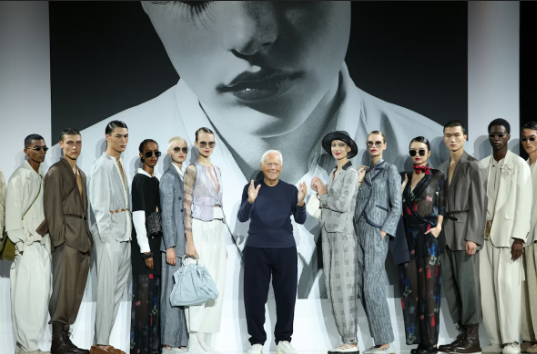
The Window Dresser Who Learned to See
In 1957, Armani took a job at La Rinascente, Milan’s famous department store. He started as a window dresser, arranging displays. Later, he became a buyer of men’s clothing, learning international fashion from the inside. The work was unglamorous but educational. He was learning how clothes move, how they sell, how they fail.
By 1964, he had caught the attention of Nino Cerruti, who hired him to design the Hitman menswear line. For over a decade, Armani studied the trade within Cerruti’s corporate structure, absorbing everything about construction, fabric, and the business of fashion. Meanwhile, he met Sergio Galeotti, an architectural draftsman who became his romantic partner and business collaborator. Their relationship would last until Galeotti’s death from AIDS in 1985.
The Rise: The Volkswagen, the $10,000, and the Suit That Changed Fashion
In 1975, at age forty-one, Armani and Galeotti sold their Volkswagen Beetle. The sale netted them 10 million lire—roughly $10,000. With that capital, they founded Giorgio Armani S.p.A. in Milan. Most fashion founders launch young. Armani was middle-aged, patient, and precise.
His first collections introduced something revolutionary: jackets without padding, without stiff linings, without the rigid architecture that defined men’s suiting. He removed what he considered false. The result looked relaxed yet elegant, powerful yet comfortable. “I believed in getting rid of the artifice of clothing,” he told WWD. “I believed in neutral colors.”
American Gigolo and the Birth of Power Dressing
The breakthrough came in 1980. Richard Gere wore Armani suits throughout American Gigolo, the erotic thriller that made both star and designer household names. The association was so powerful that debate continues about whether Gere actually wore Armani onscreen (the designer claims he did; others credit Hugo Boss for some pieces). Regardless, the cultural moment crystallized: Armani meant sensual sophistication. Armani meant the new masculine ideal.
That same year, he became the second fashion designer ever—after Christian Dior—to appear on the cover of Time magazine. Miami Vice followed, dressing Don Johnson in unconstructed linen that defined 1980s cool. Hollywood embraced him: Michelle Pfeiffer, Jodie Foster, John Travolta, and eventually nearly every A-lister seeking red-carpet credibility.
The Empire That Never Sold
Unlike his peers, Armani refused to sell. When LVMH and Kering gobbled up heritage houses, Armani remained independent. The business expanded into Emporio Armani (younger, accessible), Armani Jeans, Armani Junior, AX Armani Exchange, Armani Beauty (with L’Oréal), Armani/Casa furniture, and eventually Armani Hotels in Dubai and Milan. By 2024, the company generated €2.3 billion annually.
His independence came at a cost: relentless work. “My only regret in life,” he told the Financial Times in his final interview, “was spending too many hours working and not enough time with friends and family.” The boy who nearly died learned to control everything. The man couldn’t stop.
The Tell: How the Wound Still Shows
Armani’s design philosophy was the wound made visible. Strip away the unnecessary. Honor the natural form. Create clothes that feel like a second skin rather than armor. The man who spent weeks unable to see became obsessed with how things looked. The survivor of explosion and hunger pursued perfection as if his life depended on it.
“I am forever dissatisfied and obsessive in my search for perfection,” he admitted. Critics sometimes accused him of repetition, of too much consistency. His response was unwavering: “Elegance is not about being noticed. It’s about being remembered.”
The Control and the Tenderness
Armani controlled every detail of his empire, yet those who worked with him described unexpected tenderness. When Russia invaded Ukraine in February 2022, he wept at a press conference thinking of the children caught in war—the trauma of his own childhood rising to the surface. His charitable donations, never disclosed during his lifetime, were revealed after his death to be substantial. He banned underweight models from his runway in 2007, the first major designer to take that stand.
He never married, never had children. After Galeotti’s death in 1985, his longtime companion was Leo Dell’Orco, who led the men’s style division. When Armani died on September 4, 2025, at his home in Milan, Dell’Orco was among those at his bedside.
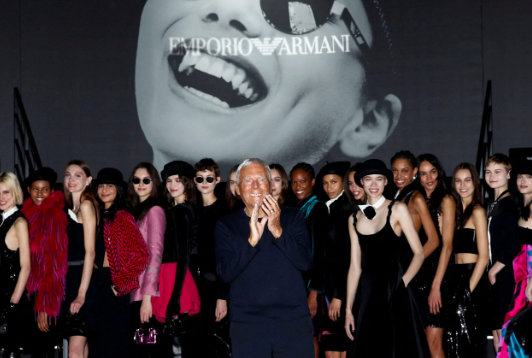
The Location: Ten Homes Following the Sun
Giorgio Armani arranged his life so the sun never set on wherever he lived. His real estate portfolio included: a three-floor apartment in a 400-year-old Milan palazzo; a compound of seven houses on Pantelleria, the volcanic island between Sicily and Tunisia; a sprawling villa in Saint-Tropez; two clifftop villas in Antigua; a farmhouse in Forte dei Marmi; properties in New York, St. Moritz, Paris, and near his birthplace in Piacenza; and a 213-foot superyacht called MAIN.
Pantelleria was his favorite. He first visited in 1981, finding an island without electricity, without hotels, without life as most tourists understood it. “The greatest excitement of the day was when a car went by on the road,” he recalled. He bought abandoned dammusi—traditional stone houses built from volcanic rock—and transformed them into a private oasis.
The Meaning of Island Escape
For a man whose childhood was defined by bombs, shelters, and explosion, the appeal of Pantelleria becomes clear. “It’s the only place where I truly feel I can ‘switch off,’” Armani told Luxuo. “My sister says it’s the only place that makes my face change.” The island offered what wartime Piacenza never could: silence, safety, and the freedom to live outdoors without fear of what might fall from the sky.
His homes followed the sun, but they also followed a consistent aesthetic: natural materials, neutral tones, the absence of unnecessary ornament. The philosophy he applied to clothing governed his interiors. Every property was a laboratory for Armani/Casa, his furniture line. The man who controlled his empire also controlled the environments where he rested from it.
The Paradox of Perfection
Giorgio Armani died at ninety-one, working until his final days. His 50th-anniversary celebration was weeks away. He had organized it remotely while recovering at home. The funeral chamber drew 15,000 mourners. All Armani stores worldwide closed for an afternoon of mourning.
His will revealed that no single heir would inherit the empire. Instead, shares were distributed among family members, Dell’Orco, and a foundation modeled on Rolex’s structure. The company he never sold would remain independent even without him. Interested buyers were instructed to approach LVMH, EssilorLuxottica, or L’Oréal—but only for a minority stake, and only after his death.
The boy who survived the explosion became the designer who stripped fashion to its essence. The child who knew hunger built a €2.3 billion empire. The man who spent weeks blind created clothes meant to be seen and remembered. His homes were beautiful. They were also sanctuaries built by someone who learned, at eleven years old, that safety is never guaranteed.
Fashion Mogul Net Worth Series
Giorgio Armani’s $12 billion fortune places him among fashion’s wealthiest figures. Explore the complete series:
- Tom Ford Net Worth 2025: From Texas Outsider to $2 Billion Empire
- Bernard Arnault Net Worth 2025: The $190 Billion Emperor Who Bought Main Street
- Elie Tahari Net Worth 2025: From Israeli Orphanage to Oceanfront Empire
- Michael Kors Net Worth 2025: The Long Island Boy Who Renamed Himself
- Ralph Lauren Net Worth 2025: The Bronx Kid Who Sold America Its Dream
- Valentino Garavani Net Worth: The $1.5 Billion Master of Red Carpet Fashion
- Donatella Versace New Worth 2025: The Replacement Child That Built an Empire
For more insider perspectives on the personalities shaping luxury fashion, visit Social Life Magazine.
Experience luxury lifestyle at Polo Hamptons.
Contact us for features and partnership opportunities.
Author

Written by
Recent Posts
Sectional Sofa vs. Regular Sofa: Which One is Best for You?

Sober and Injured: How to Manage Pain Treatment After a Massachusetts Slip and Fall
Flexible Liquidity Options Are Reshaping How Modern Professionals Handle Unexpected Expenses
5 Best At-Home Teeth Whitening Kits for a Brighter Smile in 2026

From Spa Retreats to Aesthetic Care, the Luxury Travel Itinerary Is Changing
Categories
- Art
- Articles
- Business of Luxury
- Celebrities
- Culture
- Entertainment
- Events
- Faces of Summer 2026
- Fashion
- Fashion & Style
- Featured
- Finance
- Food, Spirits, Wine
- Hamptons
- Hamptons Celebrities
- Health
- Health & Beauty
- Lifestyle
- Luxury Lifestyle
- Press
- Profiles
- Real Estate
- Technology
- The Chronicles
- Travel
- Uncategorized
- Weddings