
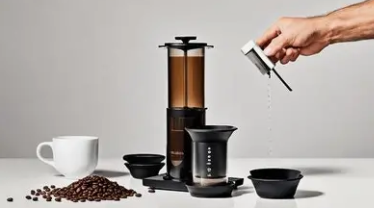
James Freeman built Blue Bottle into a $700 million empire before selling to Nestlé. His cafes house gleaming La Marzocco machines worth more than some cars. Yet ask what he drinks at home, and the answer surprises: a $40 plastic tube he first encountered at a specialty coffee competition in Oslo.
The AeroPress contradicts every assumption about what serious coffee equipment should look like. No chrome. No steam wands. No Instagram-worthy industrial design. Just a modest plastic cylinder that produces consistently exceptional coffee through pure engineering elegance. Consequently, it has become the insider choice among people who actually understand extraction science rather than those who merely spend money on appearance.
For anyone who believes their morning ritual deserves intention rather than convenience, AeroPress represents a quiet revolution. The extra 90 seconds it requires separate the coffee drinkers from the coffee lovers. Moreover, it travels anywhere, demands no electricity, and costs less than a single bag of premium beans.
The Stanford Engineer Who Solved Bitter Coffee
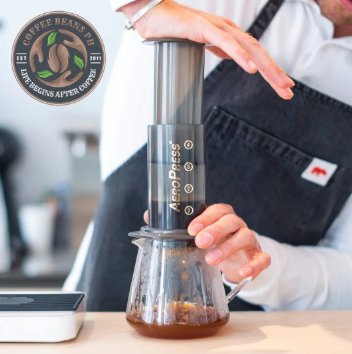
Alan Adler made his fortune inventing the Aerobie, that flying ring that seemed to appear in every American backyard during the 1980s. Aerobie sold millions because Adler obsessed over the aerodynamics until the disc flew farther than anything else on the market. His coffee invention emerged from the same obsessive methodology.
Adler loved coffee but hated how it often tasted. Automatic drip machines over-extracted. French presses left grit. Pour-overs demanded technique he found inconsistent. Therefore, he spent years in his Palo Alto garage testing chamber designs, filter materials, and pressure applications until he arrived at something that worked every single time.
The Accidental Coffee Revolution
The AeroPress debuted in 2005 without marketing budget or celebrity endorsement. Adler simply demonstrated it at trade shows where coffee professionals gathered. Word spread through industry channels because the results spoke undeniably. Baristas who’d spent years perfecting pour-over technique suddenly encountered a device that delivered comparable quality with dramatically less skill required.
This bottom-up adoption pattern mirrors how Bon Appétit documented the rise of the World AeroPress Championship, now held annually with national competitions feeding into global finals. The existence of this championship says everything about how seriously coffee professionals take what looks like a toy.
Why Baristas Adopted It
Professional baristas typically regard consumer brewing equipment with polite condescension. They’ve invested thousands of hours mastering espresso extraction and understand variables that home brewers never consider. Yet the AeroPress earned genuine respect in this skeptical community.
The reason comes down to control. Unlike drip machines that automate poorly, AeroPress puts every variable in the brewer’s hands: water temperature, grind size, steep time, and pressure application. Furthermore, it does so within a forgiving framework that rewards experimentation rather than punishing imprecision. Professionals appreciated that Adler had solved for consistency without sacrificing craft.
The Science of Total Immersion Brewing
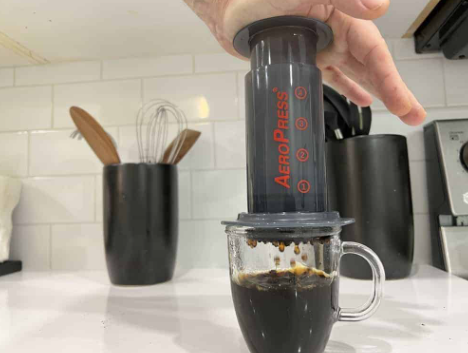
Most coffee brewing involves water passing through grounds in a one-way journey. Drip machines pour from above. Pour-overs follow gravity. Even espresso forces water through a compressed puck with minimal contact time. AeroPress operates differently.
The grounds steep fully submerged in water, ensuring uniform extraction across every particle. This total immersion approach, combined with paper filtration, produces a cup that captures coffee’s nuanced flavors without the oils and fines that create bitterness in other methods. The resulting coffee tastes cleaner and brighter while maintaining full body.
Pressure vs. Gravity Extraction
Gravity-based methods like pour-over rely on water weight alone to move liquid through grounds. AeroPress adds gentle air pressure from the plunger, accelerating extraction without the extreme force of espresso machines. This middle ground hits a sweet spot that neither approach achieves independently.
The pressure reduces steep time from minutes to seconds, which matters because extended contact creates over-extraction. Consequently, you get full flavor development without the bitter compounds that emerge from prolonged water exposure. The physics favor the impatient without compromising quality.
The Paper Filter Advantage
Metal mesh filters in French presses allow oils and fine particles into the cup. Some drinkers prefer this fuller body. Others find it muddy. Paper filters provide an alternative by trapping solids while passing dissolved flavor compounds cleanly through.
AeroPress’s paper filters sit at the bottom of the brewing chamber, catching everything the plunger pushes toward them. Additionally, the micro-perforations exceed standard drip filters in quality, contributing to the cup’s characteristic clarity. This filtration choice reflects Adler’s preference for clean extraction, though third-party metal filters exist for those who disagree.
The Connoisseur’s Morning Ritual
Coffee culture has bifurcated into convenience seekers and quality seekers. Pod machines dominate the former category through sheer speed. AeroPress leads the latter by offering ritual without tedium.
The actual brewing takes roughly 90 seconds: boil water, add grounds, steep briefly, press slowly. This investment feels minimal until you consider that many people claim they lack time for anything beyond pushing a button. The willingness to spend those 90 seconds signals something about priorities and self-respect that transcends caffeine delivery.
The Third-Wave Coffee Signal
Third-wave coffee refers to the movement treating coffee as an artisanal product rather than commodity, emphasizing origin, roasting technique, and brewing precision. AeroPress ownership functions as tribal identification within this community.
Serious coffee people recognize each other’s equipment. The Chemex on the counter, the Baratza grinder, the AeroPress tucked beside them all communicate shared values. Similar to how wine collectors signal through cellar choices, coffee enthusiasts reveal themselves through brewing equipment that privileges quality over convenience.
The Inverted Method Debate
Standard AeroPress technique places the filter at bottom with the chamber upright. The inverted method flips the device, brewing with plunger down before capping and inverting to press. This modification sparked genuine controversy within the AeroPress community.
Advocates argue inversion prevents drip-through during steeping, ensuring full immersion for the entire contact time. Critics counter that it complicates the process unnecessarily while risking hot coffee spillage. Championship competitors use both methods successfully, suggesting the debate generates more heat than the brewing differences warrant.
The Culture of Portable Excellence
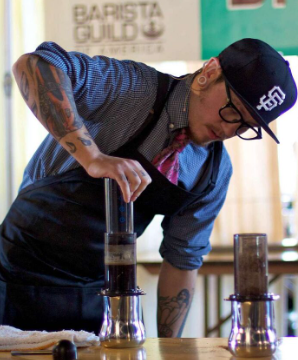
AeroPress weighs under a pound and nests into itself for travel. This portability explains its adoption among demographics who refuse compromising coffee quality based on location: journalists on assignment, consultants in hotel rooms, athletes at competitions. The device travels because its users demand good coffee everywhere.
This portability matters particularly for the Hamptons-to-city lifestyle where weekends involve different kitchens than weekdays. Rather than maintaining duplicate expensive equipment or tolerating inferior beach house brewing, the AeroPress simply moves between locations in a overnight bag.
No Electricity Required
Manual brewing methods retain relevance partly through infrastructure independence. The AeroPress needs only hot water from any source: kettle, stovetop, campfire. This simplicity provides reliability that electronic alternatives cannot match.
Furthermore, the device’s lack of electronics means nothing breaks, updates, or becomes obsolete. The same AeroPress purchased in 2005 functions identically today. This durability contradicts the planned obsolescence pervading modern kitchen equipment and appeals to anyone tired of replacing functional items because manufacturers stopped supporting them.
The Hamptons Context: Morning Rituals That Matter
Summer house mornings unfold differently than urban weekdays. The absence of commute pressure creates space for intention. Coffee becomes ritual rather than fuel, the quiet hour before guests wake and hosting duties resume.
AeroPress fits this contemplative pace perfectly. The manual process engages attention without demanding it, a meditative few minutes that centers the day ahead. Additionally, the compact device stores easily in rental properties where kitchen drawer space runs limited and permanent equipment modifications aren’t possible.
Guest Accommodation Excellence
House guests increasingly arrive with specific coffee preferences. Some need strong espresso-style shots. Others prefer lighter roasts. Accommodating this range typically requires multiple machines or accepting that someone will be disappointed.
AeroPress adjusts to varied preferences through simple ratio and technique modifications. More grounds and longer steep for concentrated cups. Less grounds and cooler water for delicate single-origins. The same device serves everyone because the operator controls every variable. Consequently, hosts can accommodate preferences rather than apologizing for equipment limitations.
Beach House Brewing Reality
Rental properties notoriously include terrible coffee equipment: decade-old drip machines with mineral deposits, single-serve pod systems stocked with stale capsules. Bringing your own AeroPress circumvents these compromises entirely.
The device’s plastic construction also suits humid coastal environments that would damage brass fittings or electronic controls on expensive alternatives. Salt air corrodes; AeroPress doesn’t care. This resilience matters for any kitchen equipment destined for beach proximity, where conditions punish delicate engineering.
The Investment Reality: Serious Coffee, Modest Outlay
High-end espresso machines cost $2,000 to $15,000 for home models. Commercial-grade pour-over setups with proper kettles, scales, and grinders easily exceed $500. AeroPress retails for under $40 and includes everything needed except a grinder.
This price point removes financial barriers from excellent coffee. Someone curious about specialty brewing can experiment without significant commitment. Those who discover a passion graduate to better grinders and premium beans rather than more expensive brewing devices, because the AeroPress itself needs no upgrading.
What You’re Actually Buying
The purchase includes the brewing chamber, plunger, filter cap, and a year’s supply of paper filters. Replacement filters cost roughly $5 annually for daily use. Total operating expense remains trivial compared to cafe purchases or capsule subscriptions.
Beyond equipment, you’re buying into a methodology. The AeroPress philosophy holds that coffee quality depends on attention and technique rather than budget and technology. This democratizing premise appeals to those who believe excellence shouldn’t require wealth.
The Quality Ceiling Question
Some critics argue AeroPress cannot match properly prepared espresso or competition-level pour-over. This misses the point somewhat. The device optimizes for consistency and accessibility rather than theoretical peak performance. Furthermore, most drinkers cannot discern differences that matter only to calibrated professionals.
For practical purposes, AeroPress produces coffee that satisfies serious enthusiasts while remaining achievable by anyone willing to learn basic technique. This practical excellence differs from unattainable perfection in ways that actually matter for daily enjoyment. Similar to how home bar setups aim for excellent rather than competition-winning cocktails, the goal is genuine quality rather than unnecessary pursuit of diminishing returns.
The Verdict: Excellence Without Pretension
AeroPress succeeds because Alan Adler applied genuine engineering to a problem others accepted as solved. His background building flying discs rather than coffee equipment freed him from industry assumptions about what brewing should involve. The result looks unimpressive and performs exceptionally.
For coffee drinkers who’ve graduated past convenience without descending into equipment fetishism, AeroPress represents the ideal middle path. The morning ritual gains meaning without becoming burdensome. Quality exceeds automatic alternatives without requiring professional training. Travel remains unrestricted by equipment dependencies.
That Blue Bottle founder chose this $40 plastic tube says everything necessary about where actual coffee knowledge leads. The signal isn’t wealth or sophistication. It’s understanding that excellence sometimes hides in unassuming packages, waiting for those who pay attention rather than those who simply pay more.
Related Articles
- Morning Rituals of the Hamptons Elite: Coffee, Wellness, and the Quiet Hours
- The Specialty Food Guide: Gourmet Sources for Hamptons Entertaining
- Weekend House Essentials: The Checklist for Effortless Summer Living
For features on lifestyle, entertaining, and the art of Hamptons living, contact us at sociallifemagazine.com/contact. Join us at Polo Hamptons for the season’s most anticipated gatherings. Subscribe to our print edition or join our email list for insider access to Hamptons culture.
Author

Written by
Recent Posts
The New York Women’s Foundation’s 2026 Neighborhood Dinner

Marco Maranghello

The Baker House 1650
MvVO ART Show

Casita Maria Center for Arts and Education
Categories
- Art
- Articles
- Business of Luxury
- Celebrities
- Culture
- Entertainment
- Events
- Faces of Summer 2026
- Fashion
- Fashion & Style
- Featured
- Finance
- Food, Spirits, Wine
- Hamptons
- Hamptons Celebrities
- Health
- Health & Beauty
- Lifestyle
- Luxury Lifestyle
- Press
- Profiles
- Real Estate
- Technology
- The Chronicles
- Travel
- Uncategorized
- Weddings