
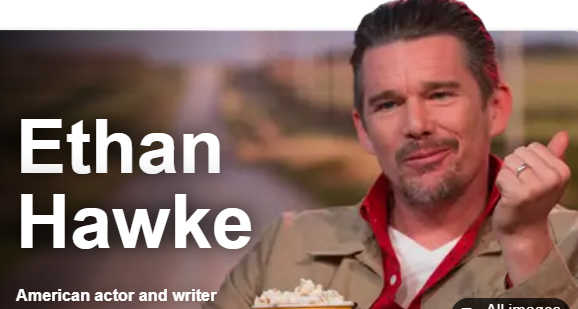
Austin, Texas, 1978. A seven-year-old boy sits in the back of a Chevrolet Impala, watching another apartment complex shrink in the rearview mirror. His mother, barely out of her teens, is driving them to their fourth home in three years. She divorced his father before the boy could form a memory of him. Now she’s chasing secretarial jobs across the Sun Belt, dragging her son through a geography of rented rooms and borrowed furniture.
The boy has learned not to unpack completely. He’s learned that attachment is a setup for loss. What he hasn’t learned yet is that this rootlessness will become his superpower. That the kid who never belonged anywhere would grow up to buy an entire town, accumulating an estimated Ethan Hawke net worth of $55 million in 2025 by turning his inability to settle into an art form.
The Wound: A Childhood Without an Address
Leslie Carole Green was nineteen when she had Ethan. His father, James Hawke, was an insurance actuary who vanished from the picture before his son’s fourth birthday. What followed was a decade of transience that would mark the actor permanently. Austin to New York to New Jersey to Florida. Each move promised stability. Each move delivered another lesson in impermanence.
The Education of an Outsider
His mother eventually remarried, and the family landed in Princeton, New Jersey. Suddenly the boy from nowhere was surrounded by Ivy League kids whose parents had summer homes. He was smart enough to get into the Hun School of Princeton, a prep school where legacy meant everything. There, he was the scholarship case, the one without a country club membership or a family compound to visit during breaks.
Books became his country. According to The Guardian, Hawke was reading Dostoevsky at fourteen, not as an assignment but as an escape hatch. Furthermore, theater offered him something his childhood never could: a place where not belonging was the whole point. You could be anyone on stage. The perpetual new kid had finally found his home in pretending to be somewhere else.
The Princeton Paradox
The contrast was brutal. His classmates vacationed in the Hamptons. He visited his estranged father in Texas, if he visited at all. They talked about family sailboats. He changed the subject. This experience of being inside a world where he’d never truly belong would later define his entire artistic philosophy. Moreover, it would explain why he chose Kingston over the Hamptons, a working-class town over a glossy enclave.
The Chip: Weaponizing the Outsider Status
At thirteen, Hawke auditioned for a community theater production of Saint Joan. He got the part. More importantly, he got the revelation. Acting wasn’t about pretending to be someone else. It was about finally having permission to feel everything he’d been suppressing during all those moves, all those goodbyes, all those first days at new schools.
The Teenage Breakthrough
By sixteen, he was in Explorers with River Phoenix, two young outsiders who recognized something in each other. The film flopped, but Hawke had tasted it: the possibility that his restlessness could be monetized, his alienation transformed into a career. Consequently, he dropped out of Carnegie Mellon after one semester. College was another institution where he didn’t fit. Hollywood, for all its superficiality, at least paid him to be uncomfortable in his own skin.
The decision horrified his mother, who had sacrificed everything for his education. Yet Hawke saw what she couldn’t: that his real education had happened in the back seats of those cars, in the rented rooms, in the constant rehearsal of being the new kid. He’d been training for this his whole life.
Building an Intellectual Brand
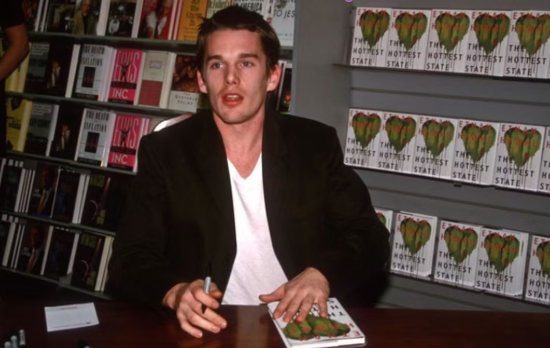
While other young actors chased action franchises, Hawke cultivated a different persona entirely. He published his first novel, The Hottest State, at twenty-six. Critics called it pretentious. He didn’t care. The book was another declaration of independence, another way of saying he was more than the industry wanted him to be. Similarly, his choice to work with Richard Linklater on Before Sunrise in 1995 signaled a commitment to art over commerce that would define his career trajectory. Unlike Leonardo DiCaprio, who parlayed his early fame into blockbusters, Hawke deliberately zigged toward the independent fringe.
The Rise: Building a $55 Million Empire on Authenticity
Dead Poets Society in 1989 should have made him a conventional star. He was twenty, beautiful, and sharing the screen with Robin Williams. The film grossed $235 million worldwide. Subsequently, Hollywood wanted to cast him as the sensitive heartthrob. He wanted to talk about Chekhov.
The Anti-Hollywood Strategy
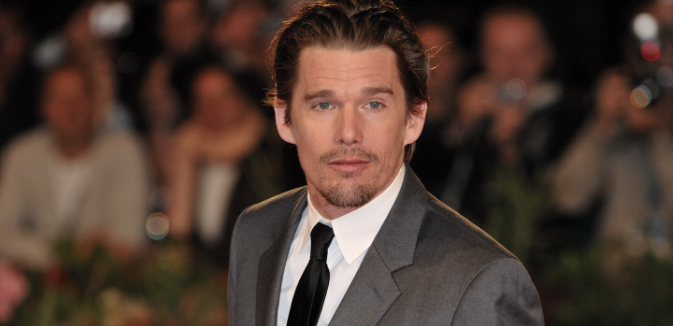
What followed was a career built on strategic refusal. He turned down blockbusters to make Reality Bites. He passed on action roles to do the Before trilogy with Linklater. Meanwhile, each choice was a declaration: he would rather be interesting than rich. Per Forbes, this strategy cost him tens of millions in potential earnings during the 1990s alone.
The math never made sense to agents. Ethan Hawke net worth projections in 2000 suggested he could have been worth $100 million by now if he’d played the game. Instead, he directed experimental theater. He wrote more novels. He took roles in films that premiered at Sundance and disappeared.
The Boyhood Gamble
Then came Boyhood. Twelve years of filming, twenty days per year, for a salary that wouldn’t cover his rent. The project was insane by any industry standard. Nevertheless, Hawke committed because Linklater understood something about him: he needed to be part of something that mattered more than money. The film earned $57 million on a $4 million budget, plus four Academy Award nominations. Additionally, Hawke’s commitment to the project, detailed in Variety’s analysis, became the stuff of Hollywood legend.
His Oscar nominations multiplied. Training Day added legitimacy. First Reformed proved he could anchor a film on pure craft. Each project added to both his artistic credibility and his net worth, though he’d bristle at you mentioning the latter.
The Tell: How the Wound Still Shows
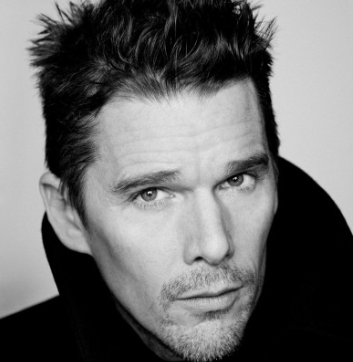
Listen to Hawke in interviews and you’ll hear the chip on his shoulder, polished smooth by decades of use but still there. He talks about Hollywood like an anthropologist studying a foreign tribe. He name-drops philosophers the way other actors name-drop directors. This intellectual defensiveness is a scar from Princeton, from being the poor kid who had to prove he belonged.
The Perpetual Outsider
His marriages tell the story too. Uma Thurman seemed like the Hollywood ending, the beautiful movie star coupling. It imploded publicly, painfully. He later married Ryan Shawhughes, his children’s former nanny. The tabloids screamed scandal. Yet the choice was vintage Hawke: rejecting the glamorous option for something more authentic, more real, more outside the machine.
Even his side projects reveal the original wound. He directs documentaries about forgotten jazz pianists. He writes plays for off-Broadway theaters. He took a role in the Marvel universe, yes, but as Moon Knight. Even his commercial concessions come with an asterisk of artistic credibility.
The Kingston Compound: Where the Ethan Hawke Net Worth Becomes Real Estate
Here’s where it all makes sense. Ethan Hawke didn’t buy a house in the Hamptons, where his Princeton classmates summer. He didn’t settle in Malibu, where the industry congregates. He bought property in Kingston, New York, a former industrial town two hours north of Manhattan. Then he bought more. And more. His holdings there reportedly include multiple properties, essentially a compound in a town that time forgot. Architectural Digest reports that his approach to the area has been less acquisition than adoption.
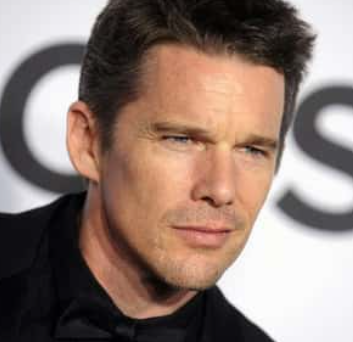
The Anti-Hamptons Choice
The choice is psychological autobiography. Kingston is where artists go when they want to be left alone but not lonely. It’s where you can walk down the street without being recognized, or at least without people making a fuss. It’s the opposite of everything the Hamptons represent. Similarly, it’s the opposite of everywhere Hawke’s mother dragged him as a child: not transient but permanent, not aspirational but authentic. Compare this approach to the Hamptons compound strategy favored by most Hollywood wealth.
The man who never had a hometown created one. The kid who was always leaving finally bought enough property to ensure he’d never have to leave again. His $55 million net worth isn’t displayed in a Sagaponack estate or a Bridgehampton spread. It’s invested in a place where he can pretend he’s not a movie star, which is what he’s been doing his whole life anyway.
The Paradox of Ethan Hawke Net Worth
Fifty-five million dollars. Four Oscar nominations. A compound in a town most people have never heard of. The math doesn’t quite add up until you understand the equation Hawke has been solving his whole life: How do you become successful enough to never feel like an outsider, while remaining enough of an outsider to feel successful?
Somewhere in Kingston, there’s a man in his fifties reading Chekhov on a porch he actually owns. He’s not going anywhere. For the first time in his life, he’s finally unpacked completely. The seven-year-old in the back of that Impala would be stunned. He would also, somehow, understand exactly why it had to be this place, this life, this deliberate distance from everything he was supposed to want.
Related Articles
- Naomi Watts Net Worth 2025: The Australian Outsider Who Found Amagansett
- Billy Crudup Net Worth 2025: The Stage Actor Who Made Television Art
- Laura Linney Net Worth 2025: The Theater Discipline That Built an Empire
Interested in Hamptons culture and Hudson Valley living? Subscribe to Social Life Magazine for exclusive access to the stories behind the estates. Join us at Polo Hamptons this summer for networking with the region’s most discerning residents.
Author

Written by
Recent Posts
The Skincare Habits That Make a Real Difference Over Time
Hamptons-Ready Beauty: Polished Makeup for Long Summer Days
Is Now a Good Time to Sell a Home in NJ?

The Hidden Work Behind a Seamless Hotel Weekend
Choosing Scratching Furniture for a British Shorthair
Categories
- Art
- Articles
- Business of Luxury
- Celebrities
- Culture
- Entertainment
- Events
- Faces of Summer 2026
- Fashion
- Fashion & Style
- Featured
- Finance
- Food, Spirits, Wine
- Hamptons
- Hamptons Celebrities
- Health
- Health & Beauty
- Lifestyle
- Luxury Lifestyle
- Press
- Profiles
- Real Estate
- Technology
- The Chronicles
- Travel
- Uncategorized
- Weddings