
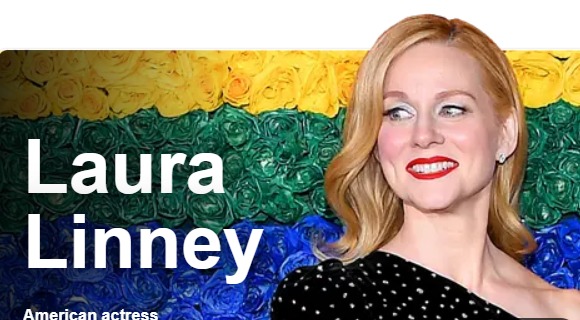
Manhattan, 1971. A seven-year-old girl sits in the wings of a Broadway theater, watching her father pace backstage. Romulus Linney is a playwright whose work is about to premiere. The critics will be kind tonight, but kindness doesn’t pay the bills. The girl watches him prepare for the anxiety of judgment, the ritual of exposure, the peculiar torture of putting your inner life on stage for strangers to evaluate.
She doesn’t know yet that she’ll spend her life doing the same thing. That watching her father navigate the economics of artistic integrity will become her graduate education. That the Laura Linney net worth of $15 million in 2025 will represent something her father never achieved: the financial security to make art without terror.
The Wound: Raised in the Wings
Romulus Linney was respected but never commercially successful. He wrote plays about the American South, about family secrets, about the gap between who we are and who we pretend to be. The work was good. The money was inconsistent. Laura grew up understanding that artistic excellence and financial stability were often mutually exclusive.
The Divorced Childhood
Her parents split when she was young, her mother—a nurse—raised her practically, and her father remained a presence, but an inconsistent one. Weekends with Dad meant exposure to the theatrical world. Weekdays with Mom meant learning to budget, to plan, to protect yourself against the unreliability of creative careers.
According to The New Yorker’s profile, Linney absorbed both lessons completely. The artist’s fire from her father. The survivor’s caution from her mother. This dual education would define her career: passionate but never reckless, ambitious but never blind to the odds.
The Shadow of Larger Names
She grew up aware of her lineage. Her great-great-grandmother was a cousin of Pocahontas. Her great-uncle was Howard Hughes’ business partner. More importantly, her father was connected to the theatrical establishment, which meant doors were slightly ajar but never fully open. She wasn’t unknown, but she wasn’t anybody either. The middle distance of almost-belonging would become her permanent address.
The Chip: The Education of a Working Actress
She went to Brown, which was unconventional for aspiring actors but characteristic of her caution. A good education was insurance against a career that might not materialize. After Brown, she went to Juilliard, which was insurance that it would. The combination tells you everything about her approach: belt and suspenders, art and practicality, passion hedged against probability.
The Juilliard Crucible
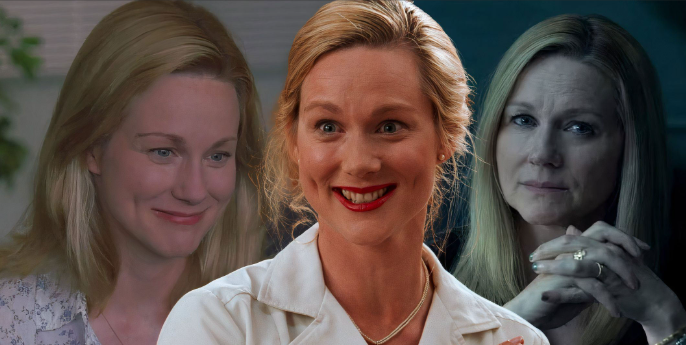
Juilliard’s drama division in the 1980s was brutal by design. As Playbill documented, the program was structured to break students who weren’t serious and forge those who were. Linney was forged. She emerged with technique that could support any role, discipline that could survive any production, and expectations calibrated to the reality of a profession where most people fail.
Her classmates included future stars, but also future accountants and teachers who discovered they couldn’t hack it. Linney watched the winnowing with her mother’s eyes. Talent wasn’t enough. Endurance mattered more. Consequently, the ability to survive rejection without losing your craft was the only thing that actually predicted success.
The Regional Theater Years
After graduation, she did what serious actors do: regional theater. Hartford Stage. Williamstown Theatre Festival. The kinds of places where you learn your craft in front of audiences who came to see the work, not the star. The Laura Linney net worth during these years was functionally zero. The Laura Linney education was priceless.
The Rise: $15 Million Built on Reliability
Her breakthrough wasn’t dramatic. It was cumulative. Television movies in the early 1990s. Small film roles that critics noticed. Broadway turns that won awards. The Truman Show gave her visibility. You Can Count on Me gave her credibility. Mystic River put her on the Oscar shortlist.
The Accumulation Strategy
Unlike actors who chase one transformative role, Linney built her career brick by brick. Per Variety’s career retrospective, she averaged three to four significant projects per year for three decades. The mathematics of compounding applied: each good role led to two more offers. Meanwhile, each award nomination raised her quote. The Laura Linney net worth grew slowly and then suddenly.
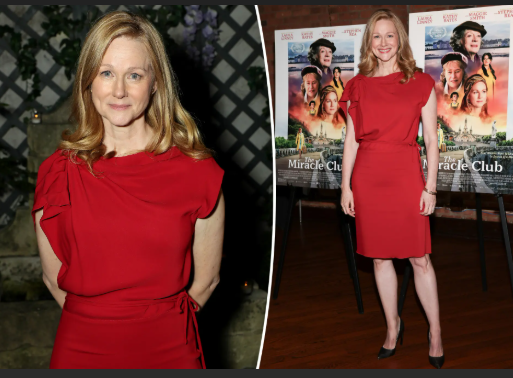
She won four Emmys. Three for television movies and limited series, one for The Big C. She collected three Oscar nominations without a win, which in Hollywood terms makes her a perennial bridesmaid. However, the steady accumulation of recognition translated into steady accumulation of income. Her approach differed from the boom-bust cycles that characterize flashier careers. Unlike stars who monetize fame through endorsements, Linney’s wealth came entirely from her craft.
The Ozark Payday
Then came Ozark. Netflix’s crime drama gave her the role of a lifetime: Wendy Byrde, a political operative turned money launderer, a woman whose ambition metastasized into something monstrous. Per The Hollywood Reporter’s salary analysis, leads on prestige streaming shows command $300,000 to $500,000 per episode. For four seasons, Linney collected.
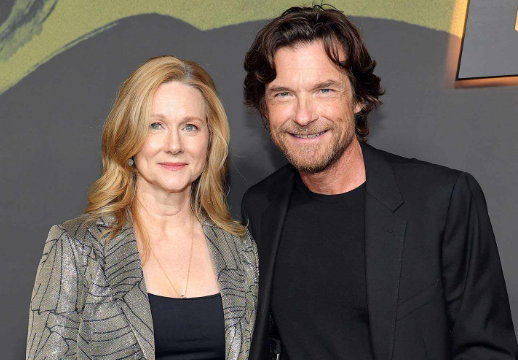
The show made her a star in the way film never quite had. Streaming viewership meant millions watched her work for the first time. Awards followed. The fifth Emmy. The first SAG Award. At sixty, she achieved the commercial success that had eluded her father entirely.
The Tell: The Discipline Never Breaks
Interview Laura Linney and you’ll encounter professionalism so complete it borders on opacity. She doesn’t dish, or gossip, or reveal. The guard went up decades ago and has never come down. This is the daughter of a playwright who watched his work be judged in public: she learned early that exposure has costs.
The Private Life Kept Private
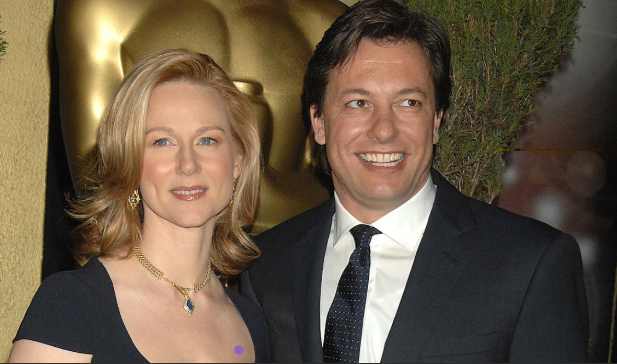
She married Marc Schauer, a real estate agent, in 2009. They had a son when she was forty-nine, after what she’s described as a difficult fertility journey. She doesn’t discuss either the marriage or the motherhood in detail. The privacy isn’t cold. It’s strategic. After watching her father’s inner life turned into public product, she keeps her own inner life locked away.
Her father died in 2011, two years after her wedding. She has spoken about his influence sparingly, always in terms of craft rather than emotion. The wound is there. The scar tissue is thick enough that you can’t see it unless you know where to look.
The Connecticut Refuge: Where Laura Linney Net Worth Takes Root
She maintains a home in Connecticut, far from the industry she serves. The choice is characteristically practical. Close enough to New York for Broadway. Far enough for peace. The house reportedly reflects her sensibility: elegant but not showy, comfortable but not excessive.
The Anti-Hollywood Geography
Connecticut for a stage actress makes sense the way Los Angeles makes sense for a movie star. The train to Manhattan takes ninety minutes. Broadway is accessible for runs and rehearsals. Yet the daily life happens in a state that values discretion, in communities where nobody makes a fuss about celebrity. As Connecticut Magazine observed, the state has long attracted artistic types seeking refuge from the exposure economy.
Her presence in the Hamptons orbit is minimal. Unlike peers who weekend in Sag Harbor or East Hampton, Linney keeps her geography simple. Work in New York. Life in Connecticut. The separation is intentional, a boundary between public performance and private existence. Her approach contrasts with the social Hamptons circuit that many in her profession embrace.
The $15 Million Meaning
Fifteen million dollars. Four Emmys. Five Tony nominations. A father’s artistic ambition finally translated into financial security. The math represents something her childhood made her crave: the freedom to say yes only to work that matters, the cushion against the terror of judgment, the proof that discipline pays even when passion doesn’t.
Somewhere in Connecticut, there’s a woman in her sixties reading scripts on a porch. She learned from her father that art is exposure. She learned from her mother that survival requires protection. The seven-year-old watching from the wings would be stunned by the trajectory. She would also, somehow, understand exactly why it had to be this careful, this gradual, this protected: because she had seen what happens when art and economics collide, and she had decided very early that she would never be vulnerable in that particular way.
Related Articles
- Ethan Hawke Net Worth 2025: The Anti-Celebrity Who Bought a Town
- Naomi Watts Net Worth 2025: The Australian Outsider Who Found Amagansett
- Billy Crudup Net Worth 2025: The Stage Actor Who Made Television Art
For profiles of artists who built careers on craft, subscribe to Social Life Magazine. Connect with the region’s cultural community at Polo Hamptons this season.
Author

Written by
Recent Posts
The Skincare Habits That Make a Real Difference Over Time
Hamptons-Ready Beauty: Polished Makeup for Long Summer Days
Is Now a Good Time to Sell a Home in NJ?

The Hidden Work Behind a Seamless Hotel Weekend
Choosing Scratching Furniture for a British Shorthair
Categories
- Art
- Articles
- Business of Luxury
- Celebrities
- Culture
- Entertainment
- Events
- Faces of Summer 2026
- Fashion
- Fashion & Style
- Featured
- Finance
- Food, Spirits, Wine
- Hamptons
- Hamptons Celebrities
- Health
- Health & Beauty
- Lifestyle
- Luxury Lifestyle
- Press
- Profiles
- Real Estate
- Technology
- The Chronicles
- Travel
- Uncategorized
- Weddings