
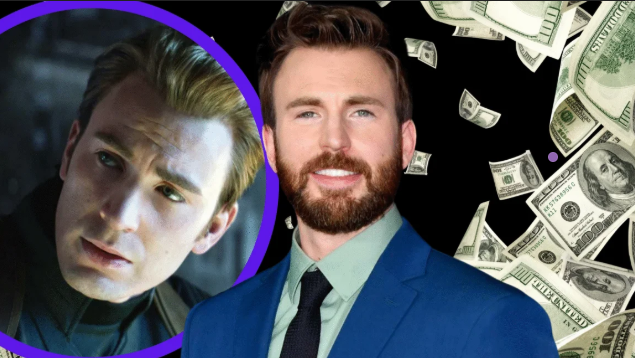
The panic attack hit during a press junket. Chris Evans excused himself, found a bathroom, and sat on the floor until his hands stopped shaking. He was already famous. Already playing the most patriotic superhero in cinema history. And he was still terrified that any moment, someone would discover he didn’t belong here.
This was supposed to be the dream. The Boston kid who idolized Gene Kelly was now commanding $15 million per film. Yet between interviews, he’d hide in corners, counting breaths, convincing himself he could survive the next ten minutes. The shield was a prop. The anxiety was real.
Today, Chris Evans net worth sits at approximately $110 million. The fortune was built on a decade of Marvel films, smart production investments, and the kind of work ethic that comes from growing up in a family where everyone performed but no one felt quite secure. His story isn’t rags to riches. It’s something more universal: the kid who got everything he wanted and found out want was only the beginning.
The Wound: Performance as Love Language
The Evans household in Sudbury, Massachusetts, ran on creativity. His mother Lisa directed the Concord Youth Theatre. His father Bob was a dentist with an arts background. The family dinner table featured four kids competing for attention through wit, impressions, and theatrical flair. Young Chris learned early: you earn love through performance.
This wasn’t dysfunction exactly. It was intensity. Lisa Evans believed in her children’s talents with an almost evangelical fervor. She enrolled Chris in acting programs, drove him to auditions, nurtured every creative impulse. The message was clear: you’re special, and you must prove it constantly.
The Weight of Great Expectations

For a sensitive kid, the pressure calcified into something darker. Evans developed anxiety that would follow him into adulthood. The fear of not being good enough. The dread of public judgment. The sense that behind every success lurked imminent exposure. His older brother Scott would later come out as gay in a conservative town; his sisters would pursue their own artistic paths. Each family member navigating the gap between being special and being seen.
The wound wasn’t poverty or neglect. It was the exhausting requirement of constant brilliance, internalized so deeply that Evans would later describe his anxiety as a permanent companion rather than an episode.
The Chip: Discipline as Armor Against Doubt
Evans coped through preparation. If he couldn’t control his anxiety, he could control his readiness. Scripts were memorized weeks early. Workouts became almost obsessive before superhero roles. The discipline wasn’t about vanity. It was about building evidence against the internal voice that insisted he was a fraud.
After graduating from Lincoln-Sudbury Regional High School, he moved to New York for summer acting programs rather than pursuing a traditional college path. The decision was deliberate: if performance was going to give him anxiety, at least it would be on his terms, in his chosen field, building toward something real.
The Almost-Quit Moment
When Marvel offered him Captain America, Evans initially said no. The commitment terrified him. Six films. Global fame. Promotional tours that would trigger his worst anxieties. He consulted therapists. He called his mother repeatedly. The decision took months.
In the end, it was the fear itself that convinced him. Running from opportunities because they scared him felt worse than the fear. The chip became a compass: do the thing that frightens you most, because the alternative is letting anxiety win.
The Rise: From Teen Comedies to Captain America’s Shield

Chris Evans net worth began building through an unusual path. His early work included teen comedies like Not Another Teen Movie and the Fantastic Four franchise, which earned him solid paychecks but typecast him as the handsome but empty leading man. By his late twenties, he’d become successful enough to worry that success was all he’d achieve.
The Captain America role in 2011 changed everything. According to Variety, Evans earned approximately $300,000 for his first appearance as Steve Rogers. By Avengers: Endgame, he commanded $15 million per film plus backend profits that significantly increased his overall take.
Building the MCU Foundation
The Marvel years provided both fortune and creative frustration. Evans played the same character for nearly a decade, always in service of franchise storytelling. Yet he used the security to take risks elsewhere, directing his first film Before We Go in 2014 and pursuing smaller dramatic roles that showcased range beyond the shield.
His production company and civic engagement platform A Starting Point launched in 2020. The venture reflected his Massachusetts roots and progressive politics, transforming celebrity access into educational content about democracy. It wasn’t designed to generate revenue so much as leverage fame toward purpose.
Strategic Moves Beyond the Shield
After leaving Marvel, Evans pivoted strategically. Forbes tracked his transition to films like Knives Out and The Gray Man, each demonstrating that Chris Evans net worth could grow without the Marvel safety net. He’d learned something in all those years of managing anxiety: sometimes walking away from security is the only way to prove you never needed it.
The Tell: Anxiety in Plain Sight
Evans doesn’t hide his mental health struggles. In interviews, he discusses therapy, medication, and panic attacks with the same directness he brings to political opinions. It’s a calculated openness. By naming the anxiety, he reduces its power. By making it public, he transforms vulnerability into brand.
Watch him on talk shows and the pattern emerges: self-deprecating humor that deflects attention, physical restlessness that suggests energy rather than nerves, and the occasional genuine moment of connection that reminds audiences why they rooted for Steve Rogers. The performance is constant, but it’s also honest about being a performance.
The Boston Identity
He’s kept deep ties to Massachusetts, returning frequently despite maintaining Los Angeles residency. The accent resurfaces in unguarded moments. His social media celebrates Patriots victories and local restaurants. It’s grounding, certainly, but also identity work. The anxious kid from Sudbury remains the real Chris Evans; the movie star is the role.
The Los Angeles Life: Chris Evans Net Worth Made Physical
Evans maintains a relatively modest profile for someone of his wealth. His primary residence in Los Angeles, valued at approximately $3.5 million according to Architectural Digest, emphasizes privacy and comfort over spectacle. High fences. Minimal public access. The kind of fortress an anxious person would design.
The choice reflects his approach to wealth generally: spend enough to solve problems, not enough to create new ones. He drives normal cars, wears normal clothes, maintains a normal-sized entourage of zero. The kid who grew up performing for love never developed the taste for performance as lifestyle.
The Privacy Premium
Chris Evans net worth of $110 million could fund mansions and yachts and all the traditional celebrity markers. Instead, it funds something more valuable: the ability to disappear. Between projects, he genuinely vanishes from public life. No paparazzi shots at restaurants. No manufactured drama. Just a man using his money to buy the silence his nervous system requires.
The Paradox of Steve Rogers

Chris Evans spent a decade playing the most confident hero in the Marvel universe. A man without doubt. A soldier without fear. And every press tour, the actual Chris Evans sat in bathrooms trying to slow his heartbeat.
The $110 million net worth represents financial freedom, certainly. More precisely, it represents the resources to manage a condition that never fully leaves. The therapy bills are covered. The career breaks are affordable. The ability to say no to projects that would trigger anxiety is preserved.
That kid in Sudbury learned to perform for love. The man he became learned to perform despite terror. Captain America was always a role. But the courage required to play him while falling apart behind the scenes? That was real.
Related Articles
- Chris Hemsworth Net Worth 2025: The Kid Who Couldn’t Afford Acting Class Built a $130 Million Wellness Empire
- Chris Pratt Net Worth 2025: From Living in a Van to Marvel’s Most Bankable Star
- Jason Statham Net Worth 2025: The Diver Who Became Hollywood’s Hardest Man
- Action Stars Net Worth 2025: How These Troubled Kids Made Franchise Fortunes
Connect With Social Life
For features, advertising partnerships, or editorial inquiries, visit sociallifemagazine.com/contact.
Experience the Hamptons’ premier polo events at polohamptons.com.
Subscribe to our print edition for exclusive Hamptons coverage delivered to your door.
Support independent luxury journalism with a $5 contribution to Social Life Magazine.
Author

Written by
Recent Posts
The Skincare Habits That Make a Real Difference Over Time
Hamptons-Ready Beauty: Polished Makeup for Long Summer Days
Is Now a Good Time to Sell a Home in NJ?

The Hidden Work Behind a Seamless Hotel Weekend
Choosing Scratching Furniture for a British Shorthair
Categories
- Art
- Articles
- Business of Luxury
- Celebrities
- Culture
- Entertainment
- Events
- Faces of Summer 2026
- Fashion
- Fashion & Style
- Featured
- Finance
- Food, Spirits, Wine
- Hamptons
- Hamptons Celebrities
- Health
- Health & Beauty
- Lifestyle
- Luxury Lifestyle
- Press
- Profiles
- Real Estate
- Technology
- The Chronicles
- Travel
- Uncategorized
- Weddings