
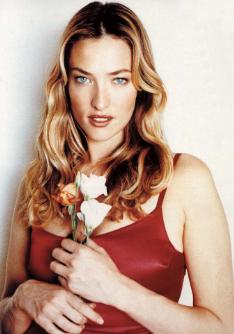
Five women stood on a soundstage in late 1990, lip-syncing to George Michael’s “Freedom ’90.” Naomi Campbell. Cindy Crawford. Linda Evangelista. Christy Turlington. And Tatjana Patitz, the one whose name casual observers still struggle to place.
The video became one of the most influential fashion moments in history. It defined the supermodel era. It launched careers into the stratosphere. Four of those women became ubiquitous. Tatjana Patitz became something more valuable: mysterious.
When she passed away in January 2023 at age 56 from metastatic breast cancer, her net worth stood at approximately $14 million. The number understates her influence. The woman Anna Wintour called “the European emblem of elegance” had built something her more visible peers never achieved: appreciation through absence.

The Myth That Launched an Era
In January 1990, Peter Lindbergh photographed five models on a beach for British Vogue. The image became arguably the most important fashion photograph ever made.It crystallized the supermodel concept, established the “Big Five” hierarchy, and changed how the industry valued individual models.
Tatjana Patitz appeared in that photograph. She appeared in the subsequent “Freedom ’90” video. Then, while her peers dominated every magazine cover and talk show appearance, she did something counterintuitive: she withdrew.
The Before Nobody Remembered
Born in Hamburg, Germany in 1966, Patitz grew up in Skanör, Sweden. Her father was a German travel journalist. Her mother was an Estonian dancer who had performed at Le Lido in Paris. The multicultural background created an aesthetic that photographers struggled to categorize and audiences struggled to forget.
At 17, she placed third in the Elite Model Look contest in Stockholm. The prize was a contract in Paris. Success didn’t come immediately. By 1985, however, she had landed her first British Vogue cover. More importantly, she had begun working with Peter Lindbergh, the photographer who would shape her career and define the supermodel era itself.
The Leverage Moment: Being Chosen Last
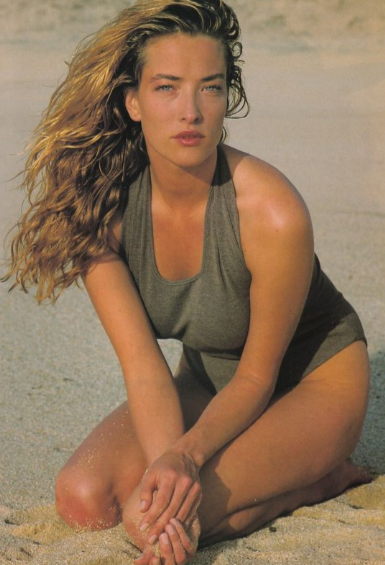
The British Vogue cover shoot that launched the supermodel phenomenon almost didn’t include Patitz. She was added late to the group—not the most famous, not the most commercial. But she was the most interesting.
Lindbergh later wrote: “I admire Tatjana because she always stays herself. She’s very soft, but at the same time she’s very strong and knows how to stand up for what she thinks.”
The Era of Tatjana
For a brief period in the late 1980s, Patitz was arguably the most sought-after model in fashion. SKY Magazine called her “the first German supermodel.” She appeared on consecutive American Vogue covers in 1988, a rare achievement under Anna Wintour’s newly revamped editorial direction.
Then she made a choice her peers found incomprehensible. At the peak of her commercial value, she began slowing down. Not because work dried up. Because she prioritized “writing, acting, meditation, and horses” over maximum bookings.
The Scarcity Strategy
While Naomi Campbell, Cindy Crawford, and Claudia Schiffer maximized visibility, Patitz minimized it. She moved to California, raised horses, and appeared selectively in campaigns that interested her rather than campaigns that offered the most money.
The fashion industry struggled with this approach. It valued ubiquity. It rewarded constant presence. But Patitz understood something counterintuitive: in an industry built on desire, absence creates more value than presence.
The Premium of Mystery
Every Tatjana Patitz appearance became an event because appearances were rare. When she closed Jean Paul Gaultier’s Hermès Fall/Winter 2009 show, the moment landed harder than any of her more visible peers’ routine runway walks.
Her long-term partnership with Jil Sander exemplified the approach. As the face of the minimalist designer’s brand, Patitz represented restraint as aesthetic. The campaigns were quiet. The impact was lasting. The relationship endured for years.
The Legacy Architecture
At the time of her death, Patitz’s estate reflected decades of selective work:
Campaign residuals: Long-term relationships with Jil Sander, L’Oréal Age Perfect, and other brands generated ongoing income without constant new bookings.
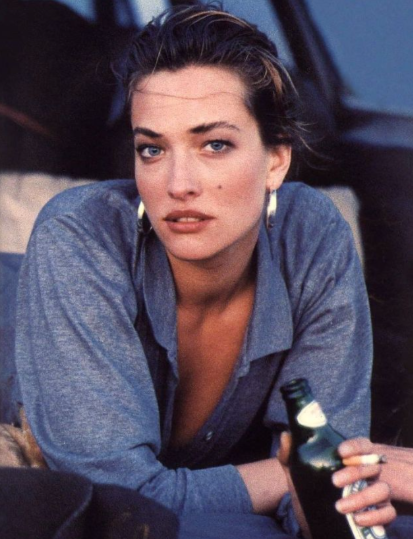
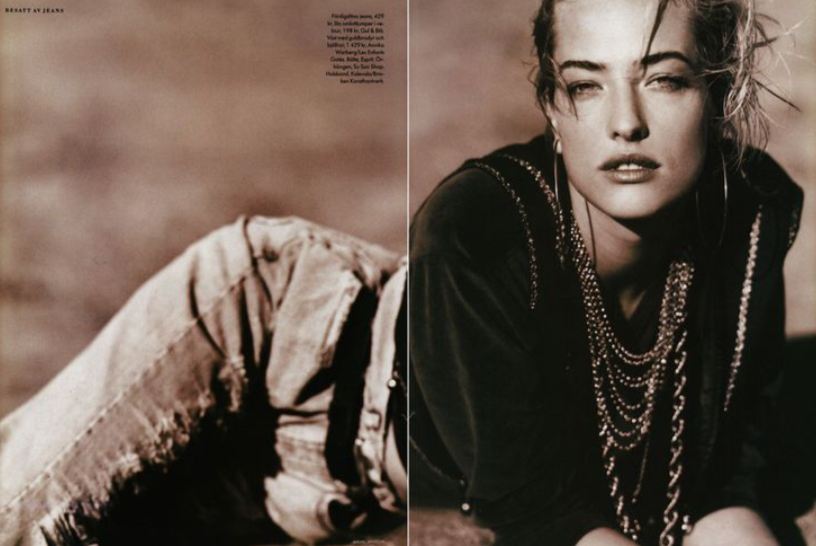
Image licensing: Lindbergh’s photographs of Patitz, including the iconic “Tatjana Veiled Head (Tight View), Joshua Tree 1988” by Herb Ritts, continue to generate licensing fees for fine art and editorial use.
Real estate: Her California property, where she raised horses and her son Jonah, represented both lifestyle choice and asset appreciation.
Consulting and appearances: Her rare public appearances commanded premium fees precisely because they were rare.
The $14 Million Truth
Patitz’s net worth at death was approximately $14 million. Compare this to her peers’ higher figures and the number might seem modest. But consider the trade-offs she didn’t make.
She didn’t sacrifice her twenties and thirties to exhausting promotional schedules. Reality television never tempted her. Manufactured controversy for attention? Not her move. Compromising her image for diminishing checks was never on the table.
Her wealth-per-unit-of-visibility ratio exceeded almost everyone in her cohort.
The Hamptons Parallel
Patitz spent most of her later years in California rather than the Hamptons. But her philosophy resonates deeply with the East End’s old money aesthetic. The loudest person at the Southampton party is rarely the wealthiest. The house without gates often contains more than the compound with security.
For Social Life readers, Patitz represents something aspirational beyond net worth: the confidence to be less visible than your resources would permit.
The Investment Philosophy
Patitz’s approach offers lessons that contradict conventional career advice:
Scarcity increases value. Every refusal made the next acceptance more valuable. Every absence made the next appearance more impactful.
Long partnerships outperform repeated transactions. Her relationship with Jil Sander generated more value than constantly chasing new clients would have.
Mystery is an asset. In an era of over-sharing, being unknown creates intrigue that visibility destroys.
Life is part of the portfolio. Her horses, her son, her meditation practice weren’t distractions from wealth-building. They were the point.
The Final Measure
When Tatjana Patitz died in January 2023, tributes poured in from photographers, designers, and fellow models who called her the most beautiful face of her era. Anna Wintour’s statement captured her essence: she was “more enigmatic, mature, and unreachable than her peers.”
That description was her brand strategy summarized in a sentence. Being unreachable, in an industry that demands constant access, was the move that distinguished her.
Her $14 million estate will eventually pass to her son Jonah. The photographs of her will continue generating licensing revenue. But her real legacy is less tangible: proof that the most powerful career move in a visibility-obsessed industry might be disappearing.
The four other women from that 1990 Vogue cover built bigger fortunes. Tatjana Patitz built something harder to measure: a life that looked exactly how she wanted it to look.
That’s a different kind of wealth entirely.
Related Articles
- Yasmin Le Bon Net Worth 2025: The Aristocratic Compounder
- Claudia Schiffer Net Worth 2025: The Original Compounding Ghost
- Christy Turlington Net Worth 2025: The Long-Game Player
For features, advertising, and partnership inquiries, visit sociallifemagazine.com/contact. For exclusive events, see polohamptons.com. Subscribe to our email newsletter for weekly insider updates.
Author

Written by
Recent Posts

How to Choose Useful Tech Gifts for Employees and Clients in 2026
The Garage Question: Which Car Goes South for the Season?
VandS Clinic Review Treatment: How Seoul Injectable and Laser Options Compare for US Patients
Before Buying a View Home: What a Sloped Lot Means for the Purchase

Powerful Strategies to Stay Ahead in a Fast-Moving Real Estate Market
Categories
- Art
- Articles
- Business of Luxury
- Celebrities
- Culture
- Entertainment
- Events
- Faces of Summer 2026
- Fashion
- Fashion & Style
- Featured
- Finance
- Food, Spirits, Wine
- Hamptons
- Hamptons Celebrities
- Health
- Health & Beauty
- Lifestyle
- Luxury Lifestyle
- Press
- Profiles
- Real Estate
- Technology
- The Chronicles
- Travel
- Uncategorized
- Weddings