
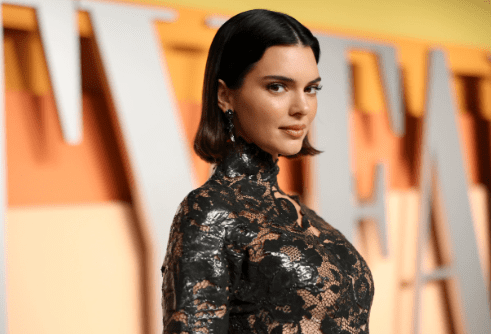
The five stages between walking a runway and owning one determine everything about a model’s financial future. Kendall Jenner understood this distinction by age 22, which explains why her 818 Tequila stake is worth more than a decade of modeling contracts combined. Meanwhile, models with twice her editorial credentials struggle to monetize their fame beyond campaign fees.
Beauty is not a depreciating asset that peaks young and fades. This misconception has cost countless models their financial futures. The reality is more nuanced and more encouraging: beauty is a credentialing asset that opens doors to business opportunities unavailable to people without it. The question isn’t whether beauty fades. The question is what you build while you have everyone’s attention.
The Misconception: Beauty Has an Expiration Date
Fashion industry wisdom holds that models peak between 18 and 25, earning their highest fees during a narrow window before younger faces replace them. This framework treats beauty as a wasting asset, like oil reserves that deplete with extraction. The logical conclusion is maximizing bookings during peak years, saving aggressively, and preparing for irrelevance.
This framework is accurate for models that only model. Campaign fees do decline with age. Editorial interest does shift toward newer faces. Runway bookings do favor youth. However, this framework completely misses how the wealthiest models actually built their fortunes.
The Flaw in Linear Thinking
Treating beauty as a depleting resource assumes the only way to monetize appearance is through direct labor—showing up, being photographed, depositing a check. This linear model caps lifetime earnings at whatever can be accumulated during peak years. Even at $10 million annually, 10 peak years produce $100 million gross, perhaps $40 million after taxes, fees, and expenses.
Compound thinking works differently. Instead of asking “How much can I earn while I’m young?” compound thinkers ask “What can I build that will earn for me indefinitely?” The answers to these questions produce radically different net worth outcomes.
The Monetization Ladder: Five Stages of Converting Beauty to Wealth
Beauty converts to net worth through a predictable progression. Each stage builds on the credibility established by previous stages. Skipping stages usually fails because the necessary foundation hasn’t been established. Understanding this ladder explains why some models with modest careers end up wealthier than supermodels who dominated magazine covers.
Stage 1: Campaign Fees (Labor for Money)
Every model starts here. Agencies book jobs. Clients pay fees. Models receive checks minus commissions. This stage establishes market value and industry credibility but generates no ongoing returns. When the work stops, the income stops.
Campaign fees vary dramatically based on market position. New faces might earn $1,000 for a day’s work. Established editorial models command $10,000-50,000 per campaign. Top-tier supermodels at peak demand might negotiate $100,000-500,000 for major campaigns. These numbers sound impressive until you calculate how many campaigns sustain such rates over a career.
Stage 2: Endorsements (Name for Money)
Models who establish sufficient visibility graduate to endorsement deals where brands pay for name association rather than just image usage. The model becomes a spokesperson, appearing in advertisements while publicly supporting the brand. Compensation increases, but the fundamental structure remains labor-dependent.
Endorsement contracts typically run 1-3 years with annual fees ranging from $500,000 to $10 million depending on the model’s profile and the brand’s marketing budget. The model must fulfill appearance obligations, maintain brand-appropriate behavior, and often grant exclusivity that prevents competing endorsements. Income remains substantial but temporary.
Stage 3: Licensing (Name Generates Money Without Labor)
The critical transition occurs at Stage 3. Instead of being paid to represent a brand, the model’s name becomes the brand—or a significant component of it. Products bearing the model’s name generate royalties on every sale. Income becomes partially passive, continuing whether the model works or not.
Licensing royalties typically range from 3-10% of wholesale revenue, depending on negotiating power and category. A model licensing their name to a fragrance generating $50 million in annual sales at a 5% royalty earns $2.5 million yearly from a single product line. Multiple licensing deals across categories create diversified passive income streams.
Stage 4: Equity (Ownership in Brands Using Your Credibility)
Stage 4 represents genuine wealth building. Rather than licensing a name to others, the model owns significant equity in ventures that leverage their credibility. The model participates in company valuation growth, potential acquisition premiums, and dividend distributions—not just royalty streams.
Equity positions create wealth multiples unavailable through licensing. A 30% stake in a company that sells for $1 billion generates $300 million in a single transaction. Licensing the same brand name might have generated $50 million over the same period. The difference explains why equity-focused models end up dramatically wealthier.
Stage 5: Investor/Advisor (Deploying Capital and Access)
The final stage transforms the model from talent into capital allocator. Having built wealth through Stages 3 and 4, the model now invests in ventures founded by others, providing both capital and credibility. Returns compound further as the model’s network and reputation attract deal flow unavailable to anonymous investors.
Stage 5 models often sit on boards, advise startups, and participate in funding rounds where their involvement attracts other investors. Their beauty-derived credibility has fully converted into business credibility that generates returns independent of their appearance.
Case Study: Kendall Jenner’s Visibility Arbitrage
Kendall Jenner’s $90 million net worth demonstrates Stage 4 execution at industrial scale. Born into reality television fame, she possessed Stage 2 endorsement opportunities before establishing Stage 1 modeling credentials. This inversion of the typical progression created unique challenges and advantages.
Converting Instagram Followers to Runway Credibility
Fashion industry gatekeepers initially dismissed Jenner as a reality star rather than a legitimate model. Her response was strategic patience combined with relentless work. She booked campaigns that serious models accepted. She walked shows for designers who valued her reach. Gradually, editorial credibility caught up with commercial appeal.
By 2017, Forbes ranked her the highest-paid model in the world at $22 million annually. That income derived primarily from Stage 2 endorsement deals leveraging her social media following. However, Jenner understood that endorsement income would eventually decline. She needed Stage 4 positioning to build lasting wealth.
818 Tequila: The Equity Play
In 2021, Jenner launched 818 Tequila. Unlike celebrity endorsement deals where talent receives flat fees, Jenner took a significant equity position in the company. She reportedly spent four years developing the product before launch, traveling to Jalisco and working with tequila families on the blend.
The results validated her strategy. 818 Tequila sold over 400,000 cases in its first two years. Industry analysts value the brand at approximately $400-700 million, with Jenner’s ownership stake representing potentially hundreds of millions in equity value. That single venture may eventually exceed her lifetime modeling earnings.
The Visibility-to-Equity Conversion
Jenner’s playbook offers specific lessons. First, she used endorsement income to fund equity investments rather than lifestyle inflation. Second, she chose categories (spirits) where celebrity attachment commands premium valuations. Third, she maintained involvement beyond name licensing, creating genuine operational credibility. Fourth, she retained significant ownership rather than accepting smaller stakes for larger upfront payments.
Case Study: Miranda Kerr’s Beauty Exit Strategy

Miranda Kerr’s $45 million fortune emerged from understanding that Stage 4 equity, properly structured, creates exit optionality unavailable to models stuck in Stages 1-3. Her Kora Organics skincare line represents textbook beauty-to-business conversion.
Building Kora Organics
Launched in 2009, Kora Organics positioned Kerr not as a celebrity endorser but as a founder genuinely passionate about organic skincare. This distinction matters for valuation. Celebrity-endorsed brands typically sell for 1-2x revenue. Founder-led brands with growth potential sell for 5-10x revenue or higher.
Kerr maintained majority ownership through the brand’s growth phase. She participated in product development, marketing strategy, and distribution decisions. When private equity firms came calling, she had equity to sell rather than just a contract to renegotiate.
Strategic Marriage and Business Synergies
Kerr’s 2017 marriage to Snapchat founder Evan Spiegel added complexity to her wealth picture. Spiegel’s net worth exceeds $2 billion, making their combined resources substantial. However, Kerr had already established Kora Organics and achieved financial independence before the relationship. The marriage enhanced her business network without defining her wealth trajectory.
This sequencing matters. Models who achieve Stage 4 independence before strategic marriages maintain leverage and credibility. Those who rely on marriages for wealth often find their business ventures dismissed as vanity projects funded by spouses.
Case Study: Tyra Banks’s Media Mogul Transformation

Tyra Banks’s $90 million fortune represents the most complete Stage 5 evolution in supermodel history. She transcended modeling entirely, building media properties that generate returns independent of her appearance or personal brand licensing.
America’s Next Top Model: Producer Economics
When America’s Next Top Model launched in 2003, Banks negotiated executive producer credit alongside her hosting role. This single decision transformed her economics. Hosts receive salaries. Producers receive ownership stakes, backend participation, and ongoing royalties from syndication and international licensing.
ANTM ran for 24 seasons across multiple networks. Banks’s producer position generated income from every episode aired, every international format licensed, and every streaming deal negotiated. The show’s total value to her far exceeds what any modeling contract could have provided.
Beyond ANTM: Media Empire Building
Banks applied similar thinking across ventures. She created the Tyra Banks Company to house production, branded content, and investment activities, launched ModelLand as an immersive attraction, and completed an MBA from Harvard Business School—signaling serious business intent rather than celebrity dabbling.
Her evolution from model to media mogul demonstrates Stage 5 completion. Banks now invests in startups, advises entrepreneurs, and deploys capital across industries far removed from fashion. Her beauty-derived credibility converted entirely into business credibility.
Case Study: Alessandra Ambrosio’s Founder Journey

Alessandra Ambrosio’s $80 million net worth emerged from strategic patience. After 17 years as a Victoria’s Secret Angel—the longest tenure in brand history—she retired from the runway with a specific plan: launch a swimwear brand leveraging her beach lifestyle credibility.
Gal Floripa: Authentic Category Positioning
Gal Floripa launched in 2019, founded by Ambrosio with her sister and childhood best friend. The brand’s Brazilian manufacturing draws on her cultural connections. Its beach aesthetic reflects her actual lifestyle rather than manufactured marketing positioning. This authenticity constrains growth but strengthens premium positioning.
Unlike models who license their names to swimwear lines designed by others, Ambrosio maintains operational involvement and significant equity. The brand cannot scale to mass-market volume, but it builds equity value appropriate for eventual acquisition by a larger fashion conglomerate.
The Patience Required for Stage 4
Ambrosio’s timeline reveals the patience required. She spent 17 years building credibility through Victoria’s Secret, then invested two years developing Gal Floripa before launch—accepting slower initial growth in exchange for authentic positioning and operational control. This long-term orientation distinguishes wealth builders from income maximizers.
Case Study: Rihanna’s Fenty Revolution

Rihanna’s $1.4 billion fortune represents the ultimate beauty-to-wealth conversion, though her path began in music rather than modeling. Her Fenty Beauty strategy offers lessons applicable to anyone converting personal brand into business empire.
Fenty Beauty: The 50% Ownership Model
When LVMH partnered with Rihanna on Fenty Beauty in 2017, she negotiated 50% ownership—unprecedented for a celebrity beauty brand. Previous celebrity-beauty partnerships typically involved 5-15% stakes or flat licensing fees. Rihanna understood that her credibility with young consumers and underserved demographics had value beyond standard celebrity premiums.
Fenty Beauty generated $550 million in revenue during its first year. The brand’s inclusive shade range attracted consumers the beauty industry had ignored. At a conservative 3x revenue valuation, Fenty Beauty was worth $1.5 billion within two years of launch. Rihanna’s 50% stake represented $750 million in equity.
Savage X Fenty: Replicating the Model
Rihanna applied identical strategy to lingerie with Savage X Fenty. She took 30% ownership in a brand valued at approximately $1 billion. Again, her credibility with younger consumers and commitment to inclusive sizing created differentiation that justified premium ownership stakes.
The combined equity from Fenty Beauty and Savage X Fenty, plus ongoing music royalties and other investments, produced billionaire status. Rihanna achieved Stage 4 wealth at a scale previously reserved for founders of technology companies.
The Patterns: Each Stage Requires Previous Stages
Analyzing these case studies reveals consistent patterns governing beauty-to-wealth conversion.
Credibility Must Precede Ownership
Models who skip to Stage 4 without establishing Stage 1-2 credibility usually fail. Their ventures get dismissed as vanity projects. Consumers question why they should buy products from unproven entrepreneurs. Investors demand larger ownership stakes to compensate for credibility risk.
Kendall Jenner’s four-year development period for 818 Tequila demonstrates this principle. She needed to establish that she wasn’t just slapping her name on existing products. The investment in actual product development converted skepticism into credibility.
The Stage 2 to Stage 3 Transition Is Everything
Most models never progress beyond Stage 2. They accept increasingly smaller endorsement deals as their visibility fades, never capturing ownership in anything that compounds. The wealthy models made the Stage 2 to Stage 3 jump while they still had negotiating leverage from active careers.
This timing is crucial. Attempting Stage 3 licensing or Stage 4 equity after visibility has faded results in worse terms. The leverage exists only while brands still want your endorsement. Smart models negotiate licensing or equity deals while brands are bidding for their endorsement attention.
Timing the Pivot Matters More Than Extending the Peak
Gisele Bündchen walked away from Victoria’s Secret at peak value. Tyra Banks launched ANTM while still a top model. Miranda Kerr started Kora Organics during her peak years. None of them maximized their modeling careers. Instead, they optimized for lifetime wealth by pivoting to ownership while credibility remained high.
Models who extend their careers indefinitely often sacrifice the ownership transition opportunity. By the time they attempt Stage 3 or 4 moves, their leverage has diminished and their credibility appears dated rather than aspirational.
The Playbook: Converting Your Own Beauty Credibility
These principles apply beyond supermodel careers. Anyone monetizing appearance-based credibility—actors, athletes, influencers, executives—can apply the five-stage framework.
Identify Your Stage
First, honestly assess your current position. Most people operate in Stage 1 (trading time for money) or Stage 2 (trading reputation for endorsement fees). Identifying your stage clarifies what opportunities you should pursue next.
Negotiate Toward Ownership
Whenever possible, negotiate deals that include ownership components. Accept smaller upfront fees in exchange for royalty participation or equity stakes. The short-term sacrifice creates long-term compounding potential.
Build During Peak Credibility
Don’t wait until your platform diminishes to pursue ownership opportunities. The leverage exists while people want your attention. Use that leverage to negotiate ownership terms that wouldn’t be available after your credibility window closes.
Choose Categories Strategically
Some categories reward celebrity equity more than others. Beauty, spirits, and lifestyle brands command premium valuations when attached to credible personalities. Commodity categories offer less differentiation opportunity. Choose ventures where your credibility adds genuine value rather than just marketing convenience.
The Bottom Line: Beauty Is a Credentialing Asset
The misconception that beauty is a depreciating asset persists because most people only observe Stage 1 and Stage 2 outcomes. They see models earning campaign fees, then see those fees declining with age, and conclude that beauty has an expiration date.
The reality is more nuanced. Beauty opens doors to business opportunities unavailable to others. Those opportunities, properly converted through Stages 3-5, generate wealth that compounds indefinitely. The beauty itself may fade, but the businesses built on beauty-derived credibility continue generating returns.
Kendall Jenner’s 818 Tequila stake will generate returns long after her last campaign. Rihanna’s Fenty Beauty equity compounded her net worth to billionaire status while she hasn’t released an album since 2016. Miranda Kerr’s Kora Organics grows whether she appears in magazines or not.
From face to fortune isn’t about having a face. It’s about understanding what to build while that face has everyone’s attention.
Related Articles
- Kendall Jenner Net Worth 2025: From Reality TV to $90 Million Empire
- Rihanna Net Worth 2025: How a Barbados Girl Built a $1.4 Billion Empire
- Alessandra Ambrosio Net Worth 2025: From Victoria’s Secret Angel to Gal Floripa Founder
- Next Gen A-List Net Worth 2025: The Stars Reshaping Hollywood Wealth
For features, advertising partnerships, and editorial inquiries, visit sociallifemagazine.com/contact. Experience the Hamptons’ premier polo events at polohamptons.com. Subscribe to our print edition for exclusive Hamptons coverage delivered to your door. Support independent luxury journalism with a $5 contribution to Social Life Magazine.
Author

Written by
Recent Posts
Experiences You Can Only Enjoy on a Sailing Vacation in Italy
How Do THC Gummies Work?
Can I Bring CBD Gummies on a Plane
How Long Do Delta-9 Gummies Last?
Natural Stress Relief Practices, Exercises & Products for More Calm
Categories
- 2025 Social Life Events
- Access to Digital + Physical Magazine
- Art
- Articles
- Beauty & Skincare
- Beauty & Wellness
- Business Strategy
- Celebrities
- Chronicles
- Design History
- Design History|Design Trends
- Design History|Hamptons
- Design Process
- Design Process|Luxury Living
- Design Trends
- Design Trends|Hamptons
- Event Photos
- Events
- Family
- Fashion
- Fashion & Style
- Featured
- Food & Beverage
- Food, Spirits, Wine
- Hamptons
- Hamptons Celebrities
- Hamptons Design
- Hamptons Design|Design Process
- Hamptons Design|Luxury Living
- Hamptons|Luxury Living
- Health
- Health & Beauty
- Home & Design
- Home & Living
- Lifestyle
- Luxury Home Design|Design Process
- Luxury Home Design|Design Trends
- Luxury Home Design|Hamptons Design
- Luxury Home Design|Interior Design
- Luxury Lifestyle
- Luxury Living
- Luxury Living|Design Process
- Luxury Living|Hamptons
- Luxury Living|Hamptons Design
- Press
- Profiles
- Real Estate
- Technology
- The Chronicles
- Travel
- Trending
- Uncategorized
- Weddings
- Wellness