
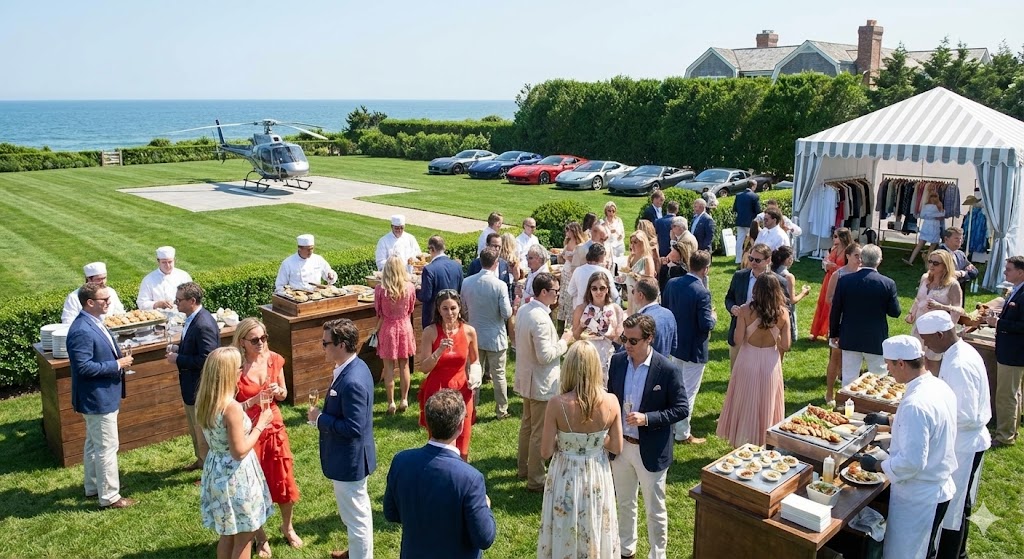
Memorial Day isn’t a holiday. It’s a fiscal calendar marker. When the first Range Rovers cross the Shinnecock Canal heading east, they trigger an economic event that concentrates more wealth activity into 14 weeks than most regions generate annually.
The conventional wisdom suggests the ultra-wealthy have escaped the calendar. They work from anywhere, anytime, freed by technology from seasonal constraints. This fundamentally misunderstands how wealth actually operates. The richest people in America still migrate, still follow predictable patterns, and still concentrate their most important relationship-building into a specific geography during specific months.
The Migration Pattern
Between Memorial Day and Labor Day, the East End population swells from roughly 60,000 year-round residents to 262,000 at peak summer. This isn’t just population growth. It’s wealth concentration at a scale found nowhere else in the country.
According to Bain & Company luxury market analysis, the Hamptons summer season accounts for a disproportionate share of luxury goods transactions in the Northeast. Brands that understand this timing outperform those that treat the calendar as irrelevant.
The math explains the migration. Manhattan empties of decision-makers during summer months. Family offices close Fridays at noon. Partners at major firms become unreachable. Anyone seeking to transact with this demographic must follow them east. The elite Hamptons social calendar becomes the de facto business calendar for entire industries.
Why the Calendar Compresses Decisions
Something happens to decision-making velocity during summer months. Deals that drift through Q1 and Q2 suddenly close. Relationships that develop slowly accelerate. Commitments that seemed perpetually pending find resolution.
The compression effect has multiple causes. Social settings lower barriers that office environments create. Shared experiences generate trust that formal meetings lack. Most importantly, the finite nature of the season creates urgency. Everyone knows Labor Day ends the window. Decisions that don’t happen by September often don’t happen at all.
This explains why sophisticated operators treat summer as execution season rather than vacation time. The “summer office” phenomenon has real teeth. Luxury brand marketing in the Hamptons follows these patterns precisely because the audience makes purchasing decisions on accelerated timelines.
The Pre-Season, Peak Season, Post-Season Rhythm
Insiders understand that the 14-week season divides into distinct phases, each requiring different strategies:
Pre-Season (May): Positioning period. Early arrivers stake social territory. Gala chairs finalize committees. Real estate transactions clear before prices peak. Brands launch products to capture early-season attention. Those who wait for Memorial Day arrive to find positions already established.
Peak Season (June-July): Maximum density. This is when the Ross School Gala, Parrish Art Museum Midsummer, and Polo Hamptons concentrate the most active participants. Deal flow peaks. Relationship velocity maximizes. Everything that didn’t happen in May must happen now or risk missing the window entirely.
Late Season (August): Consolidation phase. New introductions become less valuable than deepening existing relationships. The Hampton Classic closes the social calendar with a final concentration event. Serious operators use August for follow-up conversations, cementing relationships formed earlier in summer.
Post-Season (September): The 48-hour window after Labor Day determines whether summer relationships survive into fall. Those who follow up within two days maintain momentum. Those who wait until “things settle down” often find that connections evaporated.
The Economics of Seasonal Concentration
The wealth migration creates economic patterns that sophisticated investors exploit. Consider what happens to supporting industries during the 14-week window.
High-end catering companies generate their annual profit margins in summer months. Elegant Affairs, the caterer of choice for Polo Hamptons and dozens of private events, operates at capacity from Memorial Day through Labor Day. Their pricing reflects the scarcity: availability during peak weekends commands premium rates that off-season events cannot approach.
Real estate follows predictable seasonal patterns. According to Hamptons advertising market data, property values and transaction volumes both peak during specific windows. Sophisticated buyers transact in shoulder seasons; sellers maximize returns by listing during peak attention periods.
Charity Gala Economics
The philanthropy economy reveals how much capital concentrates in compressed timeframes. The Parrish Art Museum Midsummer Gala raised $1.4 million in approximately three hours in 2025. Prostate Cancer Foundation events at the same venue have generated over $5.6 million in live auction proceeds during single evenings.
These aren’t anomalies. The Hamptons events calendar structures dozens of seven-figure fundraising events into the summer window. Southampton Hospital Foundation, Animal Shelter galas, Watermill Center benefit. Each concentrates giving that might distribute across twelve months elsewhere into single summer evenings.
The fundraising velocity creates opportunity for philanthropic positioning. Those who chair galas, sponsor events, and demonstrate sustained summer giving build social capital that carries year-round implications.
Brand Timing Strategy
Sophisticated brands treat the Hamptons season as a launch calendar. Luxury Auto Brands introduce new models during Memorial Day events when families reunite and transportation decisions enter conversation. Fashion houses time capsule releases to mid-summer when photography opportunities abound. Real estate brokerages concentrate marketing spend into windows when buyers are physically present.
The timing specificity matters. A product launch in late August misses the social concentration of July. An event in early May catches an audience not yet fully arrived. The brands that succeed understand that Hamptons marketing requires calendar precision alongside creative excellence.
Why Year-Round Presence Signals Differently
The seasonal pattern creates an interesting social distinction. Year-round Hamptons residents occupy different positions than summer-only visitors. Permanent presence signals deeper commitment to community, different relationship with local institutions, and often different wealth structure.
Those who live in the Hamptons full-time have frequently achieved a level of wealth independence that permits geographic freedom from Manhattan’s business density. Celebrities who establish Hamptons residence year-round signal different priorities than those who appear only during peak season.
Neither pattern is superior. They simply communicate different things. The seasonal visitor often remains actively building wealth in Manhattan. The year-round resident may have transitioned to wealth maintenance and lifestyle optimization. Understanding these signals helps calibrate relationship expectations appropriately.
Investment Implications
The seasonal economy creates investable patterns for those paying attention:
Service businesses: Companies serving the Hamptons summer demographic often generate 60-70% of annual revenue in 14 weeks. This creates both opportunity (high margins during season) and risk (extreme seasonality requiring capital planning).
Real estate: Seasonal patterns affect both pricing and rental economics. Properties that accommodate summer entertaining command premiums. Rental yields concentrate into peak months. Understanding the calendar optimizes both buying and selling timing.
Brand positioning: The summer window provides outsized visibility for brands seeking this demographic. A successful Polo Hamptons sponsorship or charity gala presence generates impressions among decision-makers that equivalent Manhattan spend cannot achieve.
According to Forbes real estate analysis, Hamptons properties remain among the most stable luxury real estate investments precisely because the seasonal demand pattern has proven durable across economic cycles.
The Summer Office Phenomenon
Increasingly, the distinction between “vacation” and “work” dissolves for ultra-high-net-worth individuals during Hamptons summer. The beach house becomes the deal room. The charity gala becomes the client dinner. The polo match becomes the partnership discussion.
This reality explains why properties with home office infrastructure, reliable connectivity, and privacy features command premiums. The buyer isn’t seeking escape from work. They’re seeking better infrastructure for a different kind of work: relationship-driven business development that formal offices impede.
Family offices have adapted their calendars accordingly. Summer associates and junior analysts remain in Manhattan. Principals relocate east. The most important decisions happen in Hamptons settings because that’s where the most important people choose to be.
Strategic Positioning for the Season
For those seeking to leverage seasonal economics, several principles apply:
Arrive early: Pre-season positioning creates advantages that late arrivers cannot recover. Committee spots fill in April. Best rental properties lease in March. Relationships initiated in May develop through June and July.
Commit to presence: Occasional weekends don’t generate the repeated exposure that relationship-building requires. The compound effect of multiple encounters at multiple events over multiple weekends creates relationships that isolated appearances cannot.
Follow the calendar: Align your priorities with when decision-makers are accessible. Q1 strategy meetings matter less if Q2-Q3 execution requires people who won’t be available until September.
Plan the follow-up: Labor Day ends the season but shouldn’t end the relationships. The 48-72 hour window after summer’s close determines which connections persist and which evaporate.
Why Seasonal Patterns Persist
Technology hasn’t eliminated seasonal wealth migration. If anything, remote work flexibility has intensified Hamptons summer concentration. Those freed from daily office presence exercise that freedom by spending more summer time, not less, in the East End.
The seasonal economy persists because it serves real functions. Climate drives some migration, certainly. But the deeper driver is social coordination. When everyone agrees to be in the same place at the same time, the resulting concentration creates value that distributed presence cannot match.
Memorial Day through Labor Day isn’t just a calendar period. It’s an economic phenomenon that structures billions in transactions, generates thousands of relationships, and creates patterns that sophisticated participants exploit while casual observers miss entirely.
The ultra-wealthy haven’t escaped the calendar. They’ve created their own.
Connect This Season: Polo Hamptons anchors the summer social calendar with events that concentrate the East End’s most influential community.
Reach This Audience: Contact Social Life Magazine about advertising and editorial opportunities during peak summer season.
Stay Informed: Subscribe for coverage of the seasonal events, real estate trends, and social dynamics that define Hamptons summers.
Related Articles
Author

Written by
Recent Posts
From Gala Tables to Clinical Trials: Why Donors Are Getting Closer to the Science

Custom Pins And Patches: Creative Celebrity Merch Gift Ideas with GS-JJ
How to Choose the Right Wall Bed for Your Bedroom

Is It Possible to Travel to Ukraine in 2027? A Practical Guide for International Visitors
Why Are Truck Accident Cases So Difficult? The benefits of working with a truck accident lawyer
Categories
- Art
- Articles
- Business of Luxury
- Celebrities
- Culture
- Entertainment
- Events
- Faces of Summer 2026
- Fashion
- Fashion & Style
- Featured
- Finance
- Food, Spirits, Wine
- Hamptons
- Hamptons Celebrities
- Health
- Health & Beauty
- Lifestyle
- Luxury Lifestyle
- Press
- Profiles
- Real Estate
- Technology
- The Chronicles
- Travel
- Uncategorized
- Weddings