
George Lucas never directed another film after 1977. He didn’t need to. When he negotiated his deal for the original Star Wars, the studio dismissed his request as meaningless—he wanted the merchandising rights and sequel options rather than a larger directing fee. Twentieth Century Fox was happy to trade what they considered worthless contractual provisions for what they actually valued: reduced upfront costs. That decision, made in a conference room in 1976, has generated over $20 billion in revenue since. The film was the product everyone discussed. The licensing rights were the asset that compounded.
Bobby Axelrod would understand the structure immediately. The visible thing—the movie, the performance, the public appearance—is almost never where the real money lives. The royalty stream, the ownership stake, the residual that pays while you sleep: that’s the architecture that creates durable wealth. Everyone looks at the movie. Axelrod looks at the merchandising agreement.
There was a time when talent received compensation proportional to talent—or at least to commercial success. Hit songs meant hit paychecks. Blockbusters meant bonuses. The connection between performance and payment felt direct. But the artists who built generational wealth understood something their peers missed. Active income degrades. Residual income compounds. The performance is promotion. The ownership is the asset.
The Residual Economy
Celebrity income operates on two distinct layers that most observers conflate into one.
Active income requires presence, time, and continued relevance. Performance fees, appearance payments, and production deals all demand that the celebrity show up. The moment they stop showing up—through choice, age, injury, scandal, or shifting public taste—the income stops. Active income is fundamentally linear: more work yields more payment, less work yields less. The ceiling is hours in the day.
Residual income operates on different physics entirely. Licensing agreements, royalty streams, and IP ownership generate returns independent of current activity. Harvard Business Review analysis shows that celebrities in the top 1% of wealth accumulation derive more than 60% of their lifetime earnings from residual rather than active income. The payments arrive whether the celebrity is working, retired, or deceased.
This distinction explains why net worth diverges so dramatically among celebrities with similar peak earnings. Two artists who earned identical incomes during their active years can have net worths that differ by hundreds of millions of dollars a decade later. The variable isn’t how much they earned. It’s what they owned after the earning stopped.
The celebrities who built durable wealth—whose estates continue generating income decades after their deaths—optimized for layer two. They negotiated ownership rather than payment. They collected assets, not paychecks.
How Licensing Actually Works
Image and Likeness Licensing
The most common residual structure allows third parties to use a celebrity’s name, face, voice, or signature in exchange for ongoing royalties. The celebrity contributes their established identity. The licensee contributes manufacturing, distribution, marketing, and capital.
Typical structures include an upfront guarantee—payment regardless of sales performance—plus a royalty on actual sales, usually ranging from 3-10% of net. Contract duration runs two to five years with renewal options that favor the licensee if the partnership succeeds. Fragrance, fashion collaborations, and endorsement extensions dominate this category.
The economics vary dramatically by tier. An A-list fragrance deal might generate $2-5 million annually in royalty income. Mid-tier arrangements yield $200-500K. The celebrity’s promotional commitment correlates directly with the royalty rate offered. More commitment earns higher percentages. But even generous percentages on modest sales produce modest returns.
IP Ownership and Exploitation
Ownership structures generate fundamentally different economics than licensing. When a celebrity owns the underlying intellectual property—master recordings, publishing rights, format ownership, trademark portfolios—they capture value that would otherwise flow to corporate rights holders.
Taylor Swift’s decision to re-record her early albums illustrates the stakes. Her original masters were sold to investors without her consent or participation. Rather than accept that structure, she re-created the recordings to own the new masters outright. Forbes estimated her net worth at $1.1 billion in 2023, with owned masters comprising a substantial portion of that valuation.
Music catalog acquisitions reveal how the market prices IP ownership. Catalogs generating $10 million annually in royalties have recently traded at 15-25x that annual figure—$150-250 million. The buyer acquires a royalty stream that will persist for decades across radio, streaming, synchronization, and licensing uses that don’t yet exist. The seller converts future uncertainty into present liquidity. Both parties benefit from a structure that doesn’t require the artist’s continued involvement.
Brand Equity Monetization
Beyond specific IP, celebrities can monetize their accumulated credibility through equity arrangements that persist independently of continued endorsement activity. Unlike licensing deals with defined terms, equity positions compound with company growth.
The sophistication gradient runs from pure licensing through joint ventures to majority ownership. A 2% royalty on a product line that persists for twenty years can exceed a large one-time endorsement fee when calculated on a present value basis. McKinsey research on consumer brand economics shows that long-duration royalty arrangements systematically undervalue compared to equity structures, suggesting negotiating leverage for celebrities who understand the math.
Appearance and Performance Residuals
Traditional entertainment industry residuals—payments for reruns, streaming, syndication—create another layer of passive income. Guild contracts establish minimum payments. Individual negotiations can secure overages that substantially exceed minimums.
The streaming era disrupted traditional residual structures. Contracts written for broadcast television assumed a rerun model where repeated airings generated incremental payments. Netflix’s all-you-can-watch model didn’t fit neatly into those provisions. Newer contracts increasingly include streaming-specific backend participation, but the transition caught many performers with agreements optimized for a distribution model that no longer dominates.
The Celebrity as Holding Company
Sophisticated wealth advisors view their celebrity clients not as individuals with income but as holding companies with portfolios. The frame shifts everything.
A properly structured celebrity portfolio contains multiple asset classes. Active income from current projects and appearances provides cash flow and continued relevance. Passive royalties from licensing arrangements across multiple categories create diversified residual streams. Owned IP—masters, publishing, formats, trademarks—appreciates independently of the celebrity’s current activities. Equity positions in brands, companies, and ventures provide exposure to outcomes beyond the celebrity’s direct control. Real estate holdings, including the Hamptons compound, function as both consumption and investment.
The advisors managing substantial celebrity wealth focus their negotiating energy on IP ownership in every transaction. They structure licensing deals with perpetual terms where possible, building portfolios of royalty streams across uncorrelated categories. They systematically convert active income—which requires presence—into owned assets—which do not. Bain’s research on luxury brand ownership shows that this conversion strategy distinguishes wealth builders from high earners across every industry, not just entertainment.
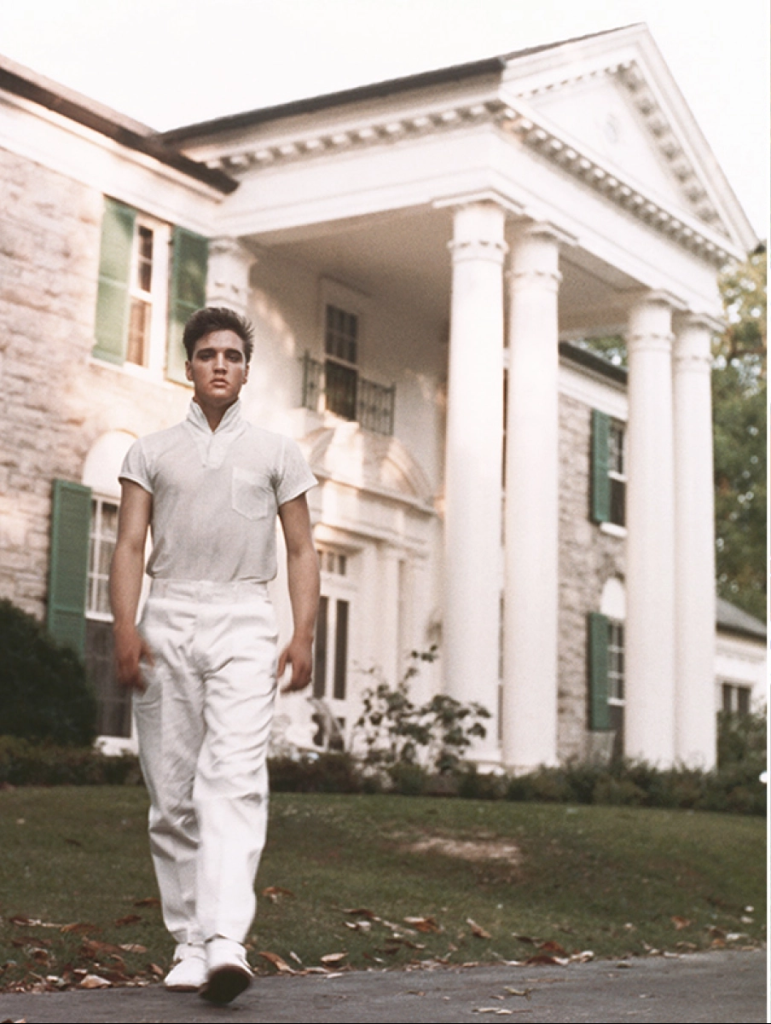
The estate planning implications deserve attention. Michael Jackson’s estate has generated over $2 billion since his death in 2009, more than most performers earn in active careers spanning decades. Elvis Presley’s estate earns more annually now than during his lifetime. The portfolio outlives the performer. That’s not a morbid footnote—it’s the point of building residual structures in the first place.
What the Long Tail Reveals
Celebrities who think in residuals are thinking the way sophisticated investors think. They negotiate for ownership because the performance is promotion and the IP is the asset. Licensing portfolios follow because diversified royalty streams compound more reliably than concentrated positions. Structure favors the long tail—spikes fade while portfolios persist.
Most observers see celebrity income as event-driven. The movie comes out. The check clears. The concert sells out. The payment arrives. This frame treats each transaction as independent, each payment as terminal. The sophisticated view is portfolio-driven: each project is a node in a network of residual streams that compound independently of future activity.
The questions that matter don’t concern current earnings. What do you own after the project finishes? Which income streams persist without your active involvement? How diversified are your residual sources across categories, geographies, and media types? What’s the liquidation value of your IP portfolio if you never work again?
When family offices evaluate celebrity brand opportunities, they apply the same framework. Current relevance matters less than underlying IP ownership, existing licensing infrastructure, and the residual income that will persist regardless of new projects. The famous face is marketing. The catalog is the asset. The portfolio of agreements generating royalties while the celebrity sleeps—that’s what gets valued in an acquisition.
The Architecture Beneath
You’ve always sensed there was a deeper structure beneath the celebrity paycheck. That somewhere, in quieter rooms, sophisticated people discussed ownership percentages and residual rates and IP valuations while the public debated box office numbers and album sales. That the performance everyone saw was the surface. Beneath it ran the architecture that actually determined wealth.
Now you see the map. The portfolio beneath the performance. The residual streams beneath the revenue. The long-tail wealth that compounds while the celebrity sleeps. Not exposed cynically, but revealed clearly—because the architecture is portable to anyone building durable wealth through ownership rather than income.
The conversations about these structures—where principals who’ve built celebrity IP portfolios sit with allocators who fund them, where ownership percentages and royalty rates get discussed without performance—happen in environments built for depth rather than flash. Rooms where the question “what do you own after the project finishes?” doesn’t require explanation. Settings where residual thinking is the default, not the exception.
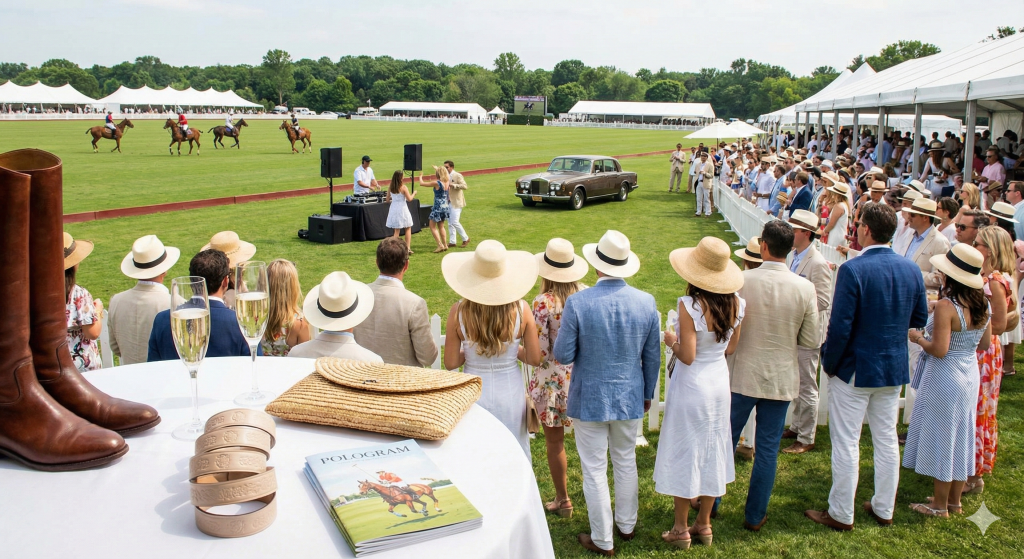
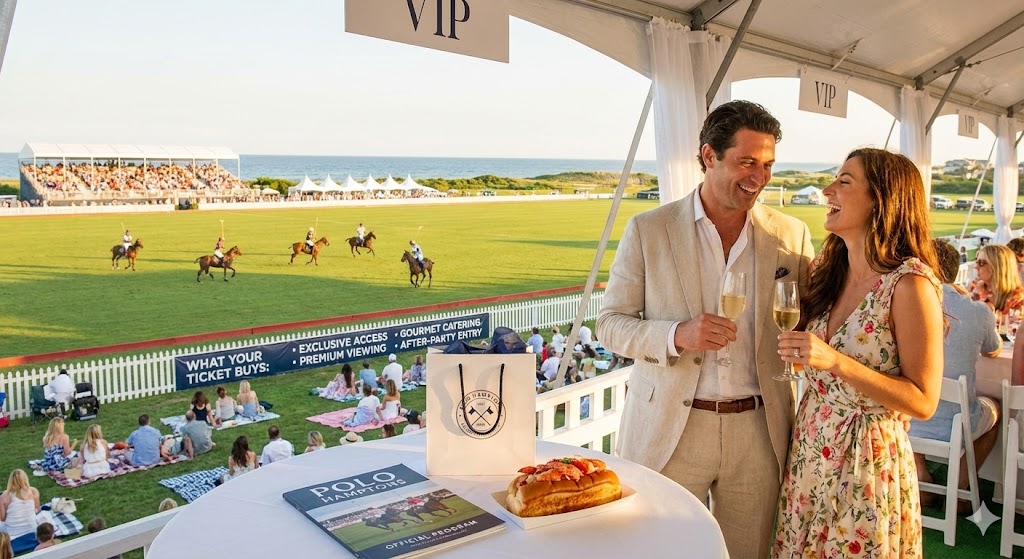
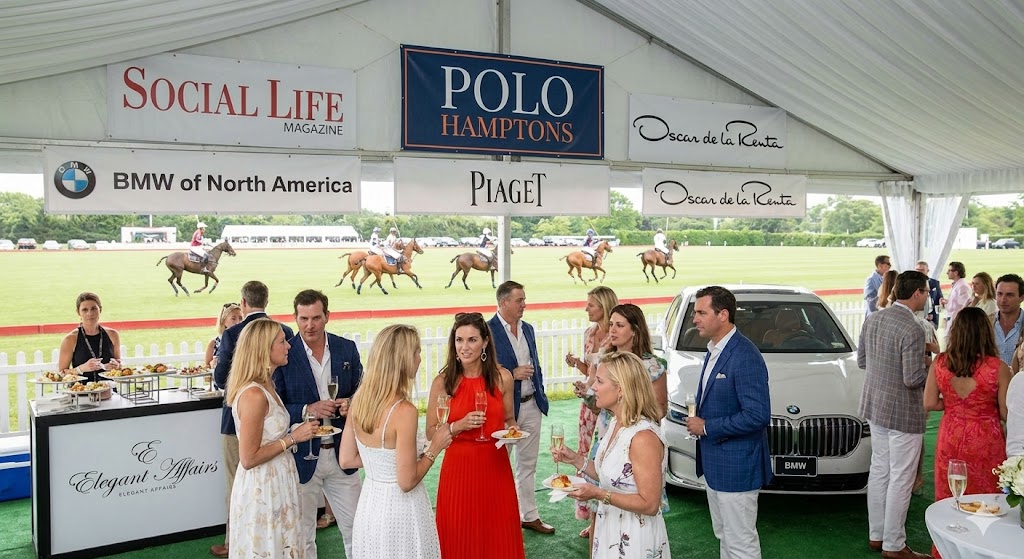
Polo Hamptons was designed for exactly that kind of conversation. Not celebrity adjacency—the principals who attend have their own access. For the caliber of discussion about ownership, structure, and long-duration wealth that requires environments matching its sophistication.
The summer calendar is published. The conversations that happen at the field aren’t about the match. They’re about the structures that compound long after the crowd disperses.
Related Reading:
- The Capital Structure Behind Celebrity Empires
- Why Investors Behind Celebrity Brands Prefer Rooms Like This
Continue the Conversation:
For editorial features, brand partnerships, or event collaboration: sociallifemagazine.com/contact
For Polo Hamptons tickets and sponsorship: polohamptons.com
Subscribe to the print edition | Join the email list | Support our journalism ($5)
Author

Written by
Recent Posts

How Polo Hamptons Became a Meeting Point for Capital, Culture, and Luxury Brands

Licensing, Royalties, and Long-Tail Wealth: How Celebrity Portfolios Actually Work
Why the Investors Behind Celebrity Brands Prefer Rooms Like This
The Capital Structure Behind Celebrity Empires—and What It Reveals About Modern Wealth
How Fame Becomes Fortune: The Capital Mechanics Behind Celebrity Wealth
Categories
- 2025 Social Life Events
- Access to Digital + Physical Magazine
- Art
- Articles
- Beauty & Skincare
- Beauty & Wellness
- Celebrities
- Chronicles
- Event Photos
- Events
- Family
- Fashion
- Fashion & Style
- Featured
- Food & Beverage
- Food, Spirits, Wine
- Hamptons Celebrities
- Health
- Health & Beauty
- Home & Design
- Home & Living
- Lifestyle
- Luxury Lifestyle
- Press
- Profiles
- Real Estate
- Technology
- The Chronicles
- Travel
- Trending
- Uncategorized
- Weddings
- Wellness