

She’d known him for three years in the city. Conference rooms. Corner offices. The occasional industry dinner where name tags made introductions unnecessary.
They’d never had a real conversation. Not one that mattered.
Then she saw him at a farmers market in Amagansett, holding a bag of corn, arguing with his teenage daughter about dinner plans. He was wearing flip-flops. She was wearing a baseball cap she’d never wear to a Manhattan lunch.
They talked for forty minutes. About kids. About the impossibility of balancing anything. Eventually, about the deal that had kept him awake for six weeks that spring. By August, they were co-investing. By December, the partnership had generated returns neither had expected.
The corn wasn’t the catalyst. The geography was. When New York’s most powerful people leave the city together, conversations become relational rather than transactional. The change creates opportunities that formal settings prevent.
The Formality Trap
Manhattan enforces performance through architecture and schedule.
Glass towers create visibility that demands constant composure. Corner offices establish hierarchy that constrains conversation. Assistants manage calendars in fifteen-minute increments, transforming every interaction into a transaction with a ticking clock.
The environment produces efficiency. It does so at the cost of authenticity.
A managing director who’d never reveal doubt in a boardroom maintains that mask through every Manhattan interaction. A founder who’d never show vulnerability during a pitch performs confidence in every professional context. The roles become permanent. The people inside them become invisible.
McKinsey’s research on social capital identifies the cost: relationships formed through performance lack the depth that consequential partnerships require. Strong relationships function as organizational grease, but grease requires authentic contact surfaces. Performance creates friction where trust should flow.

The Inversion
The Hamptons invert every variable.
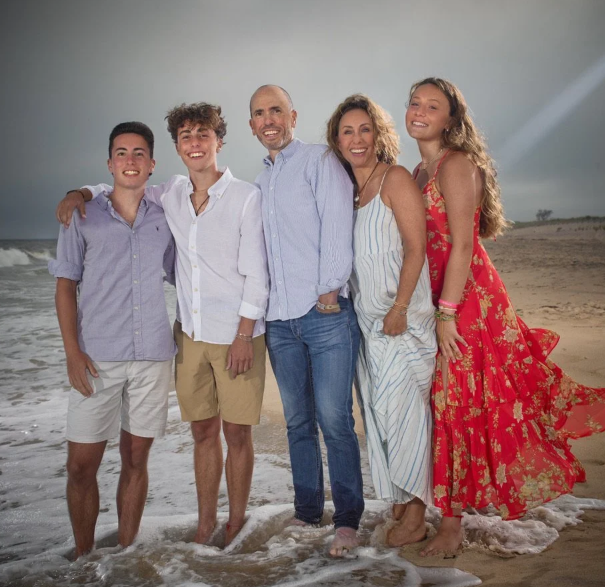
Low buildings replace towers. Hedgerows replace glass. Families appear where assistants managed access. Schedules flex around weather and tides and social plans made the morning of.
When the structural supports of professional performance disappear, different conversations become possible.
The PE partner who maintained composure through every Manhattan meeting admits uncertainty on a Hamptons porch. The founder who performed confidence in every pitch discusses the loneliness of building something during a walk on the beach. The executive who never acknowledged personal life mentions the divorce that consumed last year.
These moments of honesty create relationships that transactional contexts cannot generate. Bain & Company’s family office research documents what practitioners experience: deal velocity increases during periods of social proximity not because of increased meeting time, but because trust forms faster when formality disappears.
The Signal Density Difference
A video call creates one signal: words. An afternoon at a shared social event creates hundreds.
Body language under relaxed conditions. Reactions when things don’t go as planned. Humor—what they find funny, whether they can laugh at themselves. Generosity to service staff. Patience with their children. Response to an unexpected rain shower.
Each observation provides information that professional contexts filter out. Trust requires signal density. Geography provides it. The Hamptons optimize for observation opportunities that reveal character.
Elite networking research confirms the pattern: old money venues function as culture laboratories where evaluation happens between auction bids, not during formal presentations. The wealthy don’t ask about credentials. They watch behavior in contexts that can’t be rehearsed.
Evidence From the Origin Stories
The pattern appears consistently across the celebrity net worth archive. Relationships deepened when formality disappeared. Business followed relationship, not the reverse.
Tom Hanks and Rita Wilson are regulars at Nick & Toni’s in East Hampton, the restaurant serving as the Hamptons’ living room since 1988. Same table. Same menu. Familiar faces behind the bar. For a man who spent childhood eating at whatever restaurant his father currently worked, the consistency matters.
The consistency creates relationship infrastructure. Other regulars become familiar. Familiarity enables conversation. Conversation, repeated over seasons, becomes friendship. Friendship becomes partnership.
George Clooney gave fourteen friends a million dollars each when Casamigos sold. These were people who’d known him when he was broke. People who’d loaned him money. Let him sleep on their couches. The relationships preceded the business by decades. The geography that enabled those relationships was informal space, not professional infrastructure.
Brian Grazer built his empire on informal access. He delivered documents to executives but insisted on handing papers directly, asking questions, learning the business one conversation at a time. The delivery job was the excuse. The conversation was the product. Informality created the opening.
The Behavioral Shift Mechanics
When powerful people leave the city together, specific behavioral changes create opportunity:
Schedule compression: Calendar management that prevents access in Manhattan relaxes when principals are already at the same event. The six-week wait becomes a Saturday afternoon. Proximity eliminates friction.
Role flexibility: Professional identities that dominate Manhattan interactions share space with family roles, recreational interests, community membership. The full person becomes visible. The executive becomes a parent at a Little League game, a host at a dinner party, a bidder at a charity auction.
Status equalization: The hierarchy that separates corner office from associate flattens when both are standing at the same bar watching the same sunset. Common experience creates common ground that organizational structure prevents.
Vulnerability permission: Environments coded as “personal” rather than “professional” grant permission for admissions that business settings prohibit. The acknowledgment of difficulty, uncertainty, or failure that Manhattan punishes becomes possible in contexts where it won’t appear in a performance review.
The Trust Formation Timeline
Research on successful relationship patterns reveals a consistent timeline: trust forms through repeated observation across varied contexts. Manhattan provides repeated observation in consistent contexts—always professional, always performed. The Hamptons provide varied contexts—social, recreational, familial, informal.
One summer of Hamptons presence accomplishes what three years of Manhattan networking cannot. The varied contexts reveal character that consistent contexts conceal. Trust accelerates because observation accelerates.
The fourteen-week season provides enough repetition for trust to compound. The same faces at the same events over multiple weekends create familiarity. Familiarity invites conversation. Conversation across contexts reveals the person behind the title.
The Conversation Shift
In Manhattan, conversations optimize for information extraction. What’s your role? What are you working on? Who do you know? The questions harvest data for future use.
In the Hamptons, conversations optimize for connection. How are you really? What’s keeping you up at night? What did your kids think of the game? The questions build relationship for its own sake.
The distinction matters because relationships formed through extraction remain transactional. Relationships formed through connection become partnerships. The transaction converts to capital. The partnership compounds.
Hollywood’s $1.4 billion power couples share the pattern. Each built wealth through relationships that began before business possibilities existed. The friendship preceded the deal. The connection enabled the transaction.
The Geography Advantage
Not every informal geography produces these effects. A beach vacation doesn’t accelerate trust. A resort stay doesn’t form partnerships.
The Hamptons differ because the same powerful people appear in the same geography simultaneously. The concentration is the mechanism. Informal context without peer density doesn’t create opportunity. Peer density without informal context doesn’t enable trust.
The combination matters. Further Lane and Meadow Lane concentrate principals who’d never encounter each other at a random resort. The concentration in informal context creates conditions that neither element provides alone.
This is why the wealthy don’t vacation randomly. They relocate to geographies where peer density enables relationship formation that vacation destinations cannot match.

What Changes
When New York’s most powerful people leave the city together, the rules change:
Transactions become relationships. The deal that would have required six months of Manhattan navigation closes in six weeks of Hamptons proximity.
Performances become people. This executive you’ve never seen unguarded reveals dimensions that transform your understanding of what partnership might mean.
Introductions become investments. That casual conversation at a benefit dinner compounds into the most significant professional relationship of your career.
The geography doesn’t cause these changes. It permits them. The permission is the product. Everything else follows.
The Return to Honesty
Every June, the migration begins. By July Fourth, the transformation is complete. Manhattan’s most powerful people have become the Hamptons’ most authentic people.
They’ll return to the city in September. Performances will resume. Calendars will tighten. Fifteen-minute increments will reassert control.
But the relationships formed during those fourteen weeks persist. The partnerships that began informally continue formally. This trust that formed when formality disappeared doesn’t disappear when formality returns.
That’s the harvest. Summer creates. The year deploys. Cycles repeat.
Around and around, and back home again. To a place where we know we are loved—or at least, where we know we are seen.
Part of the Polo Hamptons Series
For the complete strategic framework, read: How Polo Hamptons Became a Meeting Point for Capital, Culture, and Luxury Brands
Continue the 3 Series:
- Why the Hamptons Becomes a Temporary Capital City Every Summer
- Why Deals, Partnerships, and Brand Loyalty Start Socially
Related: The Capital Structure Behind Celebrity Empires
For features, advertising, and partnership opportunities with Social Life Magazine, visit sociallifemagazine.com/contact. Experience where capital meets culture at Polo Hamptons. Subscribe to our print edition or support independent luxury journalism with a $5 donation.
Author

Written by
Recent Posts

Artful Living: Unique Gifts With A Creative Edge
Best Bellevue Kitchen Remodelers in 2026
How to Get Frozen Donor Eggs in Santa Monica: A Step-by-Step Guide
The Renegade Housewives of Pop Art: A Memoir of the 1960s

Nicole Miller
Categories
- Art
- Articles
- Business of Luxury
- Celebrities
- Culture
- Entertainment
- Events
- Faces of Summer 2026
- Fashion
- Fashion & Style
- Featured
- Finance
- Food, Spirits, Wine
- Hamptons
- Hamptons Celebrities
- Health
- Health & Beauty
- Lifestyle
- Luxury Lifestyle
- Press
- Profiles
- Real Estate
- Technology
- The Chronicles
- Travel
- Uncategorized
- Weddings