
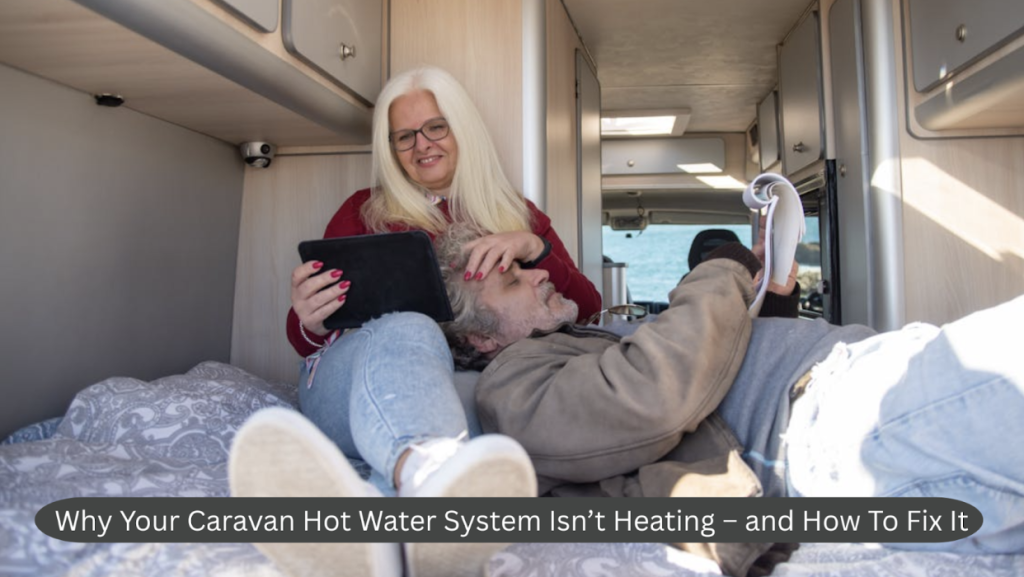
Your caravan water heater breaks down. Sometimes it’s a simple fix. At other times, it is an indication of a hazardous gas line issue that you should be able to identify early.
Cold showers after a long drive ruin your trip. What would be a relaxing issue becomes a vexing problem that ruins your whole schedule.
Knowing how these systems fail can guide you in self-repair of simple problems. You will also be aware when it is time to seek professional help before it is too late.
This is a guide on the most common hot water system issues in caravans. You will receive practical steps to diagnose and fix your system. Let’s get started.
Reasons Why a Caravan Hot Water System is not Heating
The majority of failures of hot water are related to some common issues, such as:
- Gas lines become kinked or electric breakers blow, and the supply of energy is cut off.
- Water supply lines burst, or bypass valves are switched to the incorrect position, halting water flow to the tank.
- The thermostats stop providing signals for the activation of the heating component.
- Heating elements break and cease to work altogether.
- The tempering valves fail, and you have hot water in one tap and cold in the other.
To gain a comprehensive understanding of how your particular unit works, it is always best to acquaint yourself with the design of a typical Caravan hot water system before you start making any form of repairs.
Step by Step Troubleshooting Guide
- Check Gas and Electrical Supply
- Check the gas supply: Ensure that your gas bottle is not empty and that the other gas appliances, such as the stove, are functioning correctly.
- Check regulator pressure: When the regulator is blocked or fails, it may limit the gas flow. Cleanse off any visible hindrances in line.
- For electric heaters: Inspect the power connection at the site post. Check the circuit overload, internal wiring, and fuses to determine if they are tripping or damaged.
It is essential to keep track of the specifics of models. Always look to see whether your model has outstanding recalls or safety notices before messing with gas fittings.
-
Inspect Water Supply and Plumbing
- Confirm system status: Ensure that the water pump and the switch for the hot water system are actually turned on.
- Test the bypass valve: Ensure it is adjusted to its normal position. When left in bypass (winterizing) mode, the water will bypass the heater altogether.
- Check blockages: Blockages may be caused by the deposition of silt. Also, check to see whether an outside shower has been left running with the head open, as this may sometimes cause a leakage of cold water into the hot line, resulting in other taps providing only lukewarm water.
-
Assess Internal Components
- Check the thermostat: The thermostat may be stuck if the water is too hot or too cold.
- Check heating elements: In systems that can operate on both gas and electric, attempt to operate on the secondary source of power. When it operates on gas but not electricity, then your electric heating element must be dead.
- Replace bad parts: When a multimeter confirms that the element or thermostat has no continuity, it can only be replaced.
-
Measure Temperature Control in Various Spaces
- Check the tempering valve: If there is scalding water in the kitchen but lukewarm water in the bathroom, the tempering (mixing) valve is most likely stuck or defective.
- Replace when not functioning properly: These safety valves are mandated by law, and if they fail to work, replacement is necessary to maintain safe temperatures at all outlets.
Maintenance Tips to Prevent Future Issues

The caravan is the unsung hero of preventive maintenance. The life of your equipment can increase significantly with simple routines.
- Flush the tank: It is essential to empty and refill the tank regularly to wash away calcium and sediment that may insulate the heating element, causing it to burn out.
- Check the anode rod: This is a sacrificial rod that will receive corrosion, allowing you to save your tank. Test it once a year and replace it when it is greater than 50% used up.
- Keep the insects out: Spiders and wasps are attracted to the smell of propane and frequently nest in the burner tube, which can pollute the air. Check these points regularly.
Conclusion
In a nutshell, the majority of caravan hot water problems relate to the break of the supply, misalignment of the valves, or defective internal parts, including anodes and thermostats.
It is usually easy to resolve these issues. However, the boundary between a fast solution and an unsafe error is fragile, particularly in cases involving gas and electricity.
Your next road trip will be characterized by adventure, not the shock of a cold shower, by being proactive with maintenance and knowing when to call in a professional.
Author

Written by
Recent Posts
What Goes Into Planning a Professional Furnace Installation?
Why Sports Card Collecting Is More Than Just a Hobby
From Signature Scents to Scent Wardrobes: The Evolution of Personal Fragrance

Beyond the Booth: How Exhibition Design Is Creating New Brand Experiences

Trading the Hamptons for Hvar: A Summer on Croatia’s Most Glamorous Island
Categories
- Art
- Articles
- Business of Luxury
- Celebrities
- Culture
- Entertainment
- Events
- Faces of Summer 2026
- Fashion
- Fashion & Style
- Featured
- Finance
- Food, Spirits, Wine
- Hamptons
- Hamptons Celebrities
- Health
- Health & Beauty
- Lifestyle
- Luxury Lifestyle
- Press
- Profiles
- Real Estate
- Technology
- The Chronicles
- Travel
- Uncategorized
- Weddings