
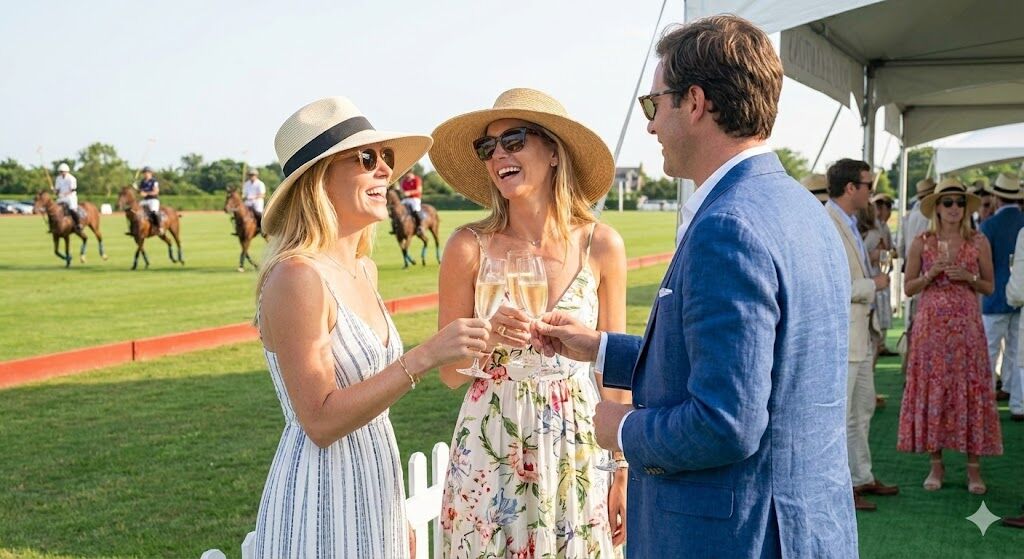
Tickets get you through the gate. Knowing how to work the event determines what happens after. The 900 guests at each Polo Hamptons match include people who can change your business trajectory, expand your social circle, or open doors you didn’t know existed. The question is whether you’ll connect with them strategically or leave having merely attended.
This insider guide covers what experienced Polo Hamptons attendees understand—the networking dynamics, relationship-building strategies, and tactical approaches that transform a pleasant afternoon into a valuable investment of your time and social capital.
Tickets for July 18 and 25, 2026 are available now. The real preparation starts before you arrive.
Understanding the Social Landscape
Polo Hamptons concentrates specific demographics in ways that create unusual networking density. Understanding who attends helps you identify opportunity and approach conversations strategically.
The Guest Profile
Average household net worth exceeds $3.6 million. Average income surpasses $315,000. Ninety-three percent own homes valued above $2.3 million. These aren’t aspirational statistics—they describe the people you’ll encounter at the bar, in hospitality areas, and watching polo field-side.
The professional mix includes finance executives, entrepreneurs, real estate developers, creative industry leaders, and established professionals across law, medicine, and consulting. Jerry Seinfeld ($950 million), Howard Stern ($650 million), and similar Hamptons residents represent the upper range of the wealth spectrum you might encounter.
The 900-Person Advantage
The attendance cap creates dynamics that larger events can’t replicate. With 900 guests, most attendees connect within two degrees of separation. Someone you want to meet probably knows someone you already know. The social graph is dense enough for meaningful connection but not so large that finding specific people becomes impossible.
This scale also means repeated encounters. You’ll see the same faces multiple times across a three-hour afternoon—at the bar, by the field, in hospitality areas. Each encounter builds on the last, allowing relationships to develop naturally rather than forcing artificial connection in a single conversation.
Regular Attendees vs. First-Timers
The guest mix includes Polo Hamptons veterans who attend annually and newcomers experiencing the event for the first time. Veterans often occupy sponsor hospitality areas or have established social positions. Newcomers circulate more freely, often more open to new connections because they haven’t yet formed event-specific social patterns.
Both groups offer value. Veterans can introduce you to established networks. Newcomers might become valuable long-term connections as they build their own Hamptons presence. Don’t dismiss either category.

Pre-Event Strategy
Effective networking at Polo Hamptons begins before you arrive. Preparation multiplies the value of your three hours on the ground.
Research and Targeting
Identify specific people you want to meet. Check LinkedIn for connections attending. Review Social Life Magazine coverage of previous years to understand who participates. Ask your network who they know who attends Polo Hamptons.
Create a short list—perhaps five to ten people you’d like to connect with. This focused targeting prevents the diffuse socializing that produces many handshakes but few meaningful relationships.
Warm Introduction Preparation
Cold approaches work less effectively than warm introductions. For each target on your list, identify potential connectors—people who know both you and your target who might facilitate introduction.
Reach out to connectors before the event. “I saw you’re attending Polo Hamptons—I’d love to meet [target name] if you know them and think it makes sense.” This preparation converts cold outreach into warm introduction.
Conversation Preparation
For each target, prepare conversation angles that extend beyond generic small talk. What do you know about their business, interests, or recent activities, what genuine questions can you ask, and what value might you offer them?
The polo setting provides natural conversation starter—the match, the setting, the summer season. But meaningful connection requires moving beyond polo talk into areas where genuine mutual interest exists.
What to Bring
Business cards remain relevant despite digital alternatives. The physical exchange creates ritual that digital contact sharing lacks. Ensure your cards reflect appropriate quality for the context.
Phone charged for contact exchange, photo capture, and any real-time coordination. Mental clarity—arrive rested, hydrated, and ready to engage rather than recovering from the night before.
On-Site Networking Tactics
The three-hour window requires efficient use of time and strategic positioning.
Arrival Timing
Arrive at 4 PM when gates open. Early arrival provides several advantages: shorter step-and-repeat lines, first access to bar and hospitality areas, time to orient yourself before crowds develop, and opportunity to establish position before prime networking hours.
Late arrival compresses your window and forces you to navigate established social clusters rather than forming them.
Zone Strategy
Different areas serve different networking purposes:
Bar Areas: High traffic zones where people congregate naturally. Ideal for casual encounter and conversation initiation. The act of getting drinks creates natural proximity and interaction opportunity.
Field-Side Positions: Shared attention on polo creates conversation context. Comments about the match open dialogue. The viewing experience provides natural rhythm—active during play, conversational during breaks.
Hospitality Tent Entrances: Transition zones where people move between areas. Brief encounters can lead to “let’s continue this conversation” invitations.
Step-and-Repeat Area: Photography queues create proximity and waiting time that enables conversation with fellow queuers.
Sponsor Hospitality: If you have access to sponsor areas, these provide higher-quality networking in more intimate settings. If you don’t have access, observe who does—they may be valuable connections worth pursuing.
Movement vs. Anchoring
Move through the event rather than anchoring in one spot. Different people occupy different zones at different times. Mobility increases your exposure to varied social clusters and creates multiple encounter opportunities.
That said, constant movement prevents conversation depth. Find balance: circulate to create encounters, then settle into meaningful conversations when they develop.
Conversation Flow
Effective polo networking follows natural social rhythms rather than forced networking protocols.
Opening: Context-appropriate observations about the polo, the setting, or the occasion. “Beautiful match” or “Have you been before?” opens without pressure.
Discovery: Genuine questions about the other person. What brings them to the Hamptons, what do they do, what interests them? Listen actively rather than waiting to speak.
Value Exchange: Where genuine connection exists, offer value—an introduction you could make, information that might help them, or simply engaging conversation that makes their afternoon better.
Next Steps: For conversations worth continuing, suggest concrete follow-up. “I’d love to continue this over coffee” or “Let me send you that article we discussed” creates action rather than vague “let’s stay in touch.”
The Exit Strategy
Graceful conversation exits enable continued circulation. Useful transitions:
- “I should let you get back to your friends—great meeting you”
- “I’m going to grab another drink—enjoy the rest of the match”
- “I see someone I need to say hello to—let’s connect next week”
Avoid the awkward fade or abrupt departure. Clear, friendly exits leave positive impressions.
Building Relationships Beyond the Event
Polo Hamptons initiates relationships. What happens afterward determines whether those initiations become valuable connections.

The 48-Hour Follow-Up
Follow up within 48 hours while the event remains fresh. Reference specific conversations—”Great discussing the downtown real estate market with you” demonstrates you remember and valued the interaction.
Propose concrete next steps rather than vague connection maintenance. Coffee meeting, phone call, introduction to someone they should know, or sharing something relevant to your conversation.
The Second Touch
If attending both July dates, the July 25 event provides natural second encounter. Reference your July 18 conversation: “Good to see you again—did that deal you mentioned close?” Continuity builds relationship faster than single encounters.
Summer Season Integration
Polo Hamptons sits within broader Hamptons summer context. Other events, dinners, and gatherings provide additional touchpoints. Position Polo Hamptons connections as beginning of summer relationship rather than isolated encounter.
Long-Term Cultivation
The most valuable relationships develop over years, not days. Add promising contacts to your regular cultivation rotation. Note birthdays, professional milestones, and relevant news that provides reason to reach out.
Sponsor and VIP Strategies
Different access levels create different networking dynamics.
If You’re a Sponsor
Your hospitality space becomes networking hub. Curate your guest list strategically—invite people you want to know better alongside people who benefit from knowing each other. Play connector rather than just host.
Use your VIP invitation allocation to create obligation and goodwill. Guests invited to your hospitality feel gratitude that facilitates future relationship.
If You’re a Sponsor’s Guest
Recognize the value you’ve received. Express genuine appreciation. Behave as ambassador for your host—your conduct reflects on them.
Use the elevated access appropriately. The sponsor’s hospitality provides introduction to their network; leverage it gracefully rather than aggressively.
If You’re General Admission
General admission doesn’t preclude meaningful networking. The event’s social dynamics favor genuine engagement over access level. Quality conversation trumps hospitality tent proximity.
Observe sponsor areas to identify high-value attendees you might approach in general circulation areas. The person leaving a sponsor tent to get a drink at the main bar becomes accessible.
Common Networking Mistakes
Avoid the errors that undermine networking effectiveness:
Aggressive Business Development: Polo Hamptons isn’t a trade show. Heavy-handed pitching, immediate business card distribution, or transactional approach misreads the context. Relationships first; business emerges from relationship.
Alcohol Overindulgence: Three hours of open bar creates risk. Impaired judgment, sloppy conversation, and compromised presentation undermine whatever connections you might otherwise make.
Phone Obsession: Staring at your phone signals unavailability. Put it away except for contact exchange, photography, or genuine necessity. Be present to the people around you.
Talking Too Much: The best networkers listen more than they talk. Discover what others need, want, and value. Connection comes from understanding, not from broadcasting.
Forgetting Names: When someone introduces themselves, use their name immediately in response. Repeat it mentally. Note it in your phone if necessary. Forgetting names signals you didn’t value the interaction.
No Follow-Up: Business cards collected but never contacted waste opportunity. The event creates openings; follow-up converts openings to relationships.
Beyond the Match: Extending the Day
Polo Hamptons ends at 7 PM. The evening that follows provides continuation opportunity.
Dinner Reservations: Book in advance at quality Bridgehampton or Southampton restaurants. Invite promising contacts to continue conversation over dinner. The extended interaction deepens what polo initiated.
After-Event Gatherings: Social momentum often carries into informal gatherings at nearby venues or private homes. Position yourself to receive invitations by being genuinely good company during the match.
Next-Day Brunch: If staying in the Hamptons, next-day brunch creates additional touchpoint. “Let’s continue this tomorrow” converts single-day encounter into weekend relationship.
For where to stay and weekend planning, see our Hotels Guide and Weekend Itinerary.
🎯 POLO HAMPTONS 2026
July 18 & 25 | Bridgehampton, NY | 4 PM – 7 PM
Get Tickets at PoloHamptons.com
900 guests. Unlimited opportunity.
Connect With Polo Hamptons 2026
Tickets and Sponsorship:
PoloHamptons.com
Contact: Justin Mitchell | admin@polohamptons.com
Feature Articles, Advertising, and Brand Partnerships:
Contact Social Life Magazine
Join Our Email List:
Subscribe for Hamptons Insider Updates
Social Life Magazine Print Subscription:
Get Your Subscription
Support Our Coverage:
Donate $5 to Social Life Magazine
Related Articles
The Complete Guide to Polo Hamptons 2026: Tickets, Sponsorships, and Insider Access
Polo Hamptons Networking: Building Business Relationships at Bridgehampton
Where to Stay for Polo Hamptons 2026: Hotels Near Bridgehampton
Polo Hamptons Weekend Itinerary: Making the Most of July in the Hamptons
Author

Written by
Recent Posts

Why Wealth Management Marketing Belongs Field-Side at Polo
Medspa Marketing in the Hamptons: How Prestige Gets Built
The Hamptons Fashion Brand Move That Beats a Billboard
How a Spirits Brand Buys the Hamptons, One Pour at a Time
The Beauty Brand Activation That Owns the Hamptons Summer
Categories
- Art
- Articles
- Celebrities
- Entertainment
- Events
- Fashion
- Fashion & Style
- Featured
- Food & Beverage
- Food, Spirits, Wine
- Hamptons
- Hamptons Celebrities
- Hamptons Lifestyle
- Health
- Health & Beauty
- Lifestyle
- Luxury Lifestyle
- Press
- Profiles
- Real Estate
- Technology
- The Chronicles
- Travel
- Uncategorized
- Weddings