
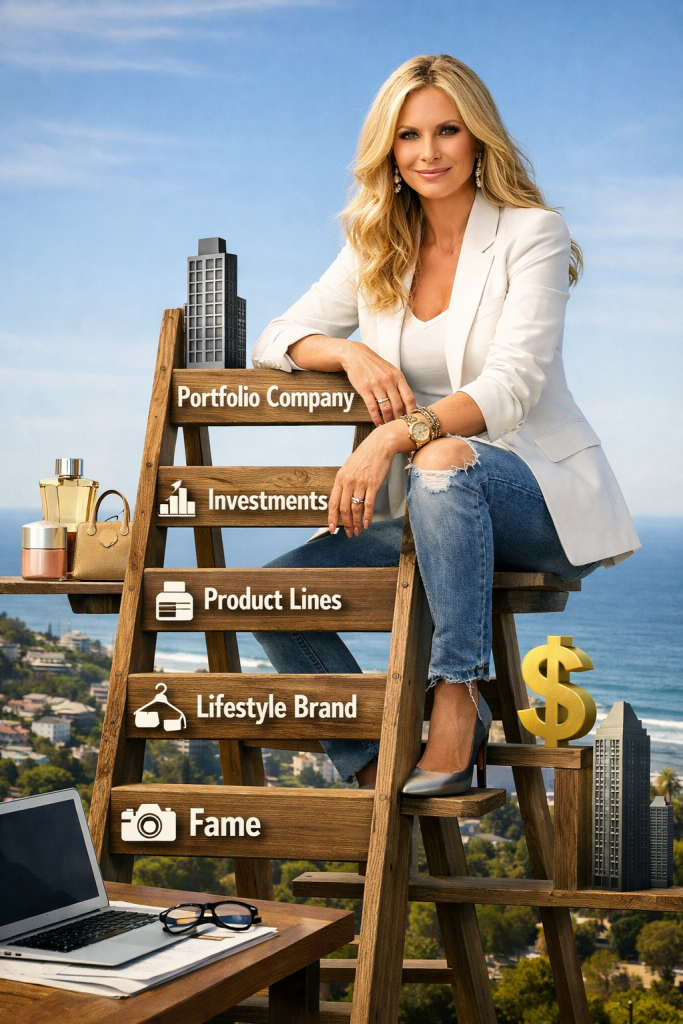
From Personal Fame to Portfolio Company
Rihanna has not released an album since 2016. Her music career, the thing that made her the most commercially relevant pop star on the planet, now represents less than 10% of her $1.4B fortune. The other 90% came from climbing a ladder that most celebrities do not know exists.
That ladder has four rungs: Talent Revenue, Brand Licensing, Equity Ownership, Portfolio Conglomerate. Every celebrity brand extension that generated real wealth followed this sequence. Every one that collapsed skipped a rung. The pattern across The Chronicles at Social Life Magazine is so consistent it functions as a law of entertainment economics. Dwayne Johnson climbed it from wrestling salary to film fees to Teremana Tequila equity. Kim Kardashian climbed it from reality TV salary to paid endorsements to Skims ownership. George Clooney climbed it from acting fees to Casamigos equity to a $1B Diageo exit. The face was always the funnel. The celebrity brand extension into ownership was always the destination.
What follows is a breakdown of how each rung works, who climbed it best, and where you are on it right now. Five case studies. Four wealth tiers. One structural insight that separates the celebrities who stay famous from the ones who get rich.
The Four-Stage Ladder Behind Every Celebrity Brand Empire
Rihanna: $1.4B and the 50% Ownership Demand
Rihanna spent a decade building a global brand synonymous with edge, inclusivity, and cultural authority before she ever launched a beauty line. When LVMH approached with Fenty Beauty, she did not accept the industry-standard 3–8% licensing royalty. Instead, she demanded 50% ownership of the brand itself. Fenty Beauty generated $100M in revenue within its first 40 days of existence.
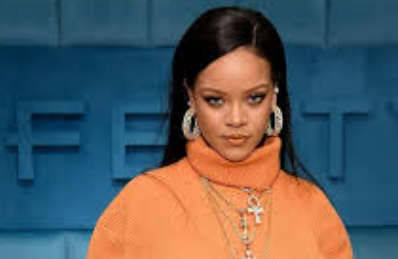
The demand was not arrogance. Rather, it was leverage, deployed at exactly the right moment on the brand extension ladder. Rihanna had already completed Rung 1 (talent revenue through music) and Rung 2 (brand licensing through endorsement deals with MAC, Puma, and Dior). By the time LVMH offered the partnership, she understood that her cultural capital was worth more than a royalty check. According to McKinsey’s State of Fashion report, celebrity-founded beauty brands with genuine cultural attachment outperform licensed brands by 3–5x on customer acquisition cost efficiency. Rihanna converted that advantage into equity, and Fenty Beauty’s valuation now anchors her $1.4B fortune while her Spotify streams generate a rounding error by comparison.
Kim Kardashian: $1.9B Through Skims and Strategic Patience
The Kardashian wealth story is routinely dismissed as reality TV money. The data, however, tells a different story entirely. Kim Kardashian spent years on Rung 1, collecting per-episode fees from Keeping Up with the Kardashians that peaked around $5M per season for the family. Substantial, but not dynasty money. She then climbed to Rung 2, licensing her name into paid endorsements and social media sponsorships that generated an estimated $50M annually at peak.
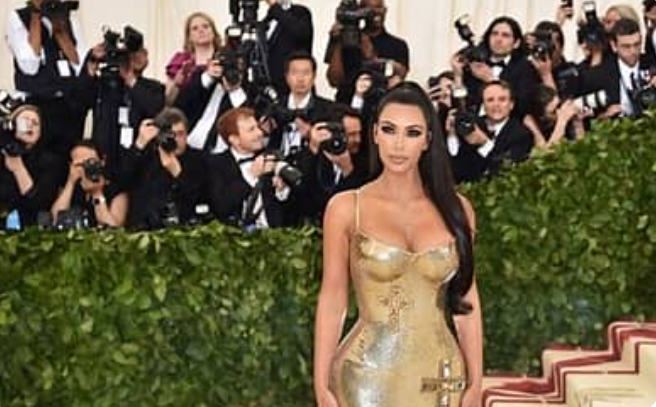
The inflection came with Skims. Kardashian did not license her name to someone else’s shapewear company. She co-founded it, took a one-third equity stake, installed her own CEO, and structured the company for institutional capital from day one. Goldman Sachs invested. The valuation hit $4B. A Nike collaboration followed. Her one-third stake is now worth approximately $1.67B. Furthermore, Skims operates independently of her daily participation. She is a shareholder with a board seat, not an employee with a call time. That structural shift—from Rung 2 licensing to Rung 3 equity ownership—is where Kardashian’s fortune separated from every other reality TV personality in history.
Dwayne Johnson: $800M and the Teremana Equity Play
The ladder is visible in every stage of Dwayne Johnson’s career. Rung 1 was wrestling salary at WWE. Rung 2 was film fees that peaked at $20M+ per picture, making him Hollywood’s highest-paid actor multiple years running. However, Johnson understood that film fees have a ceiling. According to Harvard Business Review’s research on entertainment economics, even the highest-earning actors plateau around $400–600M in career earnings.
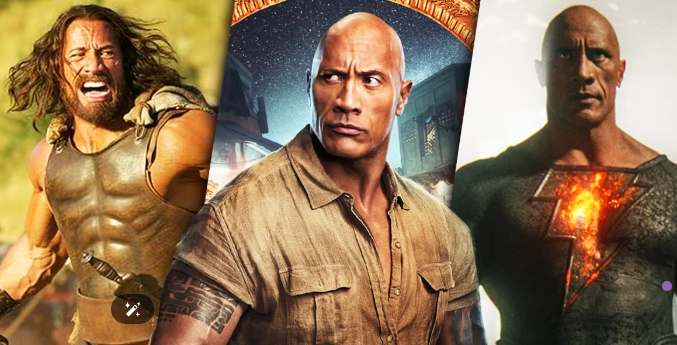
Johnson’s Rung 3 move was Teremana Tequila. He took a reported 30% equity stake in the brand, which reached a $600M valuation within three years of launch. In contrast to typical celebrity endorsements where the star collects a flat fee and walks away, Johnson embedded himself in operations, marketing, and distribution. His social media following of 400M+ became the customer acquisition engine. Teremana sold 600,000 nine-liter cases in its first year, making it the fastest-growing spirits brand in recorded industry history. Meanwhile, his production company Seven Bucks Productions represents the beginning of Rung 4: a portfolio conglomerate that produces content across multiple platforms while Johnson retains ownership.
Ryan Reynolds: $350M and the Art of the Strategic Exit
Ryan Reynolds demonstrates a different approach to the same ladder: climb fast, exit strategically, repeat. His Rung 1 was acting, generating steady but unspectacular income through the Deadpool franchise and supporting roles. Rung 2 was traditional endorsements. The leap came when he acquired an ownership stake in Aviation Gin rather than endorsing an existing spirits brand.

Reynolds did not wait to build Aviation into a billion-dollar enterprise. He climbed to Rung 3, grew the brand aggressively through his signature comedic marketing, then sold to Diageo for an estimated $610M. His cut: approximately $200M. He then repeated the playbook with Mint Mobile, taking an ownership stake and selling to T-Mobile for $1.35B. Each exit funded the next acquisition. As a result, Reynolds now operates through Maximum Effort, his marketing and production company, which represents the beginning of Rung 4 portfolio diversification. The pattern is not luck. It is the ladder executed with deliberate speed.
George Clooney: $500M and the Casamigos Blueprint
George Clooney earned more from his tequila exit than from his entire film career combined. Casamigos, the brand he co-founded with Rande Gerber and Mike Meldman as what he publicly called “a tequila for the house,” sold to Diageo for $1B in 2017. Clooney’s personal take: approximately $233M from the initial sale plus $300M in performance-based earnouts.
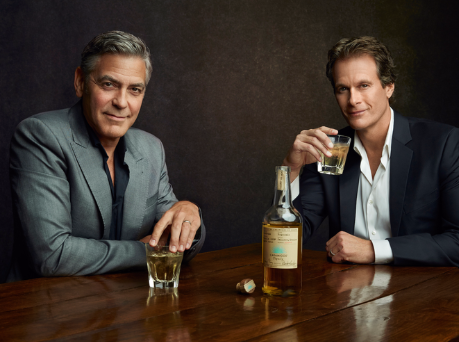
The Casamigos story illustrates precisely why Rung 3 matters more than Rung 1. Clooney’s acting career generated an estimated $200M over three decades. Casamigos generated more than that in a single transaction. The PE premium was the multiplier: Diageo paid not just for tequila sales but for the celebrity attachment that reduced customer acquisition costs permanently. According to Bain & Company’s private equity analysis, celebrity-attached consumer brands command 2–3x the acquisition multiples of equivalent non-celebrity brands. Clooney’s face was embedded marketing infrastructure worth tens of millions annually. Diageo bought the infrastructure, not just the bottles.
Where Each Rung Applies Across the Wealth Spectrum
The brand extension ladder is not a billionaire playbook. It operates at every wealth level. The difference is which rung demands your attention right now. Similarly, the mistake most people make is attempting Rung 3 moves while still standing on Rung 1. Here is how the ladder maps across the four wealth tiers that define the Social Life Magazine audience.
Tier 1: Emerging ($1M–$10M)
You are the brand. At this tier, all revenue flows through personal appearances, content creation, and direct engagement. The strategic imperative is not launching a product line. It is building the audience infrastructure—email lists, social followings, community engagement—that converts to licensing leverage later. Chappell Roan’s $10M came from controlled touring and merch ownership, not from rushing into brand deals before the audience was locked in. Specifically, every dollar spent building owned audience channels at Tier 1 reduces the customer acquisition cost of whatever brand you launch at Tier 2.
Tier 2: Established ($10M–$100M)
License your name into one adjacent category. Not three. Not five. One. Kendall Jenner’s 818 Tequila and Molly-Mae’s Maebe both followed this discipline. The key criterion: choose categories where celebrity attachment meaningfully reduces customer acquisition cost. In other words, if your audience would not naturally purchase the product based on your existing brand identity, the extension will fail regardless of marketing spend. Vanderpump’s wine and vodka lines work because her brand is aspirational dining and entertaining. An unrelated tech product would not.
Tier 3: Mogul ($100M–$500M)
Multiple brand verticals operating under a holding company structure. Rihanna runs Fenty Beauty, Savage X Fenty, and Fenty Skin as separate entities unified by a single brand architecture. The portfolio diversifies risk while the personal brand provides the connective tissue. At this tier, consequently, the critical decision is building management teams that operate each brand independently. The founder’s daily involvement should decrease as brand equity increases. If the company requires your presence to function, you have not reached Rung 3. You are still working a job with better margins.
Tier 4: Dynasty ($500M–$5B+)
The brands operate independently of your participation entirely. Kardashian’s Skims has its own CEO, Goldman Sachs institutional funding, and a Nike collaboration that functions regardless of Kim’s daily schedule. She is a shareholder, not an employee. At this tier, meanwhile, the brand extension ladder has been fully climbed. The strategic question shifts from building brands to governing a portfolio: capital allocation across ventures, succession planning for management, and structuring ownership for intergenerational transfer. The ownership inflection point that started the climb is now the foundation of a dynasty.
Why the Brand Extension Ladder Is Compressing in 2026
A decade ago, the climb from Rung 1 to Rung 3 took twenty years. Oprah spent from 1986 to 2011 building from talent revenue to OWN network ownership. Rihanna did it in ten years. Molly-Mae Hague did it in five, going from Love Island contestant in 2019 to Maebe brand founder with an estimated fortune north of $14M by 2024.
Three forces are compressing the timeline. First, social media has eliminated the distribution bottleneck. A celebrity with 10M Instagram followers has a customer acquisition channel that traditional brands spend $50M annually to replicate. According to McKinsey’s creator economy analysis, direct-to-consumer brands founded by creators with built-in audiences reach profitability 40% faster than comparable brands launched through traditional retail channels.
Second, private equity and venture capital have flooded the celebrity brand space. Goldman Sachs does not invest in Skims because Kim Kardashian is famous. Goldman invests because the celebrity attachment creates a measurable reduction in customer acquisition costs that improves unit economics permanently. The PE premium on celebrity brands means that Rung 3 equity positions are now more valuable at exit than at any previous point in history.
Third, the playbook is now visible. When Clooney sold Casamigos for $1B in 2017, it was an anomaly. By 2026, however, it is a template. Every talent agent, entertainment lawyer, and brand strategist in the Hamptons has seen the ladder work. As a result, the competition to execute it correctly has intensified, which means the window for establishing dominant positions in open categories is narrowing. The celebrities who move first into underserved categories will capture the outsized returns. The ones who wait will compete on price.
What This Means for Your Next Move
You are standing on a rung right now. The question is not whether the brand extension ladder applies to you. It does. What matters is whether you are climbing deliberately or waiting for someone to hand you a licensing deal that keeps you on Rung 2 forever.
Consider the people who read Social Life Magazine and attend Polo Hamptons understand this instinctively. In contrast, the conversations on Further Lane are not about endorsement fees. They are about equity stakes, valuation multiples, and which PE firm is looking at which celebrity brand extension next. The social infrastructure of the Hamptons exists precisely because the people in the room have already climbed the ladder or are actively positioning to climb it.
The next article in The Chronicles examines the force multiplier that accelerates the climb: the PE premium that now pays 2–3x multiples for celebrity-attached brands. Understanding why private equity changed the math of celebrity brand extension forever is the difference between building a business and building a dynasty.
Continue Reading The Chronicles
→ Rihanna Net Worth: How 50% Ownership of Fenty Beauty Built $1.4 Billion
→ The PE Premium: Why Private Equity Changed Celebrity Wealth Math Forever
The brands featured in Social Life Magazine are not advertisers. They are curated partners positioned alongside the Hamptons’ most influential names. For features, advertising, and strategic collaborations: sociallifemagazine.com/contact
Polo Hamptons is where the social calendar begins and where the next celebrity brand extension gets whispered about first. Tickets and sponsorships: polohamptons.com
The best deals in the Hamptons happen before they are announced. Our list hears first. Subscribe to the Social Life insider briefing.
25,000 copies per summer issue reach every boutique from Westhampton to Montauk. 15,000 fall/winter editions land in Upper East Side doorman buildings. Print subscription →
Independent media tracking celebrity brand extension, ownership wealth, and the economics of fame. Support The Chronicles — $5 keeps it free for everyone.
Author

Written by
Recent Posts

AI for personal finance: where PennyGuard fits
How to Pick a Homecoming Dress for Your Body Type (and Feel Amazing in It)

World Cup Injury Attorney for Vancouver Events
What a 3-Carat Engagement Ring Actually Costs in 2026: The Real Numbers
The Skincare Habits That Make a Real Difference Over Time
Categories
- Art
- Articles
- Business of Luxury
- Celebrities
- Culture
- Entertainment
- Events
- Faces of Summer 2026
- Fashion
- Fashion & Style
- Featured
- Finance
- Food, Spirits, Wine
- Hamptons
- Hamptons Celebrities
- Health
- Health & Beauty
- Lifestyle
- Luxury Lifestyle
- Press
- Profiles
- Real Estate
- Technology
- The Chronicles
- Travel
- Uncategorized
- Weddings