
White Lotus Vacation Culture: What the Show Taught Us About How We Travel

White Lotus vacation culture didn’t just reflect how wealthy people travel. It changed how they think about traveling. Three seasons of watching privilege collide with paradise produced a new self-consciousness among the exact demographic the show satirizes. Resort guests now reference the show while checking in. Travel bloggers frame recommendations as “White Lotus-worthy.” Hotels market themselves with tongue-in-cheek awareness. In doing so, the show created a mirror that fundamentally altered the subject.
White Lotus Vacation Culture Before the Show
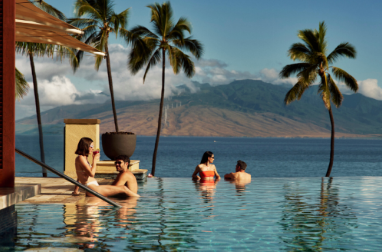
Before White Lotus premiered in 2021, luxury travel existed in a cultural vacuum of aspiration without critique. Instagram feeds presented resorts as pure fantasy. Hotel marketing promised transformation through relaxation. The wealthy traveled without examining what their presence meant for the communities hosting them. Hawaii was a backdrop, not a place with history. Sicily was a set, not a culture being consumed.

Mike White disrupted this by asking a question luxury travel marketing never wanted raised: what does it mean to buy paradise? Season 1 explored Hawaii’s colonial wounds through the lens of tourists too comfortable to notice them. Then Season 2 examined how Italian culture becomes a commodity for American consumption. Finally, Season 3 confronted spiritual tourism, where Western visitors extract Eastern wisdom like natural resources. Each season complicated the vacation fantasy without destroying it.
How White Lotus Changed Vacation Behavior
Set-Jetting: The Measurable Impact
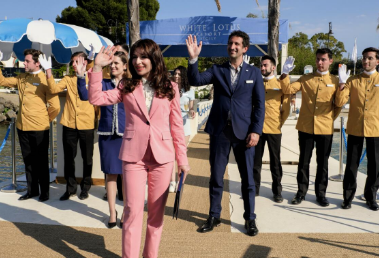
White Lotus vacation culture created the “set-jetting” phenomenon at unprecedented scale. The Four Seasons Maui reported significant booking increases after Season 1. San Domenico Palace in Taormina became a pilgrimage site. The Four Seasons Koh Samui saw immediate demand spikes. According to McKinsey’s travel research, entertainment-driven destination selection now influences approximately 30% of luxury travel bookings.
The Self-Aware Tourist
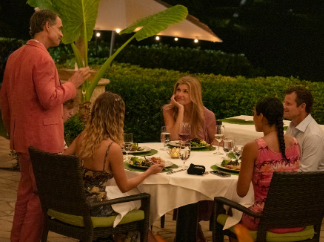
More interesting than booking patterns is the psychological shift. Affluent travelers now exhibit what sociologists might call “White Lotus consciousness.” They check into resorts knowing they resemble the characters being satirized. This awareness doesn’t prevent the behavior. Instead, it adds a layer of ironic distance that simultaneously acknowledges and permits privilege. The show gave wealthy tourists a vocabulary for discussing their own complicity.
White Lotus Vacation Culture and the Hamptons
Every dynamic the show explores already operates in concentrated form between Westhampton and Montauk. Consider the class tensions between service staff and guests. Then add the performance of leisure as identity. Factor in the property hierarchy signaling social position. Finally, account for the environmental cost of luxury development. White Lotus vacation culture merely gave these dynamics a name and a narrative framework.
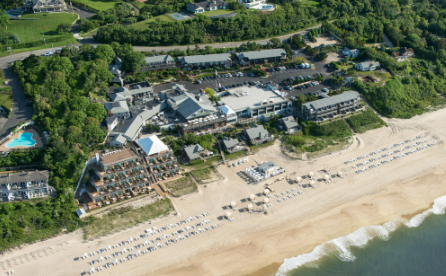
Hamptons hospitality has already absorbed the show’s influence. Hotels already reference it in marketing. Meanwhile, restaurant reservations carry social codes the show decoded for mass audiences. Beach access operates on the same hierarchies White Lotus exposed. For Social Life readers, the show didn’t reveal anything new. Instead, it confirmed what insiders already understood. That confirmation, broadcast to 20 million viewers, changed the conversation about luxury leisure permanently.
What Comes After White Lotus Vacation Culture
Season 4’s move to France signals the next chapter. French luxury hospitality operates under different codes than American or Thai resort culture. The Ritz Paris and the French Riviera carry associations with old European wealth that differ from tropical resort escapism. According to Bain & Company’s luxury market data, European luxury travel prioritizes cultural capital over comfort, heritage over novelty.
White Lotus vacation culture will evolve with this shift. Instead, the show’s audience has graduated from examining whether luxury travel is ethically complicated to assuming it is. Consequently, the new question becomes: now that we know, what do we do differently? The answer, judging by booking patterns, is mostly nothing. But we do it with better dialogue, sharper self-awareness, and significantly more expensive sunscreen.
Ultimately, the Hamptons has always operated at the intersection of these tensions. Our White Lotus Hamptons field guide maps these dynamics in detail.
Social Life Magazine has covered Hamptons luxury culture for over two decades. Contact us for features, brand partnerships, and advertising. Experience our events at Polo Hamptons. Subscribe to our email list and pick up our print edition at boutiques from Westhampton to Montauk.
Related Reading:
Author

Written by
Recent Posts
Galina Breslav: From Pension Fund to Executive Presence
Hermès Fake Authenticator: A Monopoly Mistaken for Expertise
A Real Gift: How La Scala Found Its Community in New York Through the Teatro alla Scala Association of America (TASAA)
He Sold His Company, Got Everything He Wanted, but Lost His Purpose

OUT OF LINE
Categories
- Art
- Articles
- Business of Luxury
- Celebrities
- Culture
- Entertainment
- Events
- Faces of Summer 2026
- Fashion
- Fashion & Style
- Featured
- Finance
- Food, Spirits, Wine
- Hamptons
- Hamptons Celebrities
- Health
- Health & Beauty
- Lifestyle
- Luxury Lifestyle
- Press
- Profiles
- Real Estate
- Technology
- The Chronicles
- Travel
- Uncategorized
- Weddings