
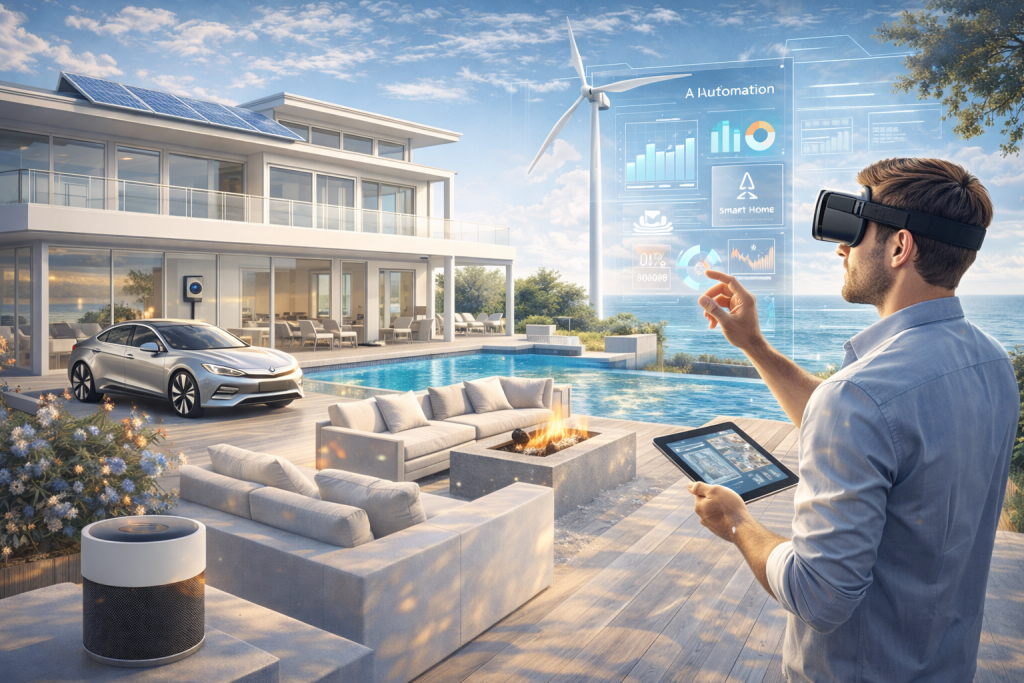
Trends Worth Your Attention
The luxury home design market generates a constant stream of trend reports. Most of them recycle the same observations with different adjectives. What follows is different. These are the movements actually reshaping how high-end homes are designed, built, and lived in across the Hamptons and beyond, filtered through 25 years of practice at the top of the market.
Each trend here has passed a simple test: is a serious designer specifying it for a client spending $3M or more on a renovation? If the answer is yes, it belongs in this analysis. If it only exists in Pinterest boards and shelter magazine mood shoots, it does not.
Biophilic Design at the Luxury Level
Biophilic design moved from buzzword to building standard faster than any trend in the past decade. The core principle is straightforward: humans function better in spaces that maintain connection to natural systems. At the luxury level, this translates into specific material and spatial decisions that go far beyond placing a fiddle-leaf fig in the corner.
In Hamptons homes designed over the past three years, biophilic principles show up in oversized operable glazing systems that erase the wall between living room and landscape. They appear in living moss installations that serve as acoustic treatment in home offices. Natural stone with visible geological character, the kind with veining that tells a 200-million-year story, has replaced uniform engineered surfaces in primary kitchens.
The research supports the instinct. According to Harvard Business Review, workspaces incorporating biophilic elements show measurable productivity gains. For residential applications, the benefits manifest as reduced stress markers and improved sleep quality, both particularly relevant for the high-performing professionals who comprise the Hamptons buyer pool. For a celebrity-adjacent look at how this trend plays out in actual East End homes, read our analysis of why top designers brought nature inside.
Smart Home Technology: The Art of Disappearing
The most sophisticated smart homes in 2026 are the ones where you cannot see the technology at all. Motorized shade pockets are integrated into ceiling reveals during framing. Whole-home audio lives inside walls, not on shelves. Climate systems respond to occupancy patterns without a single visible thermostat. The best smart home is one that never asks you to interact with an interface.
Tom Ford’s $52M purchase of Lasata, Jackie Kennedy’s childhood Hamptons estate, exemplifies this tension between heritage architecture and modern technology. The property demanded invisible integration. No surface-mounted panels. No visible wiring. Technology had to serve the architecture rather than compete with it.
For designers, the specification challenge has shifted from “what technology” to “where does it hide.” D&J Concepts approaches this through the Visual Clarity Method, presenting technology integration plans that show clients exactly how concealment works before construction begins. Our deep-dive on the technology Tom Ford’s estate conceals explores this philosophy in detail.
Quiet Luxury: The Hamptons Translation
Quiet luxury entered the cultural vocabulary through fashion, but its residential implications run deeper. On the East End, the movement represents a generational shift in how wealth expresses itself through interior design. The old guard’s formal rooms, designed by firms like Parish-Hadley and filled with museum-quality antiques, gave way to a studied casualness that is every bit as expensive but refuses to announce itself.
In practice, quiet luxury means unlacquered brass hardware that develops patina over years rather than polished chrome that demands weekly attention. It means hand-troweled lime-wash walls instead of high-gloss lacquer. Belgian linen on sofas rather than silk. The palette contracts. The texture deepens. The cost per square foot often increases because restraint requires more expensive materials to achieve visual interest without ornamentation.
Sister Parish essentially invented the Hamptons aesthetic in the 1960s. What quiet luxury represents is the third or fourth reinvention of her original insight: that the most comfortable rooms are the ones that look like they were always there. For the full historical arc, see Sister Parish to now: how quiet luxury won the Hamptons.
Sustainable Materials as Quality Markers
Sustainability in luxury design has evolved past virtue signaling into genuine material innovation. The current generation of affluent buyers, particularly those under 50, evaluates environmental credentials the same way they evaluate provenance in art. It is a quality marker, not a compromise.
Steve Chase understood material integrity decades before sustainability became a marketing category. He specified natural materials not because they were “green” but because they aged with dignity. Engineered products that looked perfect on installation day deteriorated into something visibly artificial within years. Natural stone, real wood, genuine plaster, and honest metal develop character over time.
That philosophy now aligns with market demand. Reclaimed European oak for flooring commands premium pricing precisely because it carries history in its grain. Low-VOC finishes have become standard in high-end specification not because of regulation but because informed clients demand them. For more on Chase’s material philosophy and its modern applications, read what Steve Chase knew about luxury materials.
Timeless Design: The 25-Year Test
Every trend in this guide must answer one final question: will this still look right in 25 years? D&J Concepts has the unusual advantage of being able to check. Projects completed in 2001 are now old enough to evaluate. The ones that hold up share specific characteristics. They prioritized proportion over fashion. They used materials that age rather than deteriorate. They designed for how people actually live rather than how rooms photograph.
The rooms that failed the test were invariably the ones that chased the moment. The Tuscan kitchen trend of the early 2000s. The all-gray palette of 2015. The industrial-farmhouse hybrid that peaked around 2018. Each one felt current for approximately three years and then dated permanently. Our examination of rooms that outlast trends documents what 25 years of evidence reveals about longevity in luxury design.
Color in the Hamptons Context
Color trends in luxury design operate differently than in the broader market. While mass-market design cycles through bold accent walls and statement ceilings, the Hamptons palette has always been dictated by light. The quality of natural illumination on the South Fork, particularly the late-afternoon light that bounces off the Atlantic, creates a specific chromatic environment that certain palettes enhance and others fight against.
Warm whites dominate for good reason. Benjamin Moore’s White Dove and Farrow & Ball’s Pointing both respond well to Hamptons light conditions. Cooler grays that work beautifully in a Manhattan apartment can read as clinical in an East End living room where the light shifts dramatically between seasons.
For a detailed analysis of what actually works in the region’s most photographed rooms, see the color palettes behind the Hamptons’ best interiors.
Related Reading: The Complete Guide to Luxury Home Design | The Visual Clarity Method
For features, advertising, or partnership inquiries: sociallifemagazine.com/contact | Events and sponsorships: polohamptons.com
Subscribe to Social Life Magazine | Support our journalism ($5)
Author
Written by
Recent Posts
Sectional Sofa vs. Regular Sofa: Which One is Best for You?

Sober and Injured: How to Manage Pain Treatment After a Massachusetts Slip and Fall
Flexible Liquidity Options Are Reshaping How Modern Professionals Handle Unexpected Expenses
5 Best At-Home Teeth Whitening Kits for a Brighter Smile in 2026
From Spa Retreats to Aesthetic Care, the Luxury Travel Itinerary Is Changing
Categories
- Art
- Articles
- Business of Luxury
- Celebrities
- Culture
- Entertainment
- Events
- Faces of Summer 2026
- Fashion
- Fashion & Style
- Featured
- Finance
- Food, Spirits, Wine
- Hamptons
- Hamptons Celebrities
- Health
- Health & Beauty
- Lifestyle
- Luxury Lifestyle
- Press
- Profiles
- Real Estate
- Technology
- The Chronicles
- Travel
- Uncategorized
- Weddings