
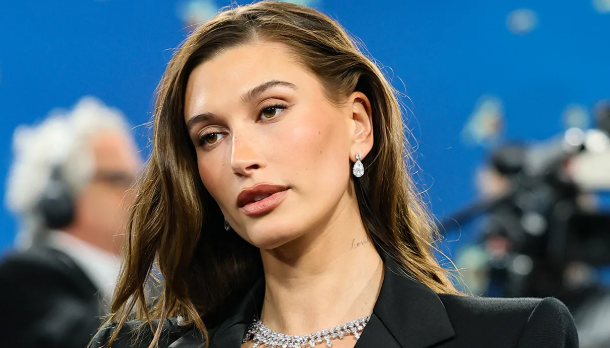
In May 2025, e.l.f. Beauty announced it was acquiring Rhode, the skincare brand founded by Hailey Bieber, for $1 billion. The deal consisted of $600 million in cash, $200 million in e.l.f. stock, and up to $200 million in performance-based earnouts over three years. The brand was barely three years old. It had ten products. It sold exclusively through its own website. Retail partners did not exist. Wholesale distribution was absent. An Amazon storefront was never even considered.
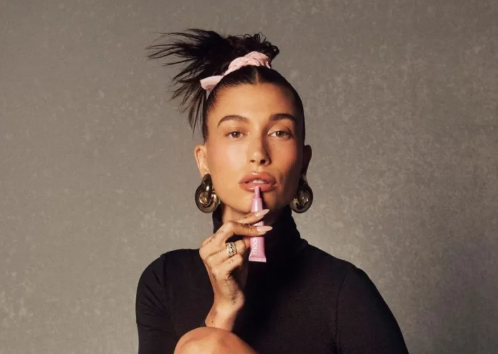
The Hailey Bieber Rhode sale closed on August 5, 2025. It marked one of the fastest billion-dollar exits in beauty industry history. For context, consider the competition. Charlotte Tilbury sold to Puig for $1.5 billion after decades of brand building. Byredo sold to Puig for approximately $1 billion after 16 years. Meanwhile, Rhode reached the same valuation threshold in three years. It did so with a fraction of the product count. Seasoned industry analysts called it unprecedented. Initially, the numbers seemed to defy logic. Then e.l.f. made the P&L public after the acquisition.
The P&L That Made Wall Street Recalculate
Rhode generated $212 million in net sales in the twelve months ending March 2025. From a direct-to-consumer-only model. With ten products. Cost of goods ran at approximately 19% of revenue. That figure would impress analysts at a scaled incumbent like Estee Lauder or L’Oreal. For a three-year-old startup without massive purchasing power, it was remarkable.
The number that broke the internet was marketing spend: 11% of revenue. Most DTC brands pour 30% to 50% of revenue into paid social advertising. Rhode, however, spent roughly one-fifth of the category average. The reason is straightforward and unreplicable. Simply put, Hailey Bieber is the marketing. Her 55 million Instagram followers and 15 million TikTok followers see every product she uses. They watch every routine she films. They notice every appearance she makes. As a result, cultural relevance substitutes for paid advertising in a way that no media budget can replicate.
Consequently, Rhode’s marketing efficiency ratio hovered near 9x. Every dollar spent on marketing generated approximately nine dollars in return. Most beauty brands consider a 3x to 4x return healthy. Rhode more than doubled that benchmark. The founder’s organic reach functioned as a perpetual, zero-cost advertising channel.
General and administrative costs ran at 17%, which some observers initially considered high for a lean startup. But that spending reflected deliberate investment in finance systems, legal infrastructure, supply chain management, and operational maturity. Nevertheless, it was precisely the kind of institutional backbone that made Rhode attractive to a strategic acquirer. When e.l.f. looked under the hood, they found a company that operated with the discipline of a brand ten times its age.
The Clean Girl Aesthetic That Launched a Billion-Dollar Brand
Bieber did not just endorse Rhode. Instead, she built it around a specific visual language. That language became aspirational for an entire generation of young women. Consider the “clean girl” aesthetic: dewy skin, minimal makeup, slicked-back hair, and effortless glamour. It started as Bieber’s personal style on social media. Rhode codified it into purchasable products.
The hero product, the Peptide Lip Treatment, became a cultural phenomenon before Rhode was even available in physical retail. The Glazing Milk toner, Barrier Restore Cream, and Pocket Blush followed. Each product reinforced one proposition: skincare that makes you look like you woke up beautiful. Not like you spent an hour in front of a mirror with fifteen products and a ring light.
By 2024, Rhode ranked number one globally in Earned Media Value. Year-over-year growth hit 367%. That metric, which measures press coverage, social media mentions, and influencer content generated without paid promotion, confirmed what the P&L already demonstrated: Bieber’s cultural influence was doing the heavy lifting that most brands need entire marketing departments and eight-figure budgets to accomplish.
Why e.l.f. Paid Ten Figures for a Skincare Startup
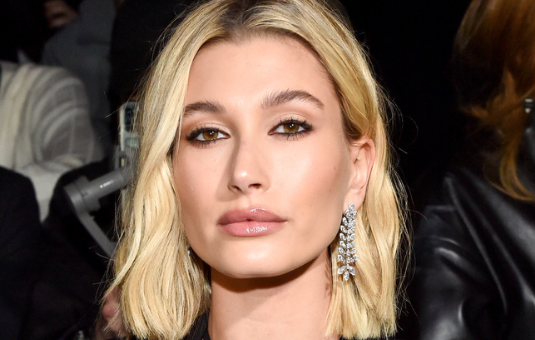
The acquisition logic for e.l.f. was precise and strategic. e.l.f. had built a $1.3 billion revenue business in mass-market cosmetics. Products ranged from $3 to $18. What it lacked was prestige positioning, skincare depth, and authentic Gen Z credibility. Rhode delivered all three simultaneously.
“In less than three years, they’ve gone from zero to $212 million in net sales, direct-to-consumer only, with only 10 products,” e.l.f. CEO Tarang Amin told CNBC. “I didn’t think that was possible.” He called Bieber “one of the most thoughtful founders I’ve ever met,” a characterization that elevated her beyond celebrity endorser to legitimate entrepreneur. Goldman Sachs analysts echoed the sentiment, describing the deal in a research note as a strategic positive that diversifies e.l.f. into skincare with a prestige brand.
The Sephora expansion, planned for fall 2025 across all North American locations and the U.K., represented the most obvious immediate growth lever. Rhode’s brand awareness stood at just 20% aided recall, meaning 80% of potential consumers in Rhode’s target demographic had never heard of the brand. For a company already generating $212 million in annual sales from a small, highly engaged audience, that awareness gap represents an enormous addressable market waiting to be captured through physical retail distribution.
Nielsen data showed that only 26 of nearly 1,000 beauty brands tracked in the United States generate more than $100 million in annual retail sales. Rhode was already in that elite tier before setting foot in a single store. The Sephora expansion could realistically double revenue within 18 to 24 months.
Three Decisions That Separated Rhode From Every Other Celebrity Brand
Three structural decisions separated the Hailey Bieber Rhode sale outcome from the dozens of celebrity beauty brands that launched and stalled during the same 2020 to 2025 window. Each decision was counterintuitive and each proved essential.
First, she built a real executive team. Co-founders Lauren and Michael Ratner brought operational sophistication and production expertise. CEO Nick Vlahos, formerly of The Honest Company, brought institutional credibility and experience scaling consumer brands through corporate partnerships. The brand was never dependent solely on Bieber’s Instagram posts for its survival. It had professional management from day one.
Second, she kept the SKU count brutally disciplined. While competitors launched 30 or 40 products to fill shelf space and create the illusion of a full-line brand, Rhode launched ten. Each product had to earn its place through consumer demand, not line strategy. The constraint forced product excellence at every SKU and prevented the brand dilution that kills most celebrity launches within their first two years.
Third, she retained creative control without micromanaging operations. Bieber described her role in a Wall Street Journal interview after the sale: “I’m still the one testing all the products. I’m still the one sitting in the product-development meetings.” She continued, “I never wanted to sell my company and wipe my hands clean and walk away from it.” After the acquisition closed, she remained as founder, Chief Creative Officer, and Head of Innovation. Her continued involvement was a contractual requirement negotiated by her legal team at Cravath, Swaine and Moore, not a courtesy extended by the buyer.
The Money: What Bieber Earned and What She Plans to Do With It
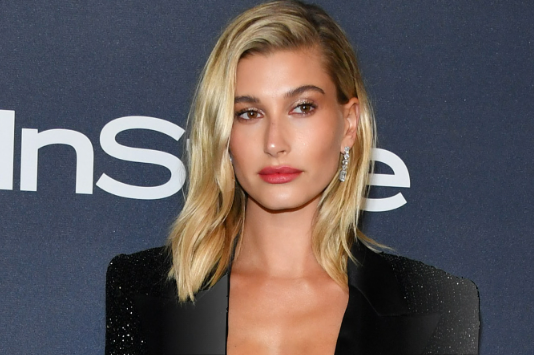
The $1 billion deal was split among Rhode’s stakeholders, but Bieber’s share was substantial. In the same Wall Street Journal interview, she was remarkably candid about her financial outlook for a 28-year-old who had just received the largest payout of her life. “It’s an amount of money that I have not dealt with before, so I just want to be smart with it,” she said. “I would like to invest it wisely. I want to preserve that for my son’s future.”
The new mother, married to pop star Justin Bieber, framed the windfall not as a spending opportunity but as a generational wealth event. She reportedly works with the same business manager she has had since she was 19 years old. That kind of financial continuity and long-term thinking, prioritizing preservation over consumption, reflects a sophistication that most people who suddenly receive nine-figure payouts do not demonstrate regardless of their age or background.
What the Hailey Bieber Rhode Sale Teaches Every Founder
The lesson is not that you need to be famous to build a billion-dollar brand. The lesson is that founder-market fit matters more than product differentiation in the modern consumer economy. Rhode’s formulations are good. Industry chemists confirm the peptide lip treatment performs well and the glazing milk delivers visible results. But the products are not clinically revolutionary. They are not backed by patented technology or proprietary ingredients that no competitor can access.
What made them worth $1 billion was the founder’s ability to create cultural context that made consumers want to buy. Bieber’s clean girl aesthetic provided the aspiration. Her consistent content provided the awareness. Her authentic involvement in product development provided the credibility. The professional team she assembled provided the operational infrastructure to scale.
For luxury brand founders, medspa entrepreneurs, and fashion brands seeking prestige positioning in competitive markets, the Hailey Bieber Rhode sale offers a clear blueprint. Build around an aesthetic that feels personal rather than corporate. Keep your product line tight enough that every SKU earns its shelf space. Invest in operational infrastructure early so that when a strategic buyer comes calling, they find a real business behind the brand. And never sell until the buyer values not just your revenue but your cultural position in the marketplace.
Rhode proved that in the modern beauty economy, the founder IS the brand. And if the founder is worth a billion, the brand is too.
The Celebrity Beauty Graveyard: What Rhode Avoided
Moreover, the timing of the Hailey Bieber Rhode sale becomes even more impressive against a specific backdrop. Celebrity beauty failures littered the same period. Celebrities flooded the market with launches, believing fame alone would translate into revenue. Many learned otherwise.
Gwen Stefani’s Gxve Beauty appears to have quietly shut down, with its website and social media accounts going dark by late 2025. Brad Pitt’s Le Domaine skincare, launched with face creams priced at $320, was publicly mocked by industry founders who wrote open letters suggesting he invest in existing brands rather than starting his own. Ariana Grande’s r.e.m. beauty struggled to maintain momentum after its initial launch buzz faded. Even established brands faced headwinds. Kylie Cosmetics saw revenue growth flatten. The Coty acquisition introduced corporate friction into what had been a lean operation.
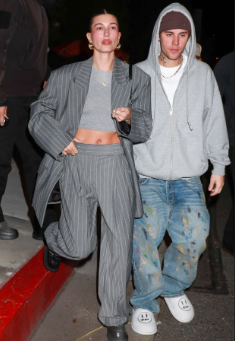
Rhode succeeded where these brands struggled. Bieber and her team understood a fundamental truth: authenticity is not optional for modern beauty consumers. Consumers can distinguish between a celebrity who slapped their name on a contract manufacturer’s existing formulation and a founder who genuinely uses, tests, and believes in every product bearing her name. Rhode’s DTC-only model reinforced this perception of authenticity. The brand did not need to be everywhere. It needed to be genuine somewhere. The consumers who found it felt like they had discovered something personal rather than being sold something corporate.
What Happens Next: Rhode Under the e.l.f. Umbrella
The acquisition by e.l.f. Beauty opens growth channels that were inaccessible to Rhode as an independent DTC brand. First, physical retail distribution through Sephora began rolling out across North America and the U.K. in fall 2025. Consider the math: $212 million in annual sales without a single store. Adding in-store availability could realistically double revenue within 18 to 24 months.
International expansion represents the second major growth vector. Currently, Rhode’s customer base concentrates overwhelmingly in the United States. However, the global prestige skincare market exceeds $150 billion according to McKinsey. That creates enormous whitespace for a brand with Bieber’s global name recognition. Markets in the U.K., Western Europe, Australia, and select Asian countries where Bieber’s clean girl aesthetic has significant cultural penetration are obvious early targets.
Product line expansion into adjacent categories like color cosmetics, body care, and fragrance could extend Rhode’s addressable market further. However, corporate ownership will test the discipline that made Rhode successful. Quarterly earnings expectations incentivize volume and velocity. The ten-SKU restraint and the refusal to launch filler products may face pressure. Whether e.l.f. can resist the temptation to over-extend the brand will likely determine whether the $200 million earnout is achieved.
Frequently Asked Questions
How much did Hailey Bieber personally make from the Rhode sale?
The exact breakdown among Rhode’s owners has not been publicly disclosed. The total deal was $800 million at closing plus up to $200 million in earnouts. Bieber, as founder and majority creative stakeholder, received a substantial portion of the closing payment. She described it in interviews as an amount of money she had never dealt with before.
Is Hailey Bieber still involved with Rhode after the sale?
Yes. She serves as founder, Chief Creative Officer, and Head of Innovation for Rhode, and additionally acts as a Strategic Advisor to e.l.f. Beauty. She has stated she never intended to walk away from the brand.
Where can you buy Rhode products?
Rhode products are available on rhodeskin.com and began rolling out to all Sephora locations across North America and the U.K. in fall 2025 as part of the e.l.f. Beauty expansion plan.
How much revenue did Rhode generate before the sale?
Rhode generated $212 million in net sales in the 12 months ending March 2025 from direct-to-consumer sales only, with just 10 products in its lineup.
Connect With Social Life Magazine
Feature Article Ideas / Advertising / Brand Partnership Inquiries
→ Contact Social Life Magazine
Polo Hamptons Tickets, Cabanas & Brand Sponsorships
→ Polo Hamptons
Join Our Email List
→ Subscribe Here
Social Life Magazine Print Subscription
→ Get Your Subscription
Support Our Work – Donate $5
→ Donate via PayPal
Author

Written by
Recent Posts
Twiggy and Sadie Frost Celebrate Documentary Premiere at Sloane’s in SoHo During NYFW
Christian Siriano Hosts Annual NYFW Model Appreciation Dinner at Hell’s Kitchen Hotspot BAR BAS
How Wealth Management Firms Handle Multigenerational Wealth
Modern Approaches to Protecting Intellectual Property Rights in 2026
In-House IT vs. Managed IT Services: What’s Right for Your Business?
Categories
- Art
- Articles
- Business of Luxury
- Celebrities
- Culture
- Entertainment
- Events
- Faces of Summer 2026
- Fashion
- Fashion & Style
- Featured
- Finance
- Food, Spirits, Wine
- Hamptons
- Hamptons Celebrities
- Health
- Health & Beauty
- Lifestyle
- Luxury Lifestyle
- Press
- Profiles
- Real Estate
- Technology
- The Chronicles
- Travel
- Uncategorized
- Weddings