
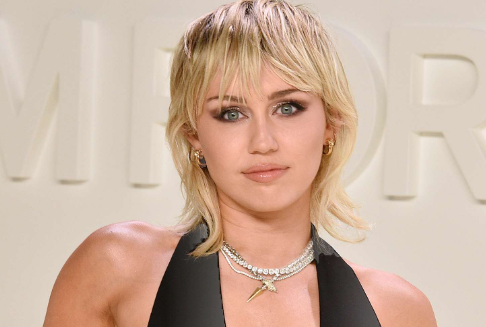
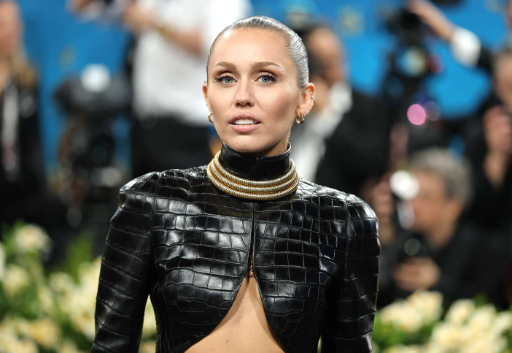
In February 2026, photographers caught Miley Cyrus cruising along the Malibu coast. She wore a platinum blonde wig, oversized sunglasses, and a sleek all-black outfit. A full camera crew followed close behind. The internet immediately understood. Hannah Montana was back. Or at least, something involving her most famous character was clearly in production. The tease arrived with perfect timing. Months earlier, her ninth studio album Something Beautiful had debuted at the Tribeca Film Festival. She wrote and directed the companion visual album herself. Critics drew comparisons to Pink Floyd’s The Wall.
According to Celebrity Net Worth and multiple financial reporting outlets, the Miley Cyrus net worth 2026 figure sits at approximately $160 million. That figure places her among the wealthiest musicians of her generation. However, the number does not capture the most interesting thing about her fortune. What makes Cyrus unique is not how much money she has made. Instead, it is how many times she has completely destroyed her own brand and rebuilt from the ground up. Each time, she emerged more profitable, more critically respected, and more culturally relevant.
Seven Acts of Creative Destruction
To understand the Miley Cyrus net worth 2026 figure, you must understand the seven distinct career phases that generated it. Each phase involved a deliberate break from whatever came before. Most of these breaks were controversial. Most artists are terrified of alienating their existing audience. Cyrus, however, made alienation a business strategy.
Act one was Hannah Montana. Disney Channel launched the phenomenon in March 2006 when Cyrus was 13 years old. Her show debuted to 5.4 million viewers and quickly became the network’s biggest franchise. A sprawling merchandise empire generated an estimated $1 billion in retail revenue across toys, clothing, school supplies, fragrances, and accessories. Cyrus earned approximately $15,000 per episode across the show’s 98 episodes, totaling roughly $1.5 million for four seasons. Later, she described herself as one of the least-paid performers on the show. Yet the Best of Both Worlds Tour in 2007 and 2008 grossed $54 million. Before turning 16, she had established herself as a viable concert headliner.
Act two was the transition artist. In 2010, Nicholas Sparks adaptation The Last Song co-starred Liam Hemsworth and grossed $92.6 million. It introduced Cyrus as a film actress capable of carrying a dramatic role. Meanwhile, the Can’t Be Tamed album signaled the first deliberate break from Disney’s family-friendly brand. Sales dipped compared to the Hannah Montana era. But credibility with an older, more discerning audience began building quietly in the background.
Act three was the wrecking ball. Bangerz debuted at number one on the Billboard 200 in October 2013. It went on to earn triple platinum certification. Her VMAs twerking incident with Robin Thicke generated more press coverage than most presidential campaign announcements. Meanwhile, the Wrecking Ball music video accumulated hundreds of millions of views. Touring behind the album, she grossed $62 million across 77 dates. In one move, Cyrus had irreversibly destroyed her Disney image. She replaced it with something the media and public could not possibly ignore. The strategy was not subtle. Nor was it meant to be.
Acts Four Through Seven: Genre Destruction and Global Domination
Act four was the experimental detour. Miley Cyrus and Her Dead Petz, a free album with the Flaming Lips, was weird, psychedelic, and deliberately uncommercial. Mainstream fans fled. Indie music critics applauded. And the whole era demonstrated range. Meanwhile, Younger Now attempted to reconnect with Nashville and country roots. It underperformed commercially relative to Bangerz. But the era served a structural purpose. It proved that Cyrus could pivot genres without losing her core audience entirely. Her audience shrank temporarily but did not disappear.
Act five was the rock reinvention. Released in November 2020, Plastic Hearts channeled Joan Jett, Stevie Nicks, and Blondie through a modern production lens. Critics praised it as her best and most cohesive work. Collaborations with Dua Lipa on Prisoner and Billy Idol on Night Crawling expanded her audience. Rock communities and legacy music fanbases that had previously dismissed her as a pop confection now paid attention. Blockbuster commercial numbers eluded the album during the pandemic. Nevertheless, it repositioned Cyrus as a serious rock artist with genuine vocal power.
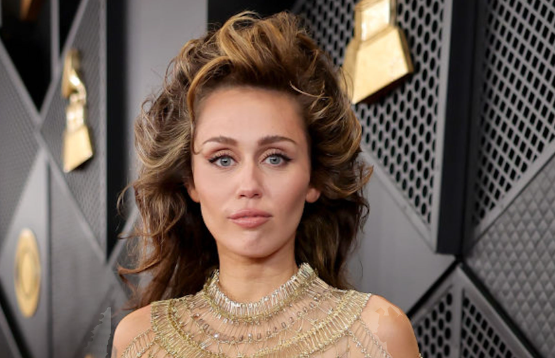
Act Six The global domination
Released in January 2023, “Flowers” became the biggest hit of her career by every measurable metric. It won the IFPI Global Single Award as the year’s best-selling single worldwide. According to industry tracking data, the song earned an estimated $14 million in streaming and download revenue alone. Streams across Spotify, Apple Music, and YouTube reached into the billions. Radio play was inescapable across dozens of countries. Its message of self-sufficiency after heartbreak resonated universally. A simple, catchy melody ensured the song stuck in listeners’ heads whether they wanted it there or not.
Act seven is the auteur era. Something Beautiful premiered at Tribeca in June 2025 as a visual album. Cyrus wrote and directed every frame herself. She compared the work to Pink Floyd’s The Wall. Rather than a collection of streaming-friendly singles, she framed it as a complete artistic statement. Cinemas screened the film for one night nationwide. As a result, the work positioned her firmly as a serious artist with directorial ambitions. Her cultural footprint now extends beyond music into cinema and visual art. Meanwhile, the Hannah Montana filming spotted in Malibu suggests act eight is already in production.
The Streaming Catalog as a Financial Instrument
In the modern music economy, a mature song catalog functions like a financial annuity. It pays out indefinitely. “Flowers” alone generates ongoing income from multiple sources. Global streams arrive from every major platform. Terrestrial and satellite radio play adds more. Sync licensing fees come from commercials, films, and television shows. Mechanical royalties from digital and physical reproductions flow in from dozens of countries.
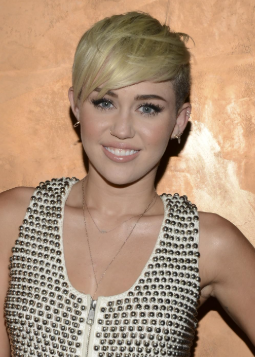
Now stack that on top of “Wrecking Ball,” “Party in the USA,” “The Climb,” “We Can’t Stop,” “Malibu,” and “Midnight Sky.” Cyrus owns a catalog that throws off millions annually. It earns regardless of whether she tours, releases new material, or makes any public appearances. According to the Recording Industry Association of America, Cyrus has earned over $62 million from digital downloads alone during her career. “Party in the USA” has generated approximately $14 million across downloads, streams, and licensing. She recorded it when she was 16 years old. These are passive income streams that compound over time. Global streaming penetration continues to increase, particularly in emerging markets across Asia, Latin America, and Africa.
Touring Revenue: The Money Machine She Has Not Turned On
Perhaps the most significant untapped asset in the Miley Cyrus net worth 2026 equation is touring revenue. Her concert history shows significant earning power. Best of Both Worlds earned $54 million. Wonder World earned $67 million. Bangerz earned $62 million. Combined with smaller tours and one-off performances, total touring revenue across her career exceeds $200 million.
However, Cyrus has not mounted a major tour since Bangerz. If she launched a global arena or stadium tour in 2026 or 2027, the revenue potential would be enormous. Her catalog includes both classic hits and the Flowers-era material. Taylor Swift’s Eras Tour grossed over $2 billion. Cyrus would not command the same ticket prices or venue sizes. Still, a well-produced world tour could realistically generate $200 to $400 million in gross revenue. If that happens, the $160 million figure could look like a low-water mark in retrospect.
Real Estate, Engagement, and the Quiet Life
Cyrus has demonstrated a real estate pattern that resembles a professional investor more than a typical celebrity homebuyer. Throughout her career, she has purchased, renovated, and sold properties in Malibu, the California hills, and Nashville. Significant appreciation often followed each transaction. Her current Nashville ranch, purchased for $5.8 million, anchors her in the country music capital where she spent her childhood. Meanwhile, her Malibu presence maintains her connection to the California entertainment industry.
In December 2025, Cyrus and drummer Maxx Morando appeared at the Avatar: Fire and Ash premiere. A diamond ring on her finger immediately sparked engagement speculation. Her marriage to Liam Hemsworth dissolved publicly in 2019. Subsequent relationships played out intensely in tabloids. By contrast, the Morando relationship represents a quieter, more deliberate chapter. This personal stability coincides with the most critically praised era of her career. That correlation is probably not a coincidence.
The $160 Million Gap: Why Cyrus Trails the Billionaire Musicians
At $160 million, Cyrus trails Taylor Swift ($1.6 billion), Rihanna ($1.4 billion), and Selena Gomez ($1.3 billion) by an enormous margin. The gap exists for one simple reason. Those artists built product empires outside of music. Swift’s wealth comes from touring and catalog ownership. Rihanna built Fenty Beauty and Savage X Fenty. Meanwhile, Gomez built Rare Beauty. Kim Kardashian built SKIMS. By contrast, Cyrus has not launched a beauty line, a fashion brand, or any consumer products company of meaningful scale. Her wealth derives almost entirely from music, touring, television, and endorsements.
That absence is both a limitation on current net worth and a massive unrealized opportunity. If Cyrus launched a brand aligned with her current positioning, a nine-figure valuation could arrive from day one. Beauty, wellness, cannabis, or lifestyle all offer viable lanes. Her existing audience, catalog value, cultural relevance, and nostalgia factor provide the foundation. A Hannah Montana nostalgia wave appears to be building in 2026. Combined with her current creative credibility among adults, it creates a unique dual audience. Gen Z viewers grew up on Disney Channel reruns. Millennials grew up on the original broadcast. No other entertainer commands that specific combination of generational reach.
The Reinvention Playbook: What Every Brand Can Learn
Ultimately, the Miley Cyrus net worth 2026 story is a masterclass in brand resilience through deliberate reinvention. Fame has followed her for 20 years. During that time, she has weathered tabloid scandals, a public divorce, career lulls, and critical dismissals. The relentless public scrutiny has destroyed artists with less resilience and thinner skin.
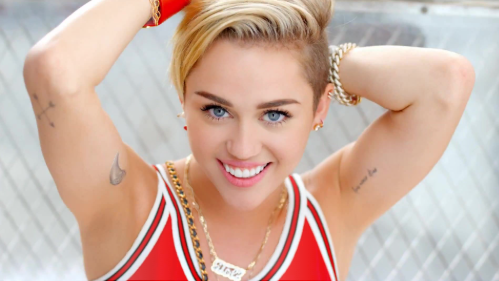
She responded to each setback by reinventing herself completely. She destroyed the old brand. Then she built a new one from scratch. Most artists are terrified to do this even once. Yet she has done it seven times. Each time, the departing audience gave way to a new one. It was larger, more engaged, and willing to pay more. Country fans who abandoned her after Bangerz were replaced by pop fans. Those pop fans, confused by Dead Petz, gave way to rock fans. Rock fans were then joined by global pop listeners who discovered her through Flowers. The total addressable audience grew with every reinvention. Each pivot expanded the demographic footprint rather than merely shifting it.
For brand founders, the lesson is clear. Do not cling to a positioning that has stopped growing. Instead, kill it. Build something new. The audience you think you are losing is always smaller than the audience you are about to gain. Miley Cyrus has proven this seven times over. At 33, she is just getting started on act eight.
The Happy Hippie Foundation and the Values Economy
In 2014, Cyrus founded the Happy Hippie Foundation. The nonprofit focuses on fighting injustice facing homeless youth, LGBTQ individuals, and other vulnerable populations. It has raised millions and supported organizations providing direct services to at-risk young people across the United States.
While philanthropy does not directly increase net worth, it serves a critical brand function. In the modern values economy, it matters enormously. Gen Z and millennial consumers, who form Cyrus’s core audience, increasingly make purchasing decisions based on values alignment. An artist who visibly invests in social causes builds a deeper form of loyalty than one who merely entertains. Consequently, that loyalty translates into higher engagement rates and stronger merchandise sales. Concert attendance rises. Organic advocacy follows, the kind no marketing budget can replicate.
Notably, Cyrus’s advocacy for LGBTQ rights, body positivity, and mental health awareness has remained consistent across every reinvention. Musical style, visual aesthetic, and public persona have changed radically seven times. Yet her core values have remained stable. This consistency provides a through-line. It allows audiences to follow her through transformations that might otherwise feel arbitrary. Values are the brand. Music is the medium. And the loyalty that results from this alignment is the most durable form of celebrity equity.
The Hannah Montana Factor: Nostalgia as Unrealized Currency
Furthermore, the Hannah Montana filming arrives at a moment when nostalgia has proven to be one of the most powerful commercial forces in entertainment. Legacy IP revivals from Barbie to Top Gun: Maverick to Full House to Gilmore Girls demonstrate a clear pattern. Audiences will pay premium prices to re-experience the cultural touchstones of their youth.
Within this landscape, Hannah Montana occupies a unique position in the nostalgia economy. The original show aired from 2006 to 2011. Children who grew up watching it are now 25 to 35 years old. They have disposable income. Many have children of their own who may be discovering the show through Disney Plus reruns. And they carry an emotional attachment to the character that has been dormant for 15 years, waiting to be reactivated.
If Cyrus is indeed filming something related to Hannah Montana, the commercial potential is staggering. It could be a revival series, a special, a documentary, or something entirely unexpected. Remember, the original franchise generated $1 billion in merchandise. A 2026 revival would tap into both the original audience’s nostalgia and a new generation’s discovery. Few entertainment properties can match that multigenerational commercial opportunity. Combined with her Something Beautiful-era artistic credibility, a Hannah Montana project would let Cyrus occupy two contradictory positions at once. She could be both beloved nostalgic icon and respected contemporary artist. If executed well, that duality could be the catalyst. It might finally push the Miley Cyrus net worth 2026 figure into the stratosphere.
Frequently Asked Questions
What is Miley Cyrus’s net worth in 2026?
Miley Cyrus’s net worth is estimated at approximately $160 million as of 2026, according to Celebrity Net Worth and multiple financial reporting sources.
How much did Miley Cyrus earn from Flowers?
The song “Flowers” earned an estimated $14 million in streaming and download revenue. It won the IFPI Global Single Award as the best-selling single worldwide in 2023 and continues to generate ongoing streaming income.
Is Miley Cyrus engaged?
Miley Cyrus was spotted wearing a diamond ring alongside her boyfriend, drummer Maxx Morando, at the Avatar: Fire and Ash premiere in December 2025. While neither has officially confirmed an engagement, the ring and the context strongly suggest they are engaged.
Is Hannah Montana coming back?
In February 2026, Cyrus was photographed in Malibu wearing a platinum blonde wig with a camera crew, suggesting something related to Hannah Montana is in production. No official announcement has been made regarding a reboot or special.
How much did Miley Cyrus earn from Hannah Montana?
Cyrus earned approximately $15,000 per episode for the 98-episode run, totaling roughly $1.5 million. However, the associated tours, albums, and merchandise generated far more. The Best of Both Worlds Tour alone grossed $54 million.
Connect With Social Life Magazine
Feature Article Ideas / Advertising / Brand Partnership Inquiries
→ Contact Social Life Magazine
Polo Hamptons Tickets, Cabanas & Brand Sponsorships
→ Polo Hamptons
Join Our Email List
→ Subscribe Here
Social Life Magazine Print Subscription
→ Get Your Subscription
Support Our Work – Donate $5
→ Donate via PayPal
Author

Written by
Recent Posts
hiTechMODA Season 16
How to Keep Your Personal Number Private When Booking Events, Rentals and Services
Understanding Compensatory Damages in a Personal Injury Case

When Online Family Therapy Makes Sense for Modern Families

Carrier Oils, Essential Oils, and Oil Blends: What Beauty Brands Need to Know
Categories
- Art
- Articles
- Business of Luxury
- Celebrities
- Culture
- Entertainment
- Events
- Faces of Summer 2026
- Fashion
- Fashion & Style
- Featured
- Finance
- Food, Spirits, Wine
- Hamptons
- Hamptons Celebrities
- Health
- Health & Beauty
- Lifestyle
- Luxury Lifestyle
- Press
- Profiles
- Real Estate
- Technology
- The Chronicles
- Travel
- Uncategorized
- Weddings