
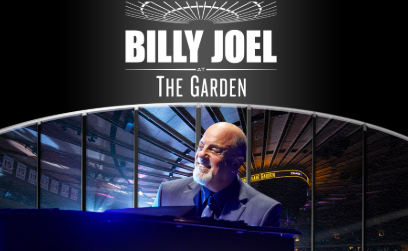
The $266M Blueprint Everyone Is Still Copying
On January 27, 2014, Billy Joel walked onto the Madison Square Garden stage and opened with “Miami 2017 (Seen the Lights Go Out on Broadway)” — a song about New York’s destruction, performed in New York’s most famous arena, for 18,000 people who had no idea they were watching the music industry reinvent itself.
Joel’s team didn’t know either. His lighting designer of five decades, Steve Cohen, later admitted the whole thing was provisional. “The residency didn’t start with grand ambitions,” Cohen told the Hollywood Reporter. “We really just wanted to put some shows on sale and see how they would go. Then they all sold out. Madison Square Garden then decided to make him a franchise. We thought this might last a year, maybe two.”
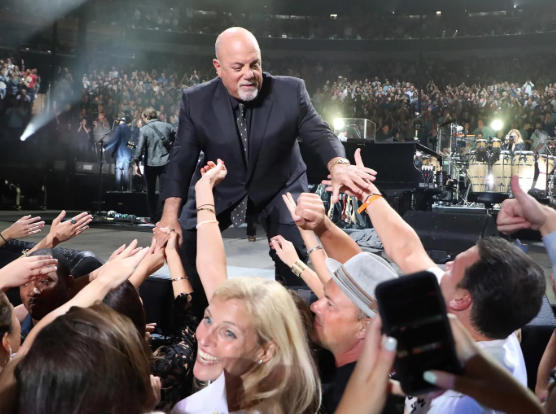
It lasted ten years. One hundred and four sold-out shows. 1.9 million tickets. $266.7 million in gross revenue. A banner in the MSG rafters that puts Billy Joel alongside the New York Knicks and the New York Rangers as the only franchises the arena has ever officially recognized.
The Billy Joel Madison Square Garden residency is the third-highest-grossing concert residency in Billboard Boxscore history. More importantly, it is the blueprint that Harry Styles, Adele, and a generation of arena-level artists have been studying ever since — the proof that staying in one place can be more profitable, more sustainable, and more powerful than any road tour ever built.
For the full context of how the residency fits into Joel’s $250 million financial picture, see our deep dive on Billy Joel’s net worth. This piece is about the residency itself: what made it work, why the numbers grew the way they did, and what every artist and event professional should understand about the model Joel essentially created for the modern era.
The Numbers, Properly Contextualized
Raw figures first, because the scale requires it.
| Metric | Figure |
|---|---|
| Total gross revenue | $266.7 million |
| Total shows | 104 (all sold out) |
| Total tickets sold | 1.9 million |
| Average attendance per show | 18,604 (playing in the round) |
| Average gross, 2014 | ~$2 million per show |
| Average gross, 2023 | ~$3.2 million per show |
| Average gross, 2024 | ~$4.7 million per show |
| Final show gross (July 25, 2024) | $5.06 million |
| First show gross (January 27, 2014) | Under $2 million |
| Residency rank, Billboard Boxscore history | #3 all-time |
| Joel’s total career gross (reported shows) | $1.2 billion, 15.3 million tickets, 841 shows |
The first number worth studying is not the total. It is the trajectory. Per-show revenue more than doubled from the opening night to the close — from under $2 million to over $5 million across the same venue, the same capacity, the same artist. That 2.5x increase happened without a new album, without a world tour announcement, and without any of the conventional mechanisms the music industry uses to drive ticket demand. It happened because the residency itself became the product, and because scarcity compounds over time when the audience is the one experiencing it.
How It Started: Hip Surgery, a Hurricane, and a Commute
The residency did not begin with a strategy. It began with circumstances that, in retrospect, look like a setup for exactly the strategy that emerged.
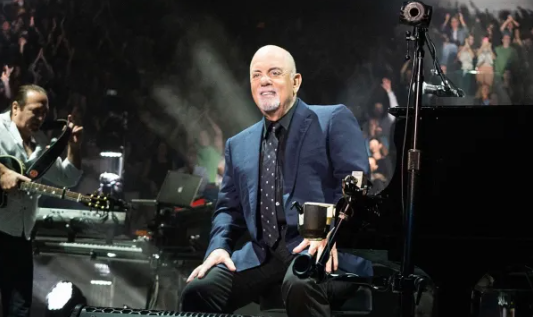
Joel had not done a major solo tour since the Face to Face run with Elton John in 2010. He was recovering from hip surgery, raising young children in New York, and by his own account not thinking seriously about performing again. The inflection point came in December 2012, when he agreed to play “12-12-12,” the Hurricane Sandy benefit concert at Madison Square Garden. More than 20 million people watched on television. Joel performed. The audience reminded him — and Madison Square Garden — what a full room looked like when he was the reason for it.
MSG reached out to his management shortly after. Joel’s response, as he later told Billboard, was essentially an efficiency argument: performing monthly at a single venue meant he could be home with his family between shows. No buses, no flyovers, no weeks in hotel rooms. Just a monthly commute to midtown Manhattan. “All I gotta do is commute,” Joel said. The residency was born from the logic of a man who had four decades of touring behind him and a young family in front of him, and who had finally run the math on whether one was compatible with the other.
In December 2013, MSG made it official. Joel was named the venue’s first-ever music franchise — the only artist in the arena’s history to hold that designation alongside the Knicks and Rangers. The structure was simple: one show per month, priced at market, running as long as ticket demand held. Joel’s stated condition was equally simple. He would keep playing “as long as the demand continues.” The demand never stopped.
The Business Model Nobody Was Running
To understand why the MSG residency was structurally different from anything Joel had done before — or that most arena artists do at all — you need to understand the economics of traditional touring versus the economics of a fixed-venue residency.
Traditional touring is a logistics business dressed as a music business. Every show in a different city means a new venue deal, new union crew rates, new truck routes, new hotel blocks, new catering contracts, and new local marketing spend. According to analysis from concert industry reporting, the average major artist on a traditional arena tour nets somewhere between 15 and 25 cents of every dollar grossed after factoring in production, travel, crew salaries, venue cuts, and promoter fees. The cost of moving is the cost that kills margins. Equipment transport alone can consume a significant portion of tour budget for large-scale productions before a single ticket is scanned.
A fixed-venue residency eliminates the variable that most damages touring economics: transit. As Billboard’s analysis of residency economics notes, “residencies essentially let artists and their teams separate the revenue of the touring business from its costs.” The production stays put. The crew learns the room. The sound improves because the same engineers work the same board in the same space over and over. The lighting designer — in Joel’s case, Steve Cohen, who has worked every MSG show since 1978 with one exception — builds an increasingly refined show in a room he understands down to its resonance frequencies. MSG itself is physically built on springs above Penn Station. Cohen has described the energy transfer from 18,000 people jumping simultaneously as something that feeds directly into the performance. A touring show can’t replicate that. A residency can bank on it every month.
For Joel specifically, the model unlocked something the touring economics never could: compounding brand value in a single market. Each monthly show was not a discrete product. It was another installment of a running cultural institution that New York claimed as its own. By year three, Joel’s MSG show had become what few concerts ever become — a standing reservation. Couples had anniversary seats. Families passed tickets between generations. The Peekskill couple who attended 102 of the 104 shows and restructured their entire vacation schedule around the monthly residency are not an anomaly. They are the product.
“We thought this might last a year, maybe two. None of us anticipated it would go this long — let alone Billy.”
— Steve Cohen, Joel’s creative director, to the Hollywood Reporter
The Revenue Curve: Why the Numbers Kept Growing
The most counterintuitive element of the MSG residency economics is the revenue trajectory. Per-show gross in 2014 averaged roughly $2 million. By 2024, it averaged $4.7 million — nearly a 150% increase for the same 18,604-seat room with the same artist. That trajectory defies basic supply and demand logic if you’re thinking about it as a traditional tour. It makes perfect sense if you understand what was actually being priced.
Three mechanisms drove the growth. The first was the passage of time itself. As the residency extended from a novelty into an institution, the ticket ceased being a concert admission and became a piece of New York cultural history. After year five, attending a Joel MSG show was not about hearing Piano Man performed live. Every city has some version of that available. It was about being present at a specific ritual in a specific room that had accrued specific meaning. The New York Times covered it as civic culture. The mayor gave a speech at the finale. That kind of institutional weight is not purchasable through normal music industry mechanisms. It accrues only through duration.
The second mechanism was dynamic pricing, which MSG and Joel’s management introduced progressively in the post-pandemic years. The 2022–2024 period saw per-show revenue jump from $2.7 million to $4.7 million — a 74% increase in two years driven partly by platinum ticket pricing that allowed the most desirable seats to float to market rates. The audience’s demonstrated willingness to pay, accumulated over a decade of sold-out shows, was finally being captured in the ticket price rather than leaking to the secondary market. By the time the final run of ten shows was announced in 2023, StubHub reported that final-show sales were 41% higher than the second-best-selling show of the entire decade.
The third mechanism was MSG’s own investment in the residency’s success. Joel was not a tenant. He was a franchise. The arena’s institutional incentives were aligned with his: more successful shows meant more valuable naming rights, more premium hospitality packages, more reason for corporate clients to maintain floor-level season arrangements. The banner raises — first for consecutive shows, then for lifetime performances — were not sentiment. They were marketing. A physical artifact permanently installed in the building that signaled to every future booking that the standard had been set.
The Franchise Innovation: What Joel Actually Invented
The residency model itself predates Joel — Las Vegas perfected it for decades, beginning with Liberace in the 1940s and scaling through Celine Dion’s landmark Caesar’s run from 2003 to 2007. What Joel invented was something more specific and, arguably, more replicable: the home-market residency in the artist’s actual city, at the arena where the artist’s audience already lives.
Celine Dion’s residency required fans to fly to Las Vegas. The venue was purpose-built for her production. The economics were casino economics — the show was partly subsidized by gambling and hotel revenue that her audience generated on the trip. That model is brilliant but not portable. It requires a Las Vegas, a willing casino, and an artist with enough international draw to fill a destination venue for years.
Joel’s model required none of those things. It required an arena with existing infrastructure, an artist with a deep home-market audience, and a commitment to showing up monthly. The whole proposition was that fans didn’t have to travel to see something special — the special thing was already in their city. Audiences came from all 50 states and more than 120 countries over the course of the residency, but the foundation of each sell-out was the tri-state area audience that had grown up with the music and now lived close enough to treat it as a ritual rather than an event.
That is the model Harry Styles cloned when he announced multi-city, multi-night residencies at arenas in New York, Los Angeles, Chicago, and Austin rather than a traditional tour. It is the structure Adele used in Munich and Las Vegas. It is the architecture that Ariana Grande’s 2026 tour is built on — 41 shows in 10 cities, all multi-night stands, including 10 nights at London’s O2. The industry has collectively concluded that Joel was right. None of them quite had his version: a single venue, a single city, monthly for a decade. But the logic flows directly from what he proved at MSG.
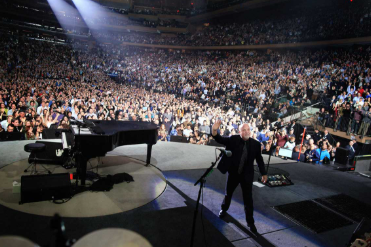
The Finale: What $5 Million Looks Like on a Thursday Night
On July 25, 2024, Joel opened his 150th and final MSG show with the same song that opened the residency a decade earlier: “Miami 2017 (Seen the Lights Go Out on Broadway).” The symmetry was intentional. His band knew it. The audience knew it. The show grossed $5.06 million from 18,576 tickets — the highest single-show gross of the entire ten-year run, from the exact same venue that had paid under $2 million on opening night.
Jimmy Fallon came out mid-show to present a banner for Joel’s 150 lifetime performances. “We are witnessing history here tonight,” Fallon told the crowd. Joel’s daughters Della and Remy joined him onstage for “My Life,” Della clapping confidently, six-year-old Remy sitting nervously on the piano. Joel’s wife Alexis had requested “This Is The Time,” and the arena screens showed a decade of backstage photographs — his family growing up alongside the residency, MSG as a second home across ten years of monthly shows.
Axl Rose appeared for the final section, leading the band through “Live and Let Die” and “Highway to Hell” in a sequined sport coat. The last song was “You May Be Right.” The same 18,000 seats that were filled in January 2014 for under $2 million a night were filled that July for $5 million, for the last time, by people who had made the trip from 21 countries for the occasion.
According to MSG Entertainment’s official statement, CEO James Dolan called it “the greatest arena run of all time.” The banner raised that night reads: “Billy Joel 150: Most Lifetime Performances By Any Artist.” It hangs in the rafters alongside the Knicks and Rangers championship banners, in a building that has hosted every relevant cultural event in New York for fifty years. Joel is the only musician in that company.
What the Residency Means for Joel’s $250 Million Picture
The $266.7 million gross is a headline number. The net figure is not public, but the structure of the residency suggests it was meaningfully more efficient than a traditional tour at comparable gross revenue. No trucks, no hotel blocks, no daily load-in costs. The same crew in the same room for ten years, improving the show incrementally rather than rebuilding it from scratch in each new city. Joel’s creative director has worked MSG since 1978. The institutional knowledge in that room is not replaceable by any touring production at any price.
Within the context of Joel’s full Billy Joel net worth story, the residency represents the single largest income event of his post-album career — a career that has generated more revenue since his last pop record in 1993 than it did during his recording years. That fact alone is worth studying. Joel has not released a new album in three decades. His catalog generates eight figures annually in passive royalties. His residency generated $266.7 million in active performance revenue. The combination — catalog as engine, residency as amplifier — is the model that every major legacy artist is now trying to replicate.
Taylor Swift’s catalog dispute ended with Fearless (Taylor’s Version). Bruce Springsteen sold his masters for $500 million. Bob Dylan sold his for $300 million. Joel has done neither. His catalog remains wholly his, generating royalties that will fund his children’s inheritance long after the MSG banner has yellowed. The residency was ten years of his life. The catalog is the rest of it. As explored in our broader look at music industry net worth rankings, the artists who hold their catalogs and combine them with strategic live performance generate substantially more durable wealth than those who convert either asset to cash.
“He kept saying it would last until the public stopped buying tickets. The public just never stopped buying tickets.”
— Steve Cohen, Joel’s creative director
The Legacy: One City, One Room, Ten Years
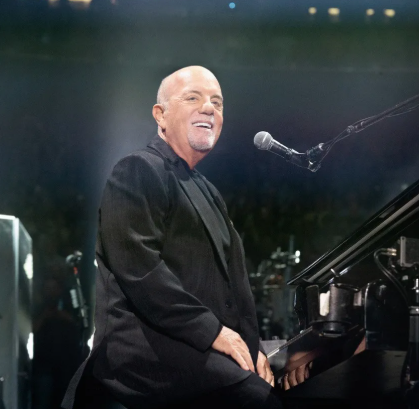
The standard biography of the Billy Joel Madison Square Garden residency ends with the $266.7 million figure and the record books. That is the wrong place to end it.
The real legacy is the proof of concept. Joel demonstrated that a legacy artist without new music, without a world tour, and without any of the conventional industry marketing infrastructure could gross more per show in year ten than in year one — purely by building something durable in a single room in a single city. He demonstrated that audiences don’t tire of an artist they love when the artist continues to show up. He demonstrated that an arena can be a home rather than a venue, and that the distinction matters to both economics and culture in ways the music industry spent decades failing to understand.
The artists who came after him — Styles, Adele, Rodrigo, Grande — are all working from the same blueprint, whether they acknowledge it explicitly or not. None of them has yet matched the duration. Monthly for ten years in one room is not a model anyone has replicated at that scale. It may never be replicated, because the conditions that produced it — an artist recovering from hip surgery who wanted to be home for dinner, an arena looking for a franchise anchor, and an audience that had been waiting twenty years for exactly this — are not reproducible by design.
They were, in the end, an accident. The most profitable accident in the history of arena music.
For a deeper look at how Joel’s Hamptons real estate holdings connect to this decade of MSG earnings, see our piece on Billy Joel’s Hamptons properties — the land strategy that received the downstream capital from ten years of Manhattan sold-out shows.
Go Deeper on Billy Joel and Music Industry Wealth
The full financial picture: Billy Joel Net Worth — How a Kid From Hicksville Built $250 Million
The real estate strategy: Billy Joel Hamptons — Where MSG Money Went
Feature your brand in the Hamptons: Contact Social Life Magazine — we connect luxury brands with the audiences that move markets.
The East End’s premier sporting event: Polo Hamptons — sponsorships, VIP access, and brand activations where the Hamptons actually convenes.
Get the Hamptons insider list: Subscribe to Social Life Magazine — 23 years of the East End, delivered to your door.
Support independent Hamptons journalism: Donate $5
Related Reading
- Billy Joel Net Worth: Inside the $250M Piano Man Fortune
- Billy Joel Hamptons: The Real Estate Strategy Nobody Is Talking About
Sources
- Billboard — Billy Joel MSG Residency Earns $266.7 Million, Third Highest All-Time
- MSG Entertainment — Official Residency End Announcement
- Rolling Stone — Billy Joel MSG Residency Finale Review
- Hollywood Reporter — Behind the 100th Concert Special
- Billboard — Concert Residencies vs. Touring Economics
Author

Written by
Recent Posts

Victoria Justice Kicks Off Halloween Early with Love Zombie Bash in Hollywood

Planning an Arizona Road Trip? Practical Details to Handle Before You Leave

Short Homecoming Dresses That Feel Polished, Not Overdone
Men’s Health After 40: Important Changes to Pay Attention To
What You Need to Know About Spray Tanning
Categories
- Art
- Articles
- Business of Luxury
- Celebrities
- Culture
- Entertainment
- Events
- Faces of Summer 2026
- Fashion
- Fashion & Style
- Featured
- Finance
- Food, Spirits, Wine
- Hamptons
- Hamptons Celebrities
- Health
- Health & Beauty
- Lifestyle
- Luxury Lifestyle
- Press
- Profiles
- Real Estate
- Technology
- The Chronicles
- Travel
- Uncategorized
- Weddings