
The Place That Built a $250 Million Artist
Here is a fact that sounds like an insult until you think about it carefully: the most commercially successful solo artist in American pop history — six Grammys, 160 million records sold, 33 consecutive Top 40 hits, $1.2 billion in career touring gross — grew up in Hicksville.
Not metaphorically. Literally Hicksville, New York. Population 40,000. Nassau County. The Levittown subdivision. A post-war planned community built so rapidly that the houses arrived pre-assembled, the streets so uniform that returning soldiers reportedly got lost between their own driveway and the corner. A place whose entire cultural identity, up until Billy Joel, was a punchline.
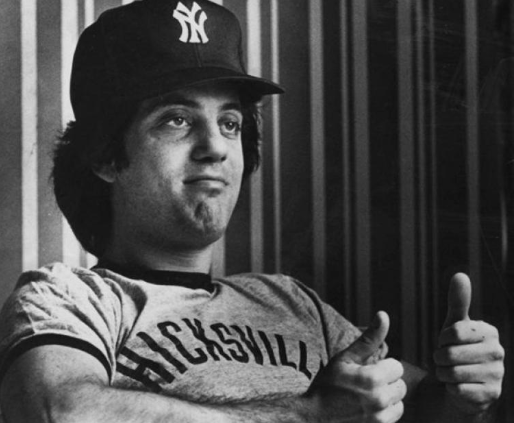
The counterintuitive truth at the center of the Billy Joel Long Island story is this: Hicksville didn’t hold him back. It built him. The embarrassment of the address, the working-class friction, the Catholic neighbors who beat him up for being Jewish, the single mother stretching a secretary’s salary across two children — all of it compressed into the specific emotional vocabulary that $250 million worth of audiences recognized as their own. Joel didn’t escape Long Island. He processed it and sold it back to the world at scale.
For the complete financial picture of what that processing ultimately produced, see our deep dive on Billy Joel’s net worth. This piece is about the geography — the specific places across Long Island that appear in the music, in the life, and in the real estate portfolio Joel has quietly assembled across five decades of refusing to leave.
The Long Island Map: Where Joel’s Life Actually Happened
| Location | Significance | Song / Album Connection |
|---|---|---|
| Hicksville (Meeting Lane) | Childhood home; Levittown subdivision | Origin of “Captain Jack,” “Scenes from an Italian Restaurant” characters |
| Hicksville High School | Left without graduating, 1967; diploma awarded 1992 | Backdrop for the Village Green referenced across 1970s catalog |
| Cold Spring Harbor (hamlet) | Debut album named for this North Shore hamlet | Cold Spring Harbor (1971) |
| Oyster Bay | Town of his childhood; site of first adult apartment; MiddleSea compound; 20th Century Cycles motorcycle gallery | “The Ballad of Billy the Kid” (the Oyster Bay bartender) |
| Nassau Coliseum (Uniondale) | Recorded Live from Long Island (1982); played final pre-renovation concert (2015); opened newly renovated venue (2017) | First video special |
| Huntington | Met Alexis Roderick at a restaurant here (2009); benefit concert at The Paramount (2013) | North Shore geography |
| Manhasset (Miracle Mile) | Affluent shopping district on Northern Boulevard | “It’s Still Rock and Roll to Me” (1980) — “cruise the Miracle Mile” |
| Sag Harbor | Village home since 2002; year-round residence | See Billy Joel Hamptons deep dive |
| Centre Island | MiddleSea compound; wedding venue (2015) | See Billy Joel Hamptons deep dive |
Hicksville: The Address That Explains the Catalog
William Martin Joel was born in the Bronx on May 9, 1949. At age one, his family moved to Meeting Lane in Hicksville — specifically to the Levitt houses section, a subdivision of nearly identical post-war homes built for returning GIs who needed somewhere cheap, fast, and functional. His father, Howard Joel, was a German Jewish Holocaust survivor and accomplished classical pianist who had fled Europe via Switzerland and Cuba. He left the family when Billy was eight and returned to Germany, leaving Rosalind Joel to raise two children on a secretary’s salary with a determination she expressed through one specific word: culture. She put classical music on the radio. She started Billy on piano lessons at age four.
The neighborhood wasn’t the culture his mother had in mind. Hicksville in the 1950s was predominantly Catholic, and the few Jewish families in the Levittown section absorbed the specific low-grade hostility of communities that had just spent four years being told who the enemy was. Joel has spoken about getting beaten up by a neighborhood kid named Vinny with the explanation “Yo, Joel, you killed Jesus.” His response was to take up boxing — he fought welterweight until he broke his nose — and to keep taking piano lessons without telling any of his friends. The greasers at the Village Green on Newbridge Road didn’t need to know about Tchaikovsky. What they did know was that Billy could hold his own, didn’t take orders, and had a quality of concentrated fury that would show up later in every song he wrote about leaving and never quite managing to do it.
By high school, he was playing late-night piano bar gigs to help his mother make rent. That schedule made attending first-period English impossible. One missed exam short of graduation credits in 1967, he made the decision that would define the next fifty years. Summer school or music career. He chose the latter. “I told them, ‘To hell with it,'” Joel later said. “If I’m not going to Columbia University, I’m going to Columbia Records, and you don’t need a high school diploma over there.” He was right. Columbia Records signed him in 1973.
In 1992, the Hicksville School Board waived the English credit requirement after he submitted essays in lieu of the missed exam. He accepted his high school diploma at Hicksville High’s graduation ceremony — twenty-five years after his class. The applause, by all accounts, was considerable.
Cold Spring Harbor: The Album That Put the Hamlet on the Map
Twenty minutes up Route 108 from Hicksville, on the North Shore of Long Island Sound, sits Cold Spring Harbor. It is a quiet hamlet in the Town of Oyster Bay — waterfront, wooded, historically a whaling and fishing community, now the kind of place where old Victorians sell for north of $2 million and the commuter rail station is a ten-minute walk from the harbor. Joel named his 1971 debut album after it.
The album cover was shot by photographer Jerry Abramowitz at a dock on Harbor Road. The dock no longer exists, but a small sign — “Billy Joel Cold Spring Harbor Park” — marks the approximate location. The album itself was Joel’s first attempt to introduce himself to the world on his own terms: a Bronx-born Long Island kid who had taught himself classical piano in secret, played dive bars until dawn, and had something to say about all of it. The record was nearly ruined by a mastering error that made everything play fractionally too fast, pitching Joel’s voice upward unnaturally. It didn’t chart. Joel spent the following year playing piano in a Los Angeles bar under a pseudonym, writing what would eventually become Piano Man.
Cold Spring Harbor the place, however, survived the album’s commercial failure and has thrived in the decades since. Today it is one of the most sought-after addresses on Long Island’s Gold Coast — the kind of established waterfront hamlet that attracts the specific category of buyer who wants North Shore history, proximity to Manhattan via the Long Island Rail Road, and a community that has been exactly what it is for a hundred years without needing anyone’s approval. Joel’s connection to the hamlet gave it a particular cultural currency that real estate listings still reference. The album may have flopped. The location endures.
“If I’m not going to Columbia University, I’m going to Columbia Records, and you don’t need a high school diploma over there.”
— Billy Joel, on leaving Hicksville High in 1967
The Songs as Cartography: Long Island Encoded in the Catalog
One of the stranger aspects of Joel’s creative relationship with Long Island is how thoroughly the geography is encoded in the music without being obviously about the place. Unlike, say, Bruce Springsteen’s New Jersey — which he names directly, builds characters around specifically, treats as the visible subject — Long Island in Joel’s catalog operates as a pressure system underneath the songs rather than their explicit content. You feel it in the emotional register before you locate it on a map.
The clearest exception is “Captain Jack” (1974), a portrait of a bored, drug-using, sexually frustrated suburban kid stuck in his parents’ house that is so specific to the Long Island experience that it became a local radio anthem before it became a national release. Joel has confirmed the song draws on observations from his Hicksville adolescence — the parking lot pot smoking, the insular suburban claustrophobia, the sense of a generation waiting for permission to leave a place that didn’t quite hold them.
“Scenes from an Italian Restaurant” (1977) is the other obvious case. Brenda and Eddie — the couple who were the king and queen of their high school prom, married too young, divorced too predictably — were fictional characters directly inspired by people Joel knew growing up on Long Island. “Once a Long Islander, always one,” fans who grew up in Hicksville and Levittown have written for decades about this song. “It’s in the blood.” According to a Consequence of Sound geographic breakdown of Joel’s catalog, the song’s origin traces to the Fontana di Trevi restaurant near Carnegie Hall in Manhattan — but the characters themselves came straight off Newbridge Road.
“It’s Still Rock and Roll to Me” (1980) contains a direct reference to the Miracle Mile, the affluent shopping stretch on Northern Boulevard in Manhasset — a detail so specific and unexotic that only Long Islanders catch it, and so precisely observed that everyone else feels they could. That is the operating principle of Joel’s entire geographic method: the detail is local enough to be real, universal enough to hit anyone who has ever felt the specific frustration of a place that promised more than it delivered.
The official Billy Joel timeline catalogs these connections across fifty years of releasing music, playing benefit concerts on Long Island, and consistently returning to the island even as his career gave him every reason and financial means to leave permanently.
Oyster Bay: The Town He Returned To
Joel’s first apartment after leaving his mother’s house was in Oyster Bay — the township that contains Hicksville, Cold Spring Harbor, and Centre Island. He has described being “enchanted” by the village, which sits at the edge of Oyster Bay Harbor on Long Island’s Gold Coast and has the specific quality of a place that knows what it is and isn’t interested in explaining itself to anyone.
He came back to Oyster Bay in 2010 to open 20th Century Cycles — a free public motorcycle gallery and workshop at 101 Audrey Avenue, housed in a former Ford dealership that he gutted, renovated, and filled with more than 75 vintage motorcycles from his personal collection. Harleys, Triumphs, Indian, Moto Guzzi, Ducati, BMW, Royal Enfield — all maintained on trickle chargers so every bike is theoretically ready to ride. The space is designed to feel like a clubhouse and gallery simultaneously: vintage posters, gas station signs, a Coke machine, a neon jukebox, workbenches where mechanics actually work. Admission is free. Joel is occasionally spotted there on weekends, talking bikes with whoever happens to show up.
The gallery is adjacent to Sagamore Hill, Theodore Roosevelt’s estate, and within walking distance of the harbor. It is a deliberate act of civic investment by a man who has the means to put his collection anywhere and chose the Long Island village where he rented his first apartment. The Oyster Bay Town Board knows it. The local tourism infrastructure knows it. 20th Century Cycles appears consistently on lists of Long Island’s top visitor attractions — not because it’s marketed aggressively, but because it’s genuinely there, open, and maintained by someone who doesn’t need the foot traffic to justify the expense.
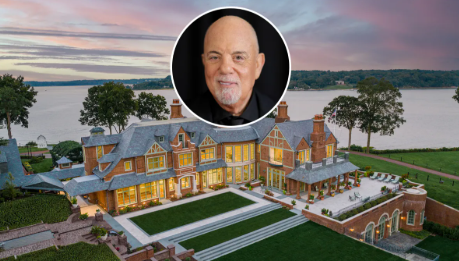
Two miles offshore, the MiddleSea compound on Centre Island represents the other end of what Oyster Bay made possible. The 26-acre waterfront estate — the one he named for Middle C, the first piano note, the one that cost $22.5 million in 2002 and is currently listed at $39.9 million — sits in the same township as the Levittown subdivision where he grew up. The kid on Meeting Lane and the man on Centre Island are connected by the geography of a single township on the North Shore of Long Island. Whether that constitutes escape or return depends entirely on what you think he was doing the whole time.
Nassau Coliseum: Long Island’s Living Room
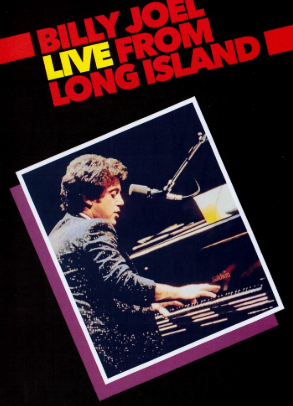
No venue on Long Island occupies the same relationship to Joel’s career as Nassau Veterans Memorial Coliseum in Uniondale. He recorded his first video special there — Live from Long Island — on December 30, 1982, playing to the home crowd that had always claimed him most fiercely. The performance became one of his defining live documents, not because it was technically superior to other recordings but because the audience response was the specific kind of reciprocal intensity that happens when a room full of people believe the man onstage is one of them and is playing to prove it.
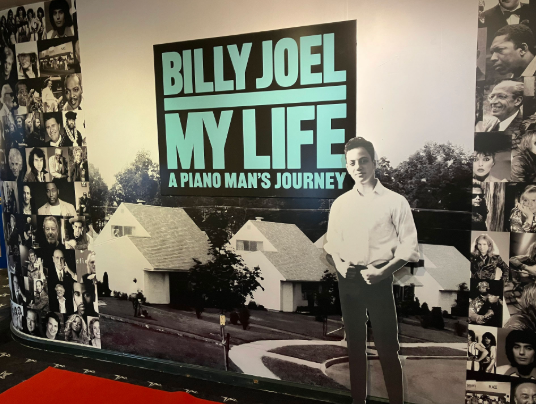
In August 2015, Joel played the final concert at Nassau Coliseum before its $261 million renovation closed the arena. Three years later, he played the first concert at the newly renovated venue. Both bookings were decisions that could only be explained by geography. No one asked Joel to mark the beginning and end of Nassau Coliseum’s renovation with his presence. He volunteered. The Long Island Music and Entertainment Hall of Fame in Stony Brook — which Joel was inducted into in 2006 — mounted a full career retrospective exhibition, “Billy Joel: My Life, A Piano Man’s Journey,” specifically because, as LIMEHOF chairman Ernie Canadeo noted, Joel was “very cordial and involved in the planning” and his stated motivation was to boost Long Island. He had never cooperated on a major career exhibition before. He made an exception for the institution that was, literally, his institution.
The Hidden Argument in the Long Island Story
The conventional reading of the Billy Joel Long Island narrative is a triumph-over-origins story: working-class kid from an unglamorous suburb achieves global fame, keeps the old address on his record covers for sentimental reasons. That reading is too simple and it misses the actual argument Joel has been making for fifty years.
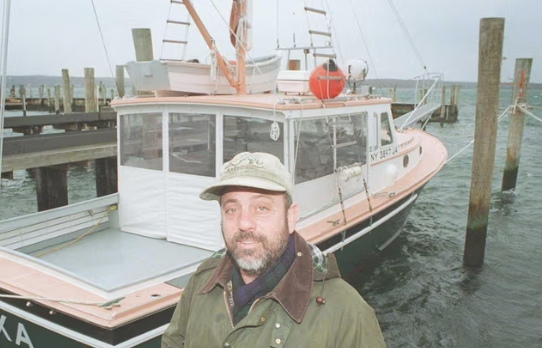
The argument is that Long Island was never the problem. The assumption that certain places produce certain kinds of people — and that those people must leave their place to become significant — is the assumption Joel’s entire career disputes. He wrote the emotional vocabulary of suburban American ambition and frustration from inside the experience, not from a safe critical distance. Billy Joel didn’t move to Manhattan and observe Long Island from across the water. He stayed close enough that the friction remained alive in the work.
His geography tells the same story as his financial decisions. He bought a bait shop in Sag Harbor when he had the money for oceanfront. Then he opened a free motorcycle gallery in Oyster Bay when he could have installed the collection at his Centre Island compound. He played the final and first concerts at Nassau Coliseum because the building’s renovation was, in some real sense, his renovation too. The renovation of the place that produced him. That he has spent five decades refusing to leave. Even as he acquired the addresses that his childhood made him look up at from a fishing boat. As detailed in our piece on Billy Joel’s Hamptons real estate strategy and the MSG residency business model: every major financial decision he has made in his post-album career points back to the same North Shore geography where he started.
He named his first album after a hamlet twenty minutes from his childhood home. Then he named his waterfront compound after the first note he ever learned on the piano his mother made him practice. He opened a free museum in the town where he rented his first apartment. These are not the decisions of a man processing an origin he’s embarrassed by. They are the decisions of a man who understood, early enough to act on it, that the place that shaped him was also the place he had something worth saying about. That saying it clearly, without irony or distance, was the entire game.
“Billy has always been identified with Long Island, written so many songs about it, and lived most of his life here. It is appropriate the exhibit is on Long Island.”
— Ernie Canadeo, Long Island Music and Entertainment Hall of Fame
For the full context of how the Long Island roots connect to the $250 million fortune — the catalog, the residency, the Hamptons real estate — see our comprehensive profile on Billy Joel’s net worth. And for the broader landscape of who has followed Joel’s example and planted serious money on the East End, the celebrity net worth Hamptons edition maps the full field.
Visit: The Billy Joel Long Island Trail
20th Century Cycles — 101 Audrey Avenue, Oyster Bay. Joel’s personal motorcycle gallery, free admission, open weekends. More than 75 vintage bikes from Harley to Ducati to Royal Enfield. Call ahead to confirm hours. Joel occasionally spotted on site.
Long Island Music and Entertainment Hall of Fame — 97 Main Street, Stony Brook. Permanent Billy Joel exhibit featuring career memorabilia, rare albums, and one of his motorcycles. Open Tuesday–Sunday.
Cold Spring Harbor hamlet — Harbor Road area, Cold Spring Harbor. The dock where the debut album cover was shot no longer stands, but a small marker remains near the location. The village itself is a 20-minute drive from Hicksville along the North Shore.
Hicksville Village Green — Newbridge Road, Hicksville. The West Village Green where Joel and his greaser friends hung out in the 1960s still exists as a neighborhood park. Not a tourist attraction, but the specific geography of half his early catalog.
Go Deeper on Billy Joel and Long Island
The $250M financial picture: Billy Joel Net Worth — How a Kid From Hicksville Built $250 Million
The Hamptons real estate strategy: Billy Joel Hamptons — The Properties Nobody Talks About
The MSG residency blueprint: Billy Joel MSG Residency — The $266M Business Model
Feature your brand or property in the Hamptons: Contact Social Life Magazine
The East End’s premier sporting event: Polo Hamptons — sponsorships, VIP access, brand activations
Get the Hamptons insider list: Subscribe to Social Life Magazine — 23 years of the East End, delivered to your door
Support independent Hamptons journalism: Donate $5
Related Reading
- Billy Joel Net Worth: Inside the $250M Piano Man Fortune
- Billy Joel Hamptons: The Real Estate Strategy Nobody Is Talking About
- Billy Joel MSG Residency: The $266M Blueprint Everyone Is Still Copying
Author

Written by
Recent Posts

hiTechMODA Season 16
How to Keep Your Personal Number Private When Booking Events, Rentals and Services
Understanding Compensatory Damages in a Personal Injury Case

When Online Family Therapy Makes Sense for Modern Families

Carrier Oils, Essential Oils, and Oil Blends: What Beauty Brands Need to Know
Categories
- Art
- Articles
- Business of Luxury
- Celebrities
- Culture
- Entertainment
- Events
- Faces of Summer 2026
- Fashion
- Fashion & Style
- Featured
- Finance
- Food, Spirits, Wine
- Hamptons
- Hamptons Celebrities
- Health
- Health & Beauty
- Lifestyle
- Luxury Lifestyle
- Press
- Profiles
- Real Estate
- Technology
- The Chronicles
- Travel
- Uncategorized
- Weddings