
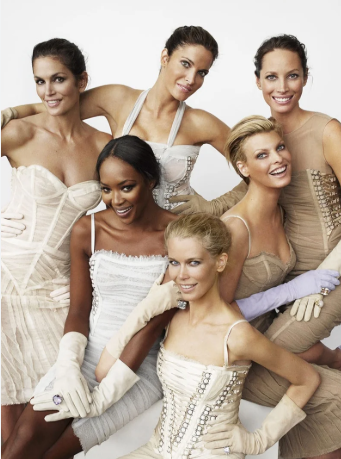
Five Supermodels Who Transcended Fashion Using the 90s as a Launchpad
The supermodels who transcended fashion didn’t share a strategy. Instead, they shared a timing instinct that told them the window was closing.
In the autumn of 1991, at Fiera Milano, Gianni Versace staged what US Vogue called “the collection that crystallized the supermodel moment.” Four women — Crawford, Campbell, Evangelista, and Turlington — walked the finale arm in arm. They wore coordinated cocktail dresses in red, yellow, and black, lip-synching to “Freedom! ’90” as the room went silent, then erupted. Fashion journalist Tim Blanks described it as “a fashion moment of biblical proportions.” Crawford called it the night the stars aligned. They were, in that moment, more famous than the clothes. More famous than the designer. In that moment, they were more famous than anyone in the room — precisely what Evangelista had meant by her $10,000-a-day quote.
However, that level of cultural saturation has a shelf life. Every person in that finale understood it. The ones who built legacies are the ones who acted on that understanding before the window closed. This article covers five women who did — the Transcenders of Social Life Magazine’s Golden Decade series. They didn’t just survive the era. They used it as raw material for something that would outlast it by decades.
Yet each one did it differently. That’s precisely what makes the pattern of supermodels who transcended fashion worth studying — and why it matters beyond nostalgia.
Cindy Crawford: The Woman Who Understood Licensing Before Anyone Else Did
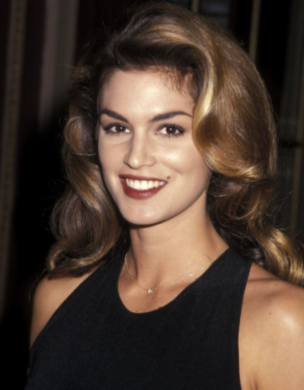
Conventionally, the reading of Cindy Crawford’s career begins with the mole, the Pepsi commercials, the MTV hosting gig. It ends with Meaningful Beauty and a $400 million net worth. The interesting story lives in the gap between those two facts — specifically, in the moment Crawford understood that endorsing a product and owning a product are structurally different transactions with structurally different outcomes.
Most models of her generation simply took the fee. Crawford took the royalty. Specifically, she structured deals as licensing arrangements rather than buyouts, accepting lower upfront payments in exchange for ongoing returns from every unit sold. When the modeling fees stopped compounding, the royalty streams kept running. This single structural preference, applied consistently across Meaningful Beauty, Cindy Crawford Home, and a portfolio of brand relationships, is the engine beneath the net worth figure.
Furthermore, what the era gave Crawford was specific credibility — the kind that made brands want her name on their products. The early 90s made her the most commercially trusted face in America — fitness tapes, Revlon campaigns, George Michael’s video. She converted that trust systematically. The runway was the credential. Her licensing architecture was the actual business.
The Kaia Factor: Modeling as Inheritable Infrastructure
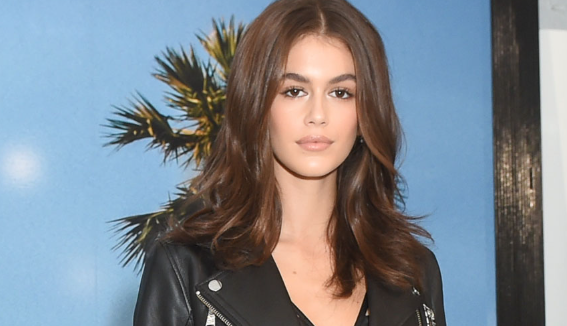
Crawford also understood something about Kaia Gerber before Kaia Gerber understood it herself: that generational modeling capital is transferable. By raising her daughter inside the industry while maintaining her own relevance, she created a second-generation asset that has kept the Crawford name commercially active well past any individual expiration date. That kind of thinking — treating fame as inheritable infrastructure rather than a personal attribute — is rare in any industry.
Full breakdown: Cindy Crawford Net Worth 2025: The $400 Million Brand Machine.
Naomi Campbell: The Woman Who Made Permanence Out of Fearlessness
Every supermodel of the 90s faced an expiration date. The industry that created them was also the industry that replaced them, methodically, with younger faces every few seasons. Campbell is the only member of the original group who simply refused the premise. At 54, she is still booking Vogue covers. Still walking for Fendi and Valentino. Still present in every room where fashion’s future is being negotiated. The industry that tried to limit her — and it did try, systematically, withholding American magazine covers for years because executives believed Black models didn’t sell — never found the mechanism to remove her from it.
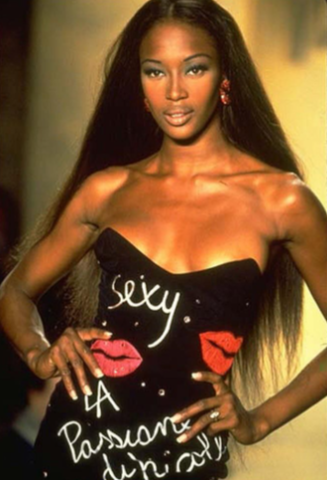
However, her method was the opposite of quiet accumulation. Where Crawford built through licensing, Campbell built through presence — through the sheer force of continuing to exist at the highest level when the conventional wisdom said she should step aside. The anger management issues and assault charges that dominated tabloid coverage for a decade should have ended her. Instead, each time the industry absorbed the noise and kept calling. Because she was irreplaceable in a way that transcended the individual incidents. Her combination of heritage, history, and runway authority simply had no substitute.
The Solidarity Play: How They Protected Each Other
Moreover, there is a specific solidarity story here that the net worth articles don’t fully capture. When European designers in the early 90s tried to manage their “quota” of Black models — one per show, if that — Crawford, Turlington, and Evangelista refused to work for designers who excluded Campbell. They used their collective leverage to force integration. This is the Transcender story at its most structural: five women who understood that their power multiplied when they acted collectively and diminished when they allowed the industry to divide them. Apple TV+’s The Super Models documentary captures how foundational that solidarity was to all five careers.
Campbell’s legacy is also the most honest illustration of what compounding presence produces. She didn’t build an empire. She built permanence. Thirty-five years after the Versace AW91 finale, she walked Vogue World 2023 with Crawford, Turlington, and Evangelista to a standing ovation. The scarcity of genuine icons is its own form of capital.
Full breakdown: Naomi Campbell Net Worth 2025: The Gatekeeper Who Controls Fashion’s Most Exclusive Rooms.
Kate Moss: The Woman Who Turned Scarcity Into a Brand Thesis
Initially, every agency in London told her the same thing in 1988: too short. At 5’7″, the fourteen-year-old from Croydon was five inches below standard runway requirements. The industry that would eventually make her one of the most referenced faces of the twentieth century initially didn’t want her in it. Sarah Doukas of Storm Model Management looked past the measurements and saw something the checklist missed: magnetism that transcended physical specification.
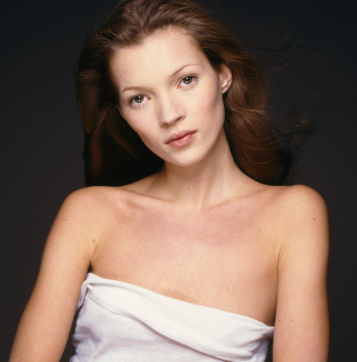
What happened next rewrote the aesthetic rules of the decade. Moss didn’t just occupy the space the Big Six had defined — she blew it open. Where Campbell, Crawford, and Turlington embodied Amazonian glamour and athletic authority, Moss represented its deliberate opposite: waif-like, raw, intimate, photographed by Corinne Day to look like a girl you might know rather than a goddess from another planet. The Calvin Klein Obsession campaign that followed — nude, vulnerable, shot in black and white by her then-boyfriend Mario Sorrenti — generated the kind of controversy that, in the pre-internet media landscape, functioned as undiluted cultural energy. It made her unavoidable.
Silence as Brand Architecture
Consequently, her strategic insight — whether conscious or instinctive — was to make unavailability the product. She didn’t give interviews. She didn’t explain herself. “Never complain, never explain” became her public philosophy and her brand architecture simultaneously. In an era of maximum celebrity access — talk shows, magazine confessionals, the first tremors of reality television — Moss maintained a mystery that made every appearance an event. The scarcity premium she built on silence is the same principle that makes rare wines more valuable than common ones. She understood that access is the thing that kills desirability, and she rationed hers accordingly.
The 2005 cocaine scandal tested the thesis and confirmed it. Contracts evaporated temporarily. Industry observers predicted the end. Within eighteen months she had signed more deals than before the incident, earning an estimated $9 million in 2006 alone. Brands discovered that the authenticity she represented — raw, real, genuinely dangerous in a way that couldn’t be manufactured — was worth more to them than the reassurance of compliance. She remained, and remains, the proof that mystique compounds in ways that performance cannot.
Full breakdown: Kate Moss Net Worth 2025: At 5’7″, She Built $70 Million on Pure Mystique.
Tyra Banks: The Woman Who Bought the Building
In 1991, twenty-five Paris fashion houses rejected her. “We already have a Black girl,” she was told, repeatedly, during her first European fashion week. She flew home to Los Angeles and made a defining decision: stop trying to enter rooms that didn’t want her. Start building rooms of her own.
From Rejection to Infrastructure: Banks Builds the Room
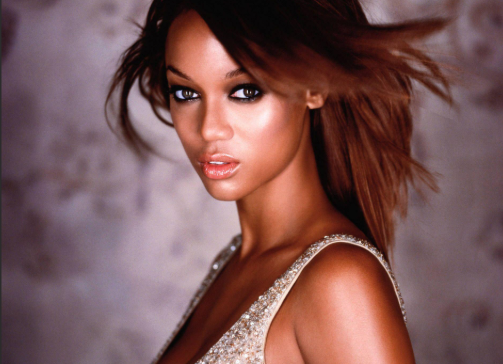
Meanwhile, the Victoria’s Secret era established her commercial reach — first Black woman on the catalog cover, first solo Black cover of the Sports Illustrated Swimsuit Issue. But Banks understood earlier than most that reach is only as valuable as the infrastructure you build to monetize it. When she conceived America’s Next Top Model, she didn’t pitch herself as a host. She negotiated the producer credit. The host gets a fee. The producer gets the backend — syndication percentages, international licensing, streaming residuals that accumulate for decades.
The Producer Credit: What the Backend Actually Pays
Forbes reported Banks earned $30 million in 2009 alone from the ANTM franchise and her other television projects — a figure that would have been impossible on a host fee alone. That single structural decision transformed her economics permanently.
What the 90s gave Banks was something more specific than fame. The rejection gave her the blueprint. Twenty-five Paris agencies told her the fashion industry’s gatekeeping was arbitrary, structural, and impenetrable from the outside. Her response was to build a competing gate — a platform where she decided which faces deserved visibility. ANTM ran for 24 cycles. The women it launched, the cultural conversations it generated, and the backend percentages it produced were all downstream from a girl who got twenty-five no’s and decided to create a different question.
The Harvard Business School case study that followed her career isn’t a postscript. It’s the point. Banks turned rejection into curriculum and curriculum into capital. The lesson isn’t about modeling. It’s about recognizing when the industry’s rules are designed to exclude you and building the parallel structure before anyone tells you that you’re allowed to.
Full breakdown: Tyra Banks Net Worth 2025: From Runway to $90 Million Media Empire.
Heidi Klum: The Woman Who Read the Contract
In 1992, a 19-year-old from Bergisch Gladbach won a German modeling contest against 25,000 entrants and walked away with a $300,000 contract. Her father, a cosmetics executive who understood business mechanics, sat down with her and explained the difference between spending a windfall and investing one. She invested. That conversation may be the most consequential moment in her financial history — not the Victoria’s Secret shows, not Project Runway, not the $160 million net worth. The habit of reading the contract rather than just signing it was established before her career began.
Reading the Contract: Where Klum’s Real Play Began
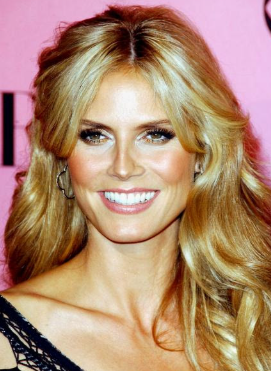
Similarly, Klum arrived in New York in 1993 in the middle of the heroin chic era with curves that violated every editorial preference of the moment. However, the same attribute that closed high-fashion doors opened the Victoria’s Secret door, which turned out to pay considerably better. Thirteen shows as an Angel. A $3 million annual contract at her peak. Sports Illustrated covers. Versace campaigns. By any standard, the commercial modeling career was extensive and well-compensated.
Reading the Contract: Where Klum’s Real Play Began
What separated Klum from a merely successful model is what she did meanwhile — watching how the television producers who hired models as guests were monetizing their attention in ways the models themselves weren’t.
When Project Runway launched in 2004, Klum negotiated the executive producer credit alongside the host title. This is the Tyra Banks play executed in parallel, independently, which suggests it wasn’t coincidence — it was the logical conclusion available to any model paying attention to where the money actually lived. The show has aired over twenty seasons. The backend percentages from syndication, international licensing, and streaming deals have compounded for two decades. America’s Got Talent added another producing credit, another backend stream, another decade of returns from a single structural decision made in a contract negotiation.
Klum’s lesson is the most transferable of the five Transcenders because it requires the least exceptional talent to replicate. Klum wasn’t the most beautiful model of her generation, nor the most culturally significant. She understood that a host fee rents visibility. A producer percentage owns it. And she acted on that distinction every single time.
Full breakdown: Heidi Klum Net Worth 2025: From German Teen to $160 Million Empire.
What These Supermodels Who Transcended Fashion Share — and What They Don’t
Laid side by side, the five Transcender stories reveal a single pattern: each woman identified the moment when the industry’s rules stopped working in her favor. Then she built a new structure before anyone told her she was permitted to.
Crawford identified it in the contract language of endorsement deals. Campbell identified it in the collective leverage of solidarity. Moss identified it in the economics of scarcity. Banks identified it in the architecture of television production. Klum identified it in the backend percentage of reality television. Five different moves, one underlying recognition: the window of visibility is temporary, and the only question that matters is what you build inside it.
A Decision, Not a Personality Type
What these supermodels who transcended fashion don’t share is method, personality, or aesthetic. Specifically, Crawford and Klum are businesswomen by instinct. Campbell and Moss are artists by instinct who became businesswomen by necessity. Meanwhile, Banks is a strategist who used modeling as an entry point to an entirely different industry. The category of supermodels who transcended fashion is not a personality type. Instead, it’s a decision — made early enough, and acted on consistently enough, to compound.
The women who didn’t make that decision — the cautionary stories in Social Life Magazine’s Beauty Without Business profile and the individual portraits of Anna Nicole Smith and Gia Carangi — weren’t less beautiful, less talented, or less commercially valuable. They were less informed, less protected, and operating in a system that had no incentive to offer them the information they needed. The Transcenders found the information anyway. That is, finally, what separates them.
Continue the Golden Decade series:
The Last Supermodels: What the 90s Taught Us About Fame — Series Pillar
The Smart Pivoters: Supermodels Who Exited on Their Own Terms
Beauty Without Business: The Early 2000s Models Who Vanished
Anna Nicole Smith: The Model America Made and Broke
Gia Carangi: The First Supermodel Fashion Forgot
Jodie Kidd: The Supermodel Who Walked Away on Her Terms
Social Life Magazine covers Hamptons luxury lifestyle, culture, and business intelligence for 25,000 readers each summer issue. Advertise, partner, or pitch a feature here. Polo Hamptons tickets and sponsorships at polohamptons.com.
Author

Written by
Recent Posts

How to Choose Useful Tech Gifts for Employees and Clients in 2026
The Garage Question: Which Car Goes South for the Season?

VandS Clinic Review Treatment: How Seoul Injectable and Laser Options Compare for US Patients
Before Buying a View Home: What a Sloped Lot Means for the Purchase

Powerful Strategies to Stay Ahead in a Fast-Moving Real Estate Market
Categories
- Art
- Articles
- Business of Luxury
- Celebrities
- Culture
- Entertainment
- Events
- Faces of Summer 2026
- Fashion
- Fashion & Style
- Featured
- Finance
- Food, Spirits, Wine
- Hamptons
- Hamptons Celebrities
- Health
- Health & Beauty
- Lifestyle
- Luxury Lifestyle
- Press
- Profiles
- Real Estate
- Technology
- The Chronicles
- Travel
- Uncategorized
- Weddings