

The architects built the room. The comedy insurgents Seinfeld era is defined by eight comedians who blew out the walls. They did not arrive with reverence for what stand-up was supposed to be. Instead, they arrived with something more useful — a specific problem with the existing order, and the talent to do something about it. Chris Rock made comedy political in a way that couldn’t be ignored. Norm MacDonald made it philosophical in a way that got him fired. Larry David made it structurally radical. Sam Kinison made it loud enough to shake the walls. Dennis Miller made it dense enough to require preparation. Ellen DeGeneres made it personal enough to cost her everything. Ray Romano made it honest enough to fill arenas. Howard Stern made it reach 20 million people before breakfast. These eight comedy insurgents Seinfeld era produced did not follow the blueprint. They disputed it. Here is how each one did it — and what they left behind.
Chris Rock: Comedy Insurgent Who Delivered the Verdict
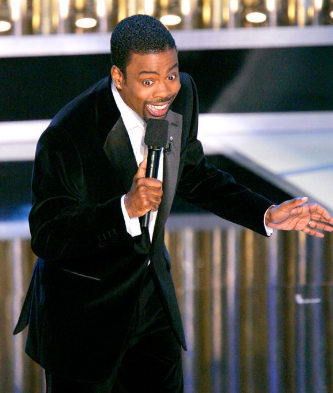
The Before
Christopher Julius Rock III was born February 7, 1965, in Andrews, South Carolina, and raised in Brooklyn’s Bedford-Stuyvesant neighborhood. His father drove a truck and delivered newspapers. Meanwhile, the family was working class in a neighborhood largely abandoned by the city. Rock was bused to a school in Bensonhurst, where the daily experience ranged from hostile to dangerous. He dropped out of high school. He then got his GED. Finally, he started doing stand-up at Catch a Rising Star in Manhattan at 18, because it was free to try and he had nothing to lose. Eventually, Eddie Murphy saw him perform and introduced himself. That introduction changed the trajectory of everything.
The Pivot Moment
In 1996, Chris Rock released Bring the Pain on HBO. The special did not arrive quietly. It arrived like a verdict — two years in the making, every sentence constructed and reconstructed until there was nothing left to cut. Rock said things on that stage that no one in American public life was willing to say. He said them with a commitment so total that audiences laughed before they fully processed what they had just agreed with.
Before Bring the Pain, Rock was a working comedian with solid credits. After it, he was the most important comedian working. That transition happened in 60 minutes of HBO air time. Indeed, very few careers have a moment that clean.
The Seinfeld Era: Rock’s Golden Age Chapter
Rock’s follow-up, Bigger and Blacker in 1999, confirmed the arrival wasn’t a fluke. He had discovered a lane — social critic as comedian, comedian as social critic — that belonged to him entirely. No one else could occupy it without the comparison being unflattering. His delivery was percussive and his construction architectural: premise, escalation, release, repeat. The precision was something the best comedians of the era recognized immediately as built, not improvised.
Together, Seinfeld and Rock represent the two poles of 1990s stand-up — the observational and the political. They define the era’s range more than any other pairing. That they remain close friends and mutual admirers is not coincidental. Craftsmen recognize craftsmen. At his peak during the Seinfeld era, Rock produced the most politically consequential comedy in America — a distinction that applies to very few careers in the art form’s history.
For the full profile: Chris Rock Net Worth: The Comedian Who Made the Room Uncomfortable.
Larry David: Seinfeld Era Insurgent and Invisible Architect
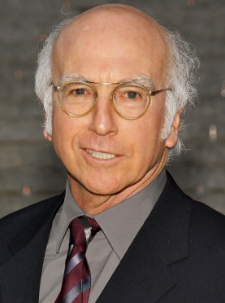
The Before
Lawrence Gene David was born July 2, 1947, in Brooklyn and raised in Sheepshead Bay. He graduated from the University of Maryland with a history degree and served briefly in the Army Reserve. Most of the 1970s found him doing stand-up in New York clubs to largely indifferent audiences. His sets were unpredictable in a way that made club owners nervous. He would sometimes walk offstage mid-set if he felt the crowd wasn’t worthy of the material — both principled and professionally inadvisable.
He wrote for Saturday Night Live for one season. A pilot followed — NBC passed on that too. By most external measures, he was a struggling comedian in his early forties with no obvious path forward. Then he met Jerry Seinfeld at a club, and they started talking about a show.
The Pivot Moment
The pitch for Seinfeld was reportedly one of the worst NBC had ever heard — two comedians explaining how a comedian thinks of material, with no discernible plot and no characters anyone would want to spend time with. NBC passed. Subsequently, an executive named Rick Ludwin funded a pilot out of his own budget, and the rest is the most-studied television history in the medium’s existence.
David’s contribution to that history is structurally enormous and chronically underacknowledged. The “no hugging, no learning” rule — that was David. Characters who never grow and refuse to learn? Also David. The interlocking plot architecture where four seemingly unconnected stories snap together in the final act — that was David too. All of it.
Curb, Seinfeld, and the Insurgent’s Legacy
David served as head writer and executive producer for the first seven seasons of Seinfeld — the seasons that built the audience, established the template, and produced the episodes still quoted thirty years later. He left after Season 7 and returned to write the finale in 1998. Between those two events, the show changed. The comparison was instructive.
After Seinfeld, he created Curb Your Enthusiasm for HBO — a semi-improvised series about a fictionalized version of himself. It became its own canonical comedy landmark and is still running. Understanding the comedy insurgents Seinfeld era without accounting for Larry David is like studying architecture without looking at the foundation. He built the structural grammar of modern television comedy and freed an entire generation of writers from the obligation to make their protagonists likable. He did it all without ever getting the credit he deserved during the run.
For the full profile: Larry David Net Worth: The $400M Architect of TV’s Most Honest Comedy.
Howard Stern: Seinfeld Era Insurgent Who Reached Everyone
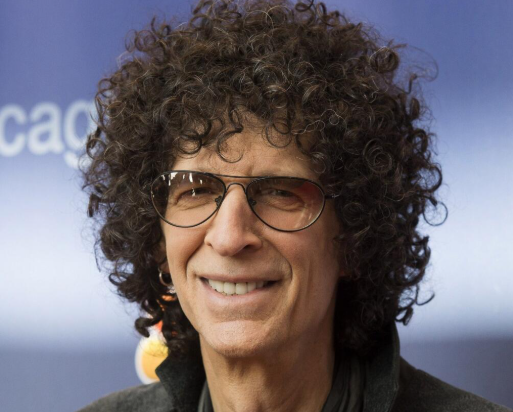
The Before
Howard Allan Stern was born January 12, 1954, in Jackson Heights, Queens — same borough, same era, different frequency than the stand-up world that produced most of the names on this list. His father was a radio engineer, so the medium was in the house from the beginning. Stern graduated from Boston University with a communications degree in 1976 and spent his early career at small radio stations in progressively larger markets. He was fired with reliable frequency for going further than management had authorized. Those firings were not setbacks — they were the resume.
The Pivot Moment
By the time Stern arrived at WNBC in New York in 1982, he had already developed the format that would make him the highest-rated morning radio host in American history: total honesty, no institutional deference, the comedian’s instinct applied to a medium broadcasting into 20 million morning commutes simultaneously. He was not performing observational comedy. He was performing himself, which turned out to be the more radical choice.
Stern in the Seinfeld Era
The Seinfeld era found Stern at full power. His 1997 film Private Parts — a biographical comedy about his own career — was a genuine commercial hit. It surprised an industry that had spent fifteen years trying to get him off the air. His Hamptons presence remains a permanent fixture in East Hampton, where he and his wife Beth have summered for decades. In a neighborhood that includes Jerry Seinfeld and Jimmy Fallon, Stern is simply a neighbor.
Comedy in the Seinfeld era was not confined to stages. Stern understood that first and built accordingly. The insurgent who reaches the most people wins the most territory — and Stern reached more people before 9 a.m. than most comedians reached in a career.
For the full profile: Howard Stern Net Worth: East Hampton’s $650M Voice.
Dennis Miller: The Seinfeld Era’s Densest Room
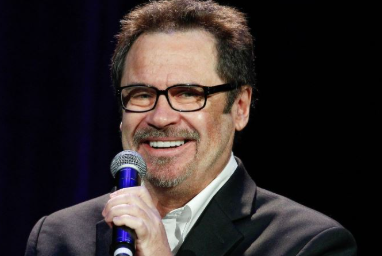
The Insurgent Standard
Dennis Miller anchored Weekend Update on Saturday Night Live from 1985 to 1991, then spent the Seinfeld era releasing specials of escalating verbal density. The references were obscure. Sentences were layered. The payoff was proportional to how much you brought to the room — a deliberate filtering mechanism for the audience he wanted.
What Miller Built
His 1988 special Mr. Miller Goes to Washington and his subsequent HBO specials through the 1990s represent a largely extinct comedy mode: the stand-up as intellectual sparring partner. Whether you agreed with his politics — which shifted significantly after the era ended — the craft during this period was impeccable. The sentences were built to last. Among the comedy insurgents Seinfeld era produced, Miller is the one who demanded the most from a room. The era was better for it.
For the full profile: Dennis Miller Net Worth: SNL, HBO, and the Most Demanding Room in Comedy.
Ellen DeGeneres: Comedy Insurgent Who Paid the Full Price

The Before
Ellen Lee DeGeneres was born January 26, 1958, in Metairie, Louisiana, and raised between New Orleans and Atlanta after her parents divorced. Her stepfather was abusive. She processed none of it through conventional channels and all of it through comedy — a coping mechanism that turned out to have commercial applications. She started doing stand-up in New Orleans clubs in the late 1970s and worked her way toward New York the same way every comedian of her generation did: one club at a time, one city at a time.
The Carson Couch
In 1986, DeGeneres became the first female comedian invited to sit on Johnny Carson’s couch immediately after a stand-up set on The Tonight Show. Carson’s couch, in that era, was the highest public endorsement the art form offered. She earned it with material that was warm, personal, self-deprecating, and clean — finding humor in the ordinary without requiring a victim. That was harder than it looked, and no one else in her generation was doing it quite the same way.
The Seinfeld Era: The Price of Honesty
Her sitcom Ellen ran from 1994 to 1998. The 1997 episode in which her character came out as gay — the same week DeGeneres came out publicly on the cover of Time magazine — remains one of the most significant moments in American television history. Professional costs were immediate: the show was canceled, her career stalled, and the industry that had celebrated her went quiet.
She kept working. The audience she had built — and the goodwill she had earned by being exactly who she was on stage since 1986 — turned out to be more durable than any single industry verdict. Among the comedy insurgents Seinfeld era gave the art form, DeGeneres paid the highest price for honesty and earned the longest return. Every comedian who came after her and said something true about themselves that the industry found inconvenient owes her a specific debt. Most of them know it.
For the full profile: Ellen DeGeneres Net Worth: Comedy, Courage, and the Cost of Honesty.
Ray Romano: The Seinfeld Era’s Most Honest Room

The Insurgent’s Approach
Raymond Albert Romano was born December 21, 1957, in Queens, New York. Throughout the Seinfeld era, he did something deceptively difficult: telling the exact truth about ordinary domestic life — marriage, fatherhood, the specific exhaustion of loving people who also exhaust you — without cruelty or self-pity. His stand-up persona was the put-upon husband, the overwhelmed father, the man who loves his family and is also completely tired from them. It was not a character. It was a direct transmission from his actual life.
Everybody Loves Raymond and the Honest Room
Everybody Loves Raymond launched in 1996 and ran for nine seasons. Before the show, Romano was already playing arenas on the strength of observational comedy about marriage and parenthood. In the mid-1990s, that material was selling out stadiums — a data point worth remembering. The comedy that tells the truth about ordinary life without embellishment or aggression outlasts almost everything else in the genre. Romano’s work from this era remains proof of that principle.
For the full profile: Ray Romano Net Worth: The $200M Case for Telling the Truth About Marriage.
Sam Kinison: The Seinfeld Era Insurgent Who Screamed
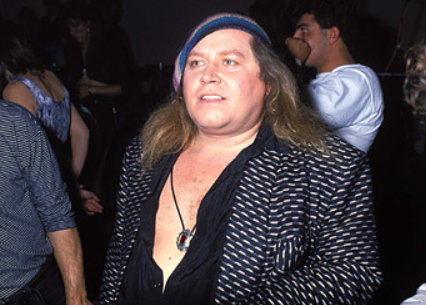
The Volcano
Sam Kinison died April 10, 1992, in a car accident outside Needles, California — three weeks after getting married, on his way to a show in Las Vegas. He was 38. The Seinfeld era had barely started, which means it ultimately contains only the first chapter of what Kinison might have built across the full decade.
What he built in that first chapter was enough to belong on any list of the era’s defining voices. Kinison was a former Pentecostal preacher who turned the sermon structure — the escalating intensity, the confession, the communal release — into stand-up comedy. His sets were physically extreme and emotionally unfiltered, delivered with the conviction of a man who had genuinely survived each of the things he was screaming about. Other comedians performed pain. Kinison transmitted it.
The Unfinished Sentence
Rodney Dangerfield discovered him. Jerry Seinfeld cited him. Every comedian who came through the late 1980s and early 1990s has a Kinison story. His death remains one of the art form’s great unfinished sentences — not tragic in the way that invites comfort, but in the way that leaves an actual gap in the record. Among the comedy insurgents Seinfeld era produced, Kinison is the one who never got to show what he would have done with a full decade.
For the full profile: Sam Kinison Net Worth: The Comedy Legacy of the Preacher Who Screamed.
Norm MacDonald: The Last Dangerous Seinfeld Era Insurgent
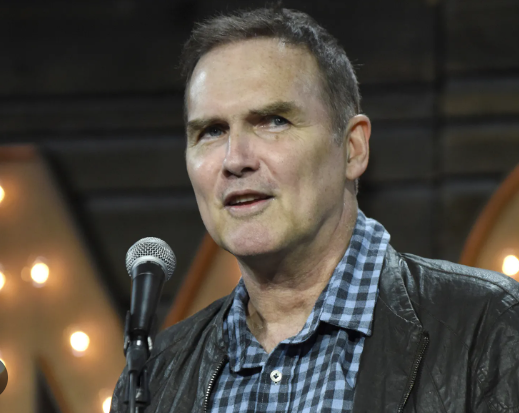
Letterman’s Pick
David Letterman — who watched every comedian alive for thirty years — said Norm MacDonald was simply the best. Not one of the best. Letterman called him the best stand-up who ever lived. That endorsement is worth sitting with before reading further, because Letterman did not say things like that casually or often.
The Involuntary Laugh
MacDonald spent 1993 to 1998 as a cast member and Weekend Update anchor on Saturday Night Live. During that run, he developed a philosophy of comedy so specific it got him fired. He was not playing for cheers — he said so explicitly. “You can applaud voluntarily, but you can’t laugh voluntarily. I don’t want to say things that an audience already thinks.” Every joke was constructed to produce the involuntary laugh: the one that escapes before the audience decides whether they agree. That goal, pursued with total commitment at the expense of his job, made him singular among the comedy insurgents Seinfeld era produced.
The Firing and What Followed
NBC executive Don Ohlmeyer had him removed mid-season in 1998 — an almost unprecedented move — reportedly because MacDonald kept calling O.J. Simpson a murderer on live television. Simpson was Ohlmeyer’s personal friend. MacDonald’s response was characteristically unbothered: he kept touring, kept writing, and kept performing. He never cared whether audiences were confused or devoted, as long as the jokes were right.
He died September 14, 2021, from leukemia — a diagnosis he had kept private for nine years, telling almost no one, continuing to perform the entire time. Tina Fey called him the last dangerous SNL cast member. Seth Rogen said he stole his entire delivery from watching Norm. Jon Stewart said no one could make you break like MacDonald. The legacy is that specific and that widespread simultaneously. A comedian so original that his influence appears in everyone who came after, even when they can’t explain exactly why.
For the full profile: Norm MacDonald Net Worth: The Best Who Ever Did It.
Comedy Insurgents Seinfeld Era: Quick Reference
- Chris Rock — Political precision, the involuntary agreement, the most consequential comedy of the era
- Larry David — Structural genius behind Seinfeld, invisible architect of modern television comedy
- Howard Stern — Radio as comedy, 20 million morning commutes, the Hamptons neighbor who reached everyone
- Dennis Miller — The densest room, the most demanding audience, the intellectual’s comedian
- Ellen DeGeneres — The one who paid the price for honesty and earned the longest return
- Ray Romano — The most durable voice, the honest room, ordinary life without embellishment
- Sam Kinison — The volcano, the unfinished sentence, the sermon that became a scream
- Norm MacDonald — The last dangerous one, the involuntary laugh, Letterman’s pick for the best ever
These eight comedy insurgents Seinfeld era defined did not follow the blueprint the architects laid down. They disputed it, detonated it, and rebuilt it according to their own specifications. They left a room that looked different from the one they entered — which is the only measure of an insurgency that matters.
For the five who built the room in the first place, read part one: The Golden Age Comedy Architects: The Five Who Built It. Browse the full celebrity archive for more.
Social Life Magazine has covered the Hamptons and the culture that shapes it for 23 years. For feature inquiries and editorial partnerships, visit sociallifemagazine.com/contact. Meanwhile, for tickets and sponsorships at Polo Hamptons, visit polohamptons.com.
Author

Written by
Recent Posts

How to Choose Useful Tech Gifts for Employees and Clients in 2026
The Garage Question: Which Car Goes South for the Season?

VandS Clinic Review Treatment: How Seoul Injectable and Laser Options Compare for US Patients
Before Buying a View Home: What a Sloped Lot Means for the Purchase

Powerful Strategies to Stay Ahead in a Fast-Moving Real Estate Market
Categories
- Art
- Articles
- Business of Luxury
- Celebrities
- Culture
- Entertainment
- Events
- Faces of Summer 2026
- Fashion
- Fashion & Style
- Featured
- Finance
- Food, Spirits, Wine
- Hamptons
- Hamptons Celebrities
- Health
- Health & Beauty
- Lifestyle
- Luxury Lifestyle
- Press
- Profiles
- Real Estate
- Technology
- The Chronicles
- Travel
- Uncategorized
- Weddings