

Howard Stern reached more people before 9 a.m. than most comedians reached in a career. That is not a metaphor. At the peak of his syndicated radio show in the 1990s, Stern was broadcasting to approximately 20 million listeners. This is across dozens of markets simultaneously. He’s got a daily audience that no stand-up comedian, television host, or late-night personality could approach. He was not performing for a room. He was performing for a country. Morning commute, five days a week, for decades. He was doing it with the comedian’s instinct applied to a medium that had never been used that way before.
Howard Stern’s net worth is estimated at approximately $650 million. That makes him the wealthiest person on either of these lists. He’s one of the highest-paid entertainers in American history. The Sirius XM deal he signed in 2004, moved his show to satellite radio for a reported $500 million over five years. It was the largest talent contract in radio history at the time. He has renewed it multiple times since. The financial scale reflects a simple commercial reality: no one else does what he does. This means no one else can be substituted for him, which means the price of keeping him is whatever he asks.
The Before: Jackson Heights to Boston University
Howard Allan Stern was born January 12, 1954, in Jackson Heights, Queens, to Ben Stern — a radio engineer who worked at WHOM in New York — and Ray Stern. His father’s profession put radio equipment in the house from the beginning and established the medium as something technical and deliberate rather than simply ambient. Stern grew up understanding that radio was built, that every element of what came through the speaker was a choice made by a person in a room, and that the choices could be different from the ones that were currently being made.
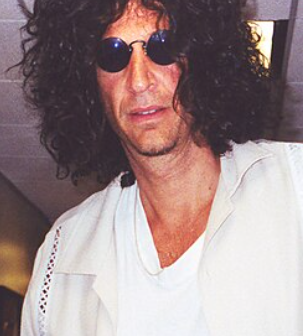
He graduated from South Side High School in Rockville Centre, Long Island — the same Long Island that produced Jerry Seinfeld and Eddie Murphy, which may say something about the particular ambition the island generates in people who grow up aware of how close the center is. He enrolled at Boston University, where he studied communications and worked at the student radio station, and graduated in 1976 with a degree that was not a credential but a starting point.
His early career was a series of small market radio stations and progressive firings for going further than management had authorized. WRNW in Briarcliff Manor, New York. WCCC in Hartford, Connecticut. WWWW in Detroit. W4 in Washington, D.C. Each firing was for the same reason: Stern was doing something the station’s management had not anticipated and did not want to explain to its advertisers. The firings were not personal failures. They were professional experiments with predictable outcomes, conducted at small enough scale that the costs were recoverable.
The Pivot Moment: WNBC New York, 1982
In 1982, Stern was hired at WNBC in New York — a major market, a significant platform, the city where the audience he needed was concentrated. He lasted until 1985, when WNBC fired him for the same reasons that every previous station had fired him, except that this time the firing was covered by the New York press and the audience he had built at WNBC followed him to his next station, WXRK, where he had been hired before the WNBC termination was formally processed.
At WXRK — known as K-Rock — Stern built the show that would run for twenty years and redefine what morning radio was. The format was simple and had never been done at this scale or with this consistency: Stern talked. He talked about himself, about his guests, about current events, about the specific anxieties and hypocrisies of American life. He’s got a lack of institutional deference that no previous radio personality had deployed in drive-time. He was not performing a character; he was performing himself, amplified.
The Climb: Syndication and the 20 Million
By the early 1990s — the beginning of the Seinfeld era — Stern was the highest-rated morning radio host in every market where his show aired. The syndication network was expanding. The audience was growing. The FCC was fining him with increasing regularity for content that violated broadcast decency standards, and each fine generated press coverage that expanded the audience further. The regulatory apparatus designed to limit him functioned, in practice, as a marketing campaign.

According to Forbes, Stern’s syndicated show was generating approximately $30 million annually. This was during the peak years of the mid-1990s. This figure reflected not just the advertising rates his audience commanded but the loyalty of that audience. This was documented as one of the most engaged in American media. Stern listeners did not use his show as background noise. They listened actively and debated the content. Then returned daily with the fidelity of an audience that felt it was participating in something rather than simply consuming it.
His 1993 book Private Parts became the fastest-selling book in the history of Simon & Schuster. His 1997 film of the same name is a biographical comedy about his own career. It grossed $41 million domestically on a $28 million budget. That result surprised an industry that had spent fifteen years treating him as a liability rather than an asset.
The East Hampton Chapter: The Neighbor Who Reaches Everyone
Howard Stern has summered in East Hampton for decades, making him one of the most tenured presences in the Hamptons celebrity landscape and one of the most genuinely integrated. His neighbors on the East End include Jerry Seinfeld, Jimmy Fallon, Christie Brinkley, and the full roster of the entertainment industry’s summer population — a geography that Stern has discussed on air with the same directness he applies to everything else.
His relationship with East Hampton is not the relationship of someone performing a lifestyle. It is the relationship of someone who has lived there long enough to have opinions about the traffic on 27, preferences about which restaurants are worth the wait, and the kind of social connections that develop over decades rather than seasons. His wife Beth Stern — animal rights activist, author, and photographer — is equally embedded in the community’s philanthropic and social infrastructure.
The annual rhythm of the Stern household in East Hampton, the summers, the charity work, the social calendar. All that Social Life Magazine has documented for 23 years — reflects a genuine commitment to the community. Not just a seasonal presence. The East Hampton real estate market has been shaped in part by the presence of people like Stern. He who bought early and stayed. The dining and social scene that defines the summer months is one he participates in rather than observes from a distance.
What Howard Stern Built
The primary structure: forty-plus years of daily radio that redefined what the medium was capable of. The Sirius XM era began in 2006 and continues today. It moved his show to a platform without FCC regulation. This removed the external constraint that had defined the first half of his career. It replaced it with a self-imposed standard that has produced some of the most substantive long-form celebrity interviews in American media.
The Stern interview format — long, probing, disarmingly personal, structured to produce revelations that subjects have not given to anyone else — has become a distinct genre. The New York Times has noted that Stern’s SiriusXM-era interviews are among the most candid in American entertainment journalism, citing sessions with figures including Paul McCartney, Madonna, and Howard Stern — in which Stern’s willingness to ask what everyone is thinking and wait for an actual answer produces content that no other interviewer generates.
His influence on media is structural rather than stylistic. He demonstrated authenticity. The performance of actual self rather than constructed persona. He was not just commercially viable but commercially superior to every alternative. Every podcaster who has built an audience by simply talking honestly about their own experience is working in a format that Stern built at scale. All on AM radio, before the infrastructure existed to describe what he was doing.
The Final Chapter: Still Broadcasting
Howard Stern is 71 years old and still broadcasting four days a week from his home studio in New York. His SiriusXM contract has been renewed multiple times, most recently in 2020. The show remains the most-subscribed program on the platform. He has discussed retirement in the way that people discuss retirement when they are not actually considering it — as a theoretical possibility that loses its appeal every time the microphone is on.
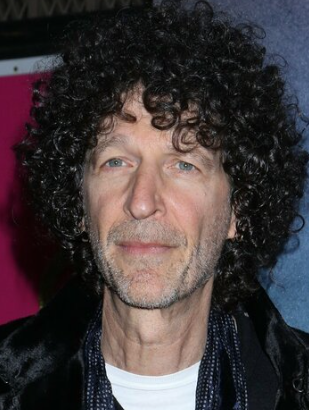
He’s transformed over the past fifteen years. From the provocateur who spent three decades being fined by the FCC to the interviewer. He has produced some of the most substantive conversations in American media. It’s not a contradiction. It is a development. The instinct was always the same: say the true thing, say it directly, don’t perform for the room. The rooms got bigger. The microphone got better. The instinct held.
For the full context of the era he helped define, read: Comedy’s Insurgents: Who Rewrote the Rules. For the full celebrity hub, visit SocialLifeMagazine.com.
Editorial features and brand partnerships, contact us at sociallifemagazine.com/contact. For Polo Hamptons tickets and sponsorships, visit polohamptons.com.
Author

Written by
Recent Posts

How to Choose Useful Tech Gifts for Employees and Clients in 2026
The Garage Question: Which Car Goes South for the Season?

VandS Clinic Review Treatment: How Seoul Injectable and Laser Options Compare for US Patients
Before Buying a View Home: What a Sloped Lot Means for the Purchase

Powerful Strategies to Stay Ahead in a Fast-Moving Real Estate Market
Categories
- Art
- Articles
- Business of Luxury
- Celebrities
- Culture
- Entertainment
- Events
- Faces of Summer 2026
- Fashion
- Fashion & Style
- Featured
- Finance
- Food, Spirits, Wine
- Hamptons
- Hamptons Celebrities
- Health
- Health & Beauty
- Lifestyle
- Luxury Lifestyle
- Press
- Profiles
- Real Estate
- Technology
- The Chronicles
- Travel
- Uncategorized
- Weddings